Key Takeaways
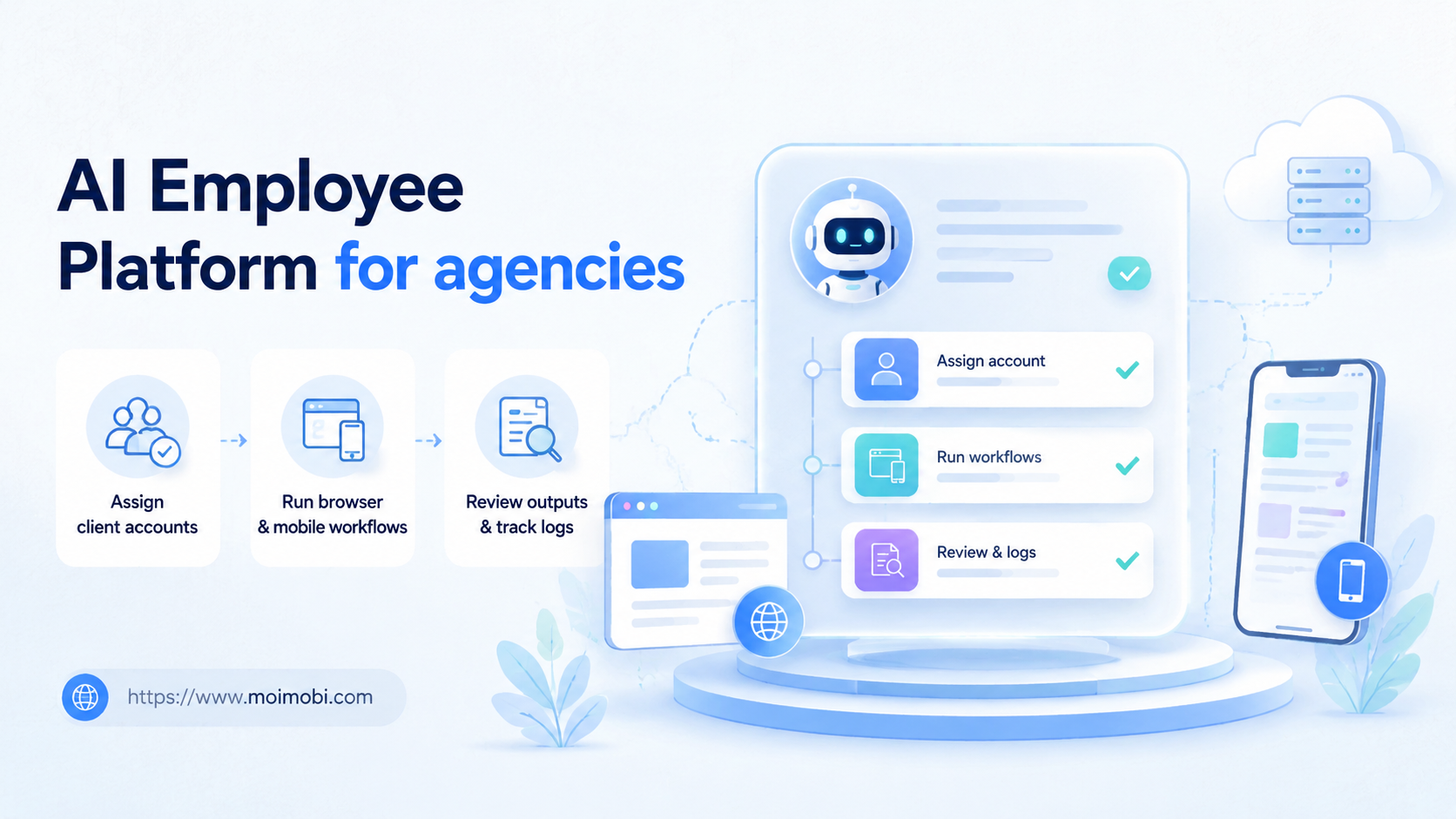
- An AI employee platform helps agencies turn repeated client work into assigned, reviewable execution workflows.
- The platform should connect AI planning with browser sessions, mobile execution environments, account workspaces, logs, and human approval.
- Agencies should evaluate AI employee software by account ownership, role boundaries, workflow repeatability, and exception handling.
- The first rollout should cover one client workflow before expanding into more accounts or platforms.
- Good results come from clearer operations, not from removing human review.
An AI employee platform is a system that lets agencies assign repeatable digital work to AI workers inside controlled browser, mobile, and account environments. For agencies, the value is not only content generation. Better value comes from preparing, executing, reviewing, and tracking client operations across many accounts.
An agency may manage social media publishing, customer replies, competitor monitoring, lead research, e-commerce updates, or reporting. Those tasks often touch logged-in web tools, mobile apps, client files, and internal review steps. A useful platform connects those pieces instead of leaving the team to copy AI output into every tool by hand.
Moimobi frames AI employees as execution capacity for real online work. Its operating model combines AI-assisted planning with browser execution, cloud phones, Android devices, and account workspaces. That keeps the agency focused on task ownership, quality control, and client outcomes.
The Core Idea Behind AI Employee Platform for agencies
For agencies, an AI employee platform should behave like an operational layer, not a chat window. It should know which client account is involved, where the task should run, who reviews the output, and what counts as a completed result.
The simple model has four parts:
- Instruction: the agency defines the task, client, account group, deadline, and success criteria.
- Execution environment: the work runs inside an assigned browser, cloud phone, or Android workspace.
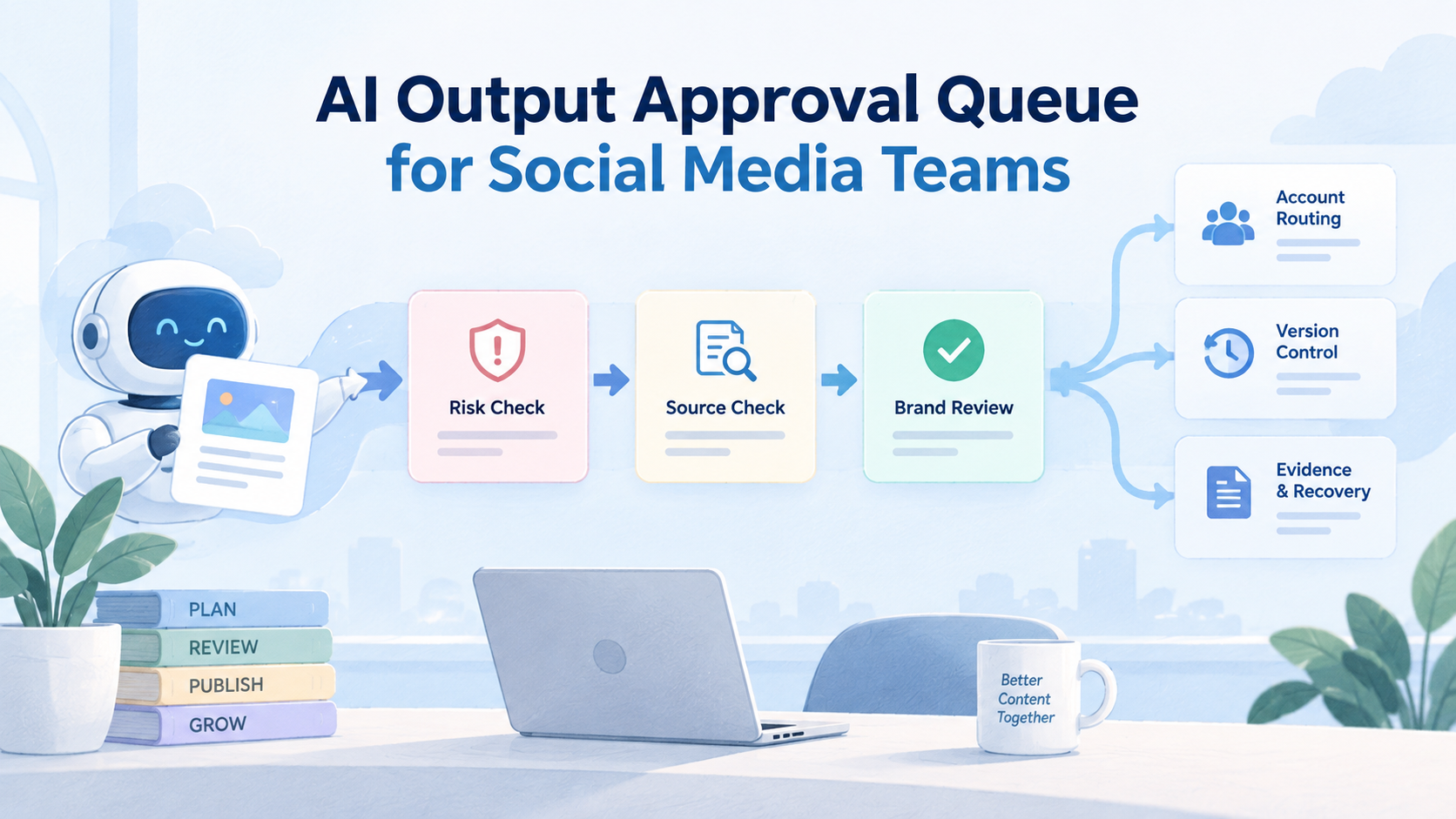
- Human review: sensitive publishing, replies, account changes, and client-facing output pass through approval.
- Result record: the platform keeps logs, task state, owner notes, and failure reasons.
This is different from ordinary AI employees software that only writes copy or summarizes notes. Agencies need execution, not only suggestions. A practical system helps the team move from "AI drafted something" to "the task was prepared, reviewed, assigned, and recorded."
Browser execution is one reason this category is becoming more practical. The W3C WebDriver standard describes a remote-control interface for browser introspection and control. Playwright documents a modern automation model around browsers, pages, contexts, locators, and traces. These technical systems show why serious online work needs controlled sessions and observable results.
An agency does not need to expose every operator to those developer tools. The operational question is easier: can the platform give each AI worker a controlled place to work, a task boundary, and a review path?
Agency Scenario: Client Accounts, Roles, Tasks, and Metrics
Picture a small growth agency with five clients. Each client has social accounts, a content calendar, customer messages, weekly reports, and a mix of browser and mobile tasks. The agency wants AI support, but it cannot let every task run without context.
The right AI employee platform assigns work by client, account, role, and workflow. One AI worker may prepare content drafts. Another may monitor comments. A third may collect competitor examples. A human operator still approves client-facing actions and handles exceptions.
| Agency role | AI employee task | Execution surface | Review metric |
|---|---|---|---|
| Account manager | Prepare weekly client status notes | Browser dashboards and workspace records | Reports delivered with clear task evidence |
| Content operator | Draft captions, check assets, prepare post queues | [AI browser](https://www.moimobi.com/) and content library | Drafts approved without rework loops |
| Community manager | Sort replies, flag sensitive messages, suggest responses | Browser inbox or mobile workspace | Replies reviewed and assigned on time |
| Research assistant | Collect competitor posts, offers, landing pages, and notes | Browser sessions and saved research workflow | Findings logged with source context |
| Operations lead | Review failed tasks, ownership gaps, and workflow changes | Task log and account workspace | Exceptions resolved before the next cycle |
This mapping keeps the agency from treating AI as one general assistant for everything. Every worker has a bounded job. Every client account has an owner. Every repeated task has a metric.
Moimobi supports this agency pattern through account workspaces, browser execution, mobile execution, and workflow tracking. When client work depends on mobile apps, agencies can use a cloud phone execution environment instead of forcing mobile tasks into a browser-only process.
Why Agencies Search for AI Employee Software
Agencies search for AI employee software because client work becomes harder to coordinate as account volume grows. The bottleneck is rarely one task. The bottleneck is handoff across people, tools, accounts, and review steps.
Common agency problems include:
- Drafts are created quickly but still need manual copy-paste into client systems.
- Operators repeat the same browser steps for many accounts.
- Client accounts are mixed across tools without a clear owner.
- Reports require screenshots, notes, and status checks from several platforms.
- Customer replies need faster triage but still require human judgment.
- Failed tasks are hard to diagnose because logs are incomplete.
The right platform should reduce that coordination cost. It should not make the agency more dependent on invisible automation. Work should become easier to inspect after every run.
NIST's AI Risk Management Framework is useful here because it frames AI work around governance, mapping, measurement, and management. Agencies do not need to quote the framework in client proposals, but they can apply the same discipline: define the use case, understand the context, measure results, and manage the risk of bad outputs.
Agency teams should also respect platform rules. Meta's developer terms and TikTok's developer guidelines both emphasize compliant access, permissions, and responsible use. AI workers should support authorized workflows and review records, not encourage spam, scraping, or careless account actions.
Who Benefits Most and In What Situations
The strongest fit is an agency that already has repeatable client workflows. AI employee software works best when the agency can describe the task before assigning it to the platform.
Good-fit agencies usually have these traits:
- Multiple client accounts with similar recurring tasks.
- Clear SOPs for publishing, monitoring, research, or reporting.
- A review process for client-facing output.
- Operators who need better handoff, not less responsibility.
- A need to connect browser work with mobile app work.
- Client reporting that depends on task records and evidence.
Not every agency needs a full platform immediately. A solo consultant may only need AI writing tools and a task board. A team without defined account ownership should fix that first. Automation will not repair unclear roles.
Good fit
Recurring client work, multiple accounts, defined review steps, and a need for traceable execution.
Not ready
One-off AI writing, unclear SOPs, no account ownership, or client work that changes every day.
Best first workflow
Start with reporting, competitor monitoring, content preparation, or inbox triage before automating sensitive actions.
The best use case is a workflow that repeats often and has a clear approval point. For example, an agency can let an AI employee collect competitor posts and draft insights. A strategist then reviews the findings before they enter a client report.
How to Evaluate or Start Using AI Employee Platform for agencies
Start with operating checkpoints. Do not begin by asking how many AI workers the platform can run. Ask whether the team can supervise the work.
- Client scope check: choose one client, one platform, and one repeated workflow.
- Account environment check: assign each account to a browser, mobile, or combined workspace.
- Role check: define who creates the task, who reviews it, and who handles exceptions.
- Execution check: run the workflow with visible logs, screenshots, or status records.
- Review check: compare completion rate, takeover count, rework, and client-ready output.
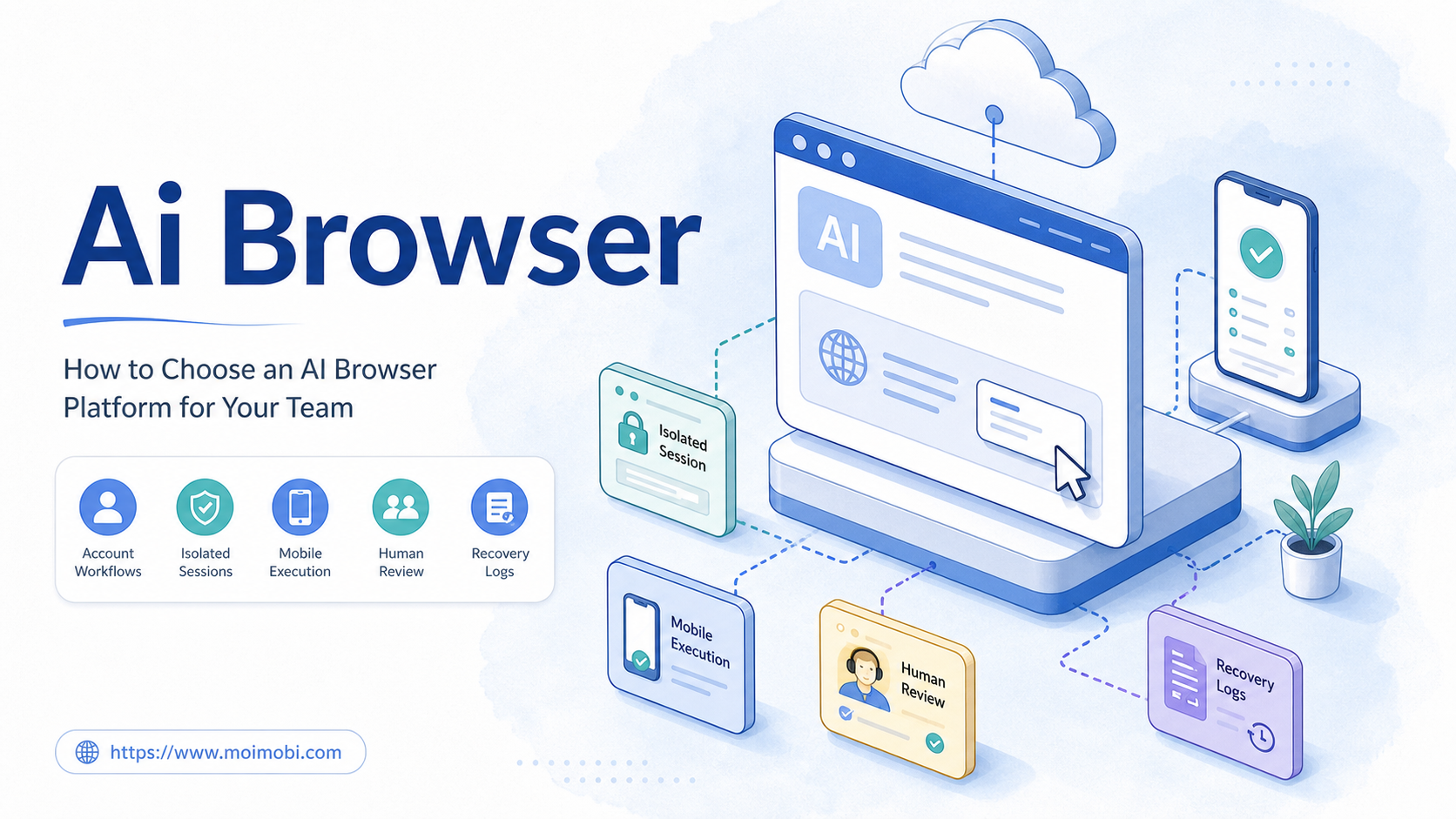
For browser-heavy agency tasks, evaluate the AI browser execution platform layer. It should support logged-in web tools, dashboards, forms, content systems, and repeatable task sessions. For mobile-heavy work, evaluate mobile automation and account environment controls.
Permission checks also belong in the pilot. An intern, operator, strategist, and client lead should not all have the same scope. The tool should make it easy to separate preparation, execution, review, and final approval.
Use a two-week pilot. Track only one workflow at first. A pilot that covers too many clients will hide the real problem. A narrow pilot reveals whether the platform improves task clarity or just creates another dashboard.
Team Workflow and Account Assignment
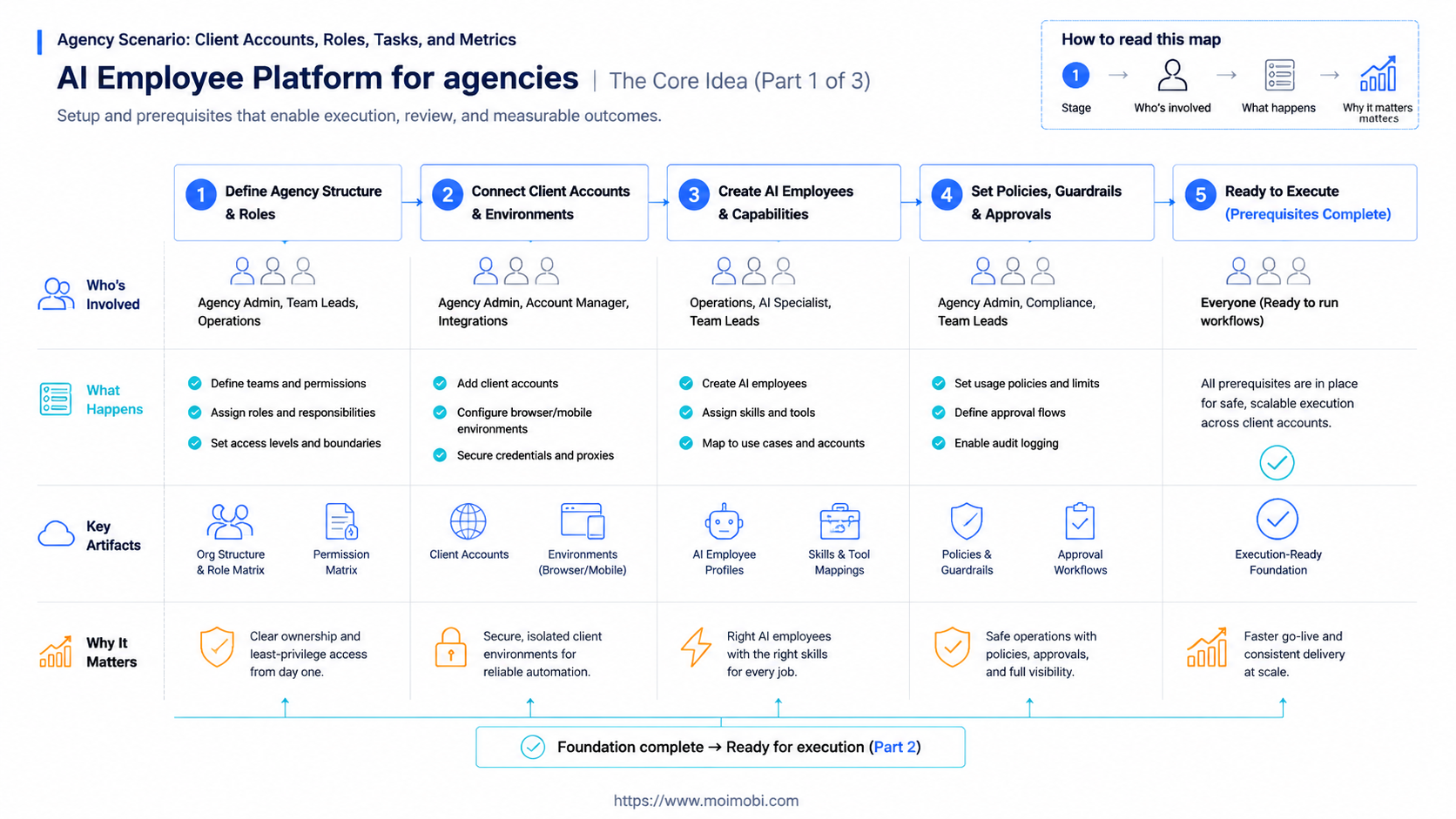
Account assignment is where agencies usually gain or lose control. A good system should answer four questions before the task starts:
- Which client does this task belong to?
- Which account and environment should it use?
- Which AI worker or workflow is allowed to act?
- Which human reviews the result?
This is where Moimobi's multi-account management model matters. Agencies do not only manage devices or browser sessions. They manage client trust, account ownership, and repeated execution.
For social media agencies, account work may move across browser dashboards and mobile apps. A strategist may approve content in a browser. An operator may check app-side status on a cloud phone. A community manager may review replies before sending. One task record should keep those pieces connected.
Strong assignment rules also reduce duplicate work. When everyone knows the account owner, environment, and next action, the team spends less time asking what happened. The task log becomes part of the agency's operating memory.
Success Metrics and Review Loop
Judge the AI employee platform by operational clarity. More generated content is not enough. Agencies need cleaner workflows, faster review, and fewer handoff gaps.
Track these metrics:
- Tasks completed per client workflow.
- Average manual review time.
- Failed task reasons.
- Manual takeover count.
- Rework caused by unclear instructions.
- Client-ready output rate.
- Account assignment errors.
- Number of tasks with complete logs.
Review these metrics weekly. The agency should ask which workflows became clearer, which tasks still require too much human rescue, and which account groups should not be automated yet.
One useful rule is to expand only after the review loop improves. If the first workflow creates messy logs, unclear ownership, or weak output, adding more accounts will amplify the issue. Fix the process before adding volume.
Mistakes That Reduce Results
The first mistake is selling AI employees to clients before the agency has a workflow. A platform cannot compensate for vague deliverables, unclear approval, or weak account notes.
The second mistake is giving one AI worker too many jobs. A better design uses narrow roles: research assistant, reporting assistant, content prep worker, inbox triage worker, or monitoring worker. Narrow roles make review easier.
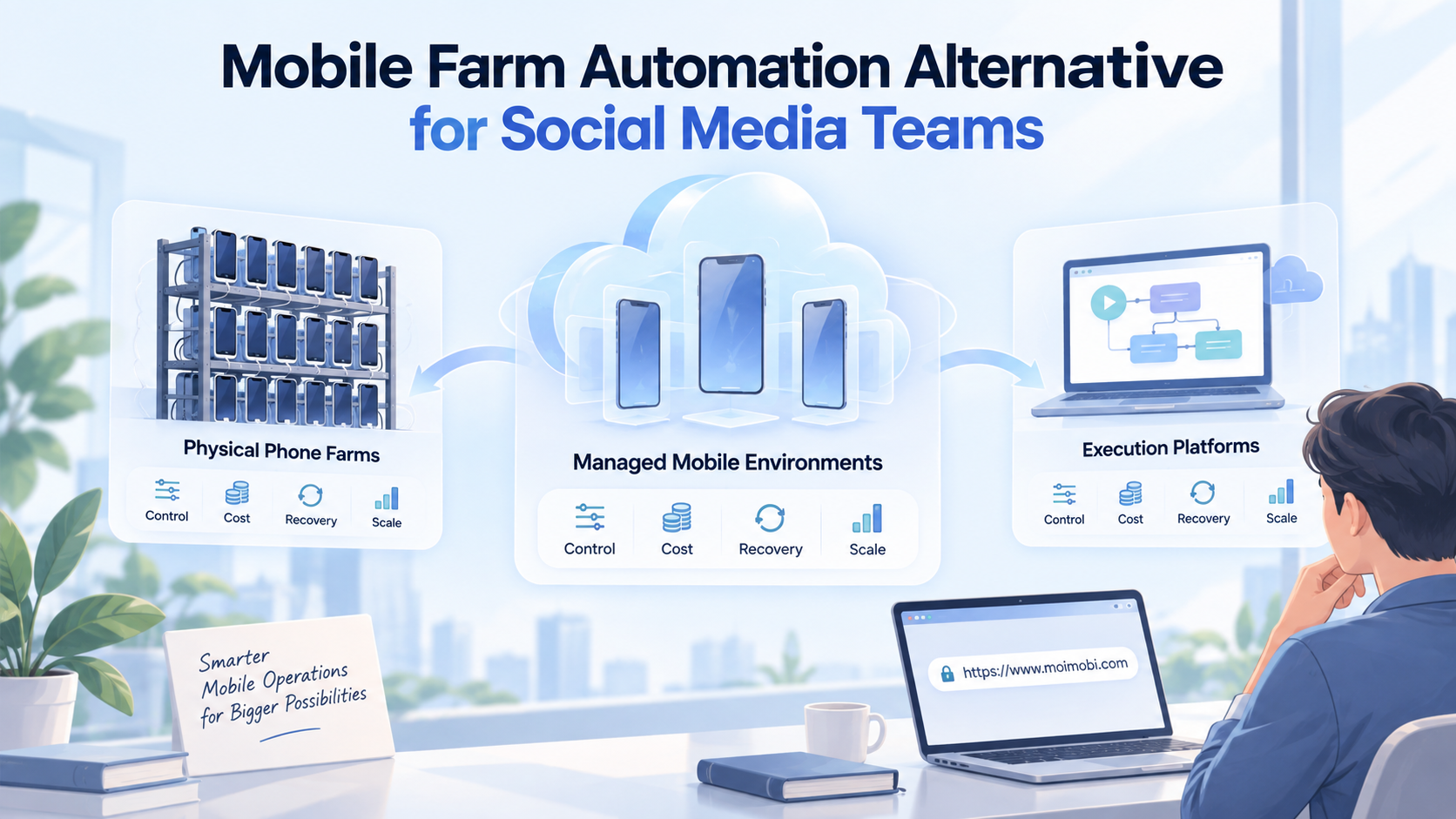
The third mistake is skipping browser and mobile boundaries. Browser work and mobile app work need different execution environments. A reliable agency stack should decide when to use browser sessions, when to use cloud phones, and when to keep the task manual.
The fourth mistake is ignoring failed tasks. Failed execution is useful data when the platform records what happened. It is wasted time when the agency only sees a generic failure label.
The final mistake is treating compliance as an afterthought. Client accounts, social platforms, and customer messages require careful handling. Human review should stay close to publishing, replies, account changes, and anything that affects customer trust.
For agencies building a broader AI worker system, the Hermes Agent skills guide is a useful next read. It explains why skills, execution boundaries, and repeatable workflows should be separated instead of blended into one vague agent.
Frequently Asked Questions
What is an AI employee platform for agencies?
It is software that lets agencies assign repeatable client work to AI workers inside controlled browser, mobile, or account environments.
How is it different from AI writing software?
AI writing software mainly produces text. A full execution platform connects instructions, execution environments, review steps, and task records.
Which agency workflows should start first?
Start with low-risk repeated workflows. Good candidates include reporting, competitor monitoring, content preparation, lead research, and inbox triage.
Can AI employees publish content for clients?
They can support publishing workflows, but final approval should stay with a human for client-facing content. Review gates protect quality and context.
Does an agency need cloud phones?
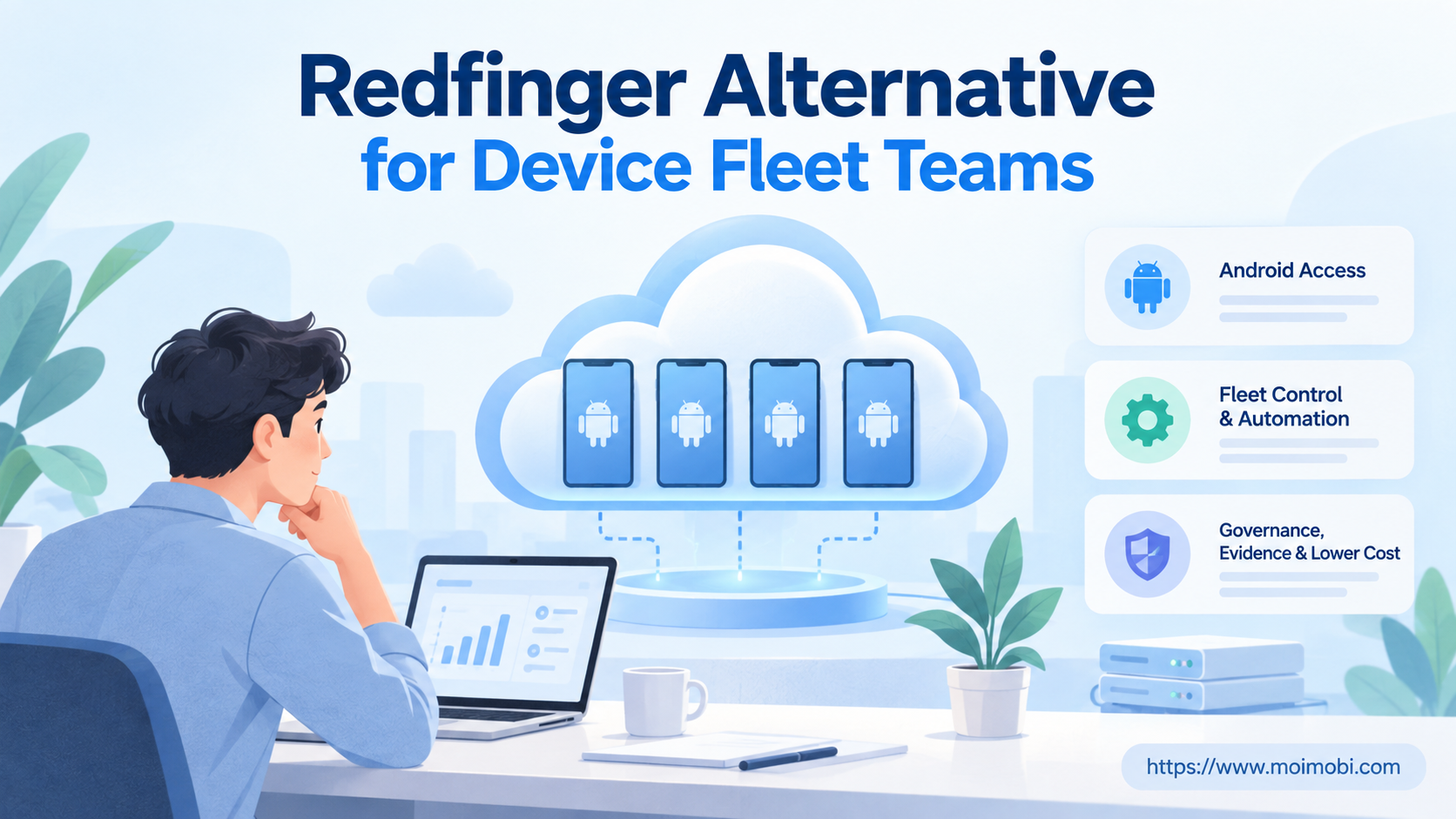
Cloud phones matter when work happens inside mobile apps. Browser-only agencies may start with browser execution and add mobile execution later.
How should agencies measure ROI?
Measure time saved, rework reduced, review speed, task completion, and client-ready output. Do not measure only the number of generated drafts.
What are the main risks?
The main risks are unclear roles, weak review gates, missing logs, poor account assignment, and automating tasks before the SOP is clear.
Can small agencies use AI employee software?
Yes, if they start with one workflow and clear ownership. Small teams should avoid broad rollouts before they prove the workflow.
How does Moimobi fit this use case?
Moimobi gives agencies execution environments for browser and mobile workflows, plus account workspaces, task routing, and review loops.
Conclusion
Agencies should evaluate an AI employee platform in this order: workflow clarity, account assignment, execution environment, review control, and measurable results. That order keeps AI employees tied to client work instead of turning them into disconnected assistants.
Start with one client workflow. Assign the account environment, define the human reviewer, track the result, and inspect the failures. If the workflow becomes clearer after the pilot, expand to more accounts or platforms. If it becomes harder to explain, fix the operating model before adding more AI workers.