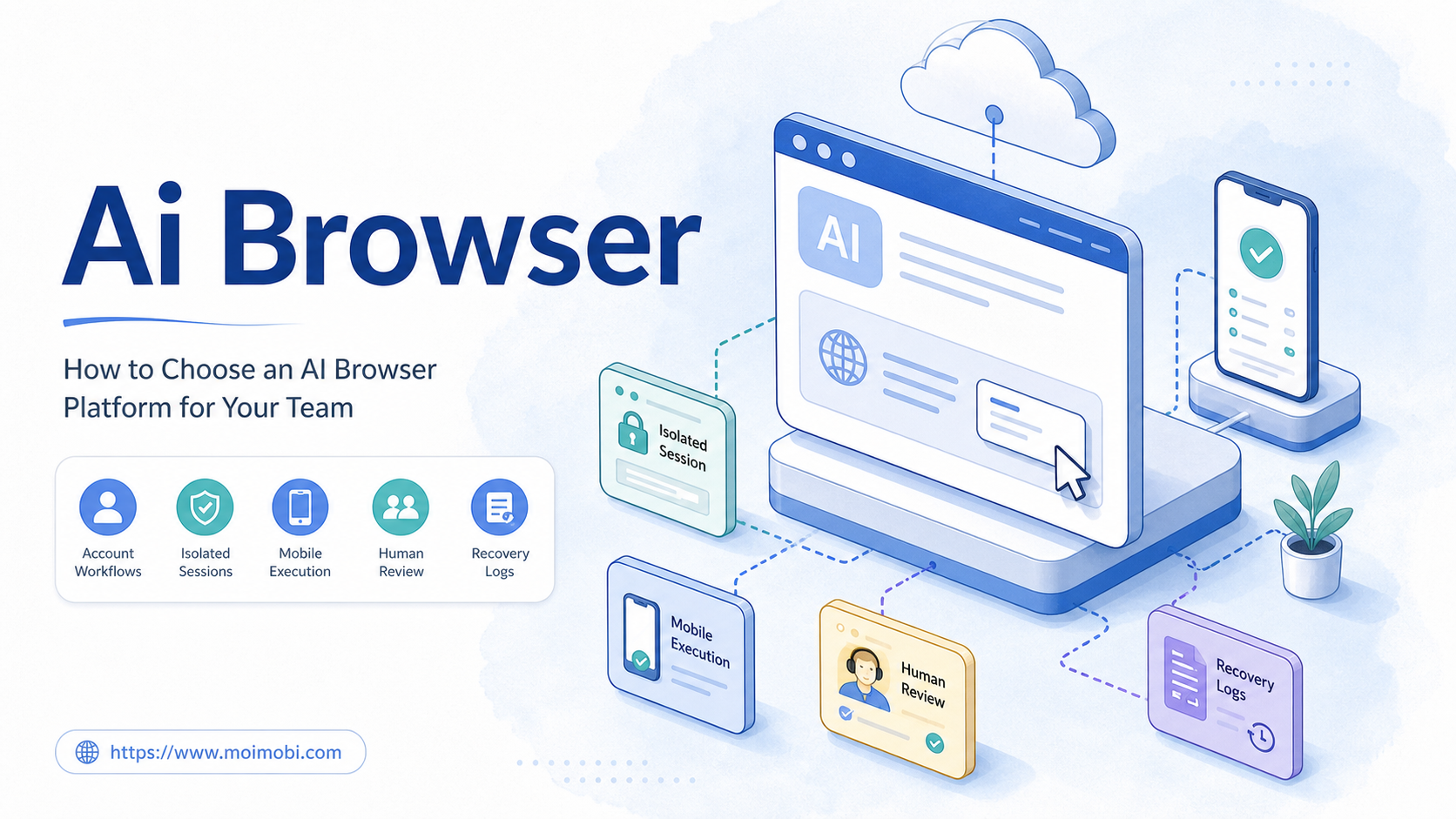
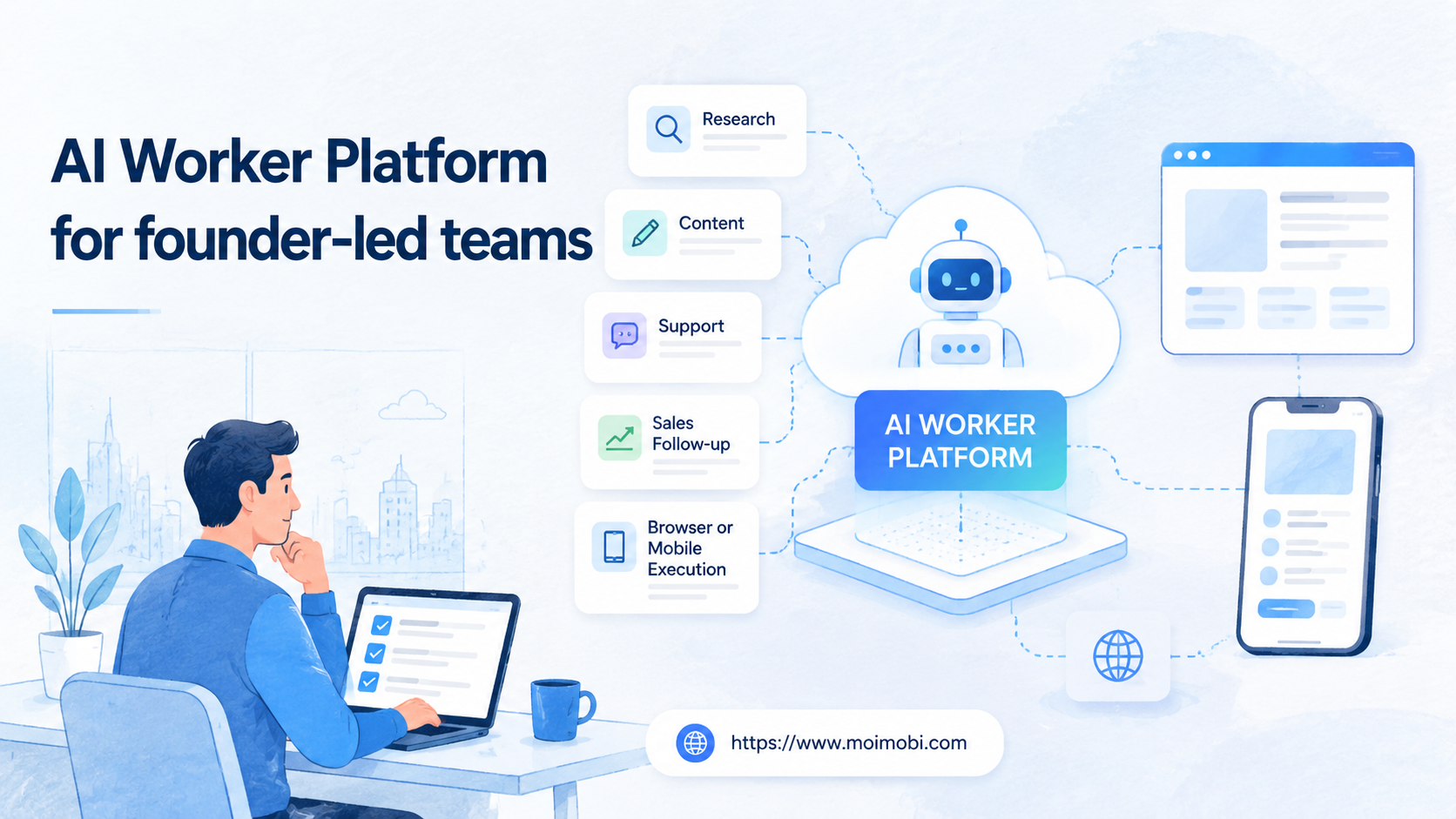
An AI worker platform is software that lets founder-led teams assign repeatable online work to AI workers and run those tasks inside controlled browser or mobile environments. The value is not replacing the founder. The value is moving daily research, content prep, inbox triage, follow-up, and reporting into workflows that can be reviewed.
Founder-led teams often operate with too many hats and too few operators. One person may handle social content, customer replies, prospect research, product checks, and weekly metrics. AI can help prepare those tasks, but the team still needs execution environments, account boundaries, and result logs.
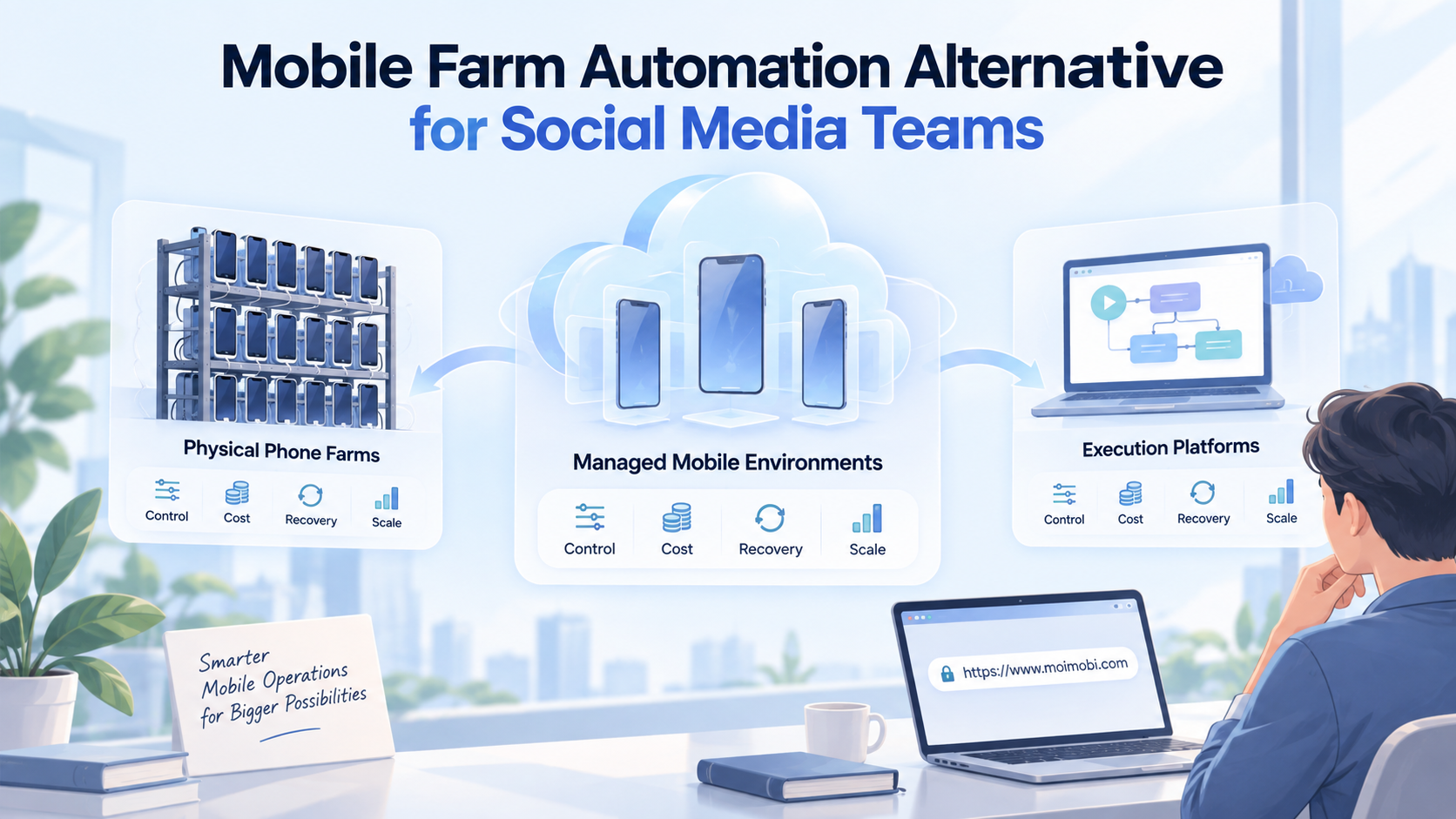
MoiMobi approaches this as an AI execution platform for small teams that need real browser and mobile execution. Fingerprint browsers, cloud phones, and Android devices provide the workspaces. AI helps prepare the next action, while the founder decides what gets approved.
Key takeaways
- Founder-led teams should start with one narrow worker, not a broad digital employee.
- Good first tasks include research, content prep, inbox triage, follow-up reminders, and weekly reporting.
- Browser profiles fit web dashboards, while mobile environments fit app-based social or messaging work.
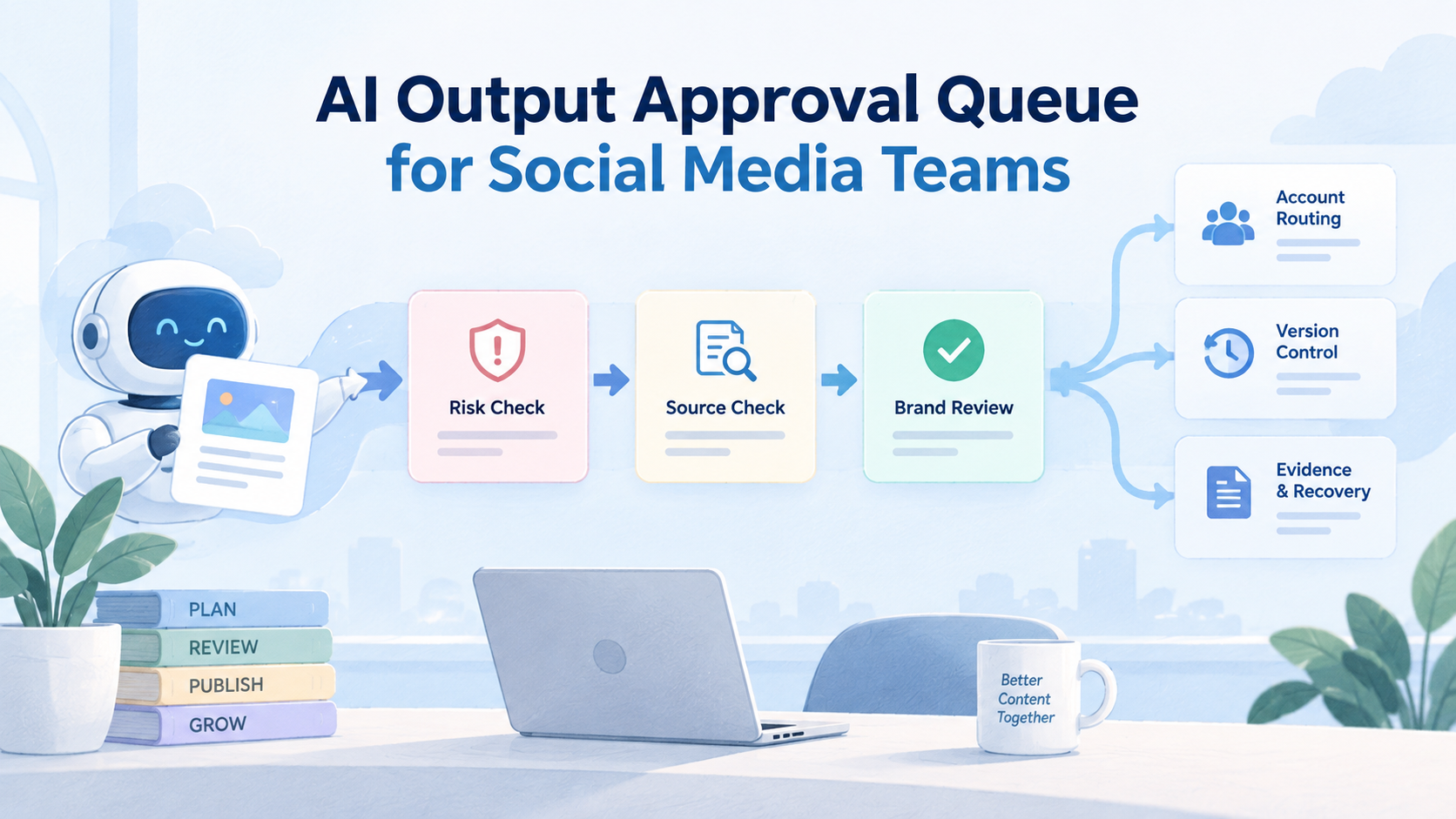
- Public replies, pricing, customer disputes, and account changes need human review.
- Success should be measured by useful outputs, clear logs, and fewer missed follow-ups.
The Core Idea Behind AI Worker Platform for founder-led teams
The core idea is practical delegation without hiring a full operations team. A founder gives a worker a task, source, environment, stop rule, and review path. The worker prepares or checks the work, then leaves a record.
One worker may collect competitor posts every morning. Another may draft customer reply options from approved guidance. A third may check CRM follow-ups and prepare a daily task list. Each worker should have one job that the founder can inspect.
A browser execution platform matters because many founder-led workflows happen inside logged-in web apps. Browser execution has state and timing. The W3C WebDriver specification defines browser control through a protocol, and Playwright documents actionability checks before clicks and inputs in its actionability guide.
Mobile execution matters when the team runs social accounts, messaging apps, or app-only customer workflows. A cloud phone execution environment gives a small team a remote Android workspace instead of relying on a personal phone.
Why Founder-Led Teams Search for This Topic
Founder-led teams search for AI worker software when they need execution capacity but are not ready to add headcount. The problem is usually not one large project. It is the repeated daily work that never fully disappears.
A founder may need to check leads, prepare content, answer customer messages, monitor competitors, and review campaign numbers. A chatbot can help write, but it does not open the right account environment, track the result, or handle the handoff.
The platform creates an operating layer. The worker handles a defined task, uses a defined environment, and produces a defined output. The founder or operator reviews the result and decides whether to approve, edit, pause, or expand.
This is closely connected to multi-account management. A small team may still manage several social, ecommerce, support, or sales accounts. Each account needs a clear workspace and owner.
Scenario Map for a Founder-Led Team
Use a small scenario map before creating workers. It keeps the first setup manageable.
| Workflow | AI worker role | Environment | Founder review point | Metric |
|---|---|---|---|---|
| Competitor monitoring | Collect posts, offers, comments, and landing page changes | Browser profile or mobile app | Review useful findings weekly | Actionable findings |
| Content preparation | Draft captions, hooks, replies, and publishing notes | Browser dashboard plus app workspace | Approve before posting | Accepted drafts |
| Customer inbox triage | Classify messages and draft reply options | Cloud phone, Android device, or browser inbox | Approve sensitive replies | Correct routing rate |
| Sales follow-up | Check open leads, prepare next-action notes, and flag overdue tasks | CRM or lead dashboard | Founder chooses action | Missed follow-ups found |
The map makes the first worker easier to choose. A founder does not need ten workers at the start. One repeatable workflow is enough to prove the model.
What to Automate First
Choose tasks that create useful context rather than public risk. Research, monitoring, classification, and draft preparation are better first choices than unreviewed sending or account changes.
For a social founder, the first worker might collect comment themes from one TikTok or Instagram account. For an ecommerce founder, it might summarize reviews and product questions. For a sales-led founder, it might find leads and prepare source notes.
Avoid broad tasks such as "manage my marketing" or "run the account." Those instructions hide too many decisions. A better task is: "Check the last five competitor posts each weekday and save hooks, comments, and offer notes."
This task can connect naturally to social media marketing workflows. The worker prepares evidence; the founder decides what becomes content or outreach.
Account Assignment and Operating Fields
Small teams should still write down account assignments. Informal access works until the founder forgets which account, browser, or phone was used for a task.
Use fields such as account name, platform, environment, worker role, allowed action, source data, reviewer, stop rule, and log location. If an assistant or contractor joins later, these fields become the handoff plan.
| Field | Example | Why it matters |
|---|---|---|
| Account | founder_brand_instagram | Prevents work from mixing across accounts |
| Environment | Fingerprint browser profile or Android cloud phone | Shows where the task runs |
| Allowed action | Collect, classify, draft, and flag | Keeps public actions under review |
| Stop rule | Pause on complaints, pricing, login errors, or private data | Creates a recovery path |
MoiMobi's device isolation is relevant even for small teams because account separation prevents confusion. A founder may not have a large team, but the account still needs a consistent workspace.
How to Evaluate or Start Using AI Worker Platform for founder-led teams
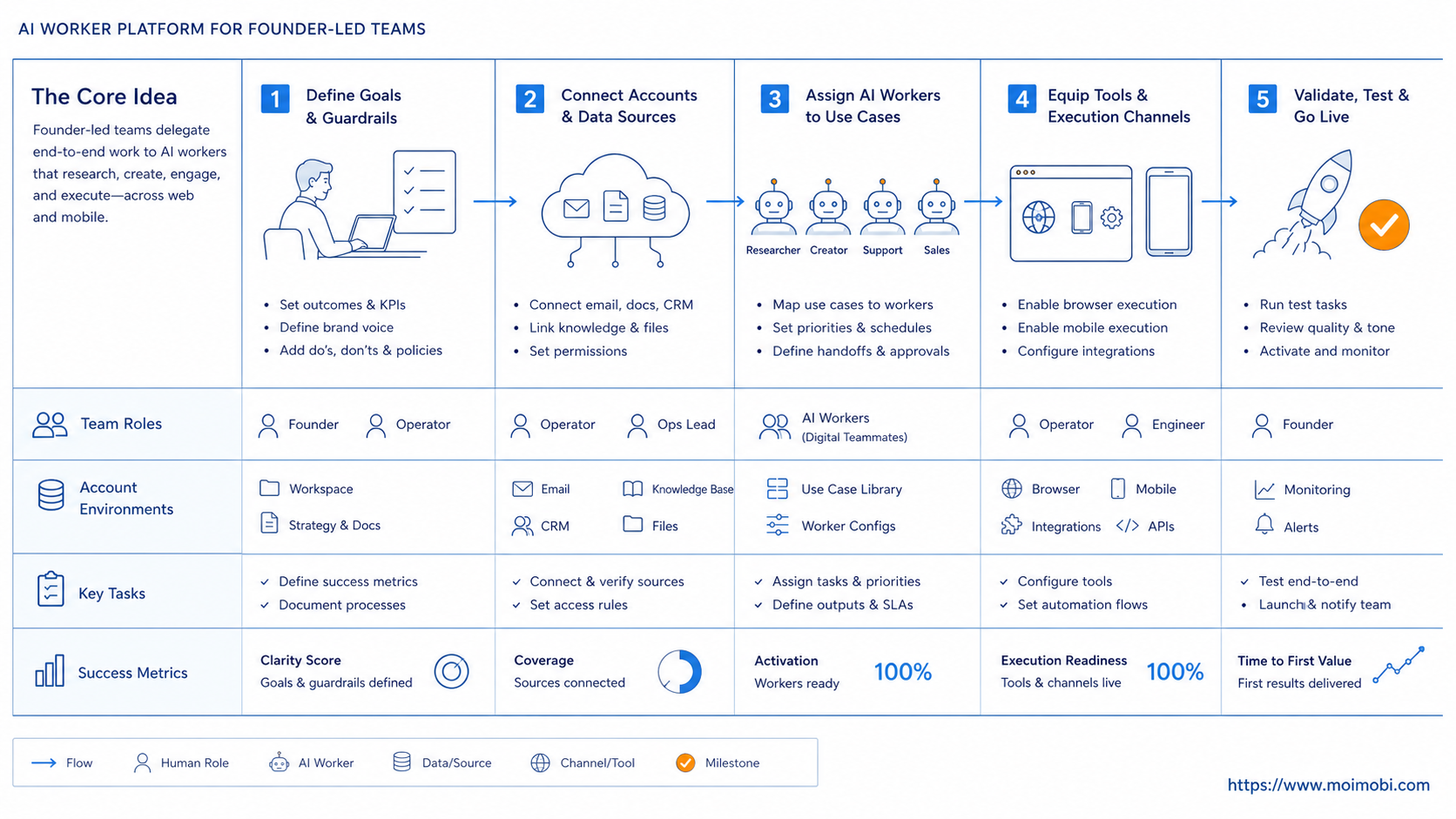
Use a checkpoint path instead of a broad automation plan.
- Task checkpoint: choose one task that happens every day or every week.
- Source checkpoint: define which data the worker can read.
- Environment checkpoint: choose browser profile, mobile app, or mixed workflow.
- Review checkpoint: decide what the founder must approve.
- Stop-rule checkpoint: pause for sensitive messages, unclear sources, or login failures.
- Log checkpoint: record account, source, status, reviewer, and next action.
Begin with a seven-day pilot. Run the worker on the same task each day. Do not add new accounts until the founder can explain the results and failures without searching through chats.
For app-first work, mobile automation may be part of the setup. A browser-only workflow may miss mobile inboxes, app views, or account states.
Seven-Day Pilot Plan for Founder-Led Teams
A founder-led pilot should be short, measurable, and narrow enough to survive a busy week. The goal is not to prove every feature at once. The goal is to see whether one worker can remove one repeated burden while keeping the founder in control.
Use the same account environment for the whole pilot unless the test is specifically about multi-account work. Changing accounts, tools, and rules every day makes it hard to know why the result improved or failed.
| Day | Founder Task | Worker Output | Review Question |
|---|---|---|---|
| Day 1 | Account inventory | Account list, owner, environment, login state, and risk note | Do we know which accounts are active and who owns them? |
| Day 2 | Competitor scan | Five source URLs, hooks, offers, comments, and content patterns | Did the worker capture useful evidence, not just summaries? |
| Day 3 | Inbox triage | Message categories for product questions, support, leads, spam, and urgent items | Would this help the founder answer faster? |
| Day 4 | Content preparation | Draft captions, reply ideas, source notes, and asset checklist | Can the founder approve or edit the output quickly? |
| Day 5 | Sales follow-up | Lead list, context, last interaction, and suggested next action | Did the worker reduce forgotten follow-ups? |
| Day 6 | Mobile app check | Cloud phone status, app login state, inbox state, and blocking issues | Does the mobile environment need repair before scaling? |
| Day 7 | Weekly review | Keep, narrow, pause, or expand recommendation | Is the workflow ready for another account or another task? |
The pilot should also define a small set of fields that every run records. Useful fields include account_name, platform, environment_id, worker_role, allowed_action, source_url, reviewer, stop_reason, and next_action. These fields make the work reviewable after the founder closes the browser or moves back into customer calls.
Failure handling should be written before the first run. If the login expires, the worker should stop and record the account. If an asset is missing, it should request the asset rather than invent a substitute. If a source is unclear, it should include the source URL and mark the finding as unverified. If a customer message involves refunds, private data, legal claims, or pricing negotiation, it should route the item to a human.
This is where founder-led teams often get the biggest benefit. A founder does not need a large automation department. They need a worker that shows what happened, what needs approval, what failed, and what should happen next. A controlled pilot turns the AI worker platform from a vague productivity idea into an operating habit.
Mistakes That Reduce Results
The first mistake is creating a worker with no owner. Even if the founder is the only reviewer, the owner should be named. Ownership keeps the workflow from becoming a hidden queue.
The second mistake is allowing public actions too early. AI can draft posts and replies, but public publishing, sensitive customer replies, and pricing claims should be reviewed.
The third mistake is skipping logs. OWASP's Logging Cheat Sheet connects logs with troubleshooting and accountability. Founder-led teams need the same record because there may be no operations manager to reconstruct what happened.
The fourth mistake is granting more data access than the task needs. The NIST Privacy Framework frames privacy as risk management. Give the worker only the fields needed for the workflow.
Pilot Metrics and Review Loop
A small pilot should create simple numbers. Track accepted outputs, rejected outputs, missed follow-ups, failed runs, manual takeovers, and useful findings.
Review the pilot once a week. If the worker produces helpful research but weak drafts, keep research and pause drafting. If mobile sessions fail, fix the environment before expanding. If the founder ignores the output, choose a more urgent task.
Use a keep, narrow, pause, or expand decision. Keep the worker if output is useful. Narrow it if the task is too broad. Pause it if failures are unclear. Expand only after the review path is stable.
This loop helps founder-led teams avoid tool sprawl. The goal is not to add another dashboard. The goal is to remove one repeatable burden and keep the result visible.
Frequently Asked Questions
What is an AI worker platform for founder-led teams?
It is a system for assigning repeatable online tasks to AI workers and running them in controlled browser or mobile environments.
How is it different from a chatbot?
A chatbot writes or answers. A worker platform adds account context, execution environments, task logs, and review paths.
What should founders automate first?
Research, monitoring, classification, draft preparation, and follow-up reminders are usually the safest first tasks.
Can AI workers publish posts or send replies?
They can prepare work, but public actions should usually require founder or operator approval.
Do small teams need cloud phones?
They may need them when work happens inside mobile apps, messaging apps, or Android account environments.
How many workers should a founder create first?
Create one worker first. Add a second only after the first worker has a clear task, result, and review loop.
What should not be automated first?
Avoid unreviewed outreach, sensitive customer replies, account recovery, and pricing decisions.
How should success be measured?
Measure useful output, time saved, missed work reduced, failure clarity, and whether the founder trusts the result.
Conclusion
For founder-led teams, an AI Worker Platform works when it turns one repeated burden into a controlled workflow. The setup should define the task, account, environment, reviewer, stop rule, and result record.
Use one narrow workflow for seven days. If the output is useful, the failures are explainable, and the founder knows what to approve, expand to the next task.