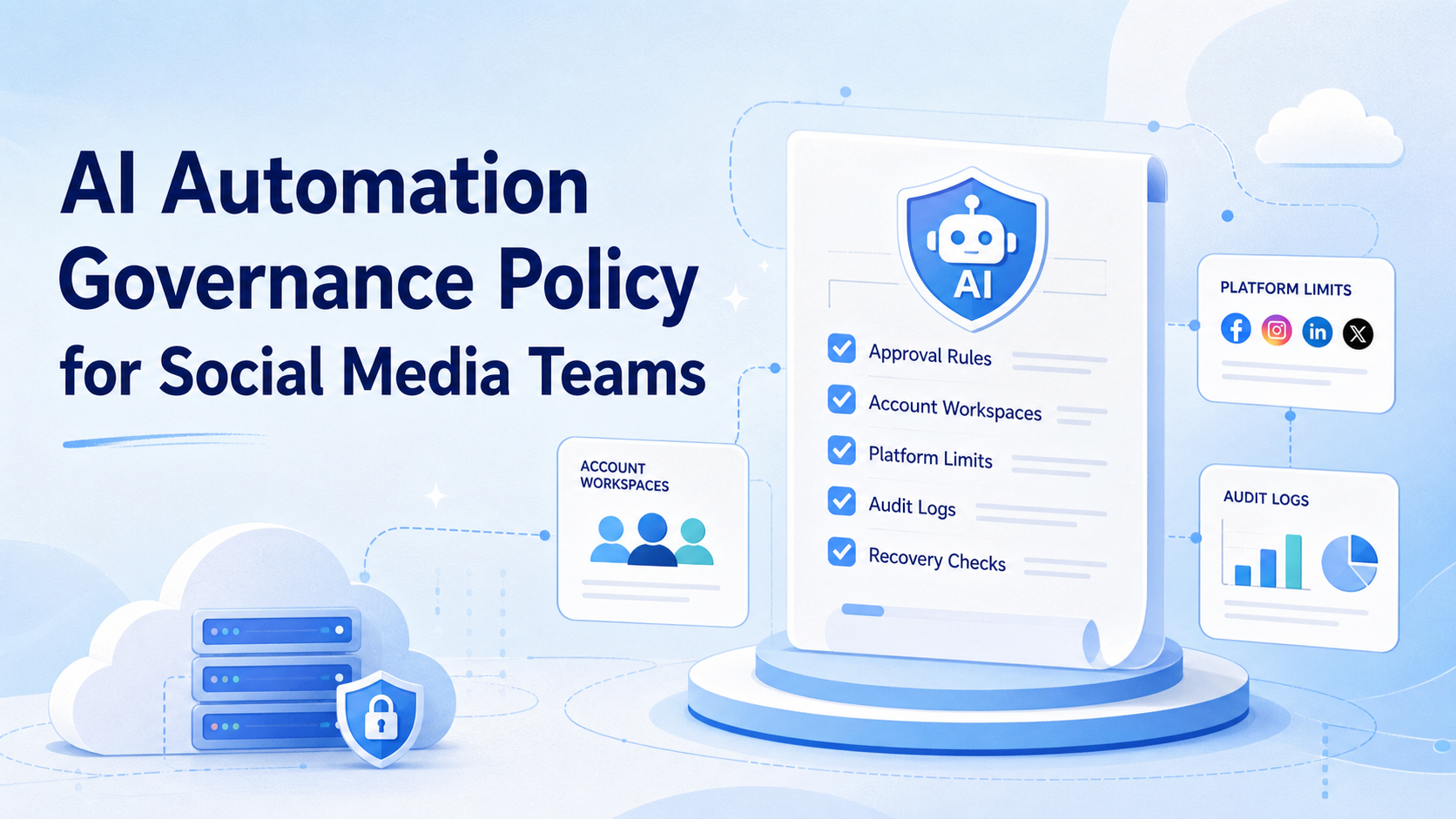
For a social media team, AI automation governance policy means a written rule set for allowed AI-assisted tasks, approvals, execution environments, and result reviews. The rule set keeps AI from becoming an informal shortcut hidden inside daily account work.
Social teams need this policy because AI now touches content drafts, replies, monitoring, reporting, creator workflows, and account operations. Without governance, one operator may use AI for caption ideas while another uses it for automated replies or account actions. The team loses consistency, auditability, and control.
The goal is not to slow every task. The goal is to define the lanes where AI can help, the points where humans must review, and the records that prove what happened.
Key Takeaways
- An AI automation governance policy defines allowed tasks, review gates, account environments, and logs.
- Social media teams need separate rules for content creation, engagement, monitoring, and account actions.
- Human approval should stay mandatory for sensitive replies, claims, sponsored content, and account changes.
- Governance works best when it connects policy to real browser and mobile execution environments.
- A pilot should measure review quality, failed tasks, unclear ownership, and recovery time.
What Is AI Automation Governance Policy for Social Media Teams?
For social media teams, the governance policy should be a practical operating document. It explains how the team uses AI inside real workflows, not just which AI tools are approved.
Start with five practical questions:
- What can AI draft, summarize, classify, or execute?
- Which tasks require human approval?
- Which account or environment may run each workflow?
- What evidence must be recorded after the task?
- What stops the workflow when the result is unclear?
NIST's AI Risk Management Framework is useful background because it frames AI risk management as a structured effort across design, use, evaluation, and management. Social media teams do not need to copy an enterprise framework word for word. They can still borrow the core idea: governance should be deliberate, documented, and tied to real risk. See the NIST AI Risk Management Framework.
For social operations, governance must also include platform context. A reply workflow, a creator disclosure workflow, and a monitoring workflow carry different risks. One policy should not treat them as the same task.
Why AI Automation Governance Policy for Social Media Teams Matters
Social media work is public, fast, and account-based. A bad AI reply can damage trust. A poorly reviewed sponsored post can create disclosure issues. A workflow that touches several accounts without logs can make ownership unclear.
FTC guidance is one reason governance matters. The FTC's endorsement and influencer resources explain that disclosures and honest endorsements matter in social marketing. Teams that use AI to draft creator captions or sponsored replies should keep disclosure review visible in the workflow. The FTC's Endorsements, Influencers, and Reviews page is a good starting point.
Platform integrity is another reason. Meta publishes Community Standards around spam and inauthentic behavior, and its Transparency Center includes policy pages for spam and inauthentic behavior. A governance policy should stop teams from using AI to produce repetitive, misleading, or unmanaged engagement. Use Meta's Community Standards as a policy reference before designing social account workflows.
The operational reason is simpler. Teams need to know what happened. If AI drafted a reply, who approved it? If automation published a post, which account ran it? If a task failed, who paused the workflow?
Key Benefits and Use Cases
The benefit of governance is not bureaucracy. Governance gives the team a shared operating model. It lets managers say yes to useful AI while setting clear limits around risky tasks.
| Workflow | Allowed AI support | Required control |
|---|---|---|
| Content planning | Topic ideas, outline drafts, caption variants | Brand review and claim review |
| Customer replies | Suggested response, intent classification, routing | Human approval for complaints, refunds, legal, or sensitive cases |
| Monitoring | Summaries, trend grouping, competitor notes | Source record and reviewer confirmation |
| Account operations | Task preparation, scheduling, checklist validation | Account owner, environment record, and stop rule |
MoiMobi fits this category as an AI execution platform because governance needs to connect policy with where work actually runs. A policy that lives in a document but never touches account workspaces will be ignored.
How to Get Started with AI Automation Governance Policy for Social Media Teams
Start with a policy that an operator can use during a real shift. Avoid a long legal document that no one opens.
Preflight checklist
- List every account, platform, and owner.
- Separate content, reply, monitoring, creator, and account-operation workflows.
- Mark which tasks are AI-assisted and which are automation-executed.
- Define which tasks require review before action.
- Define which environments can run each workflow.
- Decide which logs are mandatory.
- Write stop rules for uncertain or risky outputs.
Then build the policy in order.
- Define task categories. Use simple labels such as draft, review, reply, monitor, publish, and report.
- Assign risk levels. Low-risk drafts can move faster. Public replies and sponsored content need stronger review.
- Map account environments. Each account should have a workspace, owner, and approved execution path.
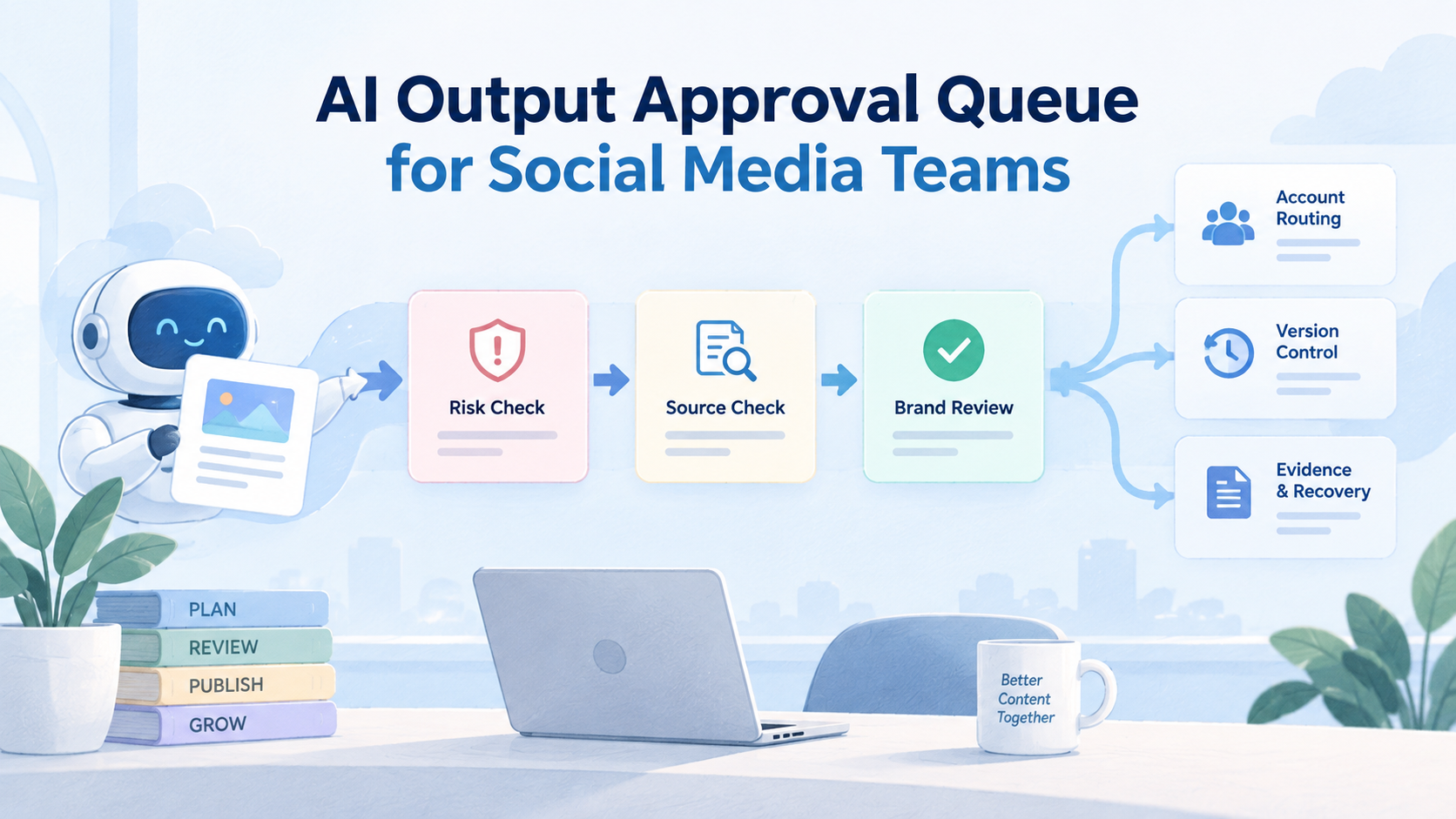
- Define approval gates. Sensitive content should not move from AI suggestion to public action without a reviewer.
- Set logging rules. Record account, operator, AI output, reviewer, action, result, and failure reason.
- Add recovery paths. A failed or unclear task should pause, route to an owner, and leave evidence.
- Review weekly. Remove unused rules, tighten vague ones, and update platform-specific checks.
For teams running many social accounts, multi-account management should be part of the governance layer. A policy cannot work if the system cannot show which account, operator, and environment handled the task.
Account Environments and Execution Boundaries
Governance becomes real when it reaches the execution environment. Social teams should not only ask whether AI is allowed. They should ask where the AI-assisted task runs and which account context it uses.
Use three boundaries.
Browser boundary. Web dashboard work should run in assigned browser profiles when accounts, permissions, or sessions matter. This keeps admin work easier to audit.
Mobile boundary. App-based work may need a persistent mobile environment. When teams need remote Android sessions, a cloud phone can provide a controlled place for mobile execution. A product-level cloud phone setup can support repeatable mobile tasks when the workflow requires it.
Account boundary. The policy should say which account group can run each workflow. A creator campaign account, support account, and brand publishing account should not share one loose queue.
Device isolation supports this boundary because it gives account groups separate workspaces. It does not replace policy, but it makes the policy easier to enforce.
AI Automation Governance Policy Roles and Records
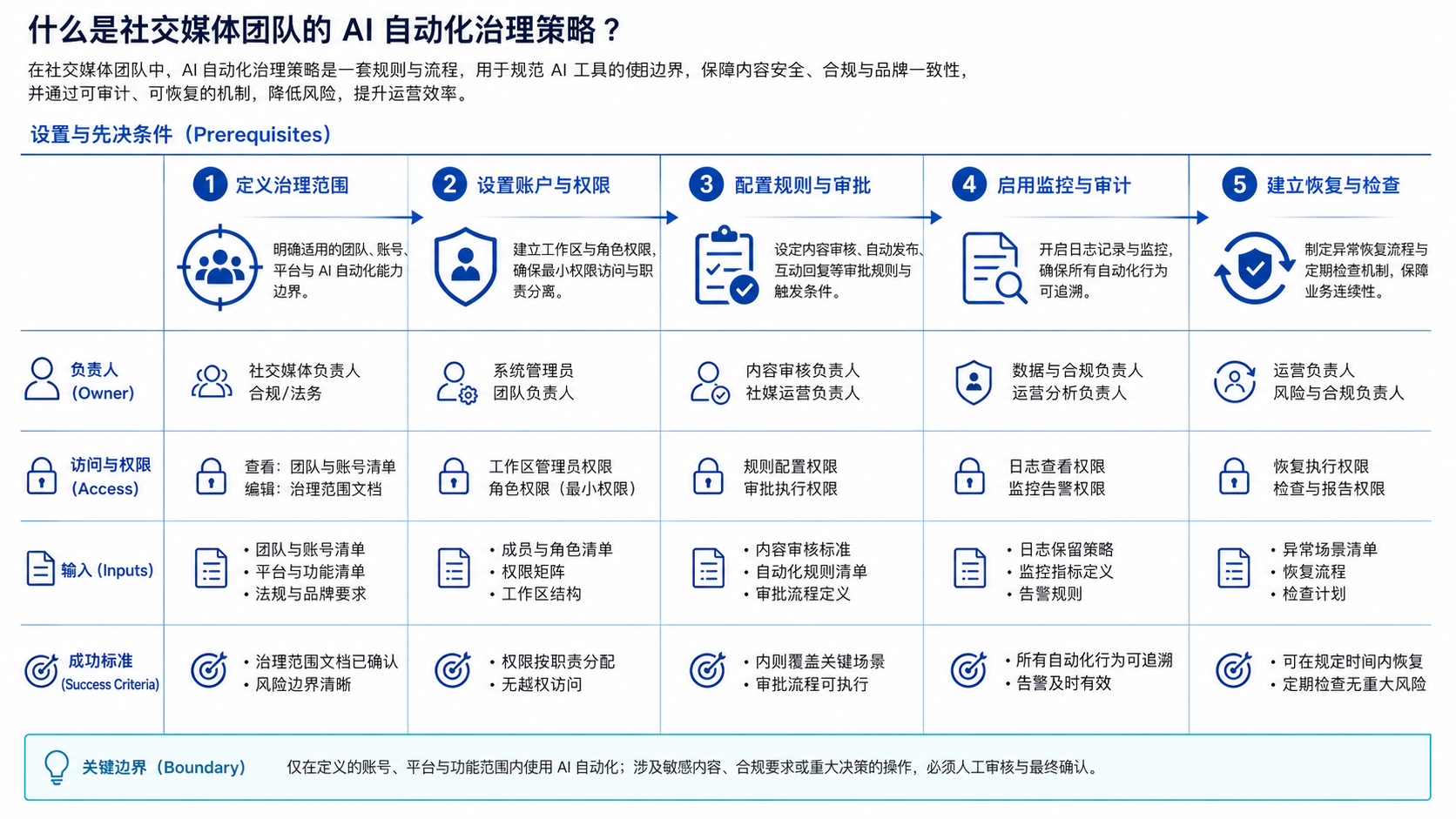
A policy becomes useful only when each role knows what to approve and what to record. Social media teams should avoid one vague rule such as "manager approval required." That rule usually fails during busy campaigns because no one knows whether the manager is approving the AI output, the final post, the account action, or the customer response.
Use a small role model instead.
Account owner. This person is responsible for the account workspace, login context, device environment, and workflow permissions. The account owner does not need to write every post. They do need to know which workflows are allowed to run on that account.
Content reviewer. This person checks brand voice, claims, disclosure wording, and sensitive topics. Their approval should be visible before a sponsored post, creator caption, or public reply goes live.
Workflow operator. This person starts, pauses, retries, or stops the automation task. The operator should not be able to silently change the workflow rules during execution.
Recovery owner. This person handles unclear results, failed tasks, account warnings, customer complaints, and manual follow-up. Governance is weak when failed automation simply disappears from the queue.
The minimum record should include the account, workflow name, environment, AI draft or summary, reviewer, final action, timestamp, result, and recovery owner. For low-risk monitoring tasks, the record can be short. For replies, creator content, paid promotions, or account changes, it should be detailed enough for a manager to reconstruct what happened.
This is where infrastructure and policy meet. A written rule can say that each account needs a separate owner. The execution system must then make that ownership visible in the task queue, account workspace, and run log. Without that evidence, governance becomes a document that people remember only after something goes wrong.
Common Mistakes to Avoid
The first mistake is writing policy only for content generation. Social media teams also use AI for replies, monitoring, routing, reporting, and account preparation. Governance must cover each workflow separately.
The second mistake is approving tools instead of approving behaviors. A tool may be acceptable for summarizing comments and unacceptable for sending replies without review. Allowed actions matter more than vendor names.
The third mistake is skipping disclosure review. FTC staff guidance says influencers and endorsers should disclose material connections with brands in a way people will see and understand. The team's AI policy should require disclosure review for sponsored, affiliate, gifted, or paid creator content. See the FTC's Disclosures 101 for Social Media Influencers.
The fourth mistake is treating social automation as a volume tool. TikTok's business help includes steps for commercial content disclosure, including branded content settings where applicable. This is another reminder that platform-native rules must appear inside the workflow. See TikTok's official commercial content disclosure help.
The fifth mistake is missing logs. If the team cannot tell who approved an AI answer, which account sent it, and what happened after, governance is only a slogan.
Who It Fits and When It Is a Strong Match
Teams already using AI in daily social operations need this kind of policy first. Agencies, cross-border sellers, creator teams, customer support teams, and brands managing several accounts often feel the need fastest.
The match is strongest when:
- Multiple people touch the same accounts.
- AI drafts public-facing content.
- Automation schedules, posts, replies, or monitors.
- Sponsored or creator content needs disclosure review.
- Mobile and browser work happen in separate environments.
A standalone document will not help a team with no workflow discipline. If account ownership is unclear, fix that first. If review rules are missing, define them before adding more automation.
For teams focused on campaign work, connect the policy to social media marketing. Governance should support publishing, engagement, monitoring, and reporting together.
Pilot Rollout, Measurement, and Recovery Checks
Do not roll out governance to every workflow on day one. Start with one workflow where risk and repetition are both visible. Customer reply review, sponsored caption approval, and competitor monitoring are good pilot options.
Measure the pilot with a scorecard.
- Every task has an owner and reviewer.
- AI output is stored with the final action.
- Public posts and replies have approval records.
- Failures route to a named recovery owner.
- Operators bypass review to save time.
- Account ownership is unclear.
- Disclosure checks are missing.
- Logs do not show what AI changed.
Add one weekly recovery review. Look at failed tasks, edited AI outputs, paused workflows, missing logs, and platform-specific issues. Then update the policy before scaling to another account group.
For mobile-heavy teams, mobile automation should follow the same pattern. Automate a reviewed workflow, not an undefined habit.
Frequently Asked Questions
1. What is an AI automation governance policy?
The policy defines how a team uses AI and automation across tasks, accounts, approvals, logs, and recovery paths.
2. Why do social media teams need one?
Social tasks are public and account-based. The policy helps teams control replies, posts, creator content, monitoring, and account actions.
3. Does governance stop automation?
No. Good governance defines where automation is allowed and where human approval is required.
4. What should be reviewed before publishing?
Review claims, tone, disclosure wording, sensitive replies, pricing, legal topics, and any content that could affect customer trust.
5. Should AI replies go live automatically?
Most teams should avoid that for sensitive or first-contact cases. Use AI suggestions, then require human approval where risk is higher.
6. How does account isolation fit governance?
Account isolation connects the policy to execution. It helps show which workspace, account, and operator handled a task.
7. What should the policy log?
Log account, workflow, AI output, reviewer, action, result, timestamp, failure reason, and next owner.
8. How often should the policy be updated?
Review it after each pilot, after platform rule changes, and whenever repeated failures show that a rule is unclear.
9. Who owns the policy day to day?
The owner should be an operations lead, not only a legal or engineering contact. Legal can review boundaries, and engineering can support controls, but daily ownership belongs with the team that runs the accounts.
Conclusion
Done well, AI automation governance policy gives social media teams a practical way to use AI without hiding accountability. It should define tasks, account environments, review gates, logs, and recovery paths.
Start small. Pick one workflow, assign owners, require approval for sensitive actions, and review the logs weekly. Scale only after the team can prove that the workflow is clear, traceable, and recoverable.