Key Takeaways
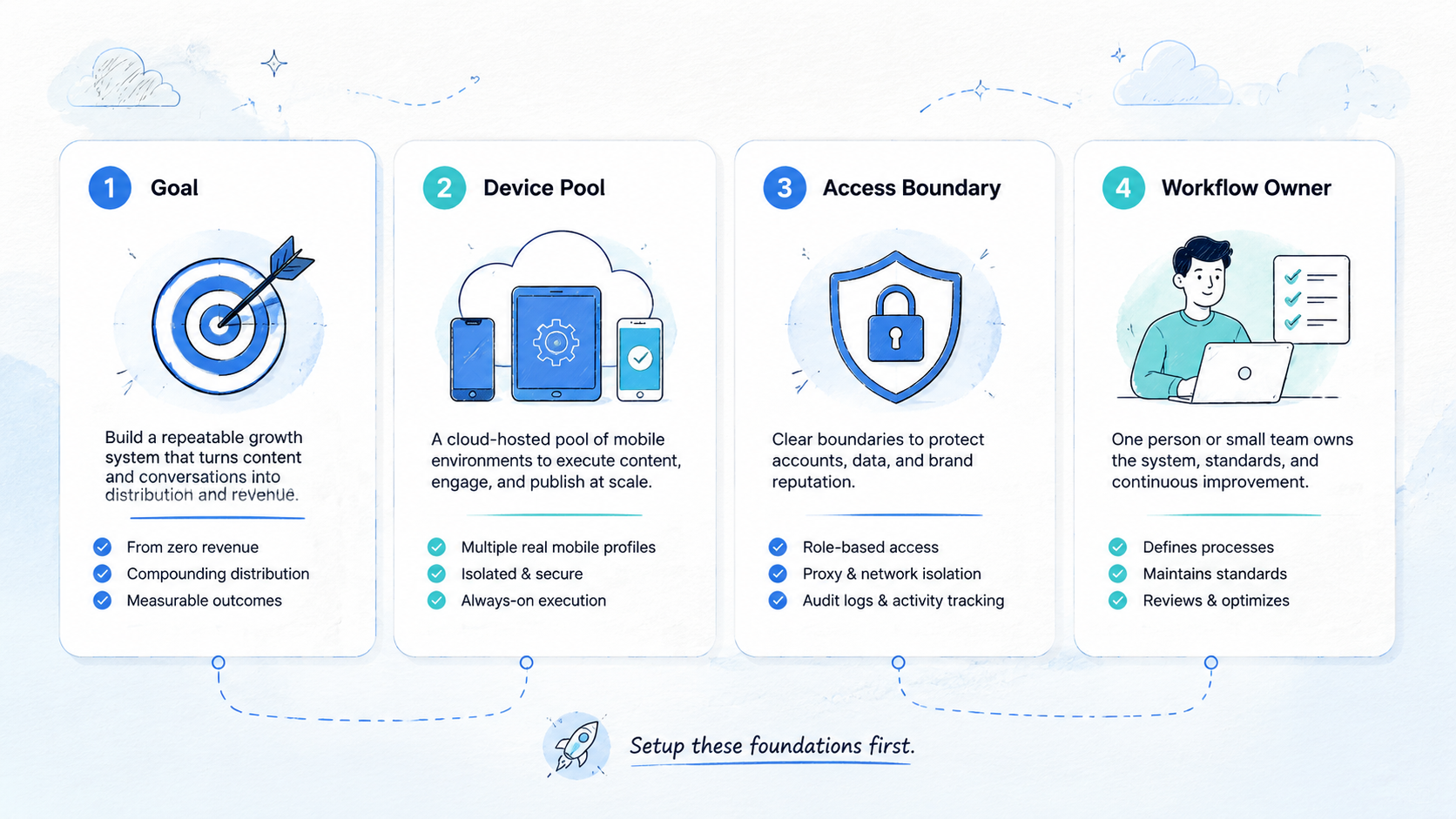
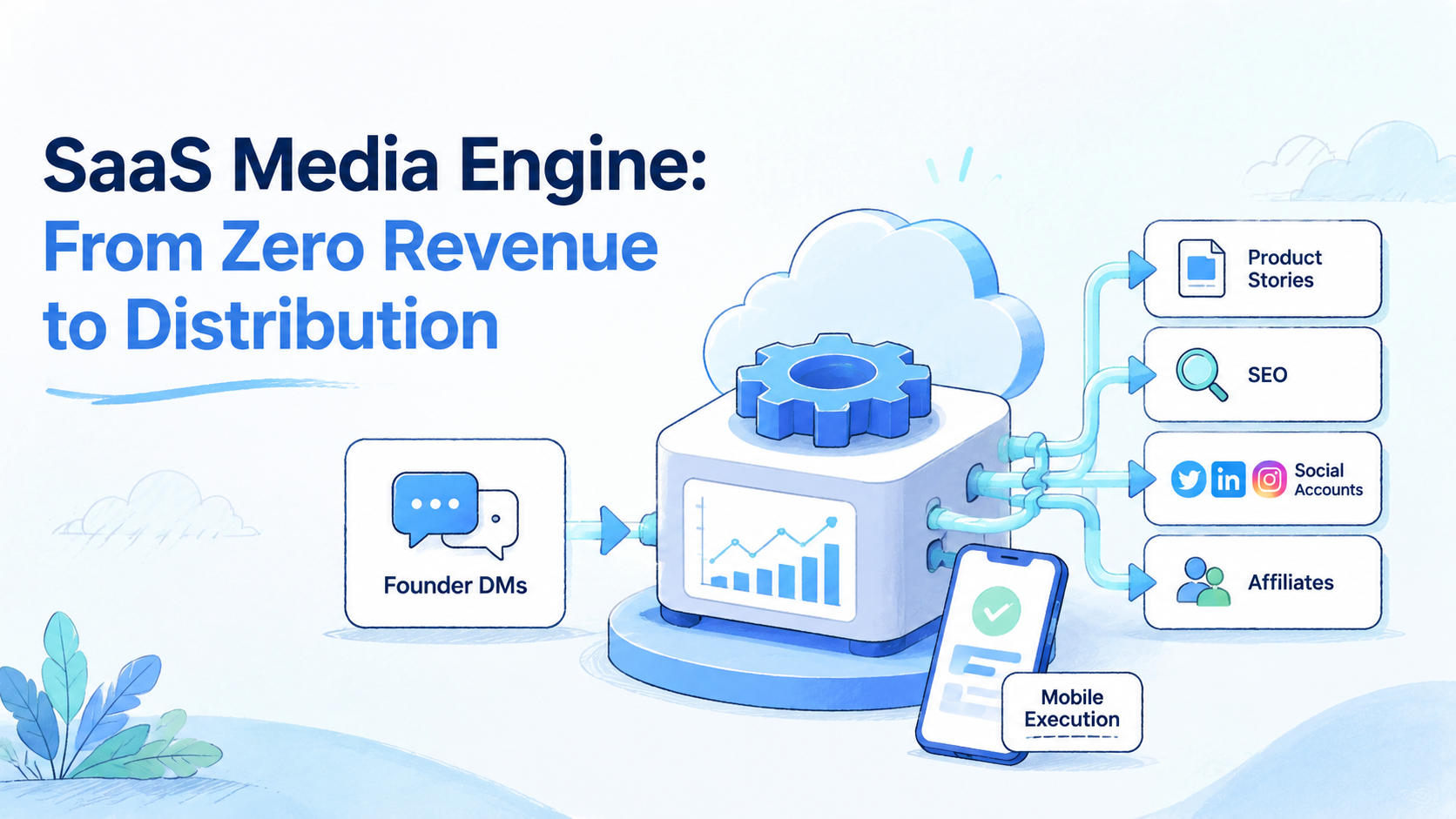
- A SaaS media engine turns user conversations, product lessons, case studies, and distribution channels into a compounding system.
- In the AI era, features are easier to copy, but trusted attention and category authority are harder to copy.
- Founder-led content can start the flywheel, while SEO, ads, affiliates, and social account systems help scale it.
- MoiMobi supports execution.
What a SaaS Media Engine Means
A SaaS media engine is the operating system that turns product knowledge into repeatable distribution. It connects founder conversations, user problems, product updates, case studies, search content, social accounts, paid experiments, and performance review.
Budget.
Simple idea. Hard execution.
The source story is useful because it shows a mindset shift. A builder stops acting only like a builder and starts acting like a media operator.
When users reply, operators should compare user language, product proof, account role, target market, channel fit, and funnel response before making the next decision.
Code still matters, but distribution becomes a first-class product capability.

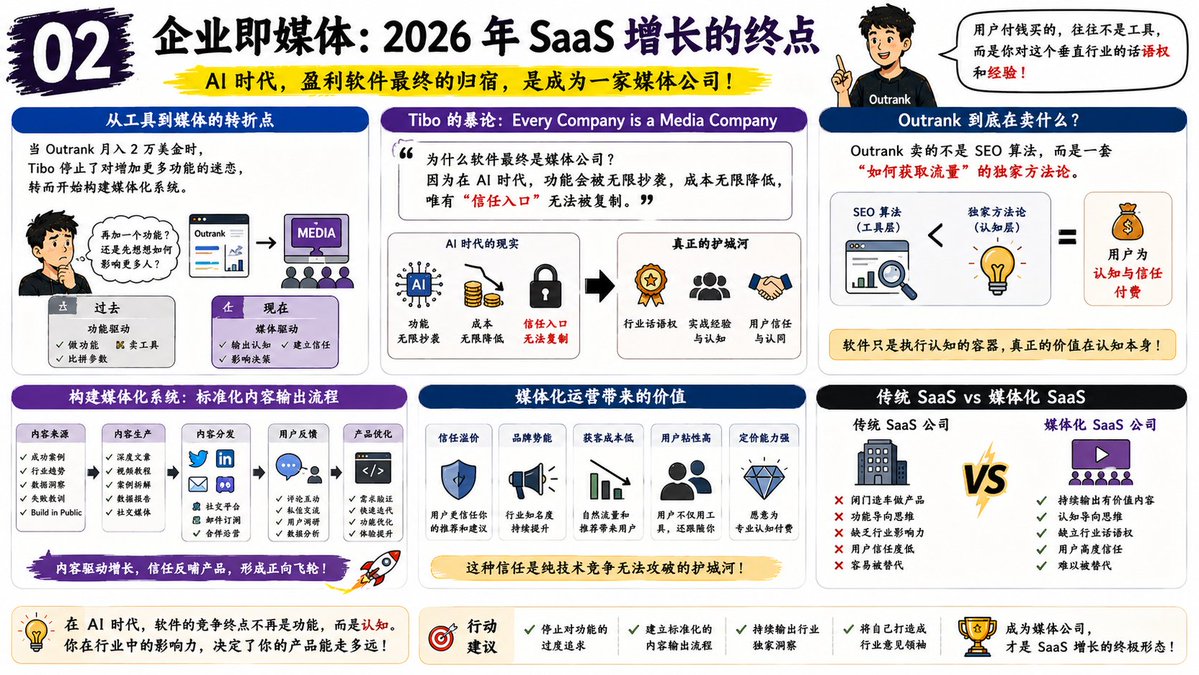
In the AI era, implementation gets cheaper.
Payment.
Features can be copied. Interfaces can be rebuilt.
For a search asset, operators should compare user language, product proof, account role, target market, channel fit, and funnel response before making the next decision.
Model updates can change a category overnight. The harder asset is trusted attention: who explains the market, who owns the narrative, and who users believe when they are ready to buy.
Timing.
For mobile software teams, that engine needs an execution layer. MoiMobi can support this layer through cloud phones, phone farms, mobile automation, device isolation, and proxy network.
At the account layer, operators should compare user language, product proof, account role, target market, channel fit, and funnel response before making the next decision.
Content creates demand. Operations make demand measurable.
Context.
Leave the Builder Cave
Many builders hide behind code when growth feels uncomfortable. They add features, rewrite onboarding, adjust pricing, and polish dashboards.
During weekly review, operators should compare user language, product proof, account role, target market, channel fit, and funnel response before making the next decision.
Those actions feel safe. They do not always create market contact.
Signal.
The first move is direct user contact. Before a product has stable revenue, founder DMs, support messages, comments, and calls should become the fastest feedback loop.
Within the brief, operators should compare user language, product proof, account role, target market, channel fit, and funnel response before making the next decision.
A useful rule is simple: speak to real users every day until the product has a clear pull signal.
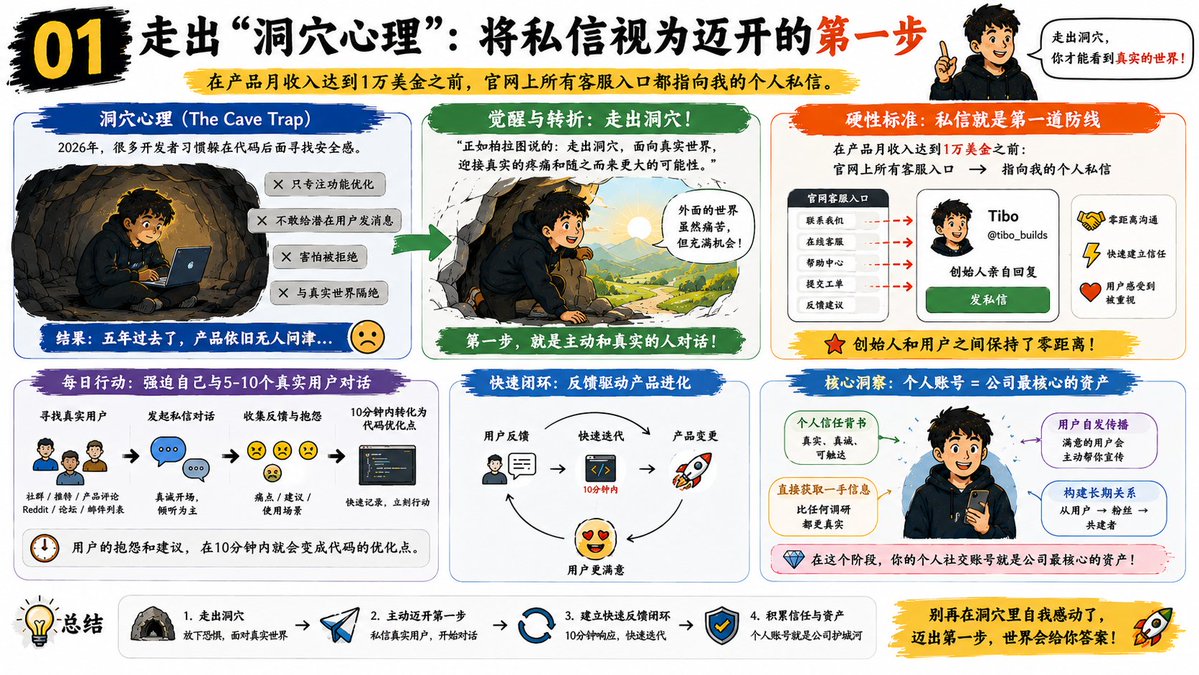
Those conversations are not only support.
Review.
They are content raw material. A complaint becomes a troubleshooting article.
After a weak launch, operators should compare user language, product proof, account role, target market, channel fit, and funnel response before making the next decision.
A repeated question becomes a landing-page section. A user success story becomes a case study.
Fit.
A rejected offer becomes pricing research.
Keep the loop short.
That short loop keeps the media engine close to real user language, which is often more useful than another internal brainstorming session.
For teams using multi-account management, the same rule applies to social execution.
When traffic rises, operators should compare user language, product proof, account role, target market, channel fit, and funnel response before making the next decision.
Comments, replies, account messages, and creator feedback should not disappear into personal inboxes. They should become structured notes.
Clarity.
Software Companies Need Media Capability
The idea that every software company becomes a media company is not about chasing attention for its own sake. It means profitable software teams need a way to explain the category, publish proof, teach the user, and make the market trust their judgment.
For payment checks, operators should compare user language, product proof, account role, target market, channel fit, and funnel response before making the next decision.
A SaaS media engine should produce three kinds of assets.
- Point-of-view assets explain why the market is changing.
Routing.
- Case assets prove that the product solves a real problem.
- Process assets show how a team can repeat the result.
Across product lines, operators should compare user language, product proof, account role, target market, channel fit, and funnel response before making the next decision.
Google Search Central's SEO Starter Guide emphasizes helpful, reliable, user-first content. That matters for SaaS.
Pacing.
Content should not only repeat feature names. It should help users understand the problem and the path forward.
Before the next post, operators should compare user language, product proof, account role, target market, channel fit, and funnel response before making the next decision.
Practical scan block:
- Does the article answer a real user question?
- Does the story show a product moment?
Intent.
- Does the example include a decision rule?
- Does the page connect to the next action?
When market fit shifts, operators should compare user language, product proof, account role, target market, channel fit, and funnel response before making the next decision.
- Does the team know which channel should reuse it?
Portfolio Strategy Reduces Single-Point Risk
Running several products can look unfocused.
Focus.
Sometimes it is. A portfolio strategy only makes sense when the products share an audience, distribution channel, content capability, or operational backbone.
The upside is risk control.
For asset reuse, operators should compare user language, product proof, account role, target market, channel fit, and funnel response before making the next decision.
One product may be hit by a category shift. One channel may become weaker.
Limits.
One acquisition loop may slow down. A portfolio gives the team more than one growth engine.
Across the phone group, operators should compare user language, product proof, account role, target market, channel fit, and funnel response before making the next decision.
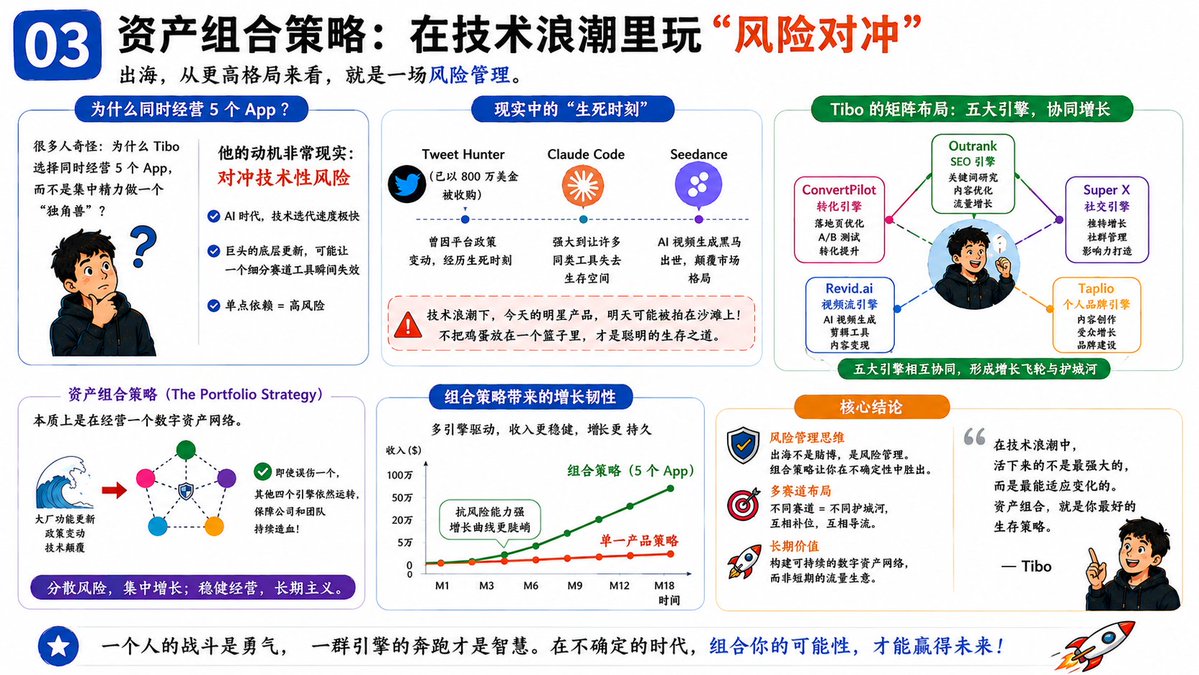
The mistake is random expansion. Do not add products just because the team can build them.
Source.
Add products only when the same media engine, SEO system, account workflow, or user base can support them.
Teams distributing mobile apps also need to respect store and platform rules.
When coaching starts, operators should compare user language, product proof, account role, target market, channel fit, and funnel response before making the next decision.
Apple publishes App Review Guidelines, and Google Play maintains a Developer Policy Center. These rules should shape launch planning, content claims, and account workflows.
Result.
The 1+1 Acquisition Principle
A SaaS media engine often grows in two layers.
The first layer is founder trust.
For a safer workflow, operators should compare user language, product proof, account role, target market, channel fit, and funnel response before making the next decision.
The founder publishes lessons, talks to users, shares product decisions, and creates the first emotional reason to care. This layer can move a product from zero to early pull.
Budget.
The second layer is industrial distribution. Once the message is clear, the team adds SEO, paid ads, affiliates, social accounts, and partner channels.
After comments arrive, operators should compare user language, product proof, account role, target market, channel fit, and funnel response before making the next decision.
This layer moves the company beyond founder effort.
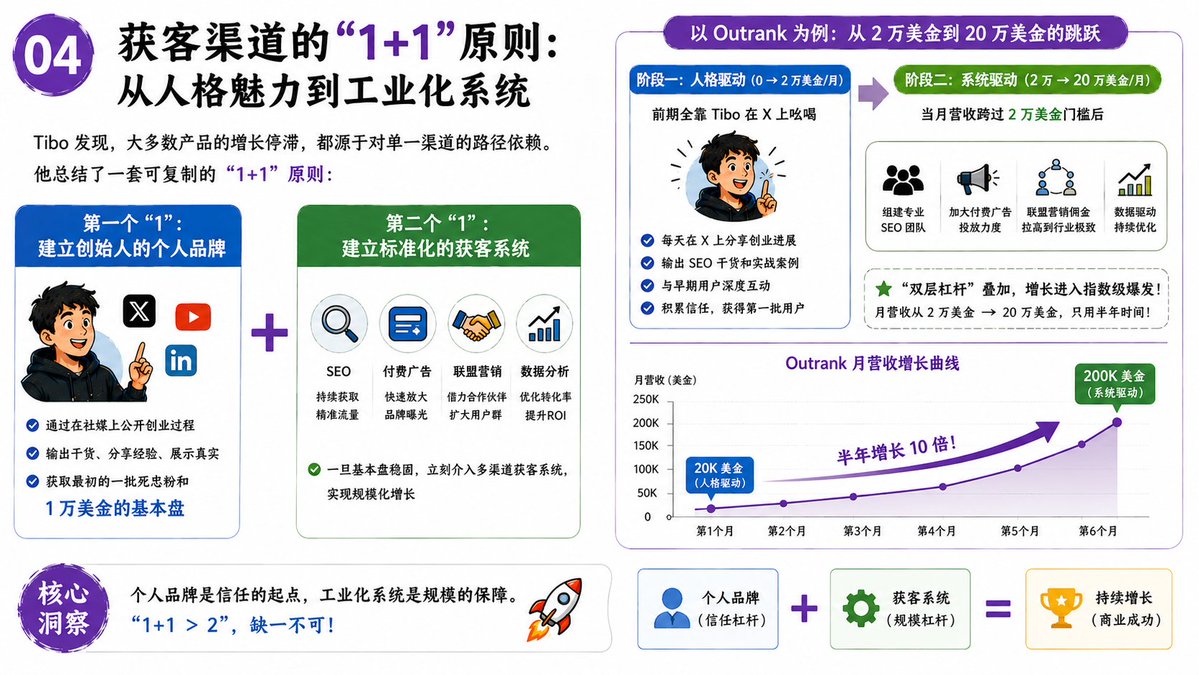
The danger is confusing the two.
Payment.
Founder content starts the flywheel, but it should not remain the entire system. A team needs templates, keywords, briefs, review rules, campaign records, and a weekly distribution review.
When installs rise, operators should compare user language, product proof, account role, target market, channel fit, and funnel response before making the next decision.
MoiMobi's mobile automation can help with the operational side: moving assets, preparing account groups, checking device environments, and keeping repeatable workflows visible.
Account Infrastructure for the SaaS Media Engine
Media systems break when account execution is not organized.
Timing.
A team may publish a good story through the wrong account. A regional post may go to a general account.
For the next channel, operators should compare user language, product proof, account role, target market, channel fit, and funnel response before making the next decision.
A product update may be reused too many times without clear tracking.
Use a record for every content asset:
- Asset ID: the unique file or campaign name used by every team.
Context.
- Product line: the offer, feature set, or app category behind the asset.
- Target market: the country, language, and user segment the content is meant to reach.
- Account group: the social or mobile account set responsible for distribution.
- Device profile: the phone environment, route, and setup used for posting.
- Owner: the person who approves the asset and records the result.
- Channel: blog, founder post, product account, paid ad, affiliate, or sales enablement.
- Review result: keep, rewrite, pause, localize, or move to a new account group.
- Next action: the exact follow-up task that turns review into execution.
This record keeps strategy connected to execution. It also helps a team understand whether a content failure came from the story, the channel, the account, or the funnel.
Before retesting begins, operators should compare user language, product proof, account role, target market, channel fit, and funnel response before making the next decision.
For account-heavy workflows, device isolation and phone farm infrastructure can separate environments by market, product, and campaign.
SaaS Media Engine Workflow for Mobile Teams
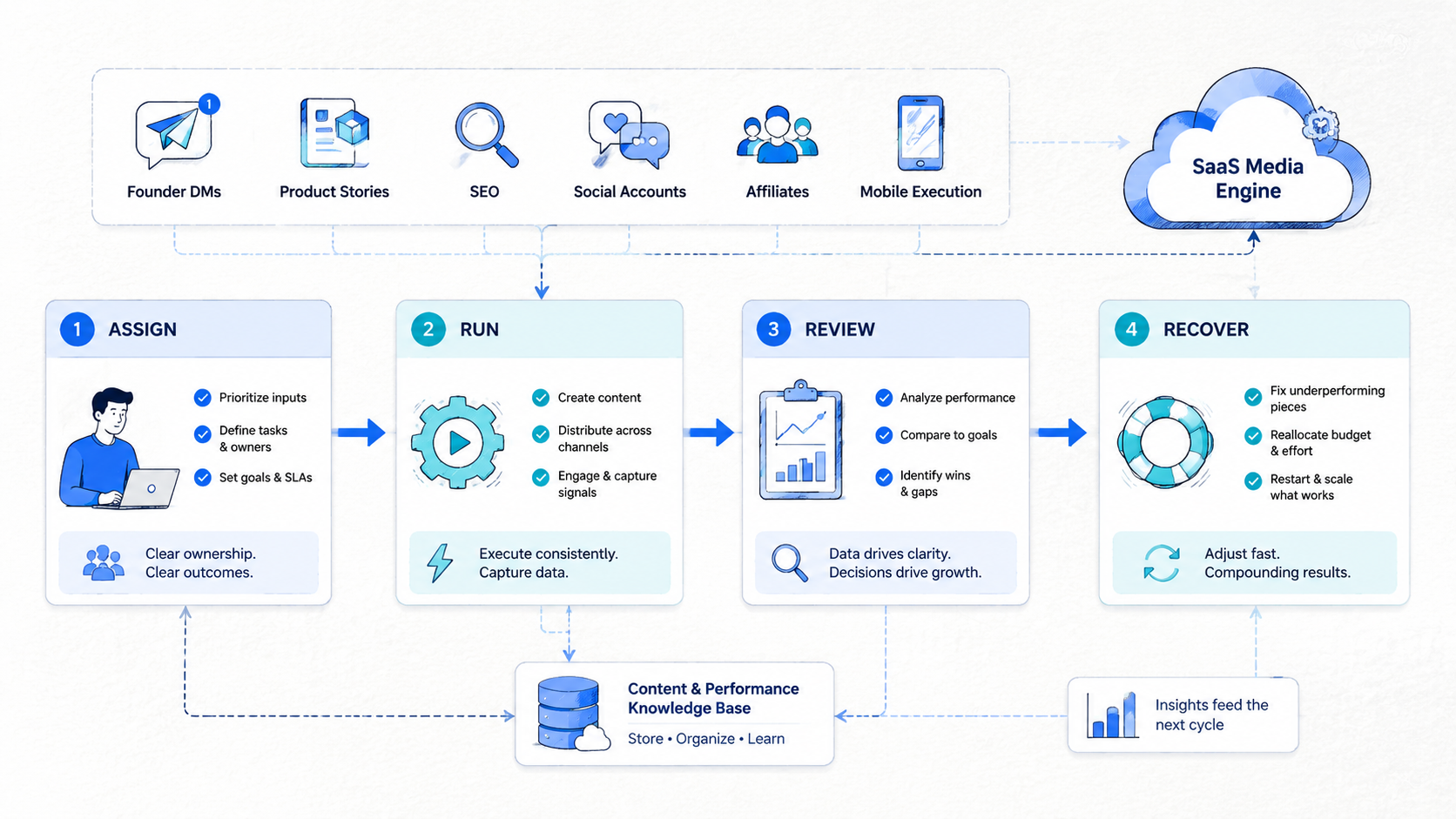
A mobile team should treat the SaaS media engine as a workflow, not as a calendar.
Signal.
The workflow starts with user language. It ends with a decision about what to publish, improve, pause, or scale.
When the message works, operators should compare user language, product proof, account role, target market, channel fit, and funnel response before making the next decision.
Start with the raw inputs. These include founder DMs, app reviews, support tickets, sales notes, comments, onboarding drop-off points, and competitor questions.
Review.
The team should collect them in one place before deciding content themes.
Next, turn the inputs into content jobs.
For cleaner records, operators should compare user language, product proof, account role, target market, channel fit, and funnel response before making the next decision.
A complaint can become a support article. A repeated question can become a search page.
Fit.
A successful user setup can become a case study. A confusing onboarding step can become a product tutorial.
After the campaign ends, operators should compare user language, product proof, account role, target market, channel fit, and funnel response before making the next decision.
Then connect each job to an account role. Founder accounts can explain lessons and decisions.
Clarity.
Product accounts can show workflows. Brand accounts can carry long-term authority.
When the team disagrees, operators should compare user language, product proof, account role, target market, channel fit, and funnel response before making the next decision.
Regional accounts can adapt language and examples for local markets.
Finally, attach a review metric.
Routing.
A search article may aim for impressions and qualified clicks. A founder post may aim for replies and direct conversations.
For regional accounts, operators should compare user language, product proof, account role, target market, channel fit, and funnel response before making the next decision.
A product tutorial may aim for activation. A case study may aim for sales confidence.
Pacing.
This keeps content from becoming random output.
SaaS Media Engine Scorecard
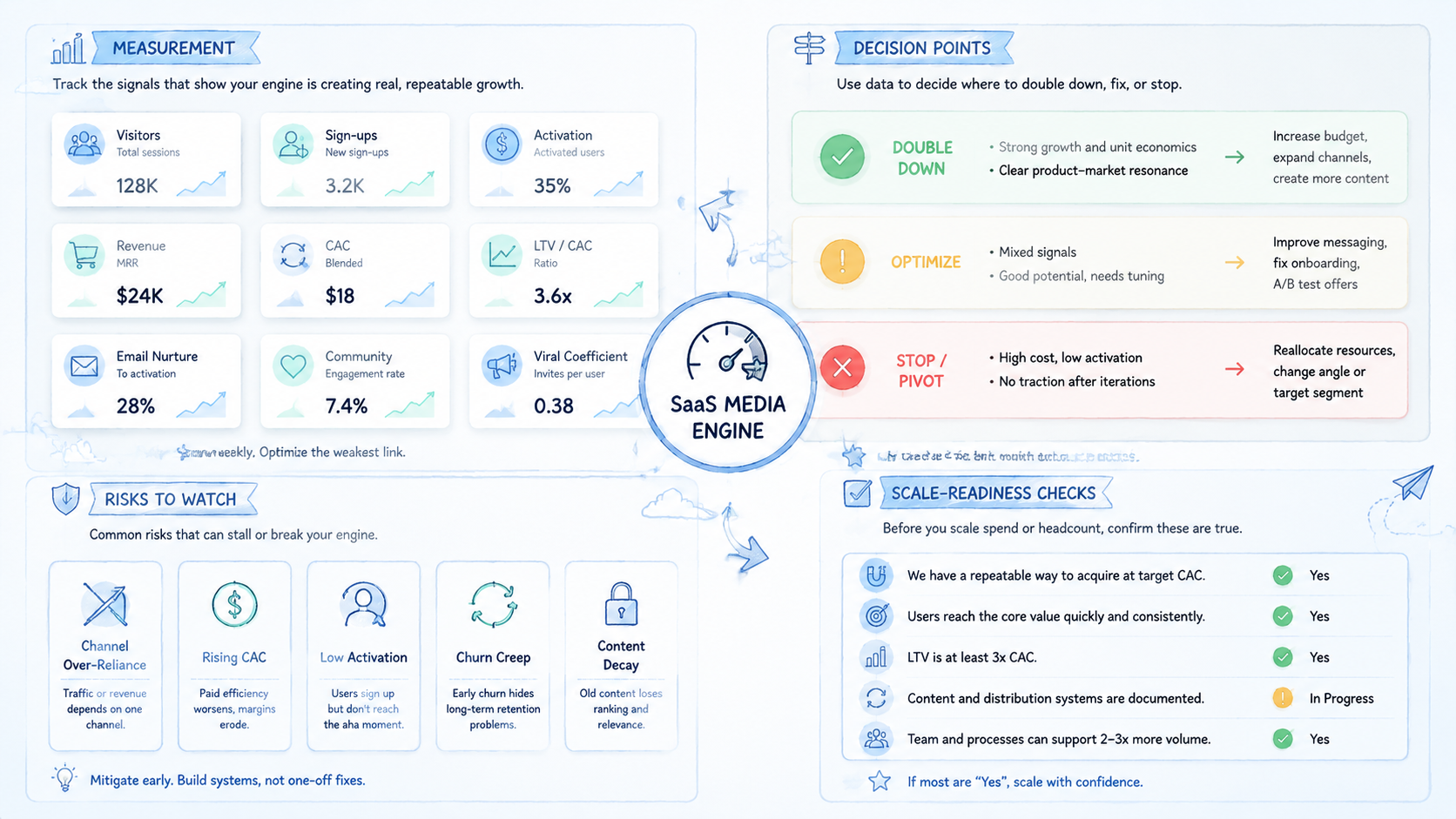
Use a scorecard before scaling any content format:
- User signal: does this asset come from a real user question?
From the dashboard view, operators should compare user language, product proof, account role, target market, channel fit, and funnel response before making the next decision.
- Product signal: does it show a product moment clearly?
- Trust signal: does it explain why the team is credible?
Intent.
- Search signal: can the topic earn long-term discovery?
- Social signal: can the idea travel in a short post?
When the funnel leaks, operators should compare user language, product proof, account role, target market, channel fit, and funnel response before making the next decision.
- Funnel signal: does it lead to a useful next action?
- Reuse signal: can sales, support, or creators reuse it?
Focus.
The scorecard should be short. If a content idea cannot pass at least three signals, it may still be useful, but it should not receive a large push.
Before paid spend grows, operators should compare user language, product proof, account role, target market, channel fit, and funnel response before making the next decision.
For example, a post about a new feature may have a product signal but no search signal. A user case study may have trust, funnel, and reuse value.
Limits.
A founder lesson may have social value but weak conversion. Different assets can win in different ways.
For operator handoff, operators should compare user language, product proof, account role, target market, channel fit, and funnel response before making the next decision.
That is normal.
SaaS Media Engine Distribution Map
Distribution should not depend on one channel. A builder-led product often starts with founder trust, but the system should grow beyond one person.
Source.
Use a channel map:
- Founder account: lessons, user conversations, build-in-public notes.
- Product blog: tutorials, comparisons, workflows, release notes.
After the review closes, operators should compare user language, product proof, account role, target market, channel fit, and funnel response before making the next decision.
- SEO pages: stable problems, alternatives, templates, integrations.
- Social accounts: short insights, clips, screenshots, proof points.
Result.
- Paid campaigns: validated messages and retargeting.
- Affiliate partners: trusted third-party reach.
Before content scales, operators should compare user language, product proof, account role, target market, channel fit, and funnel response before making the next decision.
- Sales enablement: case studies, objections, and customer stories.
Each channel needs a different job.
Budget.
Do not paste the same post everywhere. Rewrite the angle for the user's context.
When users reply, operators should compare user language, product proof, account role, target market, channel fit, and funnel response before making the next decision.
Mobile teams should also map channels to account environments. A regional account may need a different device profile, content queue, and review owner than a global product account.
Payment.
This is where cloud phones and account groups become operational infrastructure, not just tools.
Practical Operating Rules
Rule one: keep user language close to the content team.
For a search asset, operators should compare user language, product proof, account role, target market, channel fit, and funnel response before making the next decision.
If support notes are private, content gets generic. If content gets generic, conversion weakens.
Timing.
Rule two: separate idea quality from account execution. A strong story can underperform if posted through the wrong account, at the wrong time, or in the wrong market.
At the account layer, operators should compare user language, product proof, account role, target market, channel fit, and funnel response before making the next decision.
Rule three: review the funnel, not only the post. A post may create interest, but a weak onboarding step can still lose the user.
Context.
Media work and product work must share feedback.
Rule four: reuse before creating more.
During weekly review, operators should compare user language, product proof, account role, target market, channel fit, and funnel response before making the next decision.
One strong user story can become a blog post, a founder thread, a short video script, a sales slide, a help article, and a retargeting angle.
Rule five: retire weak formats quickly.
Signal.
The SaaS media engine should learn from failure. It should not protect formats just because the team spent time on them.
For the brief review, operators should compare user language, product proof, account role, target market, channel fit, and funnel response before making the next decision.
Concrete Example: One Asset Record
Use a real operating record for each campaign asset.
- Asset ID:
seo-case-us-014. - Product line: mobile analytics app.
The product line should connect to one audience, one market, and one expected action before the content moves into production. - Target market: United States.
- Account group:
us-founder-01. - Device profile:
android-us-clean-04. - Source input: support tickets about unclear activation.
- Content format: founder post plus product tutorial.
- Review metric: first action completed after signup.
- Scale rule: repeat only if activation improves and comments mention the same pain.
This example is small on purpose. A team should be able to explain one asset before scaling ten assets. If the record is missing the source input, the content may drift away from users.
If the record is missing the target market, distribution results become hard to interpret. If the record is missing the scale rule, the team will argue from opinions instead of evidence.
The decision rule is direct: keep the asset if it creates qualified replies, improves first action completion, and fits the target market. Rewrite the asset if replies are useful but the funnel is weak. Stop the format if reach is high but users are not relevant.
Common Mistakes
The first mistake is treating content as an afterthought. If distribution starts only after launch, the team loses the chance to shape the market before the product asks for money.
Review.
The second mistake is copying competitor topics without a point of view. Similar keywords may be fine, but the angle should come from the team's real user insight.
After a weak launch, operators should compare user language, product proof, account role, target market, channel fit, and funnel response before making the next decision.
The third mistake is overusing founder personality. Founder trust is powerful, but the company still needs a system that works when the founder is not posting.
Fit.
The fourth mistake is scaling without records. Teams need to know which account posted, which asset was used, which market saw it, and what happened after the click.
When traffic rises, operators should compare user language, product proof, account role, target market, channel fit, and funnel response before making the next decision.
The fifth mistake is ignoring mobile execution. For app and mobile-first teams, content, devices, accounts, and routes are part of the same growth system.
Clarity.
Weekly Review Loop
A SaaS media engine improves through review. Publishing without review is just noise.
For payment checks, operators should compare user language, product proof, account role, target market, channel fit, and funnel response before making the next decision.
Use this weekly order:
- User signal: what did real users ask or complain about?
- Content signal: which story created saves, comments, or clicks?
Routing.
- Search signal: which pages gained impressions or rankings?
- Social signal: which account role worked best?
Across product lines, operators should compare user language, product proof, account role, target market, channel fit, and funnel response before making the next decision.
- Funnel signal: did users register, try, pay, or leave?
- Channel signal: what should scale, pause, or change?
Pacing.
Short reviews beat perfect reports. The goal is to update the next brief, not to admire the last dashboard.
Before the next post, operators should compare user language, product proof, account role, target market, channel fit, and funnel response before making the next decision.
SaaS Media Engine Final Checks
A SaaS media engine should have one source of truth for content assets. Small teams can start with a spreadsheet. Larger teams can connect the record to account groups, devices, and campaign reports.
Briefly.
A SaaS media engine should also define a clear owner for each channel. Founder posts, product tutorials, SEO pages, paid ads, and partner content should not compete for the same message without coordination.
Very simple.
A SaaS media engine becomes stronger when each asset has a scale rule. Keep the idea when it brings qualified users. Rewrite it when comments are useful but the funnel is weak. Stop it when reach is high but relevance is low.
Sharp rule.
A SaaS media engine should protect the feedback loop. Support, sales, product, and marketing should all feed the next brief. If one team owns the notes alone, the system gets weaker.
Plain record.
Frequently Asked Questions
What is a SaaS media engine?
A SaaS media engine is a repeatable system for turning product knowledge into content, trust, traffic, and conversion.
Intent.
It connects founder insight, user feedback, SEO, social accounts, paid channels, and review.
Why do builders need media capability?
When market fit shifts, operators should compare user language, product proof, account role, target market, channel fit, and funnel response before making the next decision.
Builders need media capability because product quality alone does not ensure attention. Users need to understand the problem, trust the team, and see proof before buying.
Focus.
Should every founder become a creator?
Early on, it helps. Founder-led content creates trust and direct feedback.
For asset reuse, operators should compare user language, product proof, account role, target market, channel fit, and funnel response before making the next decision.
Later, the company should build a team system so growth does not depend only on one person.
How does a portfolio strategy help?
Limits.
A portfolio strategy can reduce dependence on one product or channel when the products share a user base, content engine, or operating system. Random expansion does not help.
Within that phone group, operators should compare user language, product proof, account role, target market, channel fit, and funnel response before making the next decision.
Where does MoiMobi fit?
MoiMobi supports the mobile execution layer.
Source.
Teams can use cloud phones, phone farms, mobile automation, proxy routing, and device isolation to manage account-heavy distribution workflows.
What should teams track weekly?
When coaching starts, operators should compare user language, product proof, account role, target market, channel fit, and funnel response before making the next decision.
Track user questions, content performance, search progress, account results, funnel conversion, and channel decisions. The output should be a better next brief.
Result.
What is the first step?
Start with direct user conversations.
For a safer workflow, operators should compare user language, product proof, account role, target market, channel fit, and funnel response before making the next decision.
Turn the words users already say into content assets before building a large channel plan.
Conclusion
The shift from builder to media operator is a growth identity shift.
Budget.
A team still needs product quality, but it also needs a way to create trust, explain the market, and distribute proof.
A SaaS media engine gives that work a system.
After comments arrive, operators should compare user language, product proof, account role, target market, channel fit, and funnel response before making the next decision.
User conversations become ideas. Product lessons become content.
Payment.
Accounts become distribution nodes. Data turns each campaign into the next brief.
When installs rise, operators should compare user language, product proof, account role, target market, channel fit, and funnel response before making the next decision.
For mobile teams, the best version connects strategy with execution. Content should not live apart from devices, accounts, markets, and review.
Timing.
That is how software becomes more than a tool. It becomes a visible growth network.
For the next channel, operators should compare user language, product proof, account role, target market, channel fit, and funnel response before making the next decision.