Phone Farm Business: Costs, ROI, and Risks
Key Takeaways
- A phone farm business is not only a group of phones. It is a repeatable mobile work system with cost, process, and risk controls.
- ROI depends on useful output, clean handoff, reset discipline, and the cost of managing devices.
- The biggest risks are weak ownership, unclear routing, poor state control, and scaling before the workflow is stable.
- A small pilot with clear pass or fail checks is safer than buying or renting capacity too early.
A phone farm business is a mobile operation that uses many devices to run repeated work for a clear business goal. The business case only makes sense when the devices, people, routes, tasks, and recovery rules are managed as one system.
That definition is important because many teams focus too early on device count. More phones can create more capacity, but they also create more setup work, more review work, and more ways for state to drift. ROI comes from useful output after those costs are included.
The simple question is not "How many phones can we run?" The better question is "Can this workflow produce enough value after device cost, staff time, routing, resets, review, and risk controls?" If that answer is unclear, the phone farm is not ready to scale.
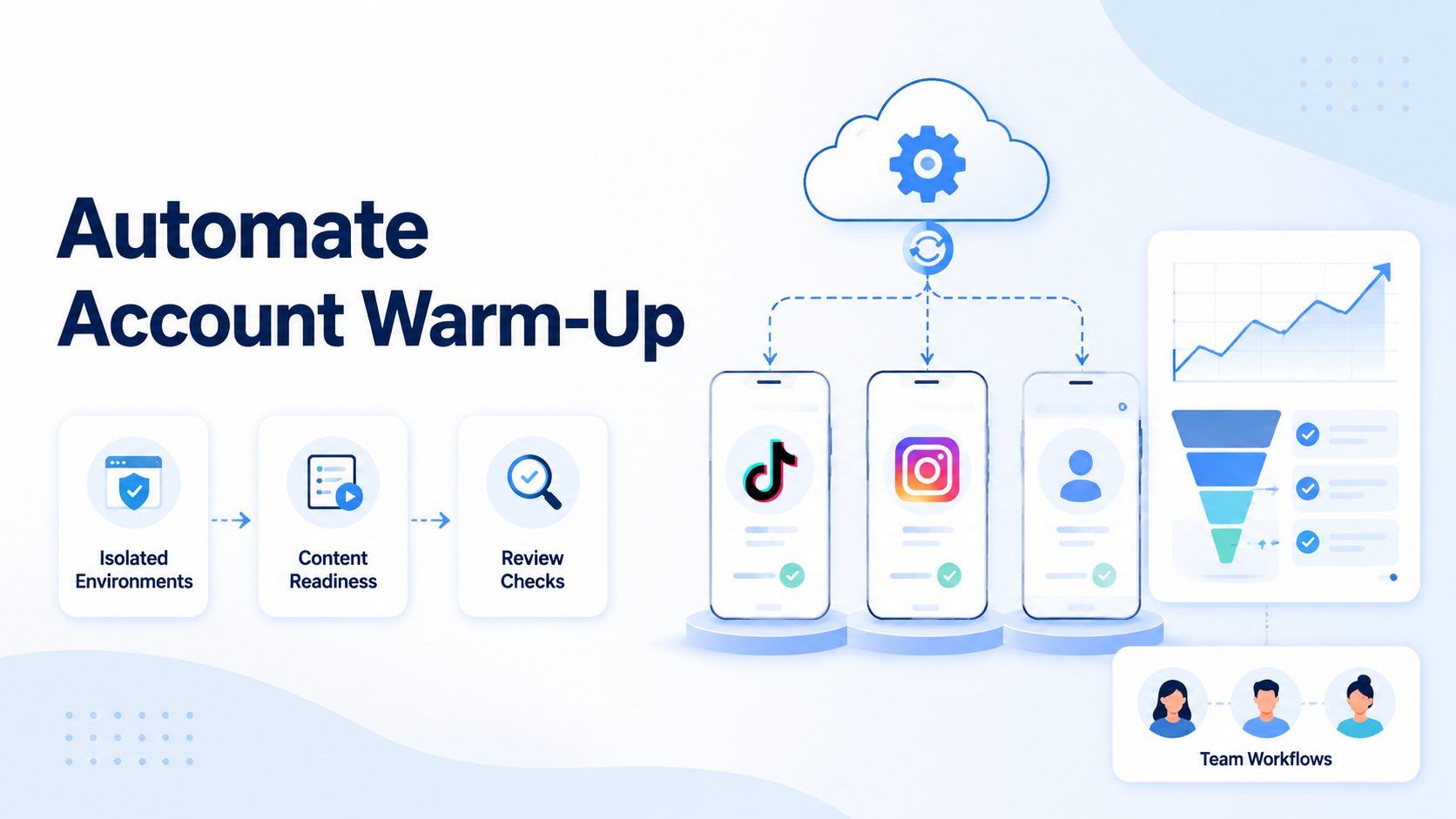
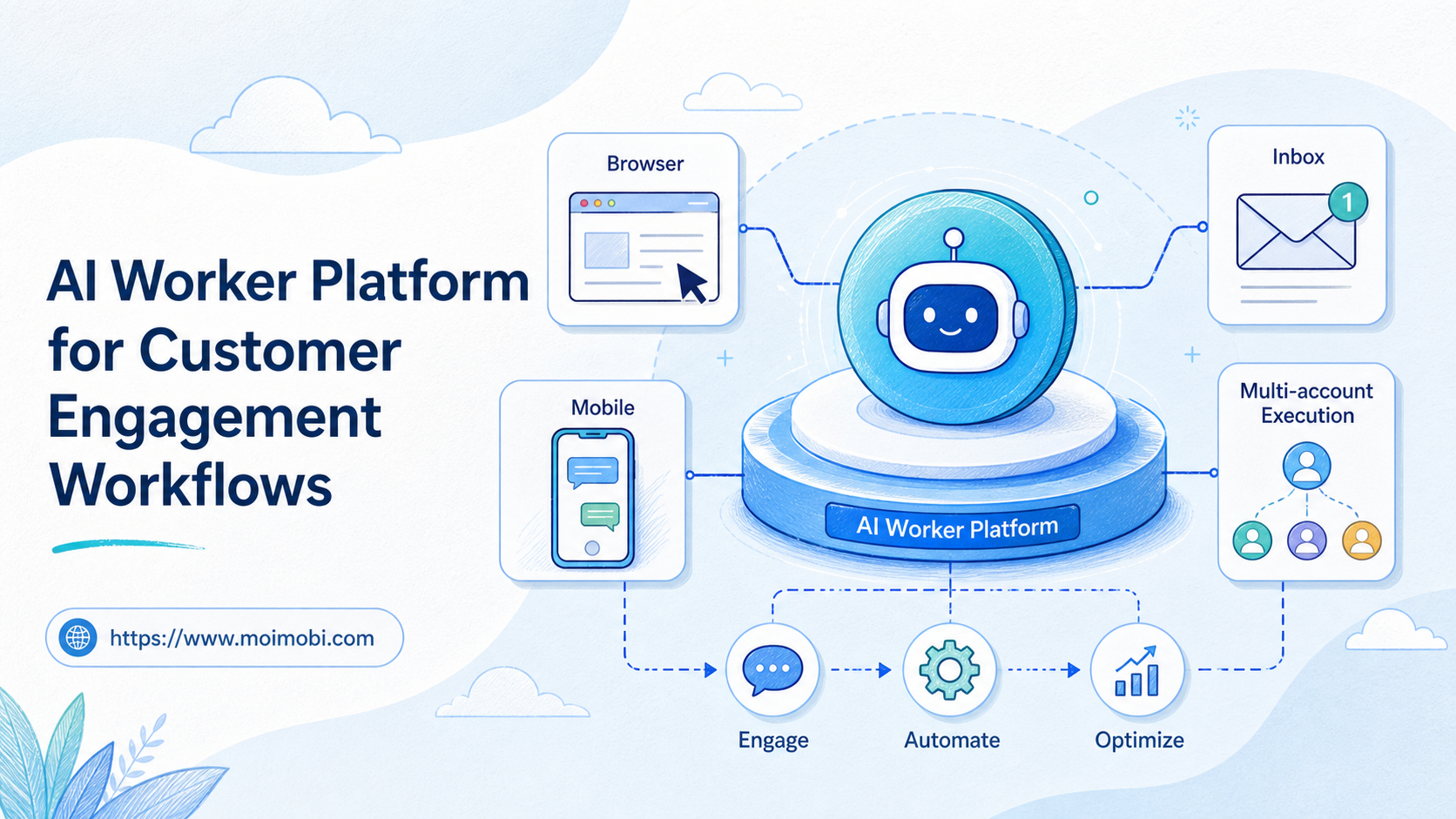
For teams using MoiMobi, the operating model can include phone farm, cloud phone, device isolation, proxy network, and mobile automation. These layers matter because a business phone farm needs more than screens. It needs control.
This guide explains costs, ROI, fit, risks, and the first pilot checks. It avoids fixed profit claims because those depend on workflow, market, team skill, policy limits, and operating quality. Treat the numbers as a decision framework, not a promise.
The Core Idea Behind a Phone Farm Business
The core idea is controlled mobile capacity. A phone farm gives a team access to multiple mobile environments. The business layer decides what work runs on those environments, who owns the work, how results are reviewed, and when devices are safe to reuse.
The mistake is treating the farm as a shortcut to scale. A larger pool can help only when the workflow is already clear. A messy task becomes harder to inspect when it runs across more devices. A weak reset rule becomes more expensive when every device needs attention.
Think about three parts of the model. The first part is device capacity. This includes physical phones, hosted phones, or cloud phones. The second part is operating labor. People still set up tasks, review output, handle failures, and make judgment calls. The third part is control. This includes roles, routing, state labels, logs, and recovery.
ROI sits between these parts. A phone farm can look profitable if only device cost is counted. It may look different after labor, downtime, review, route management, support, and failed runs are included. That is why serious evaluation starts with total operating cost, not device price alone.
Google's helpful content guidance is written for search quality, but its principle applies here: useful systems should help people complete a real task, not hide behind vague claims (Google Search Central). A phone farm business should be judged the same way. Its job is to make a specific mobile workflow easier to run, review, and improve.
| Layer | Main cost | ROI signal |
|---|---|---|
| Device capacity | Phones, cloud devices, storage, and replacement | More usable runs without unmanaged drift |
| Network path | Proxy or route setup, checks, and changes | Failures become easier to trace |
| Team work | Setup, review, reset, support, and training | Handoff gets faster instead of slower |
| Risk control | Policy review, state cleanup, and pause rules | Bad runs are isolated before they spread |
Why Teams Search for Phone Farm Business Costs and ROI
Teams search this topic when mobile work starts to feel like a capacity problem. One device is not enough. A few local phones become hard to share. Operators wait for access. Managers cannot see which device is ready, blocked, or under review.
The pressure can come from many workflows. A QA team may need repeated Android checks. A support team may need mobile issue reproduction. A marketing team may need controlled review of mobile app paths. An operations team may need a shared pool for account-linked work. The details differ, but the business question is similar.
Cost becomes confusing because the visible device is only one line item. Time is part of the bill as well. Someone has to prepare devices, manage access, handle route changes, fix failed sessions, and document what happened. A low device cost can still produce a high operating cost when the process is weak.
ROI becomes even harder when outputs are vague. A phone farm should not be judged only by activity. More sessions, more devices, or more runs do not prove value. The useful question is whether the system improves a business metric the team can defend. That metric might be faster testing, better review coverage, more stable handoff, lower hardware overhead, or cleaner mobile execution.
Risk also enters early. Teams often underestimate the cost of unclear ownership. When nobody knows who changed a device, why a route moved, or when a pool was last reset, the team loses trust in the setup. Trust loss is a business cost because it slows every later decision.
This is where a cloud phone or hosted phone farm model can change the discussion. Local hardware work can drop, but process still matters. Remote access helps only when device state, roles, and recovery stay visible.
Who Benefits Most and In What Situations
The strongest fit is a team with repeated mobile tasks and enough volume to justify shared device capacity. The work should be common enough to measure. It also needs to be stable enough to document. Daily task changes may mean the team needs process design before a phone farm.
A good-fit team usually has several operators or reviewers. One person may run the workflow. Another may check the output. A lead may need to see status. That handoff creates the need for roles, logs, and clear device states.
Phone farms can also fit teams that want less local hardware burden. Physical phones need space, power, maintenance, cables, and access rules. A hosted model can reduce some of that burden, especially when the work does not require direct physical handling. For hardware-specific testing, local devices may still matter.
Use this fit scan before committing:
| Fit level | Good signal | Caution signal |
|---|---|---|
| Strong fit | One workflow repeats often and has clear output | None of the devices have a named owner |
| Medium fit | Some tasks can move to remote devices | Hardware checks still need local phones |
| Weak fit | The team wants scale but has no defined workflow | Success depends on vague activity metrics |
Strong fit does not mean automatic success. It only means the phone farm model has a reason to exist. Clear rules for access, state, routing, and review still matter.
Weak fit deserves caution. A team that cannot describe the job should not start by buying more capacity. The first move is mapping the workflow, deciding who owns it, and defining the output. After that, a small pilot can test whether a phone farm improves the work.
Cost Categories in a Phone Farm Business
The safest cost model separates direct costs from hidden operating costs. Direct costs are easy to list. Hidden costs are the ones that often damage ROI after launch.
Direct costs may include devices, hosted cloud phones, proxy or route services, account tools, storage, monitoring, and support software. These costs can usually be estimated before the pilot. They are not the full picture.
Operating costs include setup time, user training, workflow review, reset work, failed sessions, documentation, and manager oversight. These costs are harder to estimate because they depend on how disciplined the team is. A clean workflow can keep them low. A messy workflow can make them larger than the device cost.
Risk costs are also real. A failed workflow can waste time. A poorly managed pool can create rework. A route mistake can make troubleshooting harder. Policy issues can stop a workflow entirely. Teams should not assume these costs are zero just because they are not part of the platform invoice.
| Cost type | Examples | How to control it |
|---|---|---|
| Capacity | Phones, cloud devices, storage, replacement | Begin with one pool and expand after data is stable |
| Network | Proxy routes, region rules, route review | Assign route rules by pool instead of by habit |
| Labor | Setup, reset, review, support, training | Use short checklists and visible state labels |
| Failure | Rework, downtime, bad handoff, unclear ownership | Define pause rules and recovery owners before scale |
The most useful cost metric is cost per trusted workflow run. That number is not only money spent divided by sessions. Count only runs that meet the team's quality standard and can be reviewed. Untrusted output should not be counted as full value.
How to Evaluate ROI Without Overclaiming
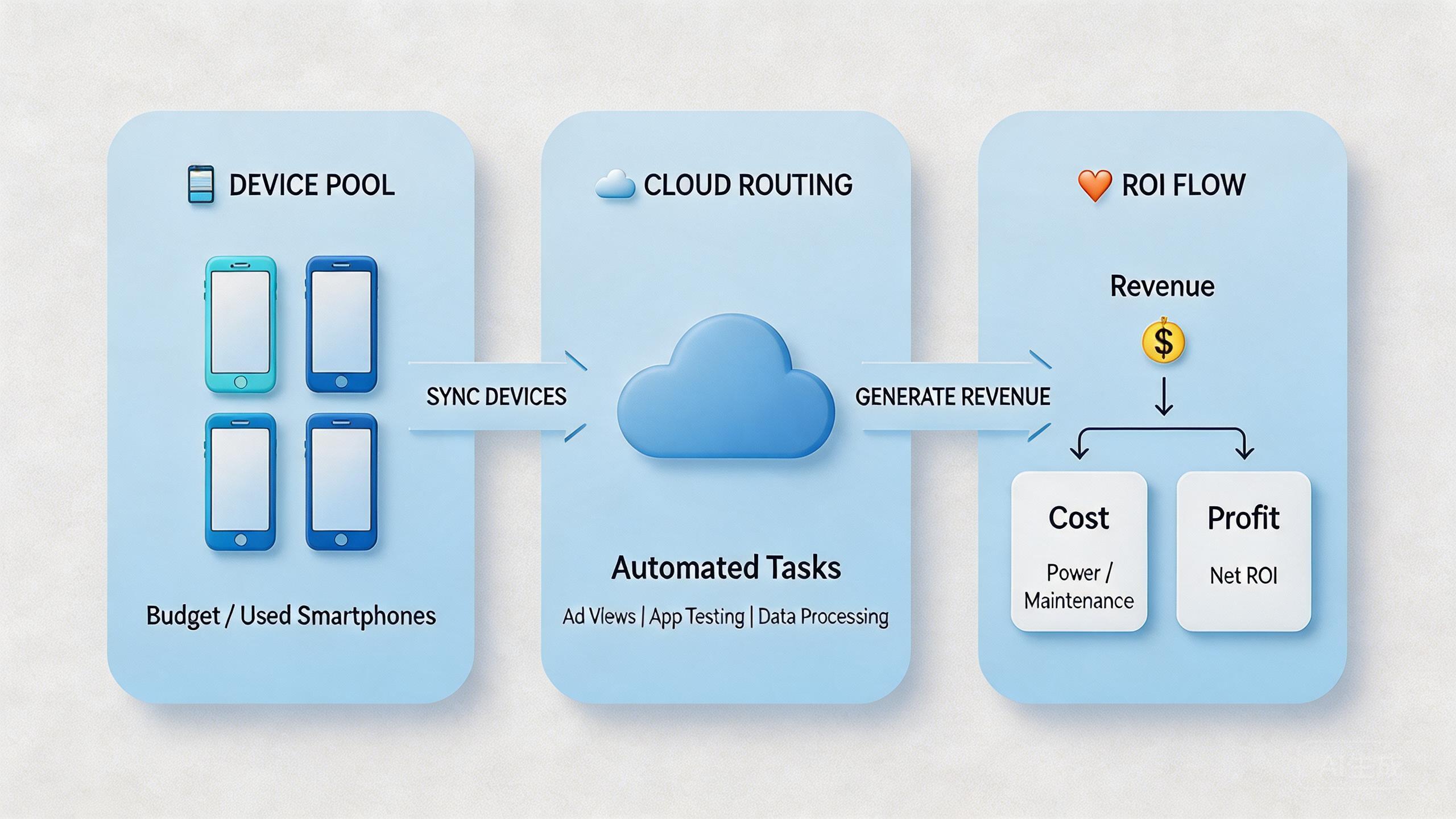
ROI should be treated as a measured result, not a promise. A phone farm business can improve output only when it reduces a real constraint. That constraint might be device access, local hardware cost, slow handoff, or repeated setup work.
Start with the baseline. How long does the current workflow take? How many people are blocked by device access? How often does state confusion create rework? How much time goes into reset and review? A baseline gives the team something to compare against.
Next, define the expected gain. Do not use broad goals like "scale mobile work." Use a testable outcome. Examples include shorter setup time, faster handoff, fewer failed runs, clearer review status, or less local hardware handling. The goal should be visible during a pilot.
Then include the full cost. Device cost is only one part. Add team time, route management, reset work, review, training, and failed runs. A phone farm that saves device cost but adds review chaos is not producing good ROI.
Use a simple ROI scorecard:
- Baseline time: measure the current workflow before changing tools.
- Pilot output: count only useful runs that meet the review standard.
- Operating cost: include setup, reset, review, and support time.
- Failure rate: record blocked, repeated, or unclear runs.
- Handoff quality: ask whether another operator can continue without private context.
- Risk signal: note policy, route, account, or state issues that need control.
- Scale decision: expand only if the pilot improves the baseline.
This approach keeps ROI grounded. It also prevents the team from calling activity a result. A busy phone farm is not automatically a profitable phone farm.
Risks That Can Break the Business Case
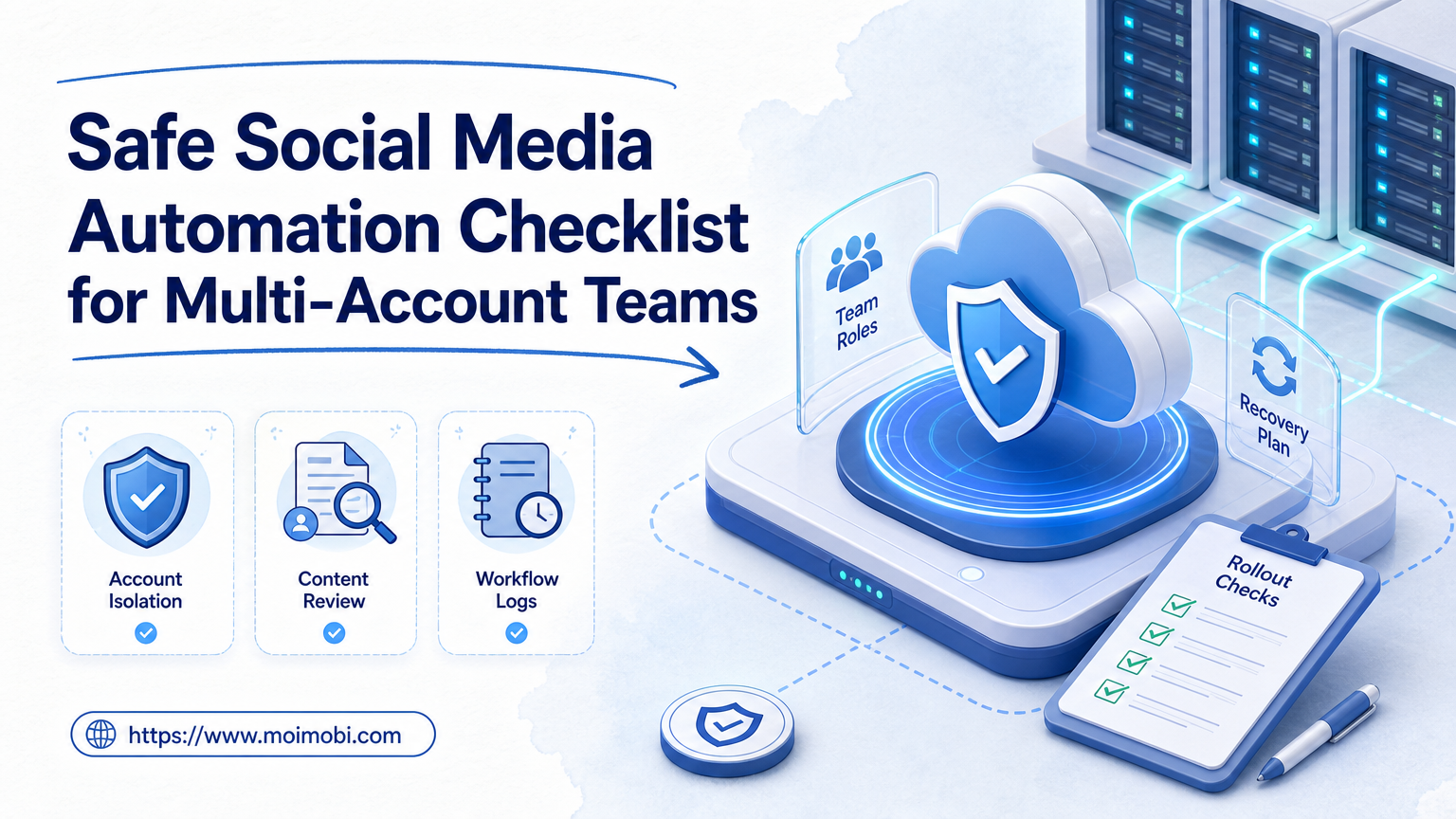
The first risk is unclear ownership. Every pool needs an owner. Every device needs a state. Every workflow needs a review path. Without ownership, small issues become shared confusion.
The second risk is weak routing discipline. A proxy network can support stable paths, but the team still needs rules. Operators should know which route belongs to which pool. Random route changes make failures harder to debug.
The third risk is poor device separation. A business phone farm often handles repeated tasks that should not bleed into each other. Device isolation helps reduce state mixing, but the process also matters. Teams need reset rules and pool boundaries.
The fourth risk is overclaiming safety or profit. Google Play's policy center is a useful reminder that platform rules still matter (Google Play Policy Center). A phone farm setup does not remove policy responsibility. It only gives the team more structure for running mobile work.
The fifth risk is scaling before measurement. A larger farm creates more events to inspect. One unclear pool will not become clearer after ten more pools are added. Expansion should wait until setup, handoff, reset, and review are stable.
The sixth risk is using automation too early. Mobile automation works best when the manual workflow is already clear. Automating unclear steps can make errors faster and harder to find.
These risks do not mean teams should avoid phone farms. They mean the business case must include controls. ROI improves when failures are easier to prevent, spot, and recover from.
Pilot Plan for a Phone Farm Business
A pilot should be narrow enough to learn from. Pick one workflow, one device pool, one route model, and one review owner. Avoid starting with every use case at once.
| Step | Decision | Pass signal |
|---|---|---|
| Workflow | Name one task for the pilot | The task repeats often enough to measure |
| Pool | Assign a small device group | Each device has a clear state |
| Roles | Separate operator, reviewer, and admin work | No user needs broad access by default |
| Routes | Document route expectations | Failures can be traced without guessing |
| Review | Track output and failed runs | The lead can decide whether to expand |
Run the pilot long enough to see normal work and failure. A single clean run is not enough. Setup, handoff, recovery, and review should all be visible before a scale decision.
Good pilot notes should be plain. Who used the devices? What ran? Which route applied? Which devices needed reset? What failed? Who approved reuse? These answers matter more than a large dashboard during the first stage.
The pilot is ready to expand when the work becomes easier to explain. Operators know what to do. Reviewers can see status. Admins know when to pause or reset. Leaders can compare cost against useful output.
Simple margin checks before scaling
Margin is not only revenue minus device cost. A phone farm can consume time in ways that are easy to miss during planning. Count the time spent preparing devices, checking routes, resetting sessions, writing notes, reviewing output, and fixing failed runs.
Use a plain margin check before adding capacity. First, estimate the value of one useful completed workflow. Then subtract the real time and tool cost needed to produce that result. Finally, remove runs that failed review or required heavy rework. The remaining value is closer to the true margin.
This check often changes the scale decision. A small phone farm with clean process may produce better margin than a larger farm with weak handoff. Less capacity can be the better choice when the team is still learning the workflow.
The strongest signal is repeatability. A task that runs with similar setup time, similar review effort, and clear recovery steps is moving toward a business system. A fresh rescue job on every run usually means scale will increase support cost.
Teams should also watch opportunity cost. Operators working on device cleanup are not working on higher-value tasks. Managers chasing unclear status are not improving the workflow. These hidden costs reduce ROI even when the direct tool bill looks acceptable.
One practical rule helps. Expand only when the next device is likely to add useful output, not just more activity. That rule keeps growth tied to measured work instead of hope.
Frequently Asked Questions
Is a phone farm business profitable?
It can be, but profit depends on workflow value, operating cost, failure rate, and risk control. Do not judge ROI by device count alone.
What is the biggest hidden cost?
The biggest hidden cost is usually human time. Setup, reset, review, routing checks, and failed runs can outweigh simple device costs.
Should a team use physical phones or cloud phones?
It depends on the work. Physical phones may fit hardware-specific tasks. Cloud phones often fit shared remote workflows that need easier access and management.
How many devices should a pilot start with?
Start with the smallest pool that can run one repeated workflow. Add more devices after the team can measure useful output and recovery.
What risks should be checked first?
Check ownership, route control, device state, reset rules, policy exposure, and whether the workflow has a clear review owner.
Can automation improve phone farm ROI?
Automation can help after the workflow is stable. An unclear manual process may increase rework once automation is added.
How should teams measure success?
Measure useful runs, setup time, handoff time, recovery time, review clarity, and failure patterns. These signals show whether the business case is real.
When should a team stop expansion?
Stop when device state is unclear, failures repeat, route changes are not tracked, or review depends on private notes.
Conclusion
A phone farm business should be evaluated as an operating system, not only a device stack. Devices create capacity. Process turns that capacity into useful work. ROI appears only when the workflow produces trusted output after costs and risks are included.
The right order is simple. Define the workflow, assign one pool, control roles, document routing, measure real output, and review failures before expansion. That order protects the team from scaling confusion.
The next step is not to buy or rent the largest possible pool. Choose one repeated mobile workflow and run a measured pilot. If setup, handoff, review, and recovery improve, the business case is becoming real. If those signals stay weak, fix the work model before adding more phones.