Key Takeaways
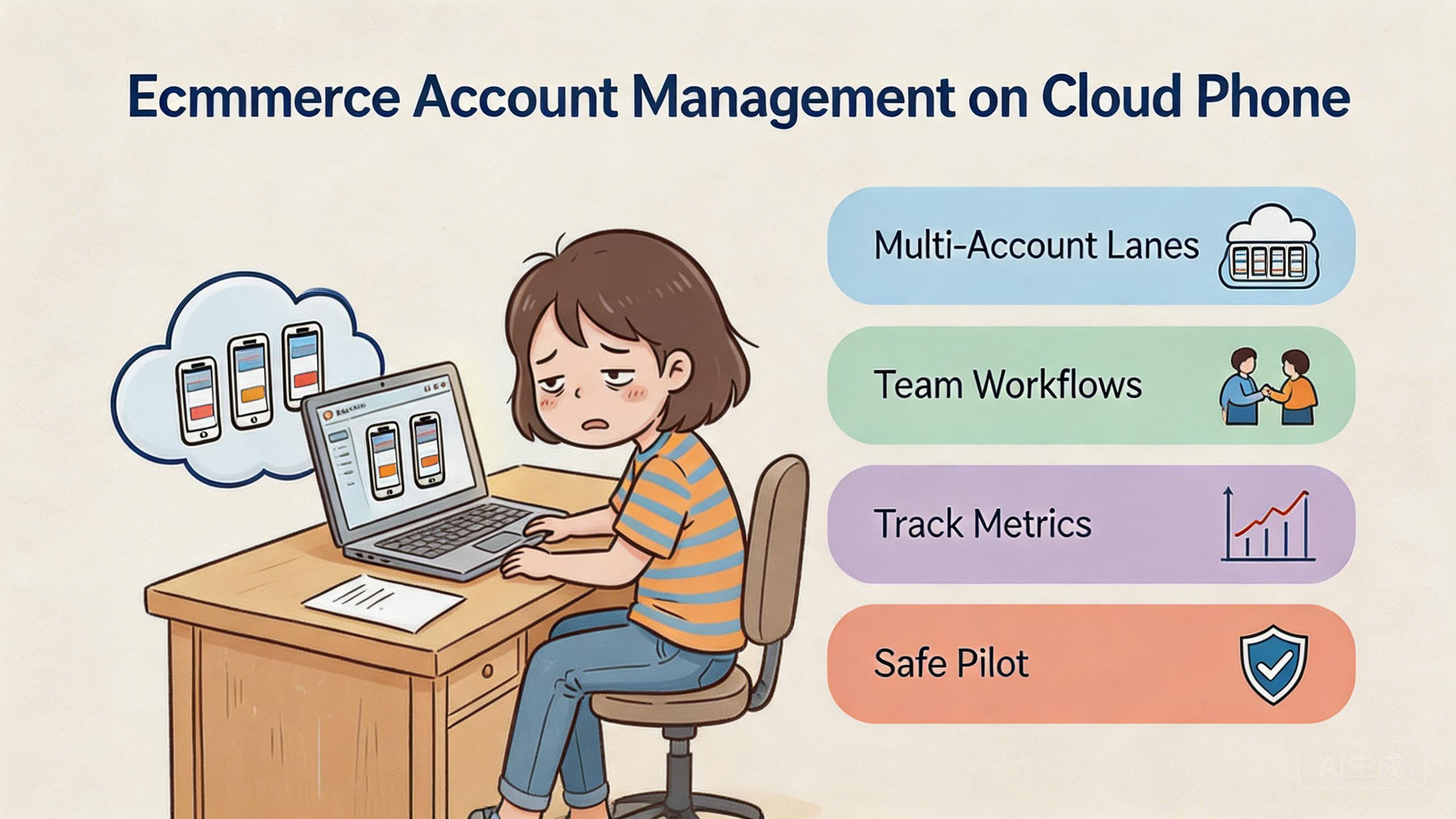
- Ecommerce account management is the process of keeping store, seller, support, and app-based account work organized across people and environments.
- Cloud phones help when ecommerce teams need mobile app access, separate account lanes, clean handoff, and repeatable daily work.
- Strong multi-account execution depends on device state, routing rules, role ownership, logs, and recovery steps.
- Start with one small pilot before adding more stores, operators, apps, or automation.
Introduction
Ecommerce account management is the work of running, checking, and maintaining seller, store, support, and marketplace accounts in a controlled way. On cloud phones, that work happens inside remote Android environments, so teams can separate account context, assign tasks, and review mobile workflows without passing physical devices around.
The decision is not only about whether a team can log in from a phone. The real question is whether the team can keep account work stable as more stores, operators, regions, and daily tasks appear. A small seller may handle everything in one place. A growing team often needs cleaner lanes.
Remote mobile environments can help when ecommerce work is app-heavy. Teams may need app checks, support replies, order review, listing checks, marketplace messages, or mobile-first account tasks. The cloud phone platform gives those tasks a remote Android surface that can be assigned and inspected.
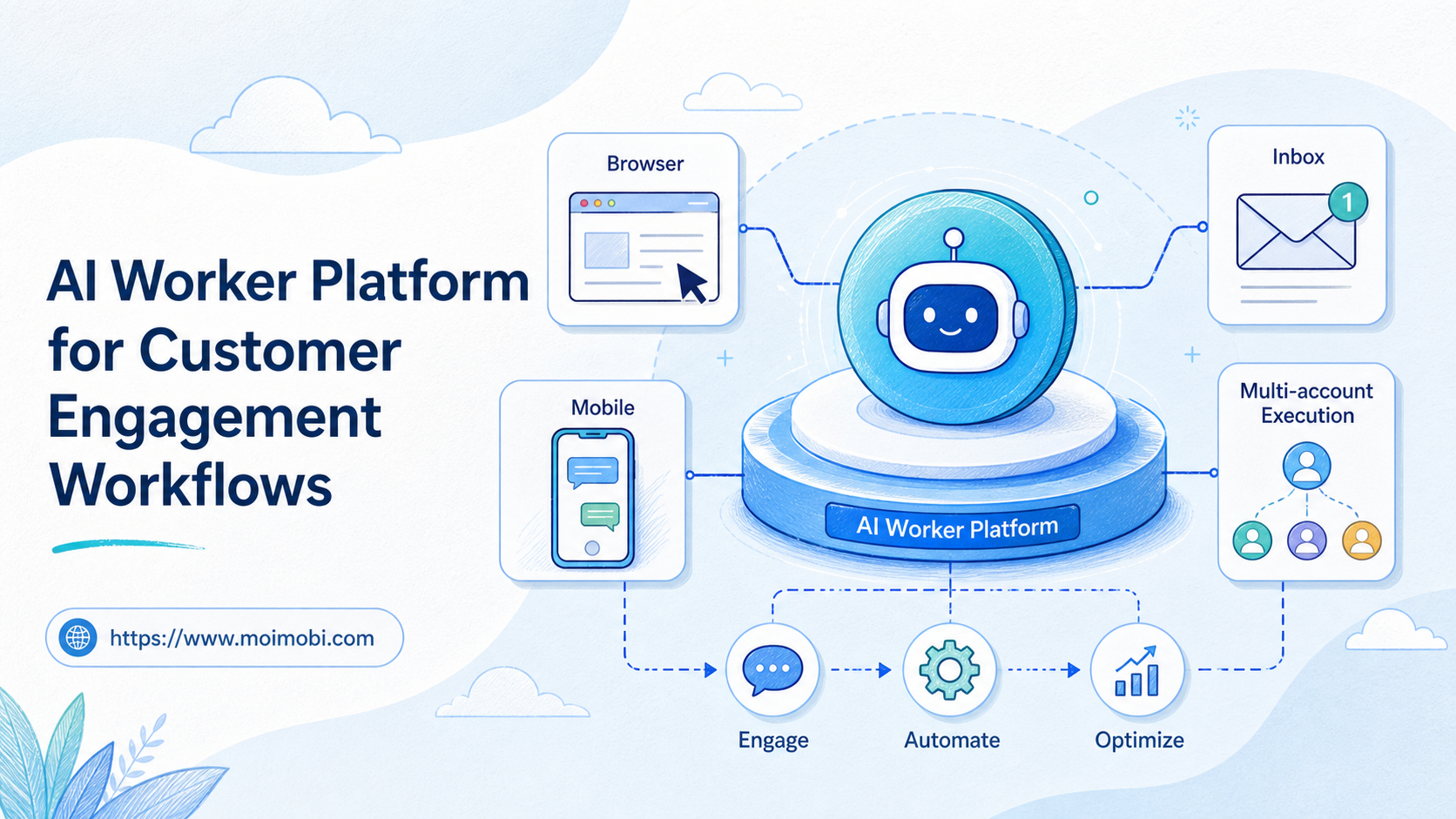
MoiMobi frames this as multi-account execution, not as a quick device trick. One cloud phone is only one layer. Stable ecommerce work also needs device isolation, routing control, access rules, task labels, and a recovery process when something breaks.
This guide explains how ecommerce account management works on cloud phones, where it fits, what can go wrong, and how a team should pilot the setup. The aim is a practical work system that operators can follow, not a claim that every marketplace task should be automated.
What Is Ecommerce Account Management on Cloud Phones | MoiMobi - Multi-Account Execution?
On cloud phones, ecommerce account management means running repeated account tasks inside remote mobile environments with clear rules for each store, role, route, and task state. The workflow may include seller app checks, message review, listing updates, account notes, customer support, campaign checks, or mobile app actions.
A common misunderstanding is that cloud phones only replace local phones. That view is too small. The useful model is an execution lane: each environment has a purpose, an account context, a route rule, an owner, and a status. That lane can then support daily account work.
This matters because ecommerce account work is rarely one action. A store may need order checks in the morning, support replies during the day, listing review after changes, and account health checks after a campaign. Several people may touch the same account. Without a shared system, each handoff creates a risk of confusion.
Persistent mobile lanes give teams a clear place to work. Operators can open the right app, use the right account, and follow a clear task list. Managers can review which lane was used and what happened during the run.
The system still needs human judgment. Store strategy, product quality, customer care, and marketplace policy still matter. Remote infrastructure cannot make a weak store operation good. It can make repeated mobile account work easier to assign, inspect, and recover.
For teams already managing multiple stores or account groups, multi-account management is the closer idea. The question is not only how many accounts exist. The question is how cleanly the team can run them without mixing context.
Why Ecommerce Account Management Matters for Multi-Account Teams
Multi-account ecommerce work breaks when every account lives in someone's memory. One person remembers which phone is used for one store. Another person knows which app is logged in. A third person knows which support task is blocked. The team may still move fast, but the work becomes hard to audit.
The issue grows as account count rises. More accounts create more device states, app sessions, network choices, task owners, and review needs. A remote phone setup can help, but only when the team builds rules around it.
| Account layer | Question to answer | Why it matters |
|---|---|---|
| Environment | Which cloud phone belongs to this account? | Prevents account work from drifting across random devices. |
| Route | Which network path should this lane use? | Makes review and troubleshooting easier. |
| Role | Who runs, checks, approves, and resets? | Keeps ownership clear when several people share work. |
| Status | Is the account ready, busy, blocked, or under review? | Stops operators from guessing before taking action. |
These layers are simple, but they change daily work. A support operator can see which account lane is ready. A manager can review which store needs attention. A technical lead can trace whether an issue came from app state, route choice, device state, or task quality.
Google's guidance on helpful, reliable content stresses that systems should serve real user needs instead of thin output (Google Search Central). The same operating principle applies here. More account actions are not useful if the team cannot explain what happened.
Policy awareness also matters. Ecommerce teams often work inside marketplace or app rules. The Google Play Policy Center is a reminder that platform rules still matter in mobile environments (Google Play Policy Center). Cloud phones help with execution structure, but they do not remove policy responsibility.
Ecommerce Account Management Benefits and Use Cases
The first benefit is cleaner separation. Each account or store group can have a defined environment. That reduces the chance that unrelated work shares the same app state, notes, route, or operator path. Clear lanes are easier to review.
The second benefit is shared access. A local phone may sit on one desk. A remote phone lane can be reached by the team through the platform. That helps remote support, operations, and store teams that need to check accounts from different places.
The third benefit is repeatable work. Ecommerce teams often run the same checks each day. They may review order status, check messages, inspect listing changes, confirm app alerts, and update simple notes. Repeated tasks fit better when the team uses the same lane and the same labels.
Common use cases include:
- Seller app checks for order, message, or account status.
- Support workflows that need mobile app access.
- Store review tasks split across operators.
- Multi-store operations with clear account lanes.
- Listing or campaign checks that need app-based review.
- Agency delivery where client accounts must stay separate.
- Mobile automation for stable, repeated task steps.
Daily ecommerce work also needs plain notes. A note can list the store, lane, app, owner, status, and next action. Use short words such as open, done, hold, review, and blocked. These words help a new operator understand the work without asking for private context.
Good teams also keep misses visible. Mark wrong app state, old account notes, missed messages, and unclear ownership. A clear miss is easier to fix than a hidden one. Small notes prevent small problems from becoming long cleanup work.
MoiMobi's mobile automation can support repeated parts of the workflow. That may include opening the right app path, following a task order, updating status, or running a known check. Human review should stay in place where judgment is needed.
The benefit is not only speed. Good account work is easy to check. A manager should know the account, lane, owner, route, task, and result. If that information is clear, the team can fix weak steps faster.
For ecommerce operators, simple notes matter. A daily note can say which store was checked, which app was used, what changed, and what needs follow-up. This small habit can save time when work moves across shifts.
How to Get Started with Ecommerce Account Management on Cloud Phones
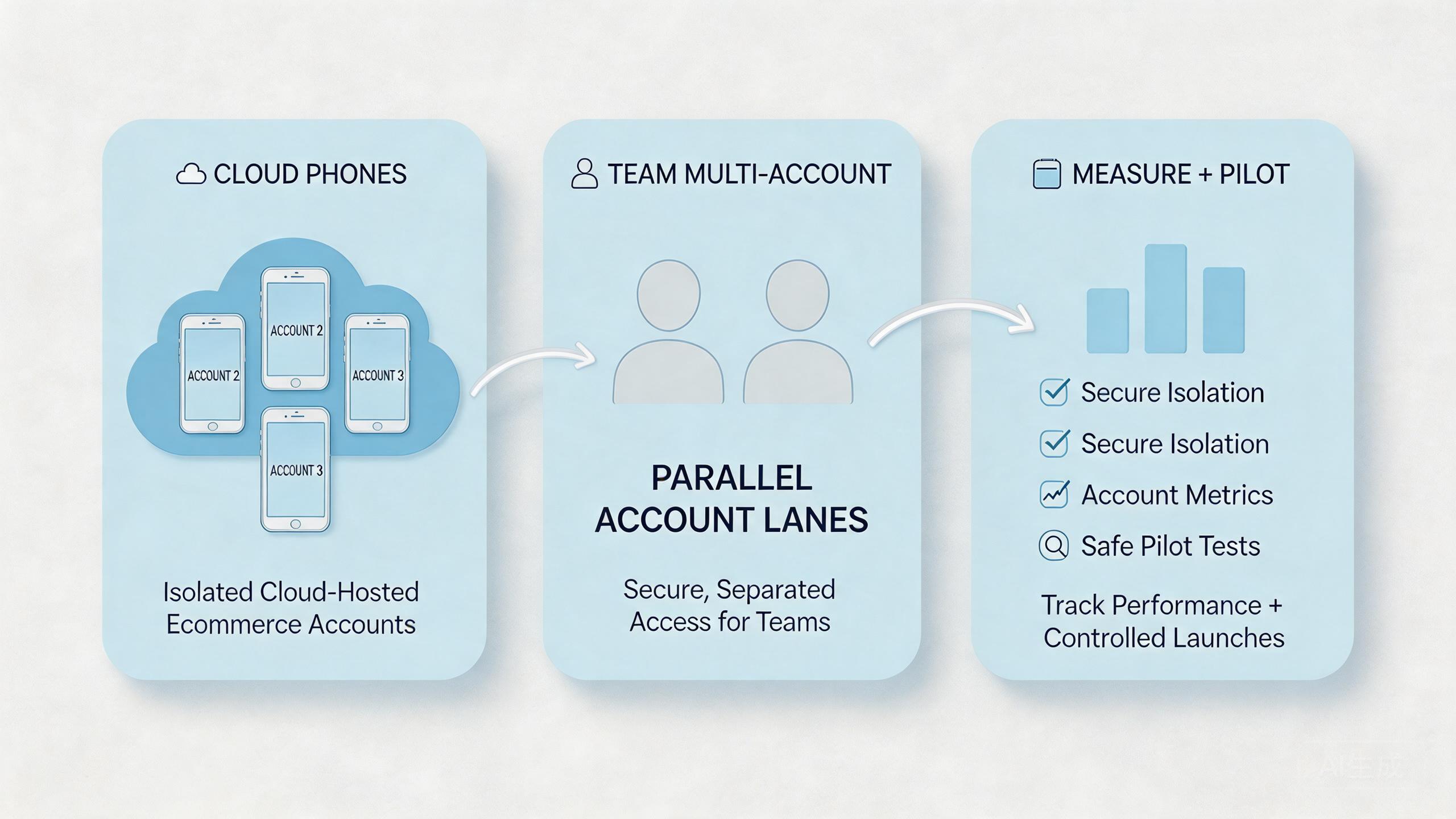
The main mistake is starting with too many accounts. A pilot should begin with one account group or one store workflow. The team needs to prove that the lane, task list, and review method are clear before adding more work.
-
1. Pick one account group.
Choose one store, market, or client workflow. Avoid mixing several business lines in the first run.
-
2. Assign one cloud phone lane.
Give the lane a clear name. Tie it to the account group, task type, owner, and route rule.
-
3. Define daily tasks.
Use plain tasks such as check orders, review messages, inspect alerts, note issues, and mark next step.
-
4. Set status labels.
Use ready, busy, hold, review, reset, and blocked. Short labels are easier for teams to follow.
-
5. Review before scaling.
Check output quality, handoff time, missed tasks, and recovery effort before adding another lane.
The setup should stay boring at first. Use one owner, one lane, one route rule, and one review time. Ask each operator to write short notes. A simple note can say what was checked, what changed, and what needs attention.
Routing should be planned, not improvised. A proxy network may be relevant when account context or region behavior matters. The exact routing policy depends on the workflow, but the rule should be documented before the team starts.
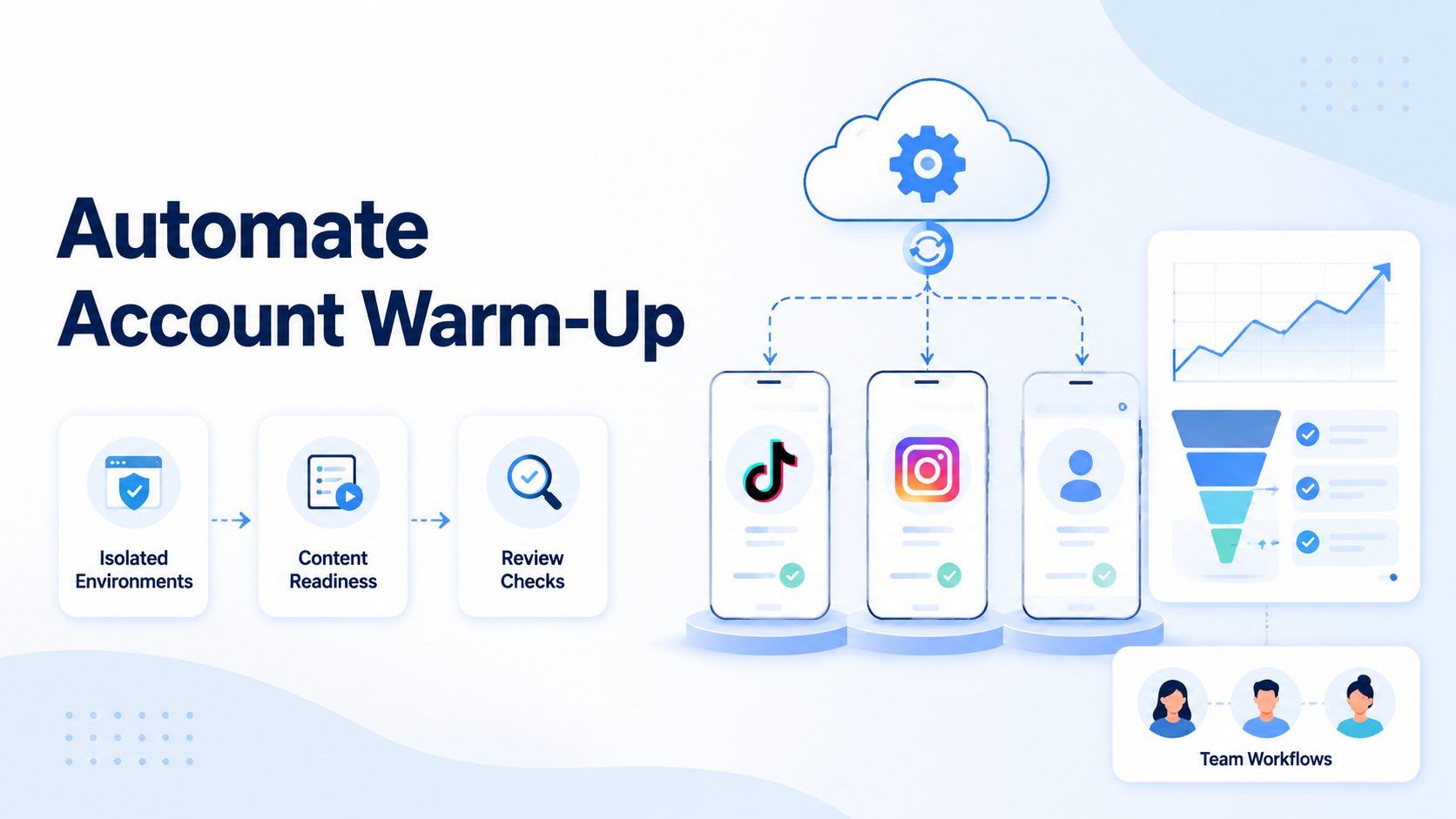
Automation should come after the manual flow is clear. First, run the task by hand inside the assigned phone lane. Then automate the stable steps. This helps the team avoid turning a messy task into a faster messy task.
Google's SEO Starter Guide is about search structure, but one idea carries over: clear organization helps people understand the content and path (Google Search Central SEO Starter Guide). Ecommerce account work needs the same clarity. A task that cannot be explained should not be automated yet.
Common Ecommerce Account Management Mistakes to Avoid
The first mistake is sharing one lane across too many accounts. That may feel efficient, but it makes review harder. Operators may not know which account state belongs to which store or task.
Another mistake is leaving route choices to each operator. Random route changes make troubleshooting hard. A lane should have a known routing rule. If the route changes, the reason should be recorded.
Weak status labels also create trouble. "Done" is not always enough. An account may be ready, blocked, waiting for review, or needing reset. Clear labels help the next person avoid guessing.
Teams also overvalue action count. More checks do not prove better account management. Better signals include completed support tasks, fewer missed messages, faster handoff, lower rework, and cleaner recovery after app or route issues.
Avoid these patterns during the first pilot:
- Several stores share one unnamed environment.
- Operators change apps or routes without notes.
- Account states move forward without review.
- Failed checks are retried without a reset rule.
- Managers track volume but not missed work.
- Automation starts before the manual task is stable.
The fix is a smaller workflow. Choose one account group and one daily task list. Run it for a short period. Review what slowed the team. Add another lane only after the first one is easy to explain.
Language matters too. Do not use absolute safety claims in team docs. A dedicated phone lane can improve control and separation, but each marketplace and app still has rules. Better internal wording is simple: cleaner lanes, clearer handoff, better review, and faster recovery.
Who It Fits and When It Is a Strong Match
This model fits ecommerce teams that have repeated mobile account work and more than one person involved. It is less useful for a single store with simple browser-only tasks. The more mobile, shared, and repeated the work becomes, the stronger the fit.
Teams with several stores, app-based checks, shared support work, remote staff, or client account lanes.
Teams with some mobile account work and some browser work. Cloud phones can cover the mobile side.
Teams with one account, no mobile app need, no handoff problem, and no reason to separate environments.
Cross-border sellers may find value when account work spans several apps, stores, or operator roles. A clear lane can keep each store easier to inspect. It can also reduce confusion when support and operations teams share the same work.
Agencies may use cloud phones when they manage ecommerce tasks for clients. Each client should have its own account context, route rule, and review flow. Mixing clients inside one lane creates avoidable confusion.
Internal ecommerce teams may use the model for app-based support and store checks. For example, one person can review mobile alerts, another can check messages, and a manager can review the daily notes. The work stays easier to audit when each lane has a clear owner.
The model is weaker when the account work is simple and central. If one person can manage the store cleanly through a web dashboard, cloud phones may add overhead. The fit improves when the mobile app is part of daily work or when several people need shared access.
Pilot Rollout, Measurement, and Recovery Checks
A good pilot should prove control, not volume. Begin with one account group, one cloud phone lane, and one daily task list. The team should learn whether the setup makes work easier to run, review, and fix.
Track five simple signals:
- Setup time: how long it takes to prepare the lane.
- Handoff time: how long another operator needs to continue work.
- Missed tasks: which checks were skipped or unclear.
- Review time: how long a manager needs to approve the output.
- Recovery time: how long it takes to fix a blocked lane.
Write the results in plain words. Use short labels such as open, done, hold, review, reset, and blocked. A team should not need a long meeting to understand the state of one account lane.
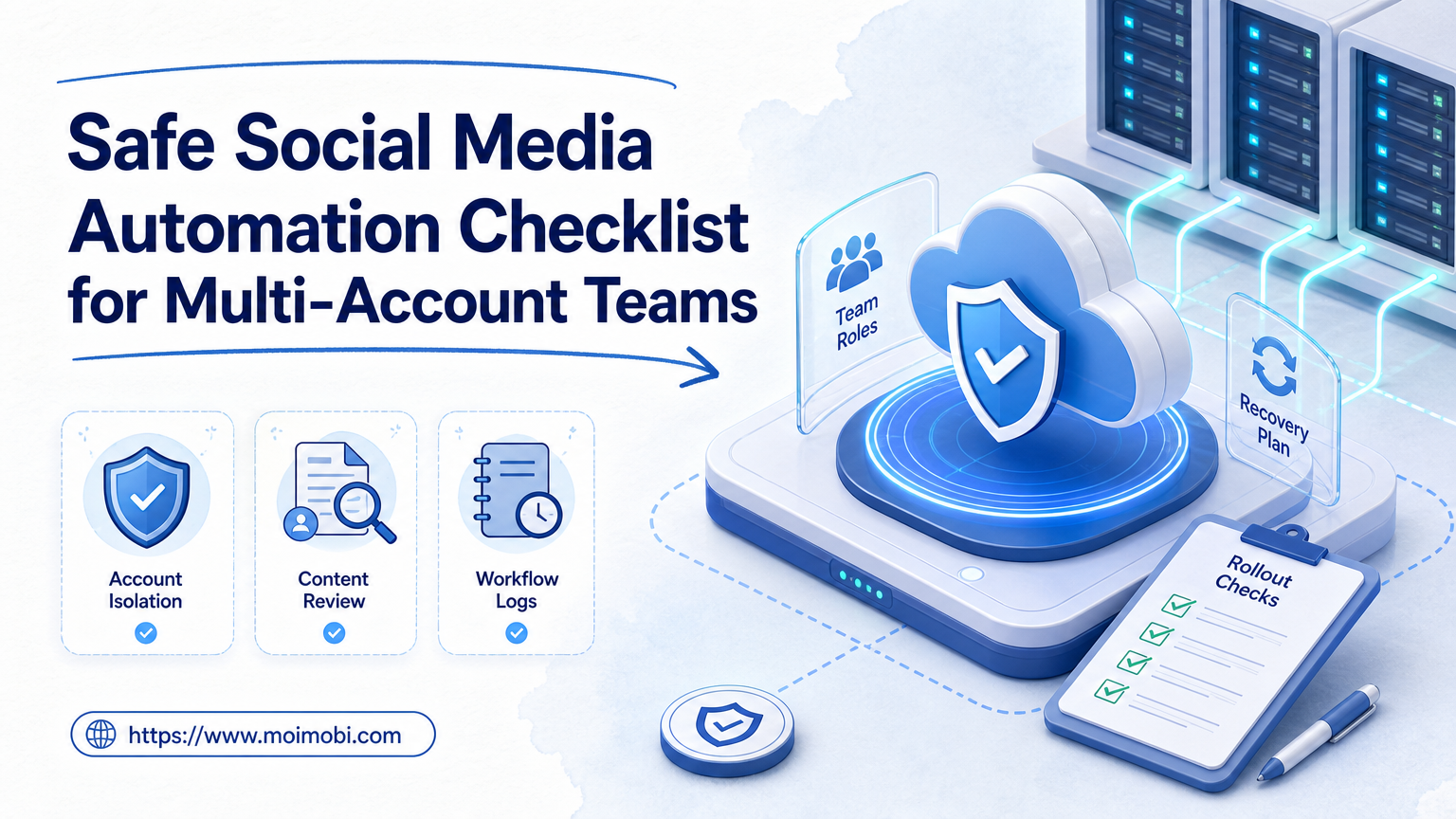
Recovery rules are part of the pilot. Decide when a lane can return to service. Decide when it needs reset. Decide who approves a reset. Decide what happens if the app state, account note, or route no longer matches the task.
Simple logs are enough for the first run. Record the store, lane, owner, app, status, next step, and issue. A short log is more likely to be used than a long report. It also helps managers see patterns.
Keep the pilot board small. It can show store, lane, task, owner, status, and next step. Each row should be easy to read in a few seconds. Long notes are less useful when operators are busy.
Check a small sample before the next run. Pick a few rows, open the matching lane, and verify the note. Look for simple signs: wrong owner, old status, missing next step, or a task that needs reset. Fix the pattern before more stores are added.
Review a small sample each day. Pick a few accounts or tasks and check the source, status, and next step. Look for missing notes, unclear ownership, wrong route, or repeated app issues. Fix the pattern before adding more stores.
The pilot is ready to expand when another operator can follow the same process without private help. That is the real test. If the system depends on one person's memory, it is not ready for scale.
Frequently Asked Questions
What is ecommerce account management on cloud phones?
It is a way to run store, seller, support, and app-based account tasks inside remote Android environments. The goal is cleaner account lanes, shared access, and easier review.
Does this replace ecommerce software or a marketplace dashboard?
No. It supports mobile account work. Store systems, dashboards, order tools, and support tools still handle their own jobs.
When should a team use cloud phones for ecommerce account work?
Use cloud phones when account tasks need mobile apps, separate environments, remote operators, and repeatable handoff. Browser-only work may not need this layer.
How many accounts should a pilot include?
Use one account group or one store workflow first. Add more only after the team can run, review, and recover the first lane clearly.
Can this help agencies manage client ecommerce accounts?
Yes, when each client has a separate lane, owner, route rule, and review process. Client work should not be mixed without labels.
What should be automated first?
Automate stable repeat steps. Examples include opening known app paths, marking task status, or following a check order. Keep judgment-heavy decisions under review.
What is the main risk?
The main operational risk is mixed context. Accounts, routes, app states, and task notes can drift if the team does not use clear labels.
What metrics matter most?
Measure missed tasks, handoff time, review time, blocked lanes, reset frequency, and rework. Raw action count is not enough.
Conclusion
Ecommerce account management on cloud phones is useful when account work is mobile-heavy, repeated, and shared across people. It gives teams a way to separate environments, assign tasks, and review app-based work without relying on one local phone or one operator's memory.
The practical value comes from structure. Each phone lane should have an account purpose, route rule, task list, owner, status, and recovery rule. Ecommerce operations become easier to manage when those parts are visible.
Use one small pilot. Choose one account group, one daily task list, and one review owner. Measure setup time, missed tasks, handoff quality, and recovery speed. Expand only when another operator can run the same process without private knowledge.
For teams that need mobile account lanes, MoiMobi can act as the execution layer. Use cloud phones for the mobile runtime, isolation for cleaner separation, routing rules for clearer context, and review habits for stable work. That is how multi-account ecommerce work becomes easier to run at team scale.