Key Takeaways
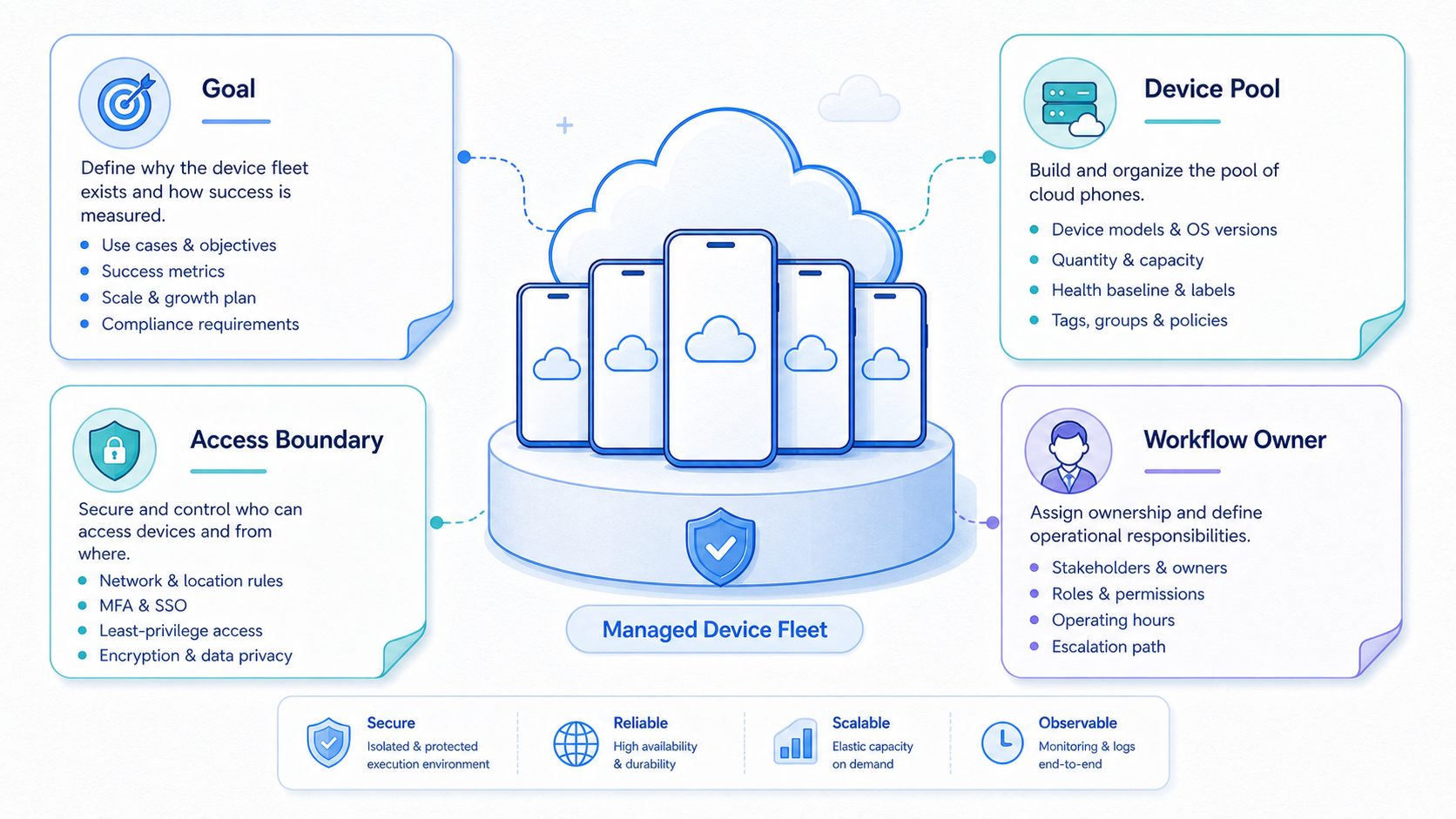
- A device fleet is a managed pool of mobile environments used for repeatable team workflows.
- The value comes from ownership, lane control, recovery, and review, not from device count alone.
- MoiMobi should be understood as execution infrastructure, not only as a rental cloud phone tool.
- Teams need clear rules for device isolation, routing, handoff, and retirement.
- A pilot should prove that the fleet makes work easier to assign, run, review, and recover.
Introduction.
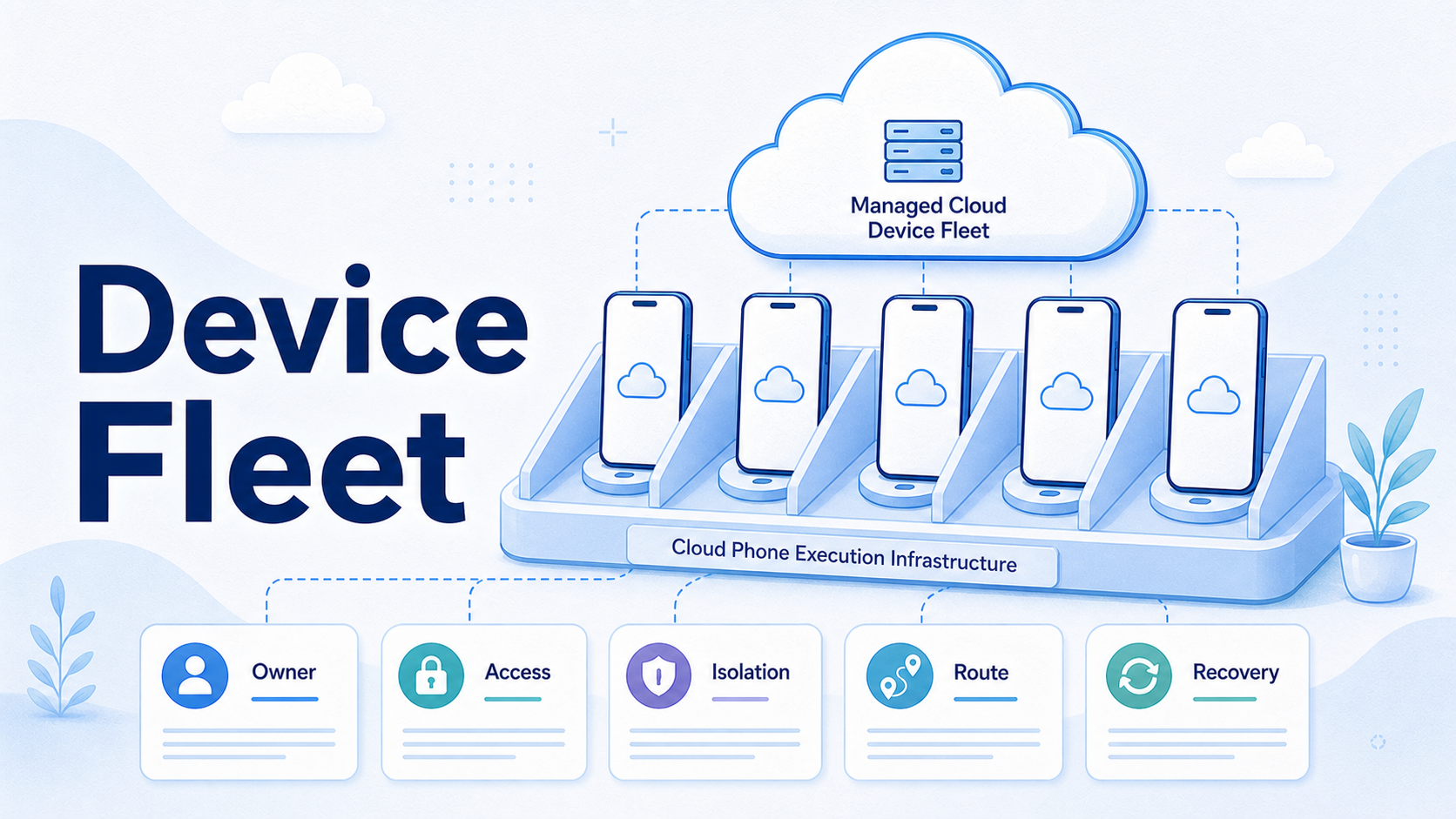
A device fleet is a managed set of mobile environments that teams use to run repeatable mobile workflows. In a cloud phone context, the fleet gives operators remote mobile lanes that can be assigned, separated, reviewed, and recovered. The goal is not to collect more devices. The goal is to make mobile execution stable enough for team work.
MoiMobi frames a device fleet as cloud phone execution infrastructure. That means the fleet is one layer inside a wider operating system. A team may combine cloud phone access, device isolation, routing notes, automation, and review rules. Each layer should make the work easier to control.
This matters when mobile work stops being a solo task. One person can manage a few phones from a desk. A team needs named lanes, owners, backups, and recovery paths. Without those basics, a phone farm can become a pile of unclear states.
Google's guidance on creating helpful content is about search quality, not device fleets. The principle still applies. Infrastructure should support useful, accountable work. It should not only make weak work faster.
What Is Device Fleet | MoiMobi - Cloud Phone Execution Infrastructure?
Device fleet infrastructure is the operating layer that turns many mobile environments into managed work lanes. Each lane should have a purpose, owner, access path, account group, route note, and recovery action. The device itself is only part of the system.
A simple example makes the idea clearer. An agency may need ten mobile lanes for client campaign checks. A weak setup labels them as phone one through phone ten. A better setup labels them by client group, owner, workflow, route, and review date. The second setup is easier to hand off.
MoiMobi's role is not just to provide remote screens. The stronger use case is controlled execution. A team can decide which operator owns a lane, which account group belongs there, and when the lane should be paused or retired. That turns cloud phones into business infrastructure.
A device fleet also changes how managers review work. Instead of asking each person what happened, a manager can inspect lane status. Which lanes are active? Which lanes are blocked? Which lanes need cleanup? These questions are simple, but they prevent expensive confusion.
The model is useful for multi-account management, social media operations, app checks, marketplace support, and regional review tasks. It is not useful when the team refuses to document ownership or state. A fleet without records becomes another unmanaged tool.
Why Device Fleet | MoiMobi - Cloud Phone Execution Infrastructure Matters
The main myth is that a larger fleet automatically means better scale. More lanes can help only when the team can explain what each lane does. A larger unmanaged fleet creates more places for state to drift.
Operations teams usually feel the problem before they name it. A device is missing. A route changed. An account state is unclear. A former operator remembers the answer, but that person is not available. The team loses time because the workflow lives in memory.
Device fleet infrastructure moves that memory into the system. The lane record becomes the source of truth. It does not need to be long. It needs to be clear enough for another operator to continue work.
The business value is often hidden in small savings. A team may reduce repeated questions. Broken lanes can recover faster. Account groups are less likely to mix when lane rules are clear. Stale environments are easier to find and close. These gains are practical even when they do not look dramatic.
Policy awareness still matters. Google publishes broad product-policy resources through the Google Play Policy Center. Teams should treat app and platform rules as boundaries. A fleet should not be framed as a way to ignore those rules.
The right view is calm and operational. A device fleet supports work that already has a reason to exist. It gives the team cleaner lanes, clearer ownership, and better review. It does not replace judgment, content quality, or platform-aware planning.
The same view helps teams avoid overlap between infrastructure pages and task pages. A device fleet article should explain the operating system behind the work. A task page can explain a specific use case such as social media marketing or account support. Keeping that split clear helps readers find the next step without reading the same promise twice.
Strong infrastructure also makes later choices easier. A team can compare physical phones, cloud phones, and emulators against the same lane rules. The rules do not change every time the tool changes. Purpose, owner, state, route, and recovery stay central.
Key Benefits and Use Cases
The first benefit is parallel capacity. A team can run several mobile workflows without passing one physical phone around. Parallel capacity helps only when each lane has a defined job. Otherwise, it increases noise.
The second benefit is handoff. A cloud phone lane can be passed from one operator to another when notes are current. The backup does not need to ask where the device is or what changed last. This is valuable for agencies and distributed teams.
The third benefit is separation. Teams doing account-based work should avoid casual mixing of clients, campaigns, or regions. MoiMobi's device isolation page is relevant when separation is part of the operating model. Separation does not remove policy duties, but it helps teams keep context clear.
The fourth benefit is recovery. A lane can break because an app changes, a credential expires, a route fails, or an operator makes a wrong change. A managed fleet gives the team a place to record the next action. Restore, pause, retire, or escalate.
Common use cases include social media checks, account support, app review, regional workflow testing, and campaign operations. A phone farm model may make sense when capacity is the main constraint. A cloud phone model may fit better when remote access and team handoff matter more.
Social media operations often need the clearest lane records. A campaign can involve several people, many assets, and different review states. A lane record keeps work from turning into a private memory. It also helps managers decide which lanes should continue after a campaign ends.
Customer support and account care have a different pattern. The work may be less about volume and more about state. The operator needs to know what happened last, what account group is involved, and what action is safe to take next. A cloud phone lane can give that state a stable place.
Regional checks add another layer. Teams may need to compare how an app or campaign appears in different markets. A lane should then carry a region note, route note, owner, and last review time. Without those notes, the team may confuse a regional issue with a device issue.
For app review or QA-adjacent work, a device fleet should not replace engineering tools. The fleet can support operator-facing checks after technical testing is done. The team should still use the right test tools for builds, logs, and code-level issues.
Good fit
- Shared mobile workflows with more than one operator.
- Account groups that need clear lane separation.
- Remote teams that need stable access.
- Work that needs review, backup, and recovery.
Poor fit
- One-off checks with no recurring workflow.
- Projects with no owner or review rule.
- Work that depends on unsupported platform claims.
- Teams that will not keep lane notes current.
How to Get Started with Device Fleet | MoiMobi - Cloud Phone Execution Infrastructure
Begin with one real workflow. A pilot should test the work that already causes friction. Do not begin with a perfect demo task. Demo tasks hide the handoff and recovery problems that a device fleet is supposed to solve.
Checkpoint: purpose. Each lane needs a reason to exist. Pass means the team can say what the lane does in one sentence. Fail means the lane becomes a place for unrelated apps and accounts.
Checkpoint: owner. Each lane needs one owner and one backup. Pass means someone updates notes and someone else can continue work. Fail means everyone can open the lane, but nobody owns state.
Checkpoint: access and route. Some workflows need route notes and access rules. Pass means the route is documented. Fail means the setup lives in one operator's memory. MoiMobi's proxy network page is relevant when routing is part of the decision.
Checkpoint: isolation. Account groups, clients, and regions should not be mixed casually. Pass means the team can explain what belongs in each lane. Fail means one device carries too many unrelated contexts.
Checkpoint: recovery. A lane needs a next action when work breaks. Pass means restore, pause, retire, or escalate is written down. Fail means every issue becomes a live call.
| Pilot measure | What to track | Healthy sign |
|---|---|---|
| Handoff time | Time needed for another operator to continue. | The backup can work from notes. |
| Blocked tasks | Tasks stopped by missing state or access. | Blockers decline after lane rules improve. |
| Recovery time | Time needed to restore, pause, or retire a lane. | Common issues have a known next step. |
| Lane cleanup | Unused lanes found and closed. | Old lanes do not stay active by habit. |
Add mobile automation only after the manual lane is clear. Automation is useful when the task is repeatable and reviewed. Weak ownership and recovery rules can make automation spread errors faster.
Build the first lane record
Start with a one-page record. Use plain labels that any operator can read. The record should include lane name, workflow, owner, backup, account group, route note, last state, next step, and review date. Add one line for recovery.
Place the record close to the work. A note hidden in a separate document will go stale. A note that operators see during handoff is more likely to stay current.
The first lane record should answer five simple questions.
- What work does this lane support?
- Who owns the lane today?
- Which account group or client belongs here?
- What changed during the last session?
- What should the next operator do if work is blocked?
These questions are basic by design. A team that cannot answer them should not scale the fleet yet. More lanes will only create more unclear states.
Review loop for scale decisions
Review the pilot after enough real work has passed through it. A short setup test is not enough. The team needs to see handoff, blocked work, app changes, cleanup, and recovery.
Use a weekly review for the first month. Make the meeting short. Ask which lanes helped work move, which lanes caused confusion, and which lanes should be closed. Then update the rules before adding more capacity.
The review should include finance and operations when possible. Finance sees recurring cost. Operations sees daily friction. Together they can decide whether new lanes are worth the added cost.
Good review loops also prevent tool sprawl. A team may start with cloud phones, keep some physical devices, and use emulators for testing. The review loop keeps each environment tied to a job.
Common Mistakes to Avoid
The first mistake is buying capacity before defining lanes. More cloud phones or more physical phones will not fix vague ownership. Write the lane record before adding volume.
The second mistake is treating a device fleet as a hidden growth hack. That language creates bad expectations. A fleet is infrastructure for real work. It should support quality, review, and policy-aware execution.
The third mistake is ignoring cleanup. Stale lanes keep costing time and money. They also confuse operators who do not know whether a lane is still active. A monthly review should pause or retire unused lanes.
The fourth mistake is placing every workflow in the same model. Some tasks need a cloud phone lane. Some need a physical device. Some need an emulator or a test setup. Good teams choose the tool by workflow.
The fifth mistake is making notes too long. Long notes are hard to keep fresh. Short notes work better when they cover purpose, owner, account group, route, state, and next action.
Another mistake is hiding risk inside vague language. Phrases like "safer account work" or "clean growth" are not enough. Teams need concrete controls. Who can access the lane? What route is used? Which account group belongs there? What is the stop rule?
Weak access rules create quiet problems. Too many people can change a lane, and nobody knows which change caused the issue. Use role-based access where the workflow requires it. At minimum, keep a record of who owns the next action.
Unclear routing can also create confusion. A route note does not need to be complex. It should tell the next operator which path is expected and when to escalate. If routing is part of the workflow, treat it as a core lane field.
Some teams also scale before they clean up. Old lanes stay alive because closing them feels slower than ignoring them. That habit makes the whole fleet harder to trust. Close stale lanes as part of normal work, not as a rare cleanup project.
Use a simple review habit.
- Keep lanes with clear use and current notes.
- Fix lanes with unclear ownership or weak recovery.
- Pause lanes with policy questions or repeated issues.
- Retire lanes with no recent use.
- Review scale only after the pilot shows cleaner work.
This habit keeps the device fleet tied to real value. It also gives finance and operations the same facts when they decide whether to add capacity.
Frequently Asked Questions
What is a device fleet?
A device fleet is a managed group of mobile environments used for repeatable work. The pool can include cloud phones, physical phones, or other mobile lanes. The important part is ownership and control.
How is MoiMobi related to device fleet infrastructure?
MoiMobi provides cloud phone execution infrastructure for teams that need remote mobile lanes. The platform can support access, separation, routing, and handoff when the team manages lanes well.
Is a device fleet the same as a phone farm?
Not exactly. A phone farm usually describes device capacity. A device fleet adds operating rules such as owners, lane records, recovery paths, and review cadence.
When should a team use cloud phones?
Cloud phones fit when mobile work is shared, remote, recurring, and hard to manage with local devices. They are most useful when handoff and recovery matter.
Does a device fleet remove account risk?
No. A device fleet does not remove app rules, platform policies, privacy duties, or quality requirements. It helps teams organize work, but judgment still matters.
What should a pilot measure?
Measure handoff time, blocked tasks, recovery time, lane cleanup, and operator questions. These metrics show whether the fleet improves the workflow.
How many lanes should a team start with?
Start with the smallest number that can prove one real workflow. A few well-managed lanes are more useful than many unclear lanes.
What should happen to unused lanes?
Unused lanes should be paused, reviewed, or retired. Keeping stale lanes active makes the fleet harder to manage.
How does a device fleet support team handoff?
It gives the next operator a clear lane record. The record shows purpose, owner, account group, last state, and next action. That reduces the need for live explanations.
Should every mobile workflow use the same lane type?
No. Some work fits cloud phones. Some work fits physical devices. Some work fits test tools. The lane type should match the job, not the other way around.
Conclusion
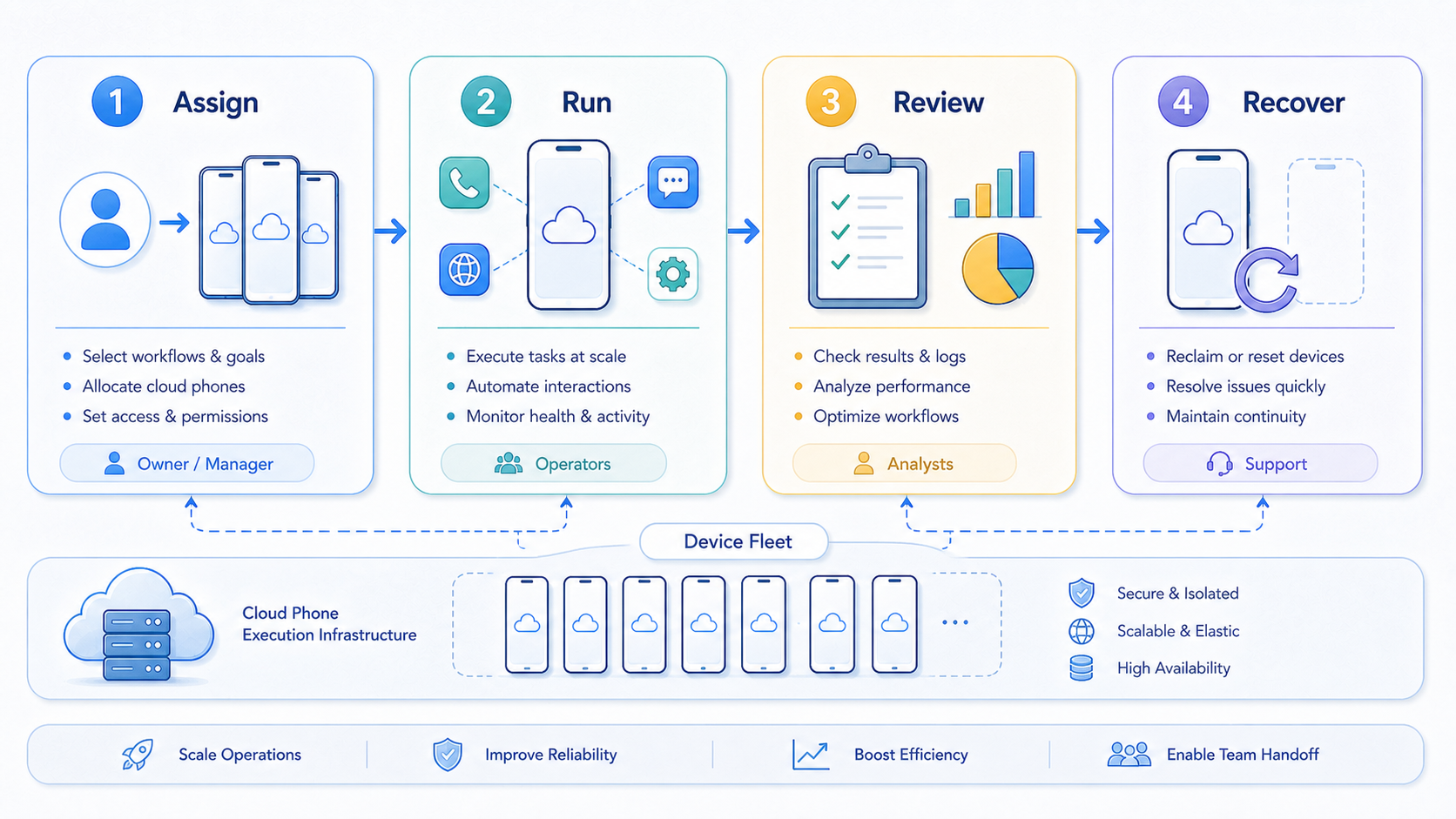
Device Fleet | MoiMobi - Cloud Phone Execution Infrastructure is best understood as a way to make mobile work manageable at team scale. The device count matters less than the operating model. A useful fleet has clear purpose, ownership, access notes, separation, recovery, and review.
Pick one workflow that already causes friction. Define the lane, owner, backup, route, account group, last state, and next action. Run the pilot long enough to see handoff and recovery, not only setup.
The final decision should be based on field evidence. Did the backup work from notes? Did blocked tasks fall? Did managers see stale lanes sooner? Did operators ask fewer repeat questions? These checks show whether the fleet is doing real work for the team.
Keep the scale plan modest. Add a few lanes only after the first lane record works. Review them each week. Close what no one uses. Improve what slows people down. This simple rhythm keeps a device fleet useful after launch and easier to defend in budget reviews.
The next step is simple. Write a lane record for one real mobile workflow. If the record is unclear, fix the process before adding more devices. If the record is clear and the pilot improves handoff, recovery, and review, the device fleet has a stronger business case.
Ground the decision in proof. A good device fleet should make work calmer, not louder. Operators should know what to do next. Managers should see which lanes need attention. Old lanes should close before they become background noise. When those habits are present, MoiMobi can support a cleaner cloud phone execution model for teams that need mobile workflows at scale, across daily work and planned reviews.