Key Takeaways
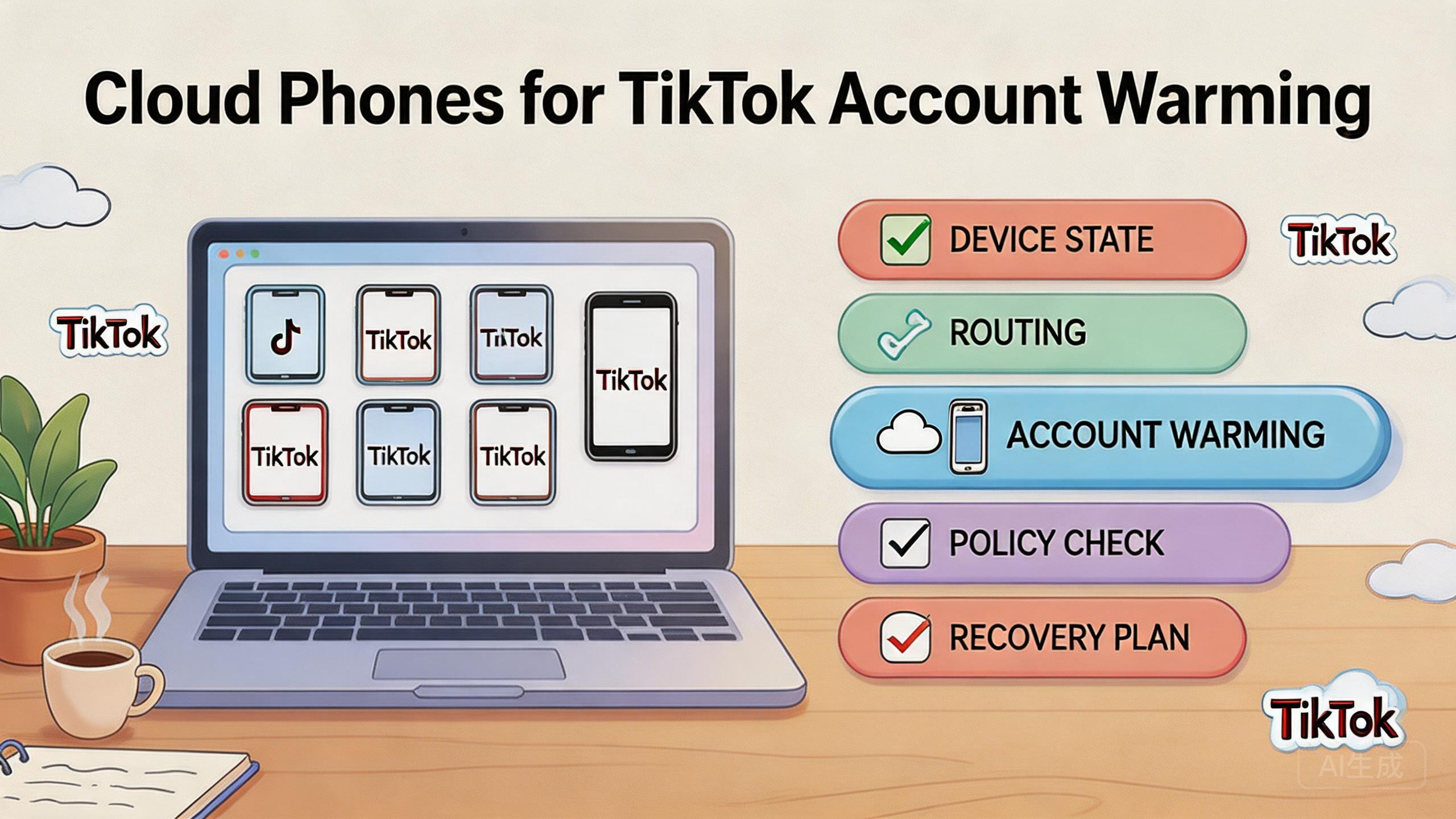
- Account warming on cloud phones means preparing and operating mobile account workflows in a controlled remote Android environment.
- The useful goal is not shortcut behavior. The goal is cleaner state, clear ownership, stable handoff, and cautious review.
- Teams still need platform policy judgment. Infrastructure cannot remove account or content responsibility.
- A small pilot should measure setup quality, handoff clarity, recovery time, and review discipline before scale.
Introduction
Account warming on cloud phones is the process of preparing mobile account workflows in hosted Android environments with controlled access, state, and review. For TikTok teams, the term should be handled carefully. It should mean a structured operating process, not a promise of account safety or a way to bypass platform rules.
The decision is operational. Teams often need mobile access for content review, account setup, app checks, and multi-person handoff. A local phone can work for one person. A distributed team usually needs clearer device state, routing notes, and reset rules.
Cloud phones can help when the workflow is repeatable. They give teams remote Android access and make shared work easier to assign. The value is stronger when cloud phones are combined with device isolation, route discipline, and clear review steps.
MoiMobi fits this as mobile execution infrastructure. Its cloud phone, phone farm, device isolation, proxy network, and mobile automation layers help teams run mobile workflows with more structure.
Platform responsibility still matters. Google Play policy guidance is not TikTok policy, but it shows the broader rule for mobile operations: teams need to understand platform requirements and avoid treating tools as policy substitutes (Google Play Policy Center).
The Core Idea Behind Cloud Phones for TikTok Account Warming and account warming on cloud phones
The common misunderstanding is that account warming is only a timeline or a set of repeated actions. A better model is workflow readiness. Operators should know which account is being prepared, which device state applies, which person owns the task, and when the work should pause for review.
Cloud phones support that model by giving teams remote mobile environments. One hosted phone can be assigned to a workflow, opened by an operator, checked by a reviewer, and reset by an admin. The software does not decide whether the account behavior is acceptable. Human review does.
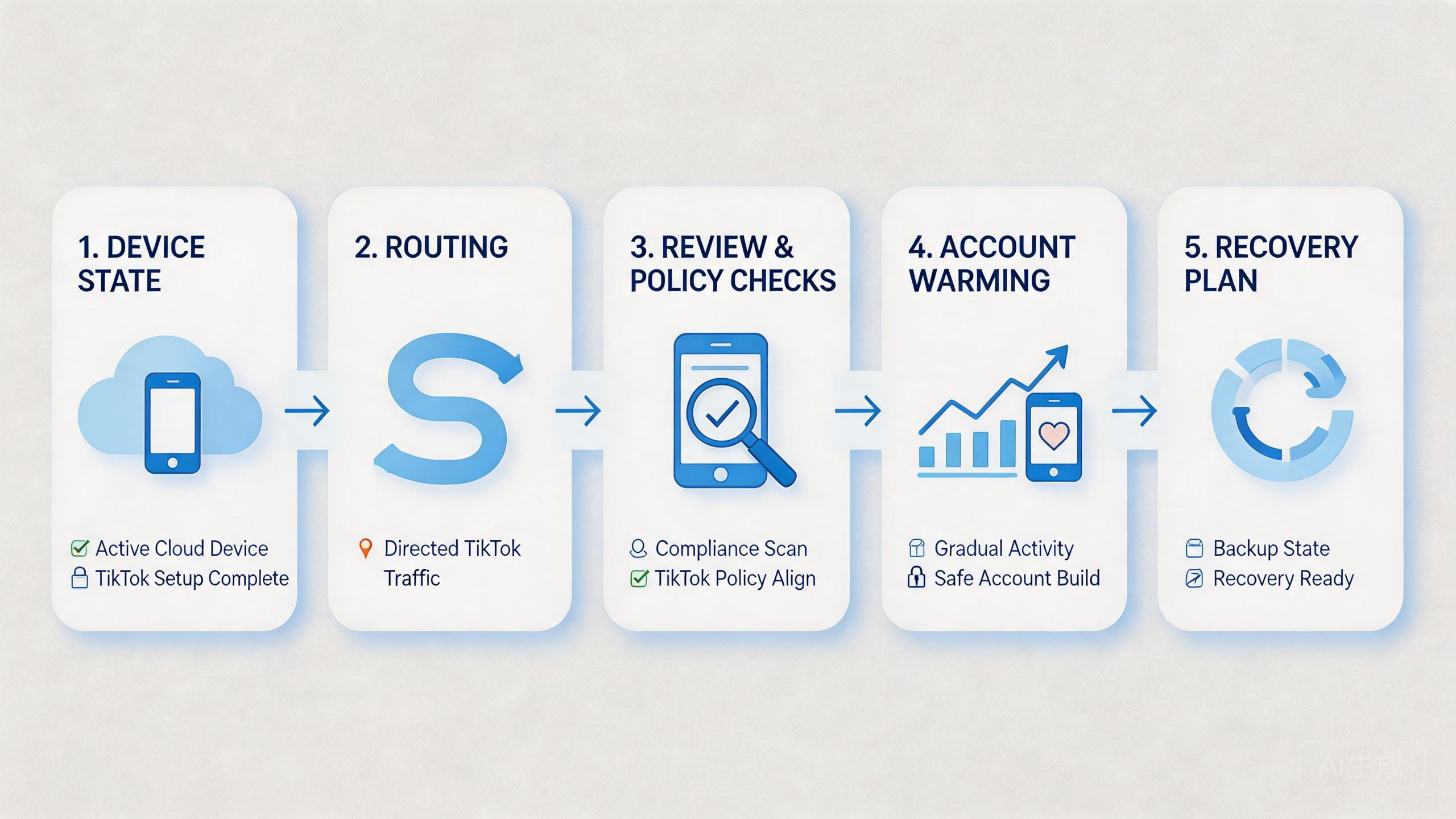
Device state is the first layer. A TikTok workflow may include app state, login state, content review, or role-based access. A device should not move between tasks without a known status. Clean, active, under review, and reset-needed are simple labels that help.
Account ownership is the second layer. Each workflow needs a current owner. Without ownership, people make assumptions. One person may think a device is ready. Another may know it still needs review. That gap creates errors.
Routing discipline is the third layer. Teams may need a known route for a workflow. A proxy network can support stable routing, but only when route rules are documented and not changed casually.
Review is the fourth layer. A reviewer should be able to see what happened without chasing private chat history. Good review includes device status, task notes, route context, and next action.
Simple operating model:
| Layer | Team question | Good practice |
|---|---|---|
| Device state | Is this phone ready for this workflow? | Use clear labels before reuse. |
| Account owner | Who owns the current task? | Assign one person or team. |
| Route policy | Which route is expected? | Record the rule and exceptions. |
| Review | Who checks the result? | Separate operator and reviewer roles. |
| Recovery | What happens after a bad run? | Pause, reset, or quarantine the phone. |
This model keeps the discussion grounded. Cloud phones are useful when they make the workflow easier to control. They are not useful when they encourage hidden or unreviewed actions.
Why Teams Search for This Topic and account warming on cloud phones
Teams search for this topic when mobile account work becomes hard to manage. One operator may be able to handle a few accounts from local phones. A team with several operators, reviewers, and managers needs a more visible process.
Handoff is the first pressure point. A content person may start a task. A reviewer may need to inspect the result. A manager may need to know whether the device can be reused. Without a shared system, the answer often lives in chat messages.
Account-state confusion is another reason. A device may have old app data, unclear login state, or pending review work. When that state is unknown, teams cannot tell whether a problem came from the account, device, route, app behavior, or operator action.
Distributed work adds a third reason. Teams may work across locations. Shipping physical phones is slow. Remote access can help, but remote access alone is not enough. Operators still need ownership, route notes, review, and recovery.
The practical decision is whether cloud phones reduce confusion. A good setup should answer basic questions quickly:
- Which account workflow is active?
- Which cloud phone is assigned?
- Who owns the task?
- Which route or context is expected?
- What must happen before reuse?
Google Search Central's helpful content guidance stresses usefulness and clarity (Google Search Central). Operations should follow the same idea. If a tool does not make the work clearer, it may not be helping.
For TikTok account workflows, the tone should stay cautious. Avoid claims that any setup makes account outcomes certain. Better infrastructure can support better process. It cannot promise platform decisions.
Who Benefits Most and In What Situations
The strongest fit appears when several people share mobile account work. A team that needs assignment, review, routing notes, and reset rules can benefit from cloud phones. A solo operator with occasional tasks may not need a full system.
Social media operations teams are a common fit. They may need to check app behavior, review account state, or run repeated mobile workflows. MoiMobi's social media marketing context is relevant when the work is content-operation driven.
Multi-account teams may also benefit. They need separation across accounts, roles, and tasks. Device isolation matters when teams need clearer boundaries between workflows.
Agencies and distributed teams often need shared access. A reviewer in one location may need to inspect work from another operator. Cloud phones can reduce waiting when the phone state is clear and the review path is defined.
QA and support teams may use the same infrastructure for app checks. They may need to reproduce mobile states or review app behavior after account setup. In that case, phone farm capacity may matter more than a single phone.
Fit boundary:
- Strong fit: repeated mobile workflows, shared operators, review needs, account-state checks, and clear recovery rules.
- Medium fit: mixed workflows where some checks need cloud access and others need local phones.
- Weak fit: undefined account work, one-off tasks, no review owner, or expectations of certain outcomes.
The weak-fit category is important. Hosted phone infrastructure should not be used to hide unclear process. If the team cannot describe acceptable workflow rules, start there before adding devices.
How to Evaluate or Start Using Cloud Phones for TikTok Account Warming
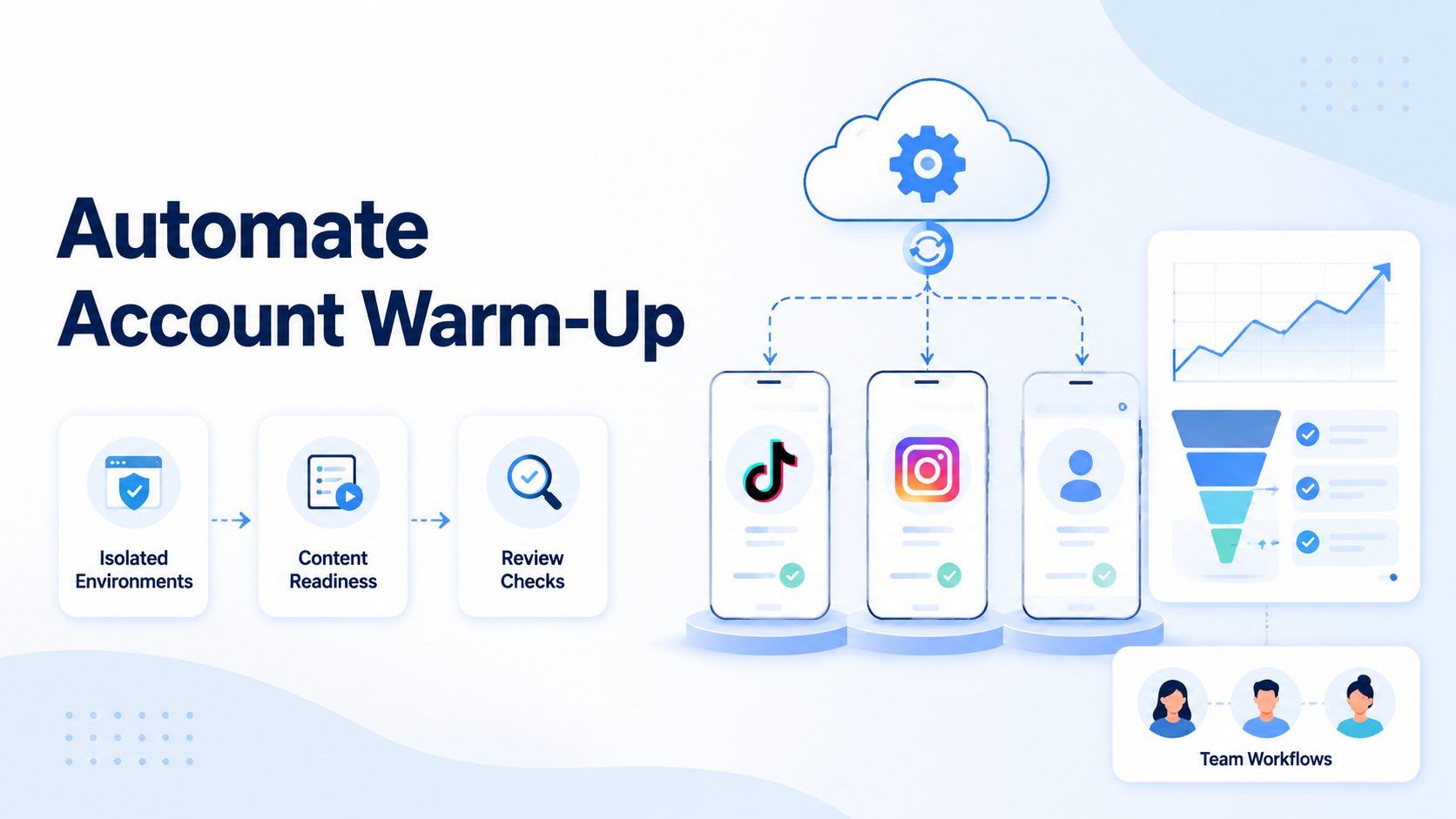
Start with guardrails. Account warming on cloud phones should begin with a workflow map, not a device purchase. The map should explain the task, owner, device state, route expectation, review path, and stop condition.
Use this step path:
- Define the workflow. Name the account task, app path, content role, and expected outcome. Keep the description short enough for a new operator to understand.
- Assign the cloud phone. Tie one phone or pool to the workflow. Do not mix unrelated tasks during the pilot.
- Set state labels. Use clean, active, under review, and reset-needed. These labels prevent vague reuse.
- Document routing. Record the expected route or network context. Note any exception before continuing.
- Separate roles. Operators run tasks. Reviewers inspect outcomes. Admins reset or reassign phones.
- Create a stop rule. Pause work when state, route, or ownership becomes unclear.
- Review before scale. Expand only after handoff and recovery are stable.
The process should be easy to audit. A manager should know who touched the workflow, which phone was used, and what should happen next. If that information is missing, the system needs better notes.
MoiMobi can support this by connecting cloud access with isolation, routing, and recovery. The stack is useful when the team treats it as infrastructure. It is less useful when people use it as a loose collection of remote devices.
Automation should come later. Mobile automation can repeat known steps, but it should not run on unclear account state. A stable manual process should come first.
Mistakes That Reduce Results
The first mistake is treating account warming as a trick. A safer operating view is preparation, review, and state discipline. Teams should avoid any claim that a device setup can remove account or platform responsibility.
The second mistake is weak ownership. Every active account workflow should have a current owner. Without ownership, devices get reused too early and reviewers lose context.
The third mistake is unclear device state. A remote phone may look ready while old state remains. Labels help. Clean means ready. Active means in use. Under review means waiting. Reset-needed means do not reuse yet.
The fourth mistake is casual routing. Route changes may be part of a valid test, but they should be recorded. Hidden changes make troubleshooting harder and reduce trust in the workflow.
The fifth mistake is using one pool for every task. Content review, account setup, QA, and support checks may need different rules. Separate pools or labels reduce confusion.
The sixth mistake is skipping reviewer access. A reviewer should not depend on screenshots alone. They need enough context to understand the device state, task result, and next step.
The final mistake is scaling before the pilot works. More phones can multiply unclear process. A small stable pool is usually more useful than a large messy pool.
Plain operating rules help. Keep task names short. Keep state labels visible. Keep route notes simple. Keep recovery ownership clear. These habits make team work easier.
Pilot Rollout, Measurement, and Recovery Checks
A pilot is not a proof that every future account workflow will work. It is a test of whether the team can run one workflow clearly. Choose a narrow TikTok-related mobile task that happens often enough to reveal friction.
Measure setup time first. Track how long it takes to prepare the cloud phone for the task. If setup depends on old chat history, the process is not ready.
Measure handoff time next. Ask a second operator to continue the workflow. If they need a long explanation, improve status labels and notes before adding more phones.
Measure review clarity after that. A reviewer should see the account task, device state, route note, and outcome. If review depends on private messages, the system is still fragile.
Measure recovery time last. A failed or unclear phone should have a stop rule. Someone should know when to pause reuse, reset the device, or quarantine it.
Pilot scorecard:
| Signal | Pass condition | Warning sign |
|---|---|---|
| Setup | Operator can start without rebuilding context. | Setup depends on chat history. |
| Handoff | Another operator can continue the workflow. | Work stops until one person explains. |
| Review | Reviewer can inspect state and outcome. | Review depends only on screenshots. |
| Routing | Expected route is visible. | Route changes are not logged. |
| Recovery | Failed phone has a clear owner. | Device returns before review. |
The pilot should produce a written rule set. Include pool name, account owner, state labels, route policy, reviewer role, and recovery owner. A new operator should be able to follow it without asking the original builder.
Expansion should follow evidence. Add devices only when the team can repeat the workflow with low confusion. If the pilot exposes unclear ownership or weak review, fix the process first.
Team Control Model for account warming on cloud phones
Team control is the part that keeps account warming on cloud phones from becoming informal device use. Every active workflow should have a small control record. The record does not need to be complex. It should show the phone, owner, state, route note, review status, and next action.
Start with phone identity. Each hosted phone should have a stable name or pool label. Operators should not choose devices randomly. A named phone or pool makes later review easier.
Add account workflow ownership next. One person or team should own the current task. The owner is responsible for notes, state updates, and handoff. This avoids the common problem where several people assume someone else checked the device.
State labels should stay simple. Use clean, active, under review, reset-needed, and paused. These labels are easy to understand and hard to misuse. A phone marked paused should not return to the pool until someone reviews the reason.
Route notes should be visible before work starts. Everyone should know which route is expected and when changes are allowed. A route exception should be logged, not remembered privately.
Reviewer access should be planned. A reviewer may not need full admin control. They may need enough visibility to inspect the task and confirm next steps. Separating reviewer access from operator access reduces accidental changes.
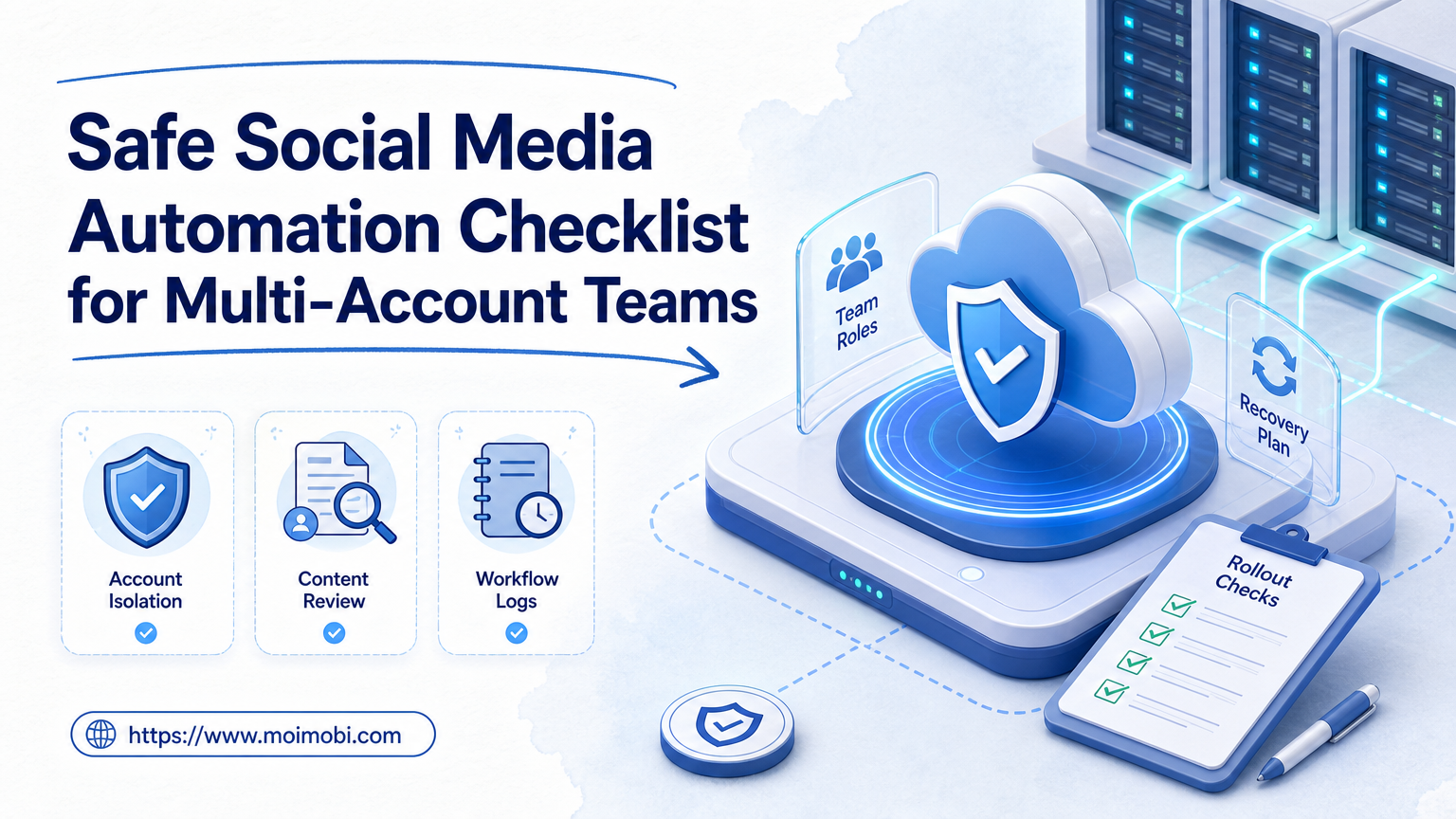
Control checklist:
| Control point | Required note | Why it matters |
|---|---|---|
| Phone label | Device or pool name | Prevents random assignment |
| Owner | Person or team responsible | Keeps accountability clear |
| State | Clean, active, review, reset, paused | Stops vague reuse |
| Route | Expected route or exception | Supports troubleshooting |
| Review | Reviewer and decision | Makes handoff visible |
This control model also helps managers judge capacity. A pool with ten phones is not useful if five have unclear state. Real capacity means phones are clean, assigned, reviewed, and recoverable.
How to Compare Providers for account warming on cloud phones
Provider comparison should begin with the workflow, not the feature list. A tool with many options may still fail if the team cannot see device state or review history. A simpler tool may work better when it keeps daily control clear.
Compare access first. Operators should be able to reach the right phone without waiting for local hardware. Reviewers should be able to inspect work without disrupting the operator. Admins should be able to reset or reassign devices when needed.
Compare isolation second. TikTok-related account workflows may involve different roles, tasks, and review states. A provider should help separate those contexts. MoiMobi's device isolation layer is relevant when mixed state is a concern.
Compare routing third. The platform should support clear route notes and stable policy. The value is not only having a route. The value is making the expected route visible to the next person.
Compare recovery last. Failed or unclear runs are normal in real operations. The better question is whether the provider helps the team pause, inspect, reset, and return a phone to service with less confusion.
Selection questions:
- Can the team see device state quickly?
- Can reviewers inspect without changing the workflow?
- Can route notes stay attached to the task?
- Can admins quarantine unclear phones?
- Can the pilot start small before the team expands?
The right provider should make the work calmer. Operators know where to work. Reviewers know what to check. Managers know whether the pool is truly ready.
Frequently Asked Questions
What does account warming on cloud phones mean?
It means preparing mobile account workflows in hosted Android environments with controlled state, access, and review. It should not mean certain outcomes or bypassing platform rules.
Are cloud phones enough for TikTok account operations?
No. Cloud phones provide remote mobile access. Teams still need ownership rules, review, policy awareness, routing notes, and recovery checks.
Can cloud phones make account workflows safer?
They can support cleaner process, but they cannot remove account risk or platform responsibility. Teams should use cautious rules and review each workflow.
When should device isolation be used?
Use isolation when different accounts, roles, or workflows need separation. It helps reduce mixed state and makes review easier.
Should automation be used for account warming?
Only after the manual workflow is stable. Automation can repeat known steps, but it cannot fix unclear state, weak policy judgment, or poor review.
What should a pilot measure first?
Measure setup time, handoff time, review clarity, route visibility, and recovery time. These signals show whether the process is ready to expand.
Who should not use this setup yet?
Teams without a defined workflow should wait. If ownership, review, route policy, and reset rules are unclear, start with process design.
How many cloud phones should a team start with?
Start with a small pool. The goal is to test repeatability, not volume. Expand only after the workflow is clear.
Conclusion
For TikTok account workflows, the priority order is process first, devices second, and scale third. Define the task, assign the cloud phone, label state, document routing, separate roles, and review before reuse.
MoiMobi fits teams that want mobile execution infrastructure rather than loose remote screens. Cloud phones provide access. Device isolation, proxy routing, phone farm capacity, and automation support the wider operating model.
The next step is a small pilot. Pick one account workflow, run it through a narrow phone pool, and measure setup, handoff, review, and recovery. Expand only when the team can repeat the process without private explanations or vague device state.