Key Takeaways
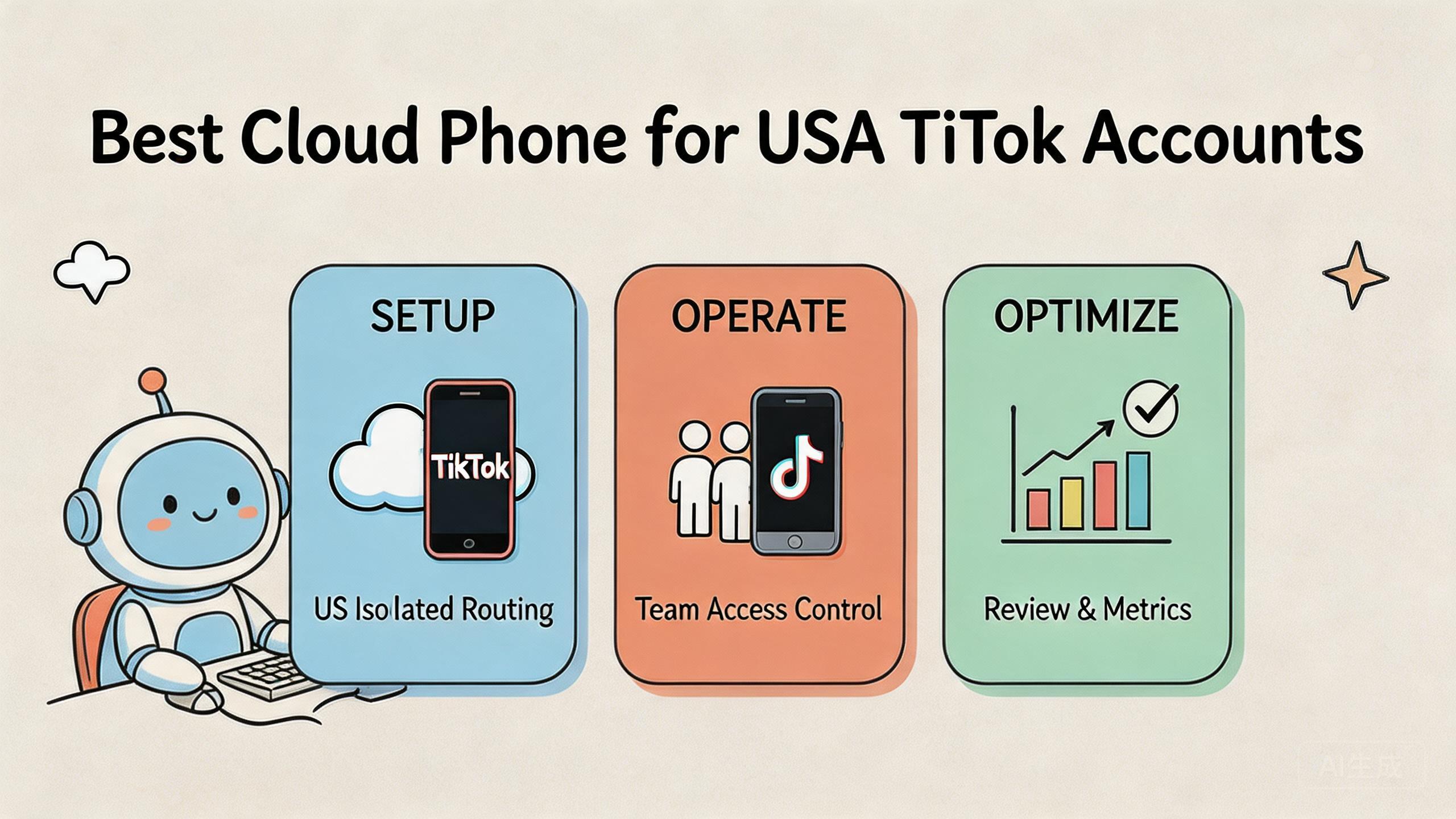
- The best cloud phone for USA TikTok accounts is usually the option that gives teams clean Android environments, stable routing rules, role control, and reviewable handoff.
- A strong setup should be judged by workflow fit, not only device count or a low monthly price.
- Account work needs cautious process design. No cloud phone can remove platform policy responsibility.
- Start with a small pilot, measure state quality and handoff speed, then scale only when the workflow is stable.
Introduction
A strong cloud phone for USA TikTok accounts means a remote Android environment that helps a team operate, review, and manage TikTok-related mobile workflows with clearer control. The decision is not only about renting a screen in the cloud. The real choice is an execution layer that supports account state, team access, routing discipline, and repeatable work.
Many teams reach this topic after local phones become hard to manage. One person can keep a few devices organized. A team handling multiple accounts, reviewers, creatives, or operators needs more structure. The problem usually starts with handoff. Nobody knows which device is clean, which account was used, which route was active, or who should reset the environment.
For USA TikTok account workflows, the selection should stay practical. You need a setup that makes mobile work easier to assign and review. You also need a process that respects platform rules, because infrastructure does not replace policy judgment.
Google's Android policy guidance is written for app distribution. Its broader lesson still applies to mobile operations: teams need to understand platform requirements instead of relying on tools alone (Google Play Policy Center).
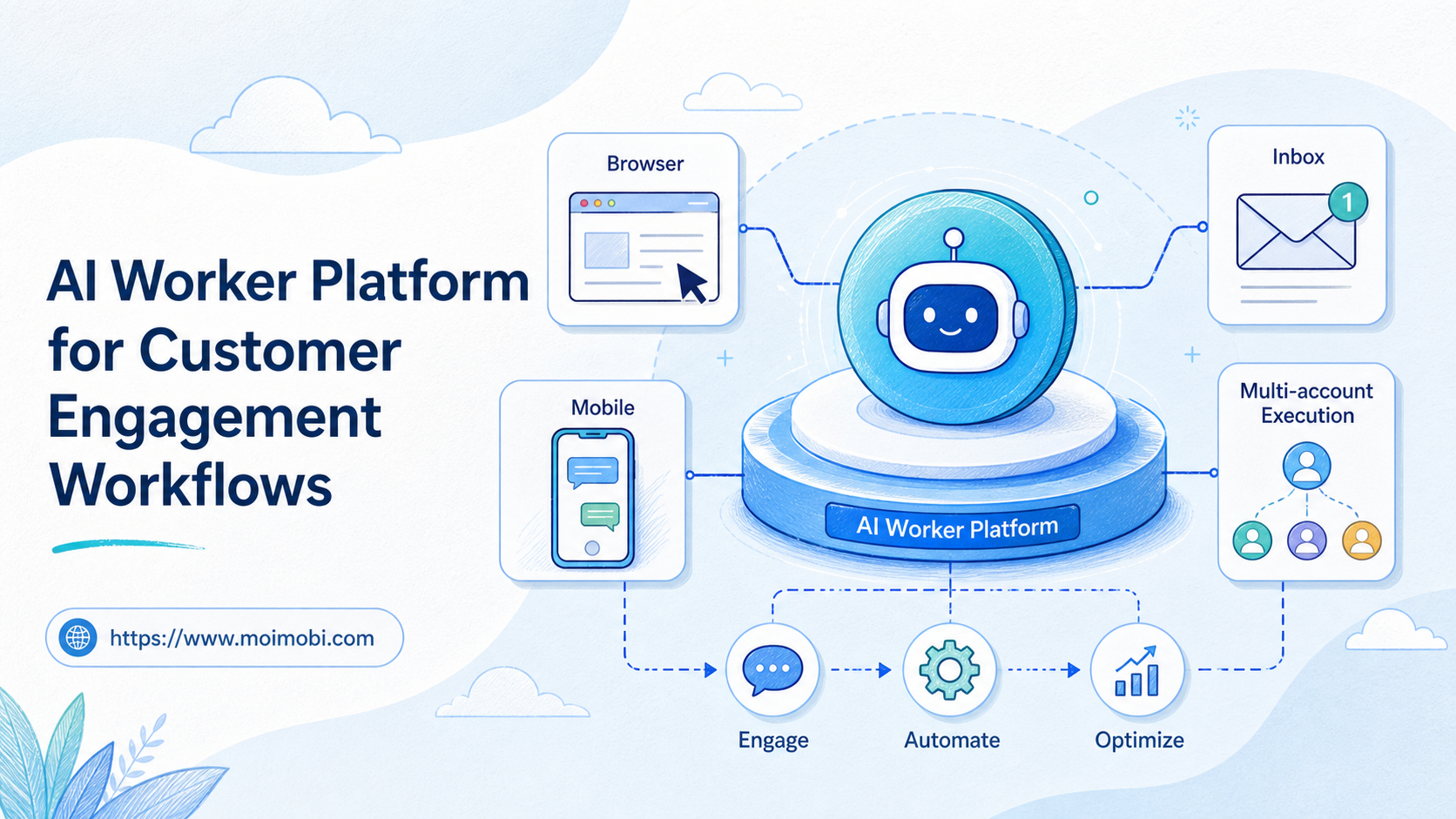
MoiMobi fits this as execution infrastructure. The stack can connect cloud phone, device isolation, proxy network, phone farm, and mobile automation. The real question is whether those layers match your account workflow.
What to Look for in a best cloud phone for usa tiktok accounts
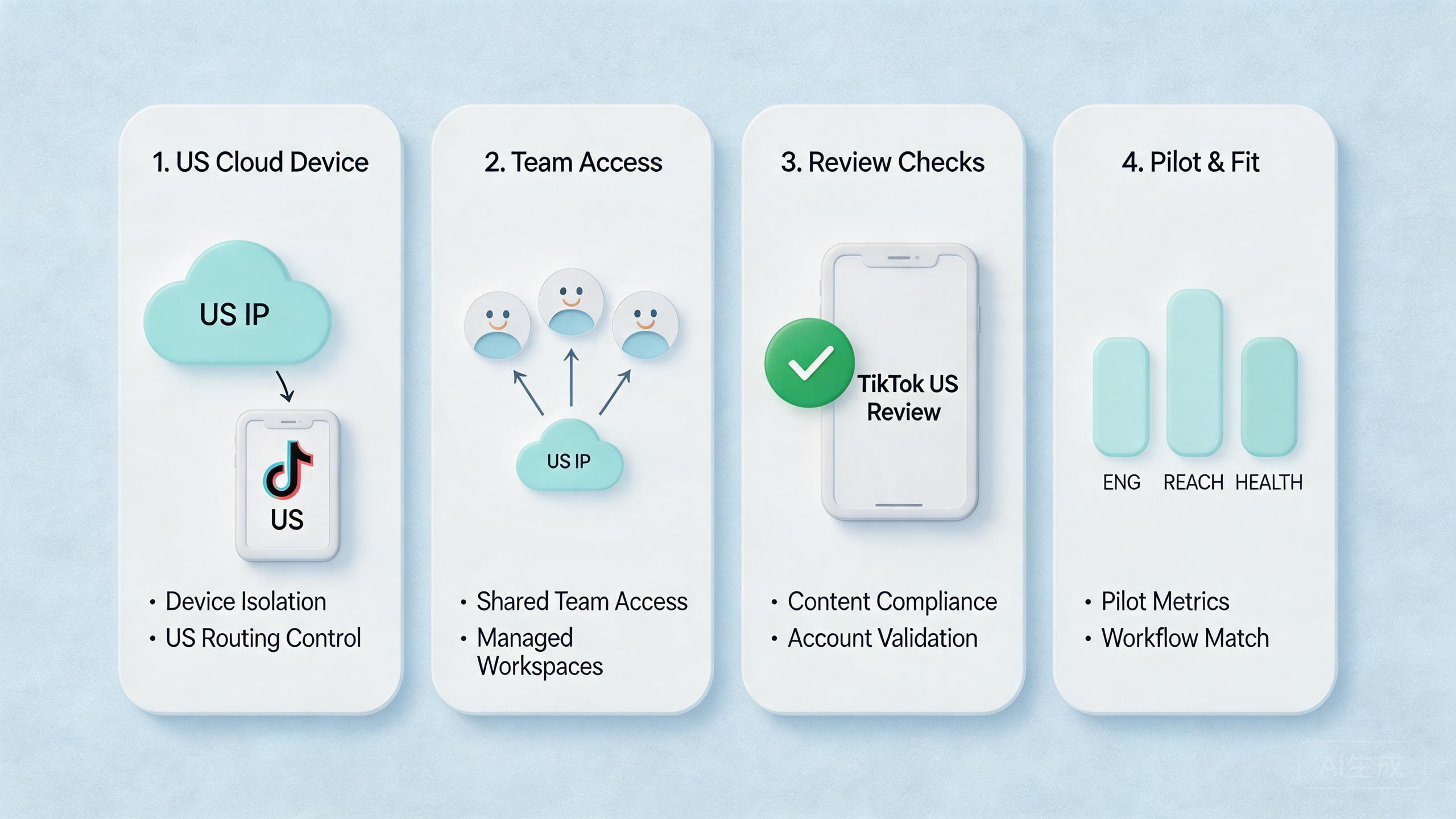
Selection starts with constraints. A USA TikTok account workflow usually depends on mobile access, account separation, consistent routing, and human review. A weak cloud phone may still open an app, but the team will struggle when the work has to be repeated by different people.
The first constraint is environment quality. Each account workflow should have a clear Android environment. Operators need to know which device state belongs to which task. Shared, unclear environments create confusion because old sessions, app state, and operator changes may carry into the next run.
The second constraint is routing discipline. Teams often care about USA workflows because the audience, account setup, or review context is tied to that market. The platform should help the team document and keep routing behavior consistent. It should not encourage casual route switching without a reason.
The third constraint is handoff. A manager, reviewer, or second operator should be able to understand what happened. If all workflow knowledge stays with one person, the cloud phone is only a remote gadget. That setup is not team infrastructure.
The fourth constraint is operational safety. Avoid any vendor or workflow that talks like a shortcut. Claims about risk-free account operation should be treated carefully. Platforms can support cleaner process, but they cannot promise outcomes controlled by external platforms.
| Decision area | What to check | Why it matters |
|---|---|---|
| Device state | Can each account workflow keep a known Android state? | Unclear state makes failures hard to explain. |
| Isolation | Can teams separate accounts, roles, and operating contexts? | Separation reduces accidental cross-workflow contamination. |
| Routing | Can routing rules be assigned and reviewed by workflow? | Consistent routing makes testing and review easier. |
| Team access | Can operators, reviewers, and admins use different permissions? | Flat access creates quiet configuration drift. |
| Recovery | Can operators reset, quarantine, or reassign a device quickly? | Recovery process decides whether scale stays manageable. |
The strongest choice is rarely the one with the longest feature list. Better options make the operating model easier to see. If your team cannot explain device ownership, routing policy, and reset rules, more phones will only increase confusion.
Core Capabilities That Matter Most and best cloud phone for usa tiktok accounts
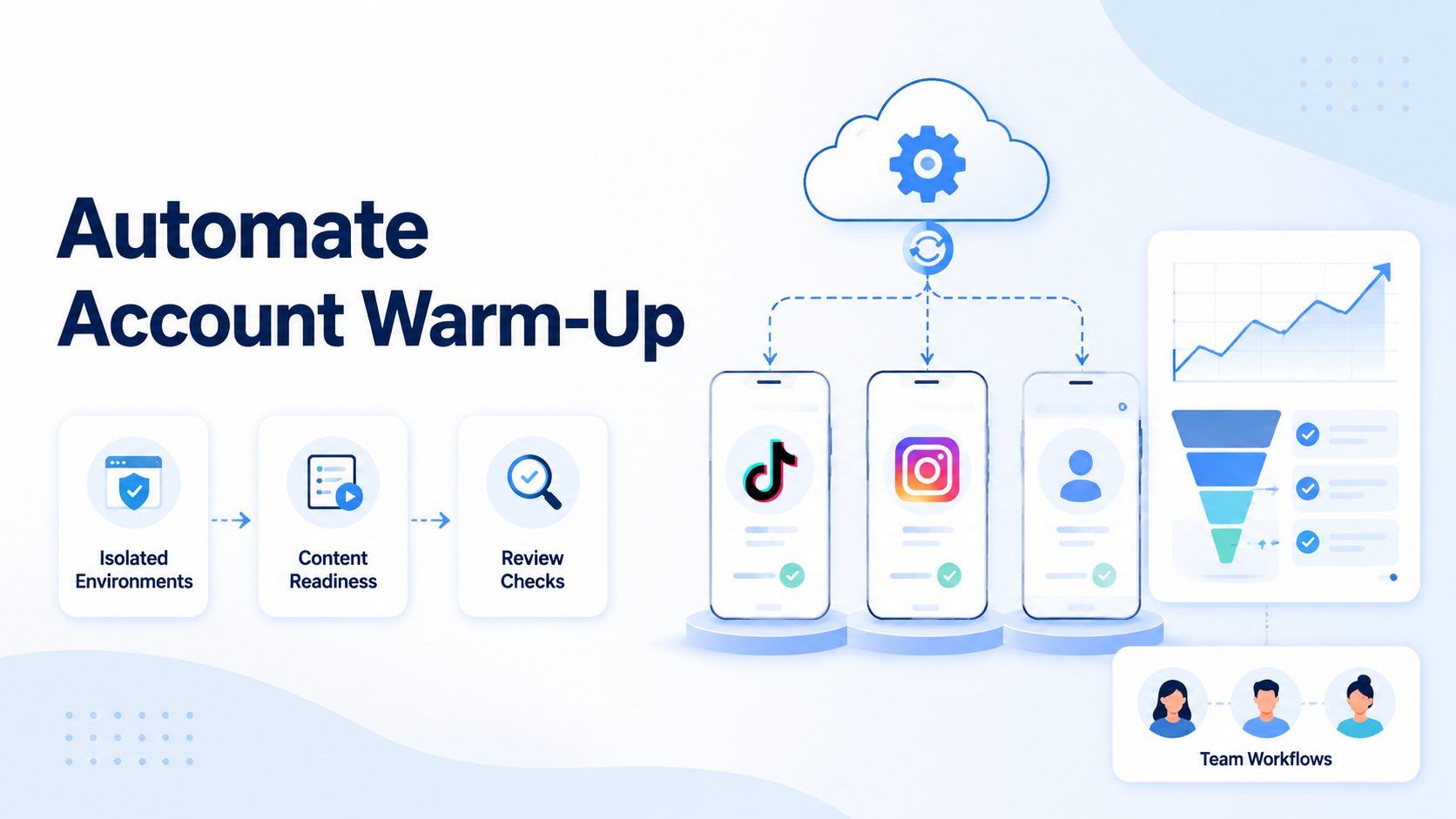
The core capability is not remote access alone. The more important capability is controlled mobile execution. A team should be able to open a cloud phone, assign it to a task, inspect its state, route it correctly, and recover it after the work is done.
Device isolation is the first layer to review. Account workflows need boundaries. Those boundaries may include Android environment, app state, account role, operator access, and review process. MoiMobi's device isolation page is the closest next step when this is the main concern.
Routing control is the second layer. A USA-focused workflow should not depend on informal operator choices. Route ownership should be documented by workflow, including when changes are allowed. A proxy network layer becomes useful when routing needs to be repeatable.
Role management is the third layer. Operators may need daily access. Reviewers may need inspection. Admins may need reset and assignment controls. These roles should not all behave the same. Clear permissions reduce mistakes and make accountability easier.
Monitoring and notes are the fourth layer. The system does not need to be overbuilt. It does need enough visibility to show which devices are active, which accounts are under review, and which workflows need reset. Without those basics, the team relies on memory.
Google Search Central's guidance for helpful content focuses on serving users with clear, useful information (Google Search Central). The same operating principle applies here. Tools should make the actual work clearer, not just add a new interface.
Useful capabilities usually answer simple questions:
- Who owns this cloud phone right now?
- Which account workflow is it assigned to?
- What route or region policy is expected?
- Is the device reusable, under review, or ready for reset?
- Can another person continue the same work without guessing?
If a cloud phone provider cannot support these questions, the team may still use it for light manual work. It may not be enough for repeated USA TikTok account operations.
Pricing, Setup, and Team Fit
Pricing should be read through workflow cost, not only monthly device price. A cheap cloud phone can become expensive if operators lose time rebuilding sessions, checking state, or asking who changed a device. A more controlled setup may cost more per unit but reduce daily coordination work.
Setup cost also matters. Leaders need time to define device pools, roles, routes, and reset logic. That setup is not waste. Process design is the work that makes scale possible. Skipping it often creates a fragile system that only the first operator understands.
Team fit depends on the operating pattern. A solo creator may need simple remote access. A small marketing team may need a few controlled devices and shared review. A larger operation may need device pools, account assignment, routing rules, and recovery reports. The same provider can feel good or bad depending on which pattern is real.
Good fit:
- Multiple operators need shared mobile access.
- USA account workflows require clear routing rules.
- Reviewers need to inspect state without owning the task.
- The team can define reset and handoff rules.
Weak fit:
- The workflow is still undefined.
- One person handles every account manually.
- The organization expects infrastructure to remove policy risk.
- No one owns recovery when a device state becomes unclear.
The pricing conversation should include management overhead. Ask how long it takes to onboard one operator. Ask how long it takes to recover a dirty device. Ask whether a reviewer can see enough context to approve or reject the work. These numbers are often more useful than a simple device count.
Use a small pilot before a large purchase. A pilot should test one real workflow, not a staged demo. Assign a few accounts, run repeated tasks, review handoff, and document what breaks. This gives the team a better price judgment because it includes labor cost.
Avoid buying for the largest imagined future. Start with the smallest pool that proves the workflow. Expansion should happen after the operating model is clear. That approach protects budget and reduces cleanup work.
Best Options for Common Use Cases
Different teams mean different things when they search for the best cloud phone for USA TikTok accounts. Some need account access. Some need creative testing. Some need campaign operations. Others need a review layer for a distributed team. The right option depends on the job.
For multi-account management, the priority is separation. Operators need a clean way to assign accounts, avoid mixed state, and review the environment before reuse. MoiMobi's multi-account management context is relevant when the work spans many accounts and roles.
For social media marketing, the priority is repeatable execution. Operators may need to post, review, respond, or check app behavior across different workflows. The cloud phone should support shared access and review, not only remote control. MoiMobi's social media marketing use case is a closer fit when the work is content-operation driven.
For QA or app workflow testing, the priority is repeatability. A team may need to check app behavior, account state, or user journey consistency. In that case, a phone farm model may matter more than a single cloud phone.
For automation-assisted workflows, the priority is control. Automation should not run on unclear environments. Teams should first define state, routing, and review rules. Then mobile automation can support repeat steps that are already well understood.
| Use case | Primary need | Best evaluation question |
|---|---|---|
| Multi-account operations | Separation and assignment | Can each account workflow stay isolated and reviewable? |
| Social media marketing | Shared access and content review | Can operators and reviewers work without losing context? |
| Mobile QA | Repeatable test paths | Can the same workflow be repeated after a change? |
| Automation support | Stable environment rules | Is the manual workflow clear enough to automate safely? |
One option does not need to win every category. A provider that works for a small review team may not fit a large phone farm. A system that handles manual access may not handle automation well. Rank providers against your workflow, not against a generic feature sheet.
The decision also depends on how the team treats policy. A cloud phone can support process discipline, but it should not be used as an excuse to ignore platform rules. Keep a clear internal checklist for account ownership, content responsibility, and acceptable workflow boundaries.
Selection Checklist for best cloud phone for usa tiktok accounts
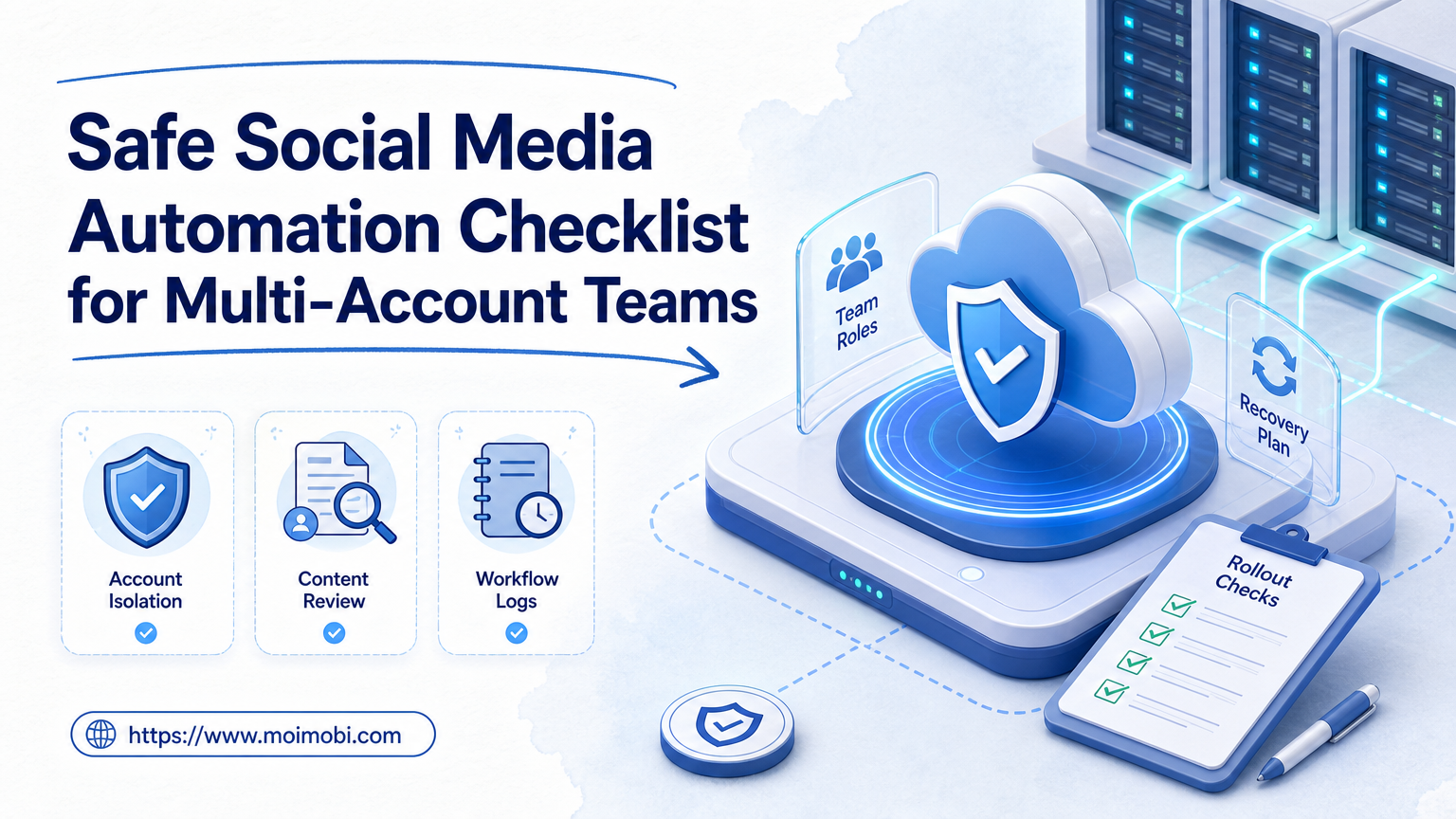
Use a checklist before committing. A practical provider should pass operational checks before the team expands. If a provider only looks good during a demo, the daily workflow may still fail.
- Define the exact workflow. Write down whether the team needs posting support, account review, app testing, creative checks, or handoff. Do not buy capacity before the job is clear.
- Assign device ownership. Decide who owns a cloud phone during each task. Add a simple rule for when the device returns to the pool.
- Set routing policy. Document which routing model belongs to the workflow. Limit unplanned changes so review stays possible.
- Separate roles. Keep operator, reviewer, and admin permissions distinct. This reduces accidental changes and improves accountability.
- Test recovery. Break the workflow on purpose during the pilot. Measure how long it takes to identify, reset, and return a device to service.
The pilot should run long enough to expose friction. One short login test is not enough. Run the same workflow across several handoffs. Track setup time, review time, reset frequency, and operator questions. Those signals show whether the system is actually ready.
Keep the first pool small. A three-device or five-device pilot can teach more than a large unmanaged rollout. The goal is not to prove volume. The goal is to prove repeatability.
Use plain pass or fail criteria. A pilot passes when another operator can continue work without guessing. It passes when a reviewer can see the device state clearly. It passes when recovery has an owner and a known path. It fails when every issue depends on private memory.
Google's SEO Starter Guide explains that clear page organization helps users and search systems understand content (Google Search Central SEO Starter Guide). Team operations need the same clarity. A cloud phone system should be organized enough that people can understand what to do next.
Pilot Metrics Before Scaling the Device Pool
A practical pilot needs measurement before expansion. Managers should not judge the setup by whether the first login worked. Judge whether the same account workflow can be repeated, reviewed, and recovered without private operator knowledge.
Start with one workflow and one owner. Choose a USA TikTok account task that already happens weekly. Assign a small device pool, name the operator roles, and write a short reset rule before the first run. This gives the pilot a baseline.
Measure five signals during the test:
- Setup time: How long does it take to prepare a cloud phone for the task?
- Handoff time: How long does a second operator need to understand the state?
- Review clarity: Can a lead inspect the result without asking for missing context?
- Reset frequency: How often does a device need cleanup before reuse?
- Recovery time: How long does it take to return a failed environment to service?
These numbers do not need to be perfect. They need to be visible. A workflow that feels fast to one operator may still fail when a reviewer joins. A workflow that looks stable during setup may break when devices are reused.
The review meeting should be short and specific. Ask which step caused the most confusion. Ask which device state was hardest to verify. Ask whether routing notes were clear enough for another person. Then fix one bottleneck before adding more devices.
Expansion should follow evidence. Add more cloud phones only when the team can explain ownership, routing, review, and reset without debate. That is the difference between controlled scale and a larger pile of remote screens.
One final pilot check is documentation quality. Write a short operating note for the workflow after the test ends. Include the device pool name, account owner, expected route, reset rule, reviewer role, and stop condition. A new operator should be able to read that note and continue the work without private chat history.
Good documentation also protects later decisions. When the team reviews a failed run, it can separate tool problems from process problems. That distinction matters. A device issue may need recovery. A route issue may need policy review. An unclear handoff may need training before any new cloud phone is added.
Frequently Asked Questions
What is the best cloud phone for USA TikTok accounts?
The right option is usually the one that fits your workflow, not the one with the most devices. Look for clean Android environments, routing control, role access, device isolation, and recovery rules. For teams, reviewable handoff matters as much as remote access.
Can a cloud phone remove TikTok account risk?
No. A cloud phone can support better process, but it cannot remove platform responsibility. Teams still need to follow applicable platform rules, review account behavior, and avoid unsupported claims about safety.
Should a team choose one cloud phone or a phone farm?
Choose one cloud phone for a narrow workflow or pilot. Consider a phone farm when multiple operators need repeated access across many devices. The larger setup needs stronger ownership, routing, and reset rules.
How should USA routing be handled?
Handle routing as a team policy, not an operator preference. Assign routing rules by workflow, document changes, and review exceptions. Avoid casual switching because it makes troubleshooting harder.
Is MoiMobi only an emulator replacement?
No. MoiMobi should be evaluated as mobile execution infrastructure. The value comes from cloud phones, isolation, routing, phone farm capacity, and automation support working together.
What should teams measure during a pilot?
Measure setup time, handoff time, reset frequency, review clarity, and recovery time. These signals show whether the workflow is stable enough to expand.
Who should not use a cloud phone setup yet?
Teams without a defined workflow should wait. If nobody can explain account ownership, routing policy, or reset rules, buying more remote phones may make the process harder to manage.
How many devices should a team start with?
Start with the smallest pool that proves the workflow. A small pilot helps the team find process problems before spending on more capacity. Expand after the review loop works.
Conclusion
A good cloud phone choice helps your team run a controlled mobile workflow. Remote access matters, but it is only one layer. The stronger decision criteria are device isolation, routing discipline, role control, recovery process, and reviewable handoff.
MoiMobi is a fit when the team wants infrastructure for repeated mobile execution, not just a temporary remote screen. It can connect cloud phones, proxy routing, isolation, phone farm capacity, and automation into a clearer operating model. That model is most useful when the team already knows what work needs to happen and wants to make it repeatable.
The practical next step is a small pilot. Pick one USA TikTok account workflow, define device ownership, set routing rules, assign reviewer access, and measure handoff. If the pilot reduces confusion and improves recovery, the setup is ready for careful expansion. If the pilot exposes unclear ownership, fix the operating model before adding more devices.