Key Takeaways
- A small team needs operational clarity more than raw automation volume.
- An e-commerce platform works best when browser, mobile, review, and retry rules are explicit.
- The first rollout should focus on one repeatable workflow instead of the full operation.
- Recovery quality is a better early metric than throughput alone.
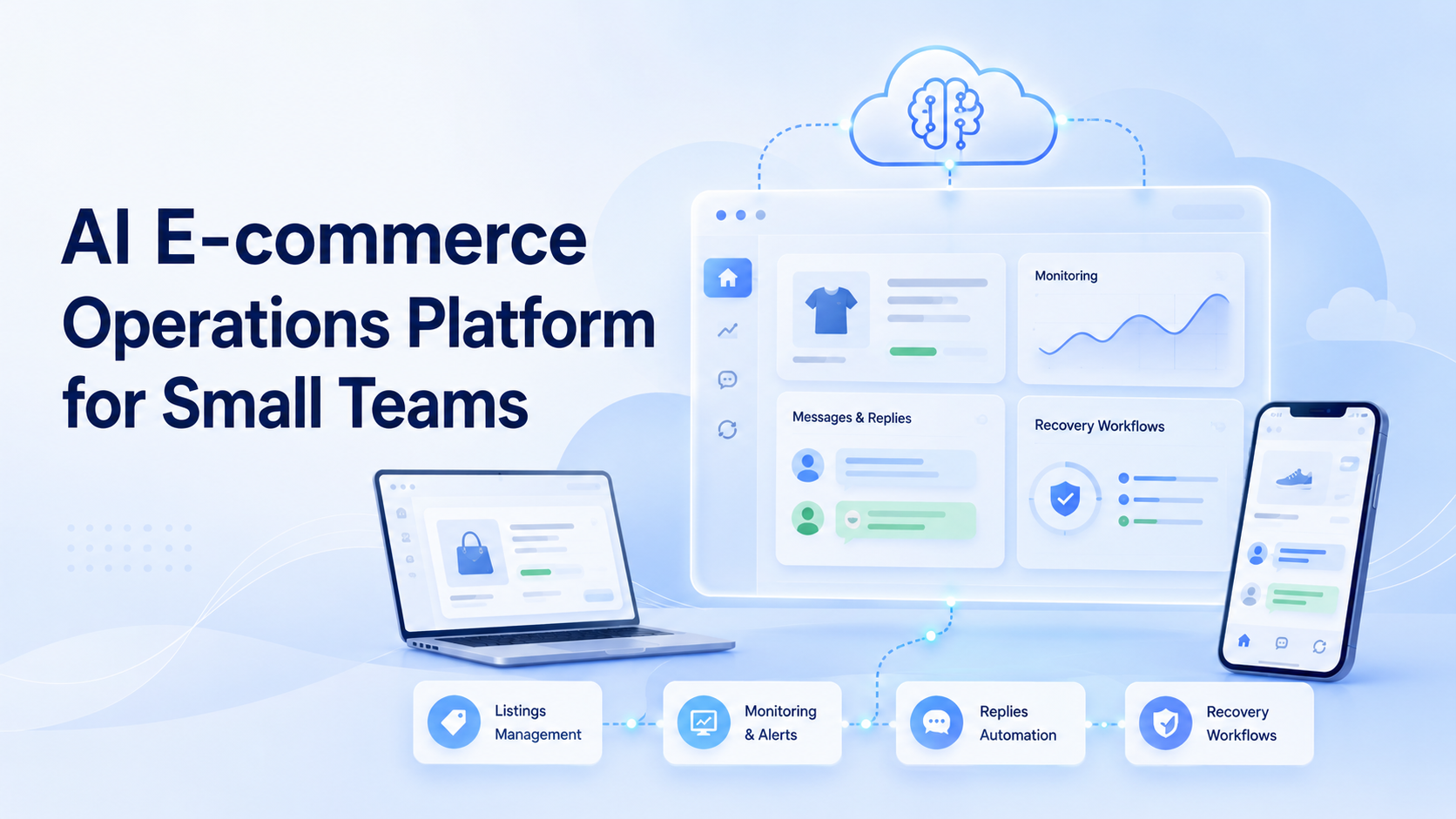
AI E-commerce Operations Platform for Small Teams is a system that helps a lean team run repeated e-commerce tasks through controlled environments and defined review paths. The platform is not just a collection of scripts. It is a way to keep listings, monitoring, customer follow-up, and exception handling organized when the same few people own many tasks.
This topic matters because small teams usually feel pressure first. They have less headcount for cleanup. They also have less room for account confusion after a failed run.
Official sources help explain the runtime side. W3C WebDriver defines browser automation through explicit sessions.1 Playwright isolates state through browser contexts.2 Android Enterprise describes managed workspaces for device-based execution.3 Repeated work becomes more manageable when the environment can be reopened predictably.
What Is AI E-commerce Operations Platform for Small Teams?
The practical answer is simple. It is an execution layer that helps a small team route repeated e-commerce tasks into the right account environment with the right review steps.
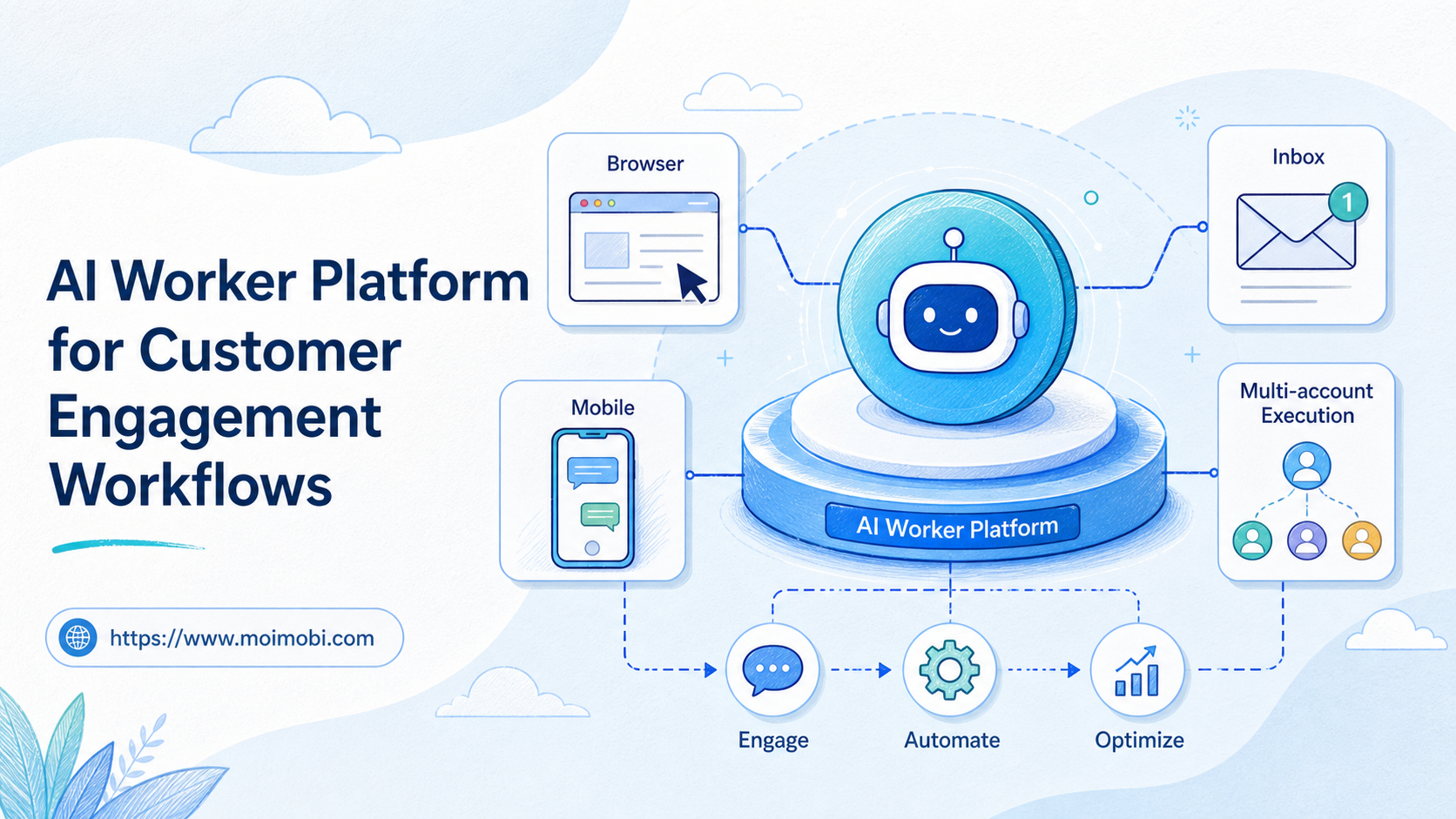
One workflow may cover browser-based listing updates or dashboard checks. Another may cover customer replies, mobile-first account work, or app-native follow-up. A good platform makes those lanes visible instead of forcing one shared environment to do everything.
That is why teams that begin with an AI browser often end up evaluating cloud phone, mobile automation, and device isolation together. The workflow depends on more than text generation.
Why AI E-commerce Operations Platform for Small Teams Matters
Small teams do not fail because the work is unimportant. They usually fail because the same people must manage too many repeated tasks at once.
That creates pressure in three places:
- account routing
- exception handling
- recovery after interruption
When one operator must remember every runtime, account state, and retry rule, the system does not scale. A platform matters because it moves those rules into the workflow itself.
Key Benefits and Use Cases
The common mistake is to think the platform only helps with high-volume stores. Small teams often benefit earlier because they have less buffer for mistakes.
Useful scenarios include:
- listing and catalog maintenance
- dashboard monitoring and status collection
- customer reply support
- account-specific follow-up tasks
| Task | Why the platform helps | What to check |
|---|---|---|
| Listings | Keeps changes tied to the right account workflow | Approval path |
| Monitoring | Lets the team reopen the same runtime quickly | Resume speed |
| Replies | Separates customer queues from other work | Escalation quality |
| Follow-up | Reduces ad hoc handoff between operators | Cleanup load |
How to Get Started with AI E-commerce Operations Platform for Small Teams
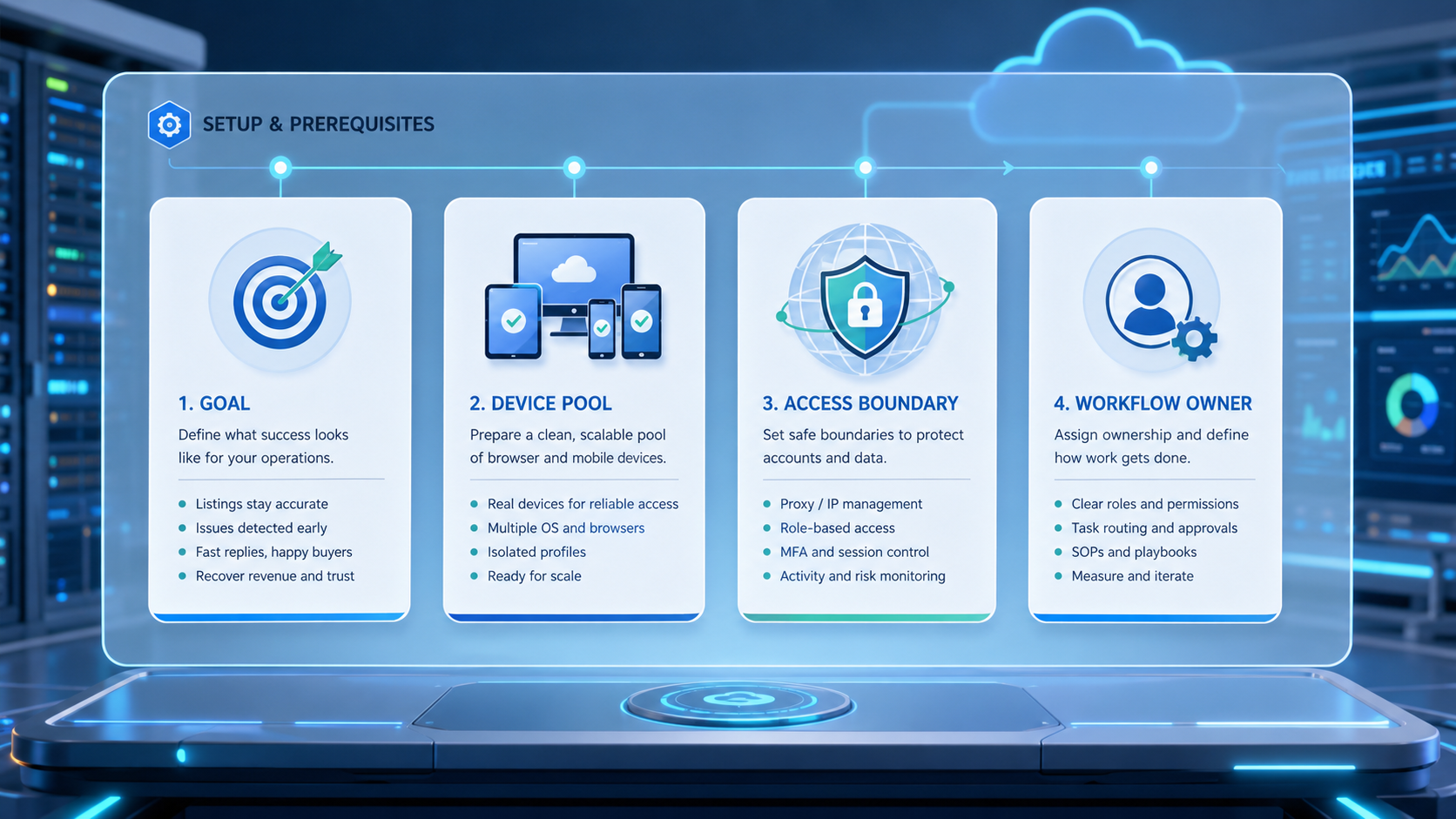
Begin with one workflow that already repeats every week. Do not start with the entire store operation.
- Choose one task lane. A listing update or monitoring lane is usually enough.
- Define the account scope. Keep the workflow tied to one account set.
- Choose the runtime. Use the browser for dashboard work and mobile environments for app-native steps.
- Define the review rule. Mark where a person must approve or inspect the result.
- Define the retry rule. Decide what happens after failure, interruption, or incomplete data.
If mobile account work matters, compare cloud phone farm infrastructure with the cloud phone vs emulator comparison before scaling. Small teams usually pay for poor runtime choice later through cleanup time.
Common Mistakes to Avoid
The first mistake is using one shared environment for unrelated tasks. That may feel lighter at first, but it makes failures harder to inspect.
Another mistake is assigning one worker to a vague job such as "ops." Small teams need narrower ownership, not broader labels.
A third mistake is scaling because the happy path works. The real question is whether the team can recover quickly when the run goes wrong.
Watch for these signs:
- retries have no clear owner
- browser and mobile steps switch lanes without logs
- manual notes replace explicit review rules
- the team cannot explain what changed after a rerun
Who It Fits and When It Is a Strong Match
This model fits small teams with repeated account work. It is a weak fit for teams with highly irregular tasks and little workflow reuse.
Small teams running weekly or daily listing, monitoring, and customer workflows.
Teams moving from manual checklists into controlled execution lanes.
Teams with low repetition and no stable account structure.
Pilot Rollout, Measurement, and Recovery Checks
The pilot should prove that the platform lowers correction cost for a small team. It should not try to prove every possible use case at once.
Use a compact scorecard:
| Review area | What to inspect | Good sign |
|---|---|---|
| Routing | Did the work stay in the assigned lane? | Few manual redirects |
| Review | Did a person intervene only at planned checkpoints? | Predictable handoff |
| Recovery | Could the team reopen the same state after a failure? | Short resume time |
| Cleanup | How much rework followed each run? | Low correction cost |
AWS Device Farm and BrowserStack App Automate both reinforce the value of reproducible environments for repeated mobile work.4 5 The same lesson applies here. A small team needs reruns that are easy to understand.
Frequently Asked Questions
Is this only useful for large stores?
No. Small teams often benefit earlier because they have less spare capacity for cleanup.
What should a small team automate first?
Start with one repeated workflow that already has a clear success and failure pattern.
Does every team need mobile execution?
No. Use mobile execution only when app-native steps are part of the real workflow.
What is the first metric to watch?
Correction cost is usually more useful than throughput.
Why does state isolation matter so much?
Because shared state makes reruns and diagnosis slower.
Can one worker cover listings and customer replies?
Only when the workflow boundary and review model stay simple.
When should the team scale the rollout?
Scale after routing and recovery stay stable through a full pilot cycle.
Conclusion
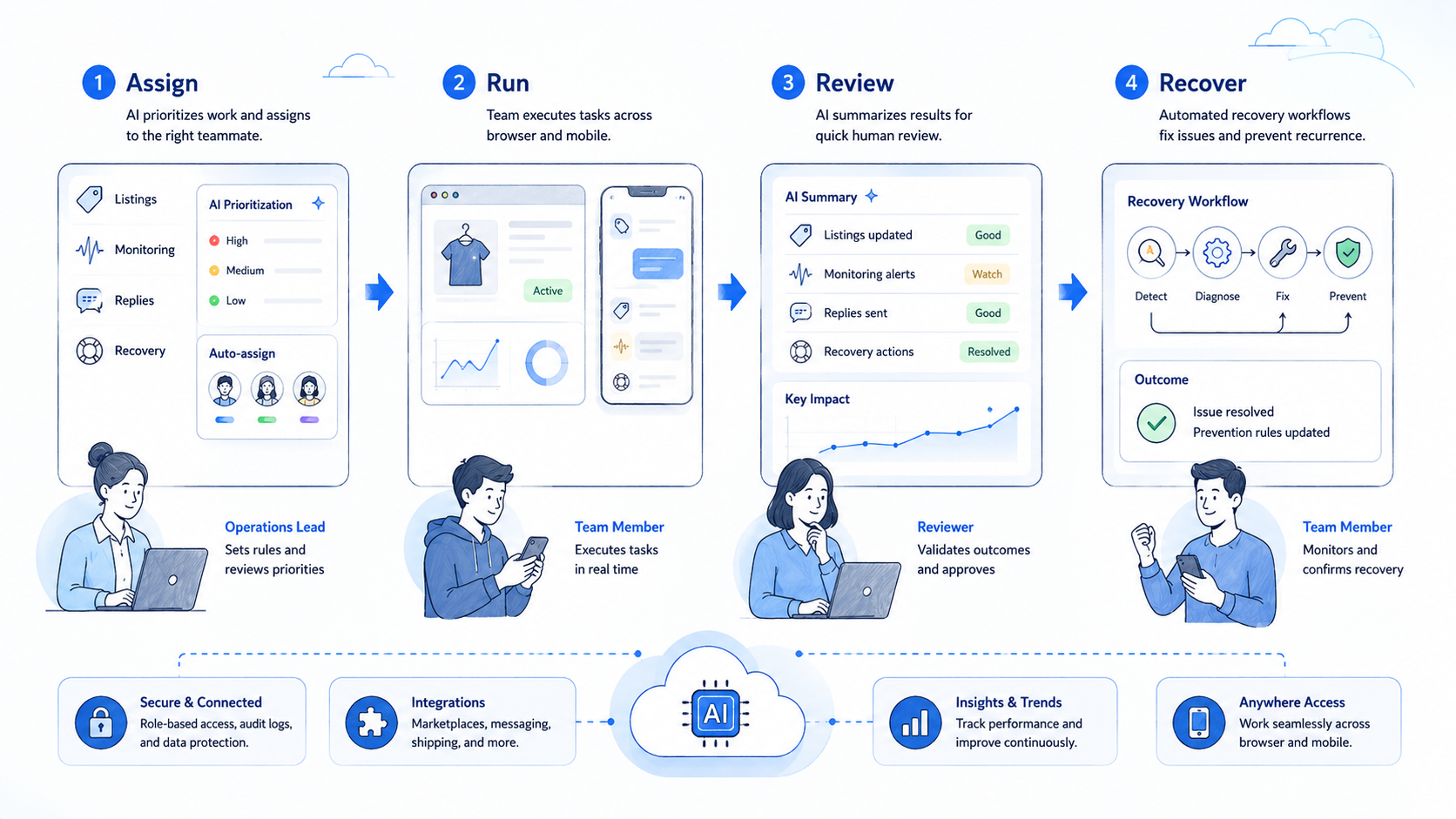
An AI E-commerce Operations Platform for Small Teams helps a lean operation turn repeated work into a clearer execution model. The biggest gain is not volume by itself. The bigger gain is lower cleanup cost and cleaner task ownership.
Before adding more workflows, check the basics in order: task boundary, runtime fit, and recovery path. If those are strong, the team can scale with less confusion.