
Key Takeaways
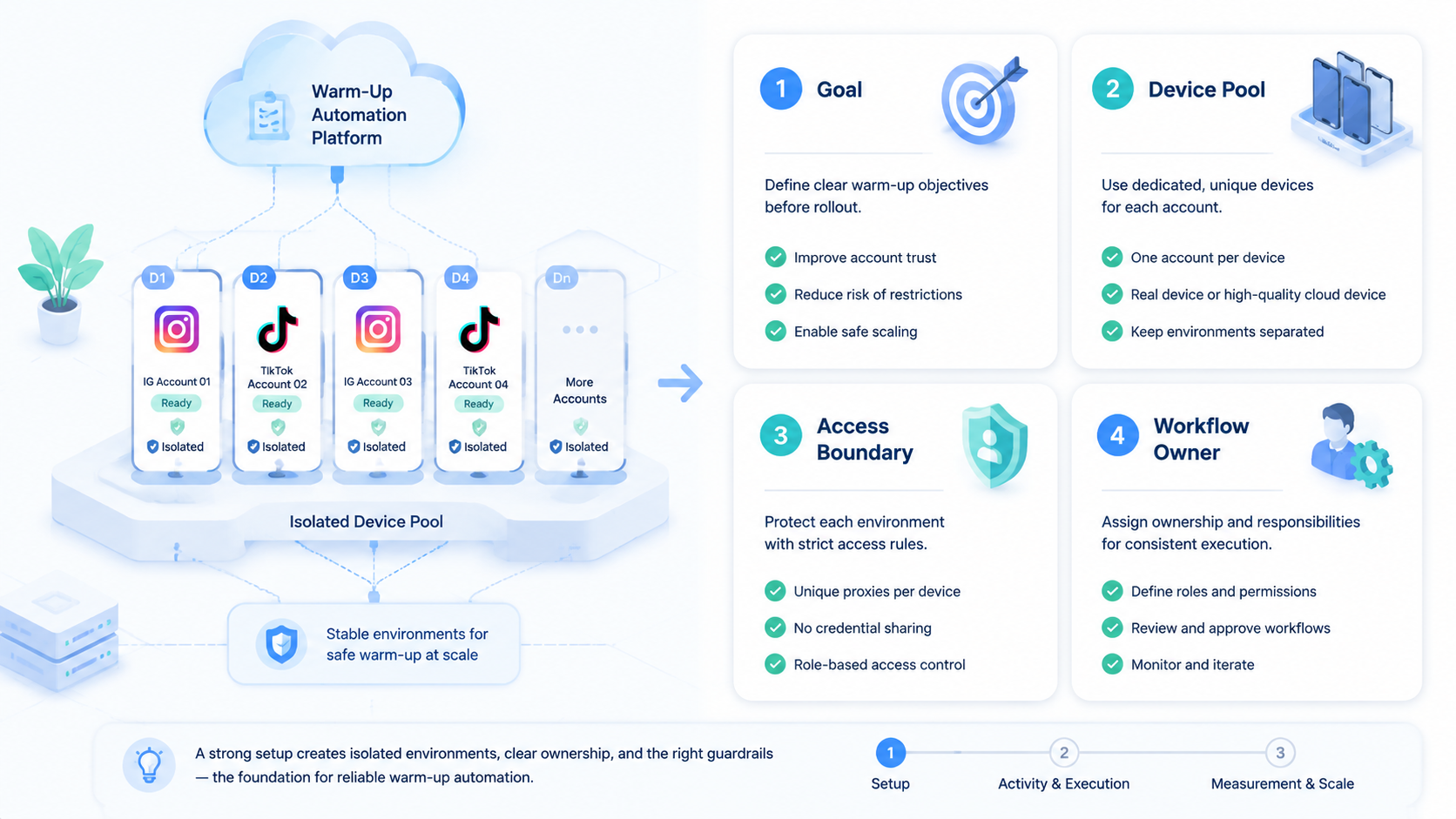
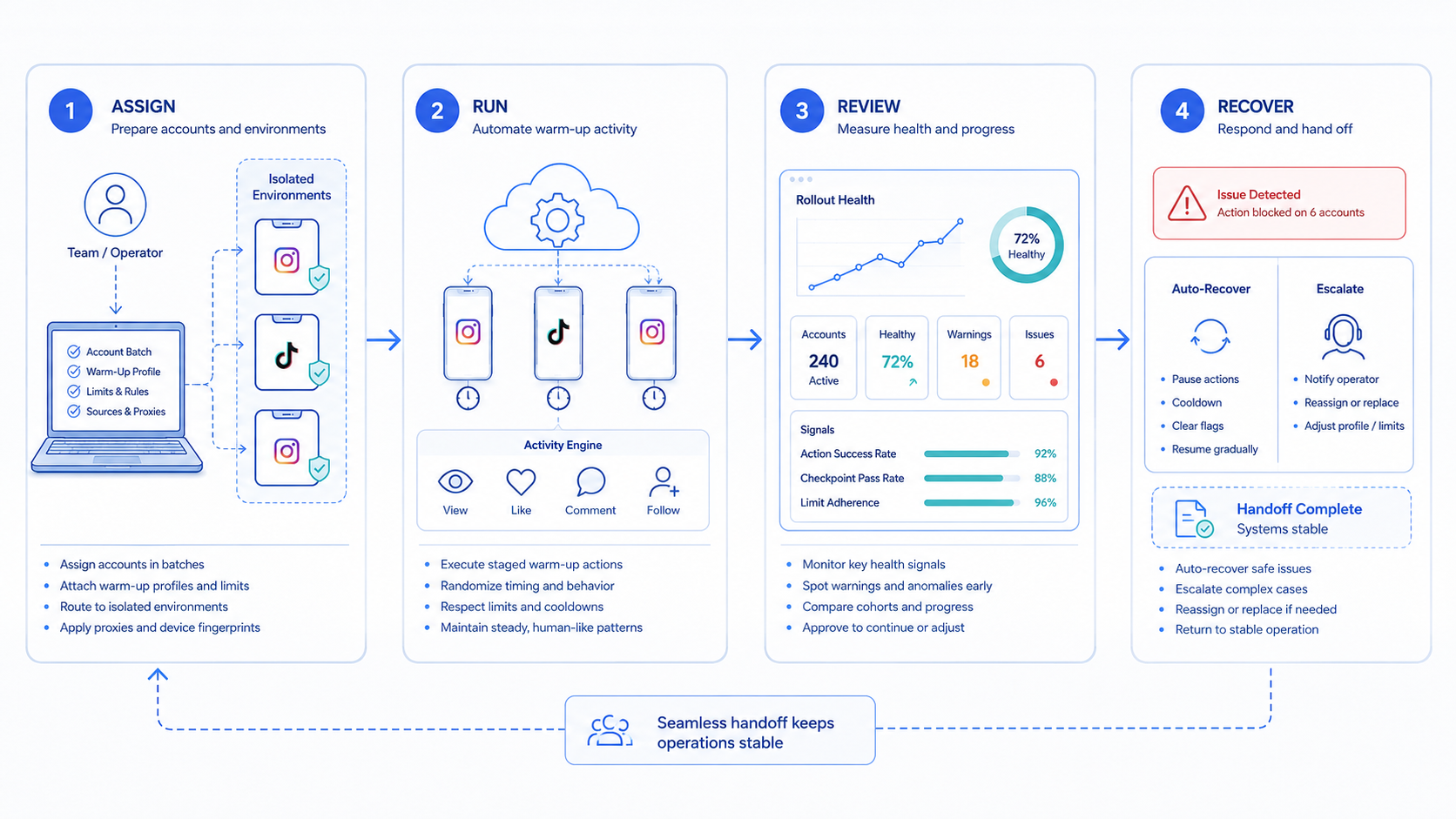
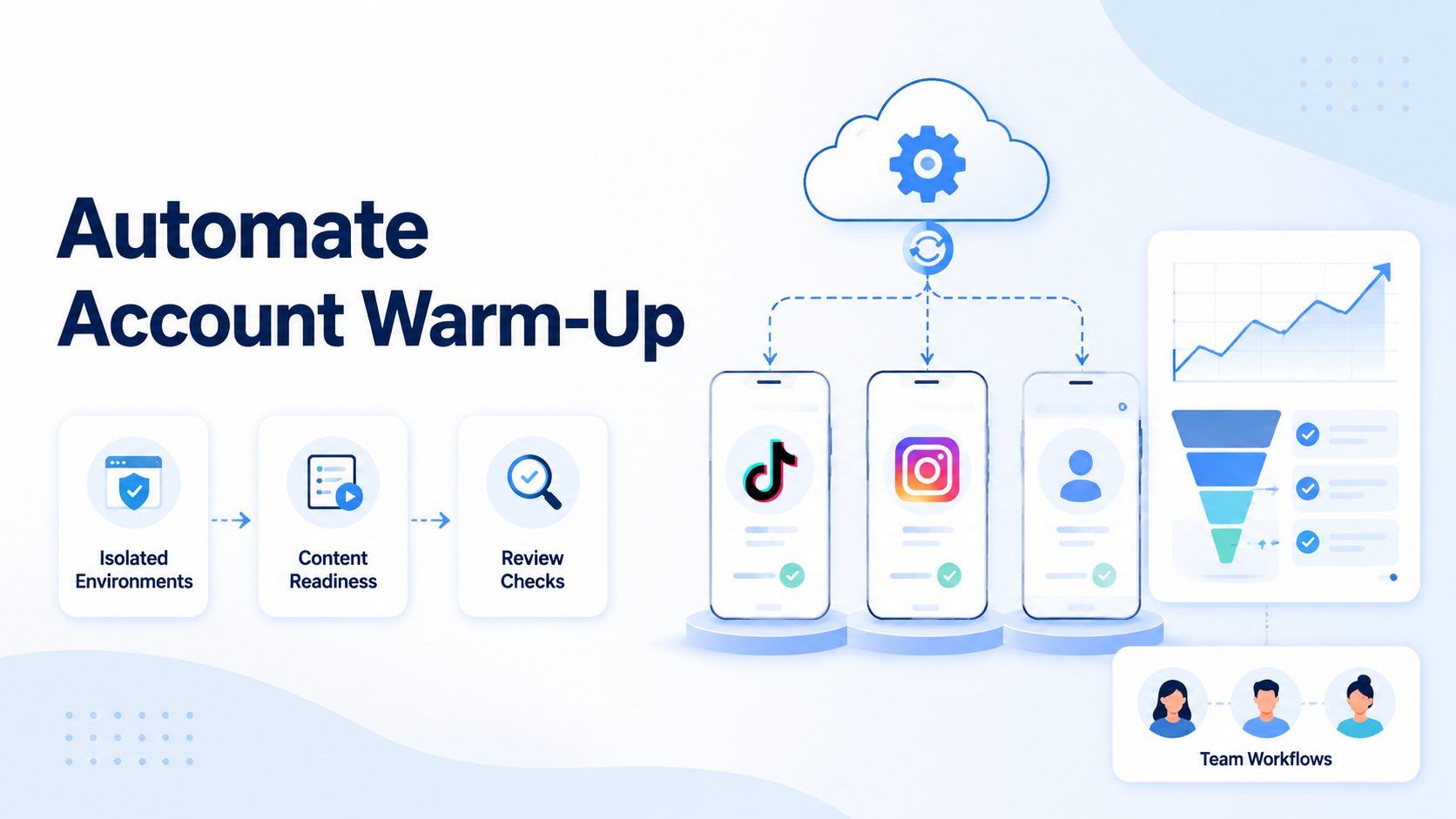
- Instagram and TikTok warm-up automation is a staged workflow, not a single bot action.
- Teams need separate environments, clear pacing rules, and daily review loops.
- The useful goal is stable account activity, clean handoff, and measurable rollout control.
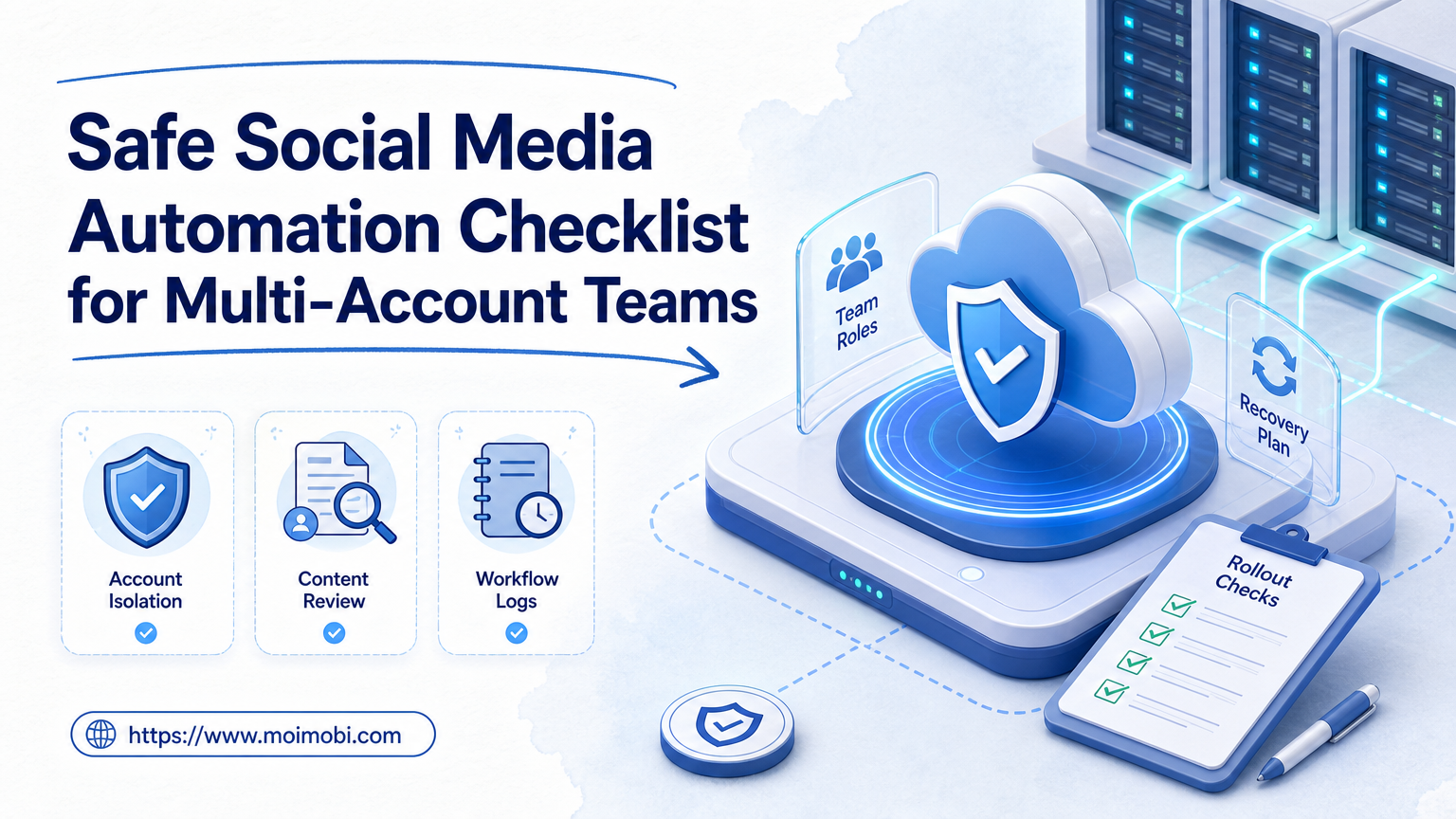
- A good pilot starts small, tracks health signals, and expands only after the first model holds.
Instagram and TikTok warm-up automation is a controlled process for introducing activity across multiple accounts without mixing environments or overloading one operator path. In practice, that means setting rules for profile access, device assignment, posting rhythm, comment handling, and review loops before volume increases.
That matters because multi-account work usually fails in familiar ways. Sessions get mixed. One device handles too many roles. A team member changes the activity pattern without logging it. Then nobody can tell whether the problem came from content, timing, routing, or operator behavior.
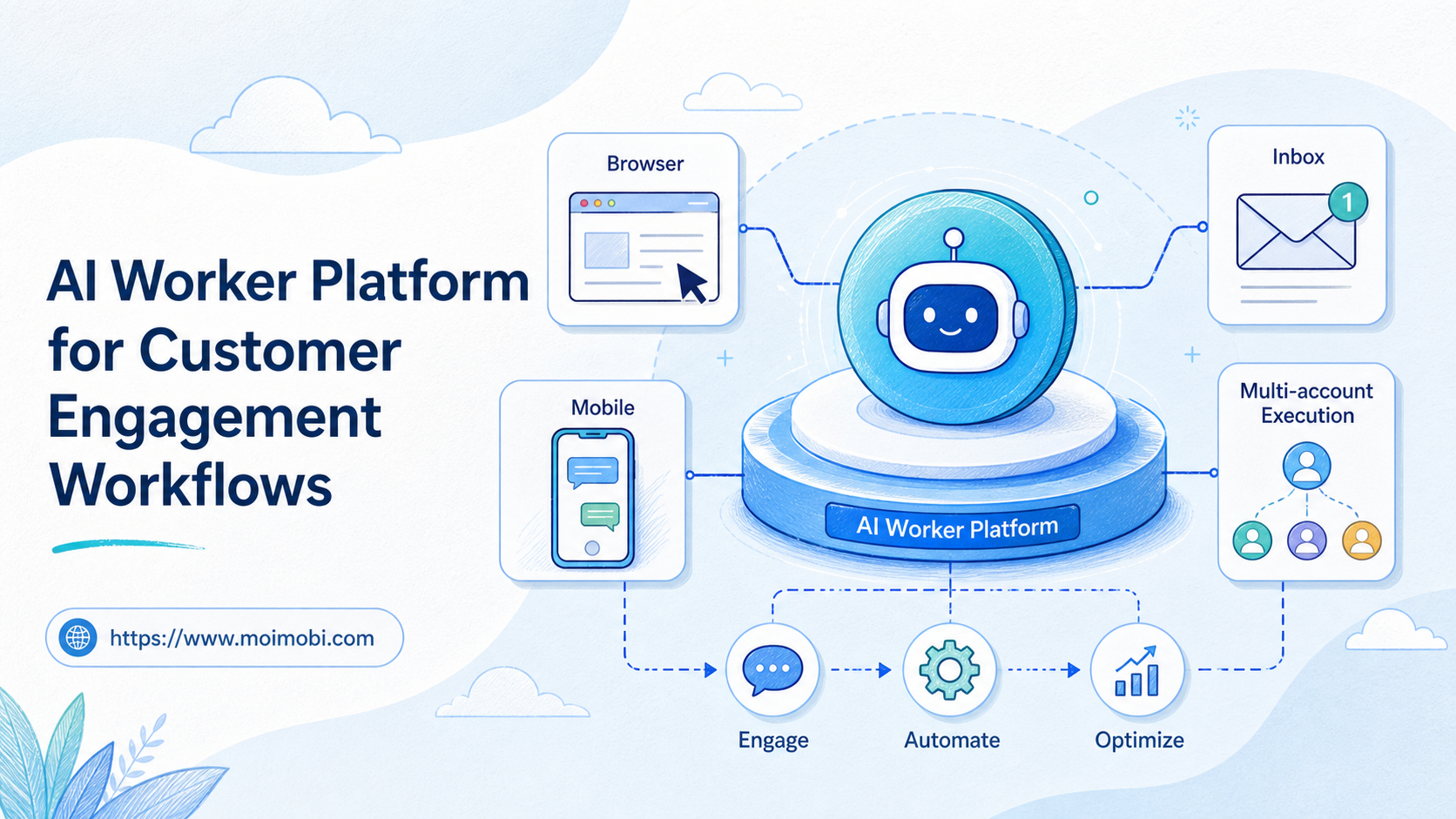
For Moimobi, the useful frame is execution infrastructure. A warm-up workflow usually sits on top of isolated browser or mobile environments, reusable task paths, and a review loop that shows which accounts are ready for the next stage. That is closer to an operations program than to a growth hack.
TikTok gives account owners controls over comments and comment filtering, which matters once activity grows and teams start touching engagement tasks.1 TikTok also provides comment insights that help operators see how discussions change as account activity increases.2 On the execution side, Playwright shows why separate browser work should run in separate contexts, while Android Enterprise shows why managed mobile environments improve control.3 4
What Is Instagram and TikTok Warm-Up Automation for Multi-Account Operations?
Instagram and TikTok warm-up automation is a staged execution model for bringing multiple accounts into regular activity with controlled pacing, isolated environments, and operator-level checks. It is not just "post a little every day." It is closer to a rollout plan with task assignments and recovery rules.
In many teams, the workflow starts with three layers:
| Layer | What it controls | Why it matters |
|---|---|---|
| Environment | Browser profile, device, routing, session state | Prevents mixed signals and session crossover |
| Activity path | Posting, browsing, profile edits, replies, dwell time | Keeps execution consistent across accounts |
| Review loop | Status checks, failure logs, expansion decisions | Shows whether the pilot is ready to scale |
This is why a broad AI browser and cloud phone platform matters more than a one-off tool. Teams do not just need activity. They need repeatable execution with clean separation and clear ownership.
Why Instagram and TikTok Warm-Up Automation Matters for Teams
The operational problem is simple. A team may have dozens of accounts, multiple operators, different content batches, and different routing setups. Without a warm-up structure, those moving parts drift. One account gets too much activity. Another gets ignored. A reused environment creates noise. A content team and an engagement team work on the same account without a shared log.
Warm-up automation matters because it turns that mess into an ordered sequence. A team can decide which accounts move first, what actions belong in stage one versus stage three, who can touch the account, and what signal must appear before the account progresses.
This is also where device isolation and multi-account management become practical, not abstract. The point is not to decorate the stack with more tools. The point is to keep the workflow explainable when something breaks.
Key Benefits and Use Cases
The strongest use cases are operational, not cosmetic.
- Launching a new account batch for an agency client across Instagram and TikTok.
- Moving creators from manual account handling to team-based account operations.
- Separating content publishing from engagement handling in a growth team.
- Running a pilot on mobile-first accounts before expanding the device pool.
The main benefit is not speed by itself. It is control. A stable warm-up path gives the team a clear answer to three questions: what happened, who changed it, and what should happen next.
Another benefit is handoff. When the workflow lives inside cloud phone or mobile automation environments with account-level tracking, one operator can stop and another can continue without rebuilding context from scratch.
How to Get Started with Instagram and TikTok Warm-Up Automation for Multi-Account Operations
Use a small pilot first. Do not start by moving your full account pool.
- Choose a narrow account batch. Start with 5 to 10 accounts, not 50.
- Bind one environment per account or per tightly defined account group.
- Define stage rules for profile setup, light browsing, content posting, comment review, and limited replies.
- Assign one owner per stage. Publishing and engagement should not compete for the same execution slot.
- Log every failure. A failed login, session reset, or blocked task should create a recovery note.
- Review expansion only after the first cycle completes cleanly.
For browser-side work, browser contexts are the clearest reference model for state isolation. For mobile-side execution, cloud phone for TikTok and Android antidetect are the more relevant next pages to evaluate.
Pass / fail checkpoints
- Pass: each account has a known environment, a known owner, and a logged next step.
- Fail: the team cannot tell whether a problem came from routing, session state, or operator action.
Common Mistakes in Instagram and TikTok Warm-Up Automation
The first mistake is treating warm-up as a posting schedule only. The second is treating it as an isolated account trick with no team workflow around it.
Common failure modes include:
- reusing the same environment across accounts that should stay separate,
- letting multiple operators edit the same account path without a handoff log,
- advancing accounts to a heavier stage without a daily review,
- and measuring volume but not recovery quality.
Another mistake is collapsing browser and mobile actions into one vague bucket. A team may need one workflow for browser-side setup and another for mobile-first execution. That is why a cloud phone vs emulator comparison is often part of the evaluation, especially when the team is still choosing its execution layer.
Who It Fits and When It Is a Strong Match
This topic fits best when the team already has repeated account workflows.
Strong match
- Agencies managing many client accounts.
- Growth teams with separate content and engagement roles.
- Operators using both browser and mobile environments.
- Teams that need account-level logs and expansion gates.
Weak match
- Solo users with one or two accounts.
- Teams with no shared workflow or no daily review habit.
- Setups that still rely on one device for every role.
- Teams looking for an instant shortcut instead of an operating model.
Pilot Rollout, Measurement, and Recovery Checks
The pilot is where most teams learn whether the workflow is real.
Use a short review table:
| Check | What to inspect | What failure looks like |
|---|---|---|
| Environment stability | Session continuity and assigned profile use | Shared or drifting account context |
| Execution rhythm | Stage progression and action logging | Random activity spikes or skipped stages |
| Recovery speed | How fast the team explains and handles a failed task | No root cause and no next-step owner |
| Handoff quality | Can another operator continue without rework? | Work stalls when the original operator stops |
| Scale readiness | Can the same model support 2x more accounts? | Manual work grows faster than account count |
Do not expand because one day looked fine. Expand because the pilot produced clean logs for several cycles and the recovery path made sense each time.
How Teams Usually Sequence the First 14 Days
The early phase works better when the team uses simple stage rules instead of broad automation promises. The goal is not to force volume. The goal is to prove that each account can move through the same checklist without confusion.
| Phase | Main actions | What the team checks |
|---|---|---|
| Days 1-3 | Profile review, light browsing, environment validation | Stable login, clean assignment, no mixed handoff |
| Days 4-7 | First content actions and limited engagement tasks | Action pacing stays consistent across the batch |
| Days 8-10 | Comment review, small reply tests, schedule checks | Recovery notes exist for every failed task |
| Days 11-14 | Repeat successful paths and prepare the next batch | Owners can explain which accounts are ready to scale |
This structure keeps the review loop narrow. If one account drifts, the team can compare it with the rest of the batch and check whether the difference came from content, timing, or environment use.
Environment Assignment Rules That Keep the Workflow Clean
Warm-up programs usually break when the environment layer stays vague. Teams need a short operating rule for who touches which account and where that work happens.
- One account or account group should have one named execution environment.
- Publishing and engagement tasks should use a visible schedule when they share the same environment pool.
- Session resets, login prompts, and failed actions should create a note in the same log used for stage reviews.
- If a team changes the activity plan, it should mark the stage change before the next operator continues.
These rules sound basic, but they are what make device isolation and cloud phone useful in practice. The infrastructure only helps when operators can reopen the same environment with the same context.
Instagram and TikTok Warm-Up Automation Expansion Scorecard
Teams often look at posting volume first because it is easy to count. For warm-up work, that is the wrong leading signal.
Use this scorecard before expansion:
- Environment stability: the assigned environment opens cleanly and keeps the expected session state.
- Stage consistency: accounts in the same phase show similar pacing and task completion.
- Recovery quality: failed actions produce a usable note and a clear next owner.
- Handoff quality: another operator can continue without guessing what happened last.
- Scale readiness: the team can explain how the same model would work for the next 10 accounts.
If those five checks are weak, adding more accounts usually increases noise faster than output. If they are strong, the team has a better reason to scale than "the first few posts looked fine."
Frequently Asked Questions
Is Instagram and TikTok warm-up automation just a bot workflow?
No. A usable setup includes environment control, activity rules, and review steps.
Does every account need its own environment?
Not always one-to-one, but separate environments are usually safer for separate account groups.
Should browser and mobile tasks stay in the same workflow?
They can share a control layer, but many teams keep execution paths separate.
What is the first thing to measure in a pilot?
Measure session stability and task recovery before volume.
Is this only for large agencies?
No. Small teams also use it when they already manage repeated account operations.
What breaks warm-up workflows most often?
Mixed environments, unclear ownership, and missing recovery logs.
What should a team do next after reading this?
Run a small pilot and check whether your environment, activity path, and review loop stay aligned.
Conclusion
Instagram and TikTok warm-up automation for multi-account operations works best when teams treat it as execution design, not as a shortcut. The useful question is not whether automation exists. The useful question is whether the workflow stays stable when more people, more accounts, and more environments join the system.
Before you scale, verify three things: each account has a clean environment, each stage has an owner, and each failure creates a usable recovery check. If those three pieces hold, expansion becomes a controlled decision instead of guesswork.
Sources