Content Type: comparison
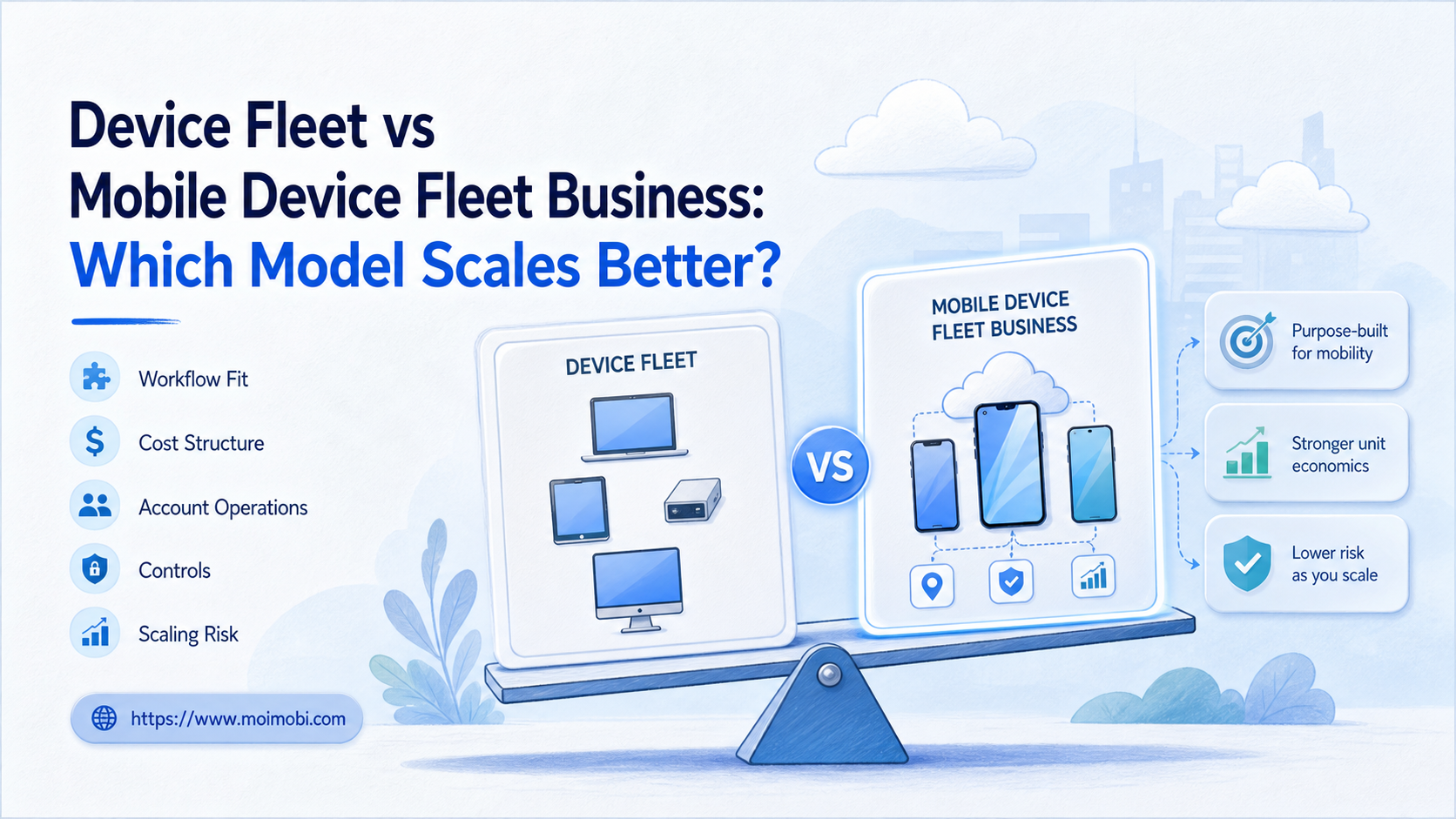
A mobile device fleet business is an operating model built around many mobile environments, accounts, workflows, owners, and execution records. A general device fleet is broader. It may include laptops, tablets, phones, kiosks, test devices, and managed endpoints.
The comparison verdict is this: a general device fleet scales better for IT control, while a mobile device fleet business scales better for repeated mobile app operations. Choose by the work that must repeat, not by the number of devices involved.
The better scaling model depends on the work. Use a general device fleet model when the main need is employee device management, compliance, and IT control. Use a mobile device fleet business model when the core work happens inside mobile apps, account environments, publishing flows, customer replies, or repeated Android execution.
The selection rule is direct: manage devices when the device is the asset; manage mobile execution when the workflow is the asset. Many teams need both, but they should not use the same operating metrics for both.
Key Takeaways
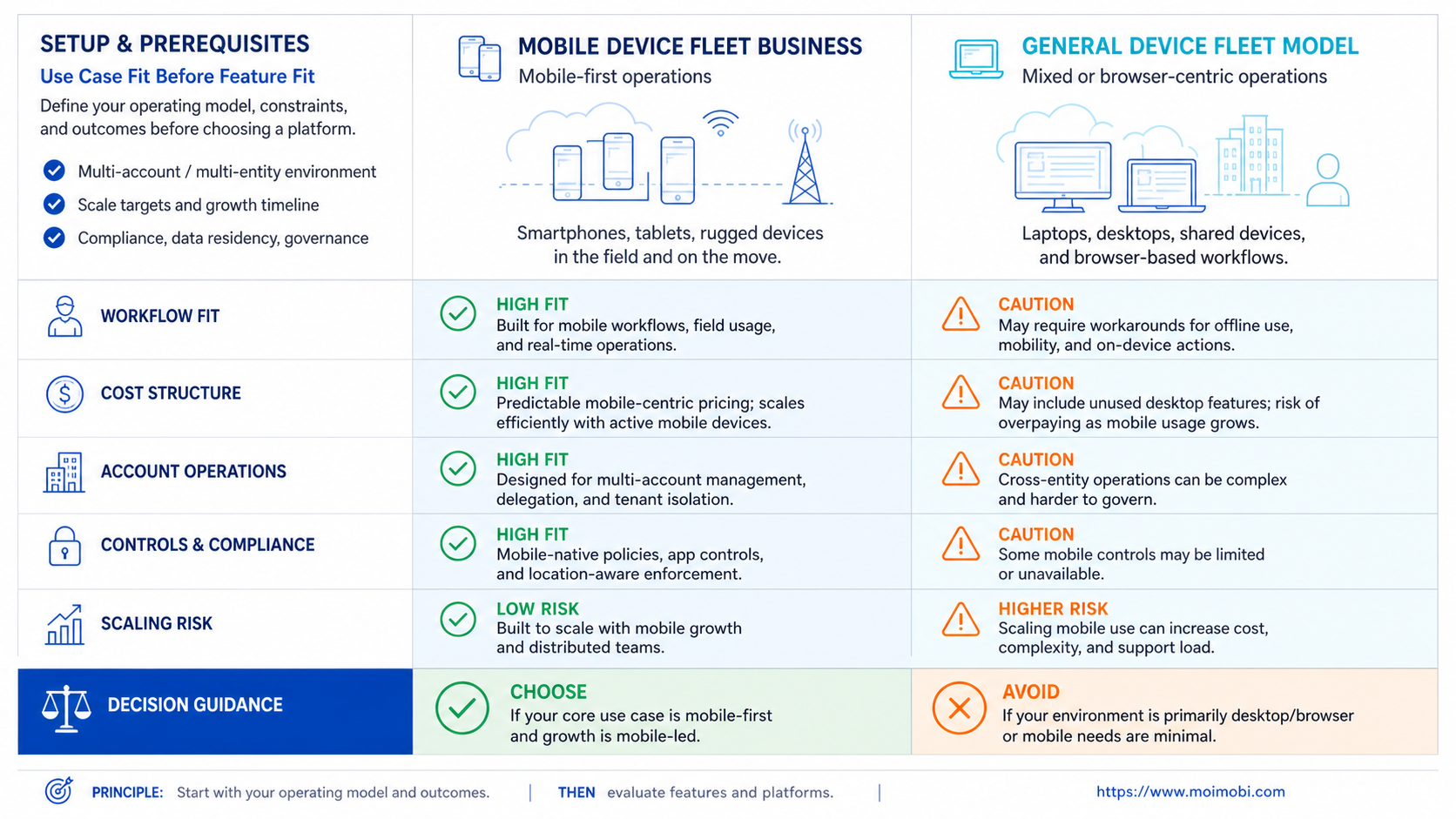
- A general device fleet scales around IT inventory, policy, enrollment, monitoring, and endpoint control.
- A mobile device fleet business scales around mobile app workflows, account assignment, environment persistence, and task results.
- The right model depends on whether the team is managing endpoints or running repeatable mobile operations.
- Device count alone is a weak scaling metric. Teams also need ownership, routing, evidence, and recovery rules.
- A pilot should test queue time, failure visibility, account handoff, and environment reuse before expansion.
A Practical Comparison Framework for Mobile Device Fleet Business Decisions
Start with the operating unit. In a general device fleet, the unit is usually a device assigned to a person, department, location, or compliance policy. In a mobile device fleet business, the unit is often an account-workflow-environment bundle.
That difference changes the decision. IT device fleets ask questions such as: Is the device enrolled? Is it compliant? Is it patched? Can it be locked or wiped? Mobile execution fleets ask different questions: Which account uses this environment? Which workflow is running? Who owns the result? What proof exists after the task completes?
Android Enterprise describes management capabilities for company-owned devices, work profiles, and managed Google Play in enterprise environments. The official Android Enterprise overview is a useful reference for device management scope. It shows why endpoint control and mobile workflow execution should not be treated as the same problem.
| Comparison axis | General device fleet | Mobile device fleet business |
|---|---|---|
| Primary goal | Control, secure, and manage endpoints | Run repeatable mobile workflows |
| Main unit | Device, user, department, policy | Account, environment, workflow, task owner |
| Success metric | Enrollment, compliance, uptime, support load | Task completion, evidence, handoff, recovery speed |
| Best tooling fit | MDM, EMM, endpoint management | Cloud phones, account workspaces, automation queues |
| Scaling risk | Policy drift and support overhead | Account confusion, duplicated work, unclear task state |
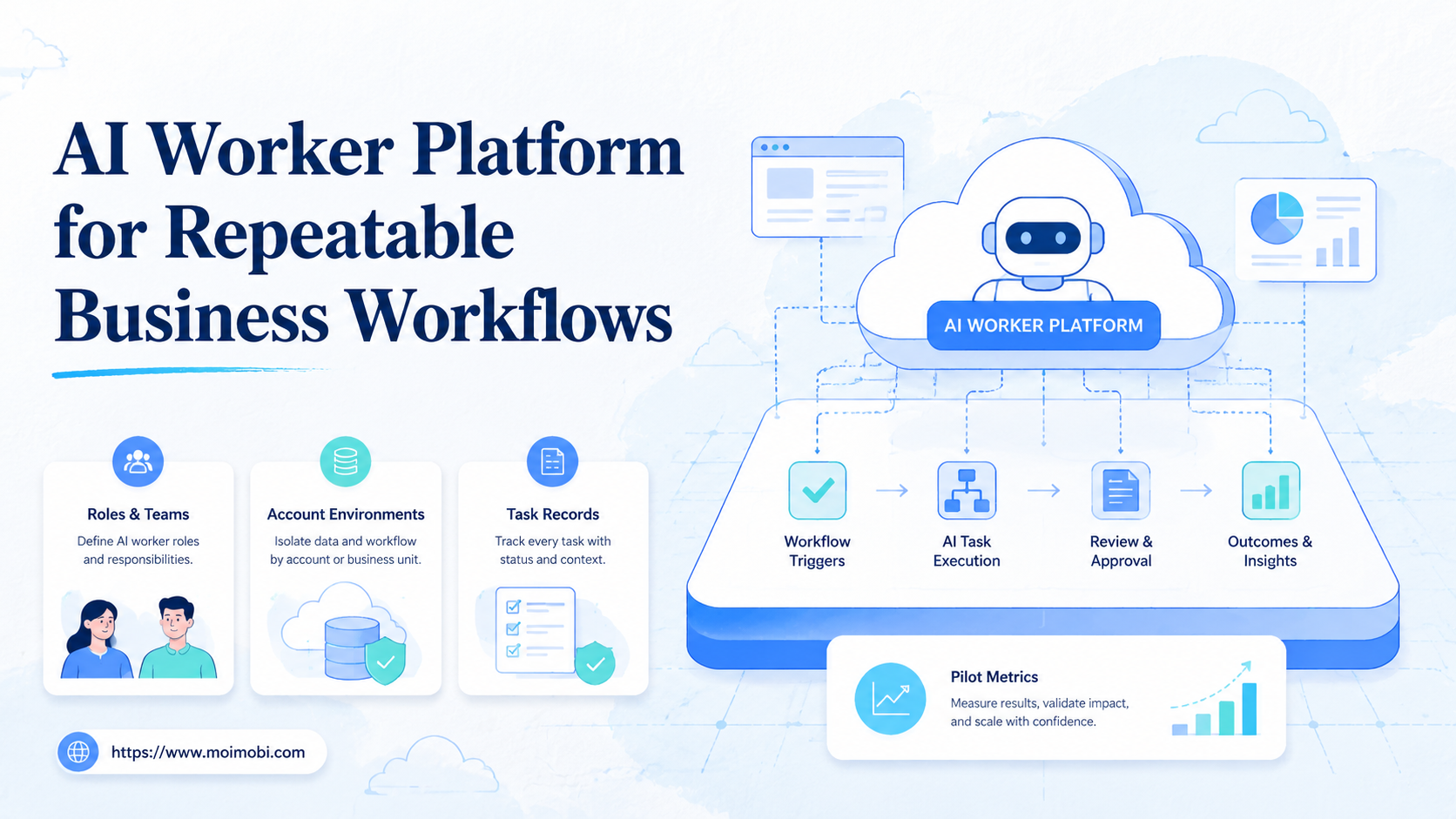
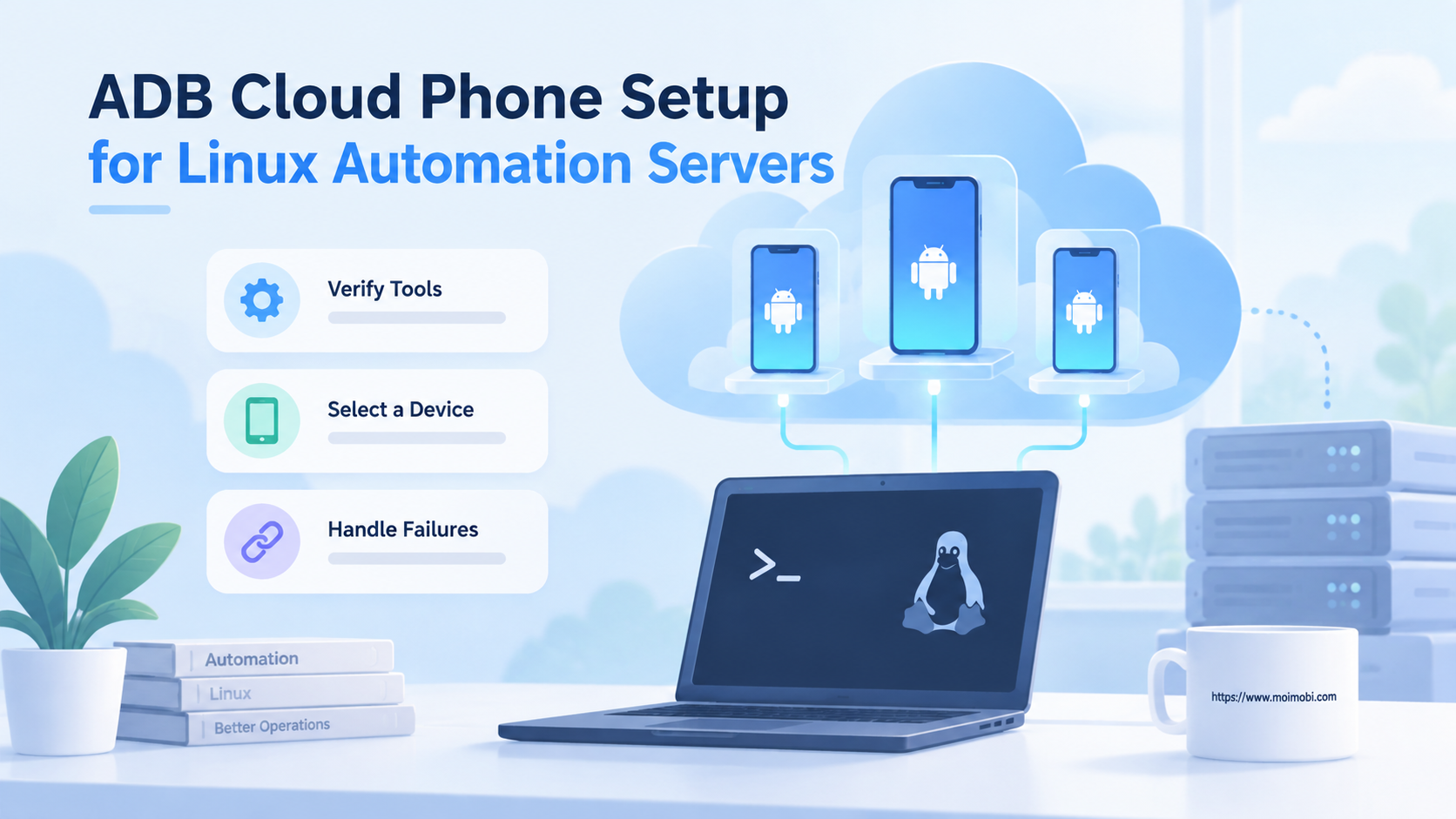
For teams running mobile-first operations, cloud phone environments often sit inside the second model. They are not just devices on a list. They are execution spaces where apps, accounts, routes, tasks, and evidence must stay connected.
Use Case Fit Before Feature Fit in a Mobile Device Fleet Business
Feature comparisons become noisy when the use case is unclear. A mobile device fleet business is not automatically better than a general device fleet. It is better only when the business value comes from repeated mobile execution.
Use the workflow test:
- If the question is "Who owns this phone, and is it compliant?" start with device fleet management.
- If the question is "Which account ran this task, and what happened?" start with mobile execution management.
- If the question is "Can our team reproduce app issues across real devices?" consider a device testing cloud.
- If the question is "Can our operators run many mobile app workflows without losing account context?" consider a managed mobile fleet.
AWS Device Farm is a useful contrast. AWS describes Device Farm as a way to test and interact with apps on real physical devices hosted by AWS. See the AWS Device Farm developer guide for that testing-oriented model.
That model helps QA teams, but it is not the same as operating a mobile account workflow business. A QA run may end after test artifacts are collected. An operations workflow may need persistent login state, account assignment, queue status, human review, and retry rules.
MoiMobi is closer to the operations model. Its value is not only remote access. It is the combination of Android environments, account workspaces, browser profiles, task execution, and records for teams that need repeated work across many accounts.
Operational Trade-Offs and Team Workflow Comparison
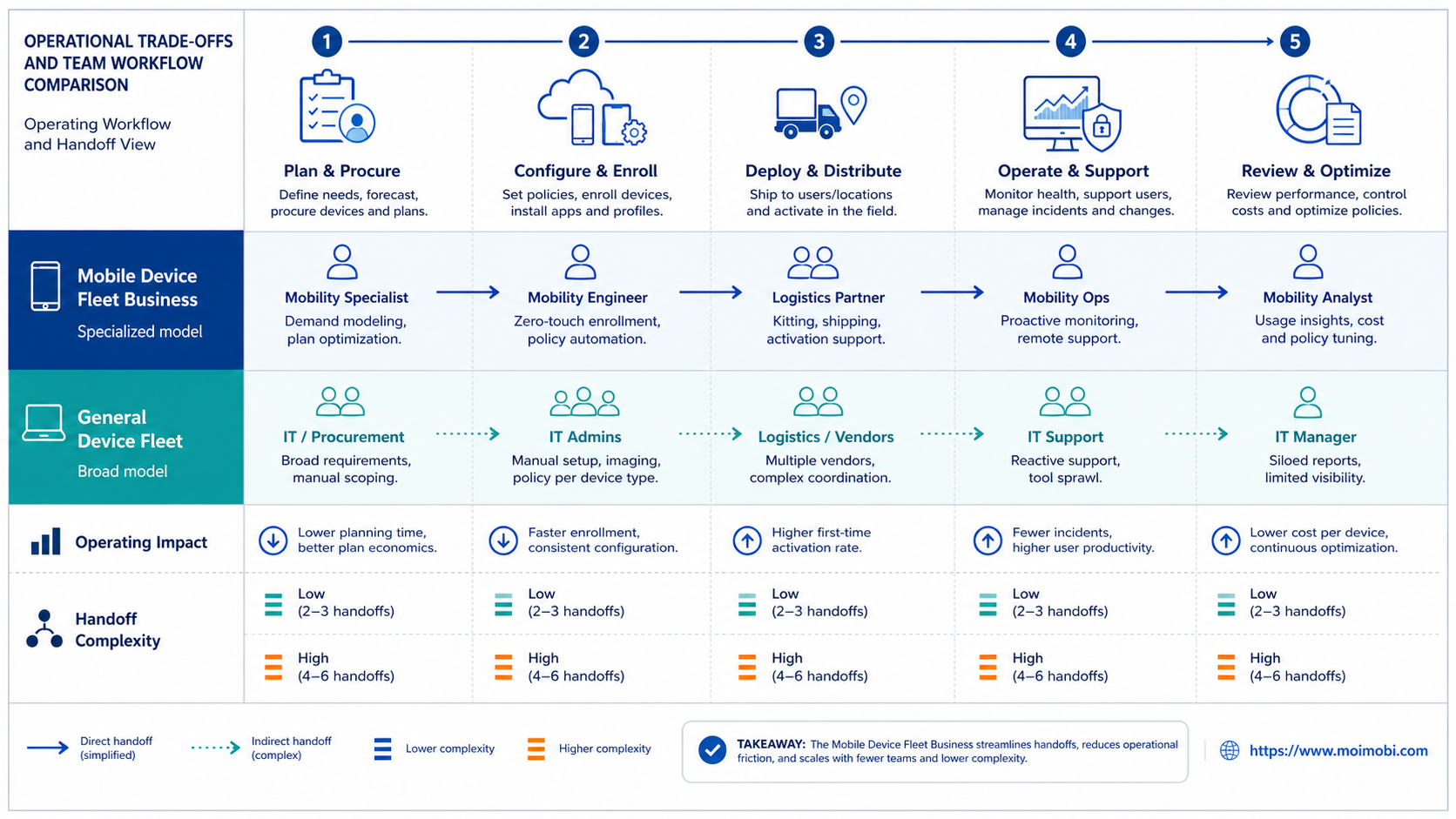
The first trade-off is control versus throughput. General device fleets usually prioritize central policy, employee assignment, endpoint security, and inventory visibility. Mobile execution fleets prioritize parallel capacity, account isolation, workflow state, and task evidence.
The second trade-off is reset versus persistence. IT-managed devices may be reset, re-enrolled, reassigned, or updated by policy. Mobile operations often need persistence. Account sessions, app state, cookies, route settings, and prior task history may all affect the next run.
The third trade-off is support model. Device fleets need help desk workflows. Mobile device operations need operations review. A failed endpoint may create a ticket. A failed mobile workflow may require retry, account check, manual takeover, content revision, or environment replacement.
Use this decision block:
Choose general device fleet management when
- Devices are assigned to employees or departments.
- Compliance, inventory, updates, and access control are the main jobs.
- Mobile apps are one part of a broader endpoint estate.
Choose a mobile device fleet business model when
- Accounts and app sessions are central to daily work.
- Teams run recurring publishing, reply, monitoring, or marketplace tasks.
- Evidence and handoff matter after each task run.
For account-heavy teams, device fleet infrastructure should include ownership, routing, logs, and review loops. Hardware or virtual device count is only one part of the design.
Setup Cost, Ongoing Cost, and Management Overhead
The common myth is that scale means adding more devices. The workable view is more disciplined. Scale means adding capacity without losing control of owners, environments, queues, and outcomes.
A general fleet cost model includes procurement, enrollment, policy setup, support, loss handling, replacement, updates, and user onboarding. A mobile execution cost model includes environment capacity, routing, account setup, workflow design, monitoring, task review, and failure recovery.
Neither model is automatically cheaper. A small physical device fleet may work well for internal QA. A managed cloud environment may work better when teams need many repeatable account workflows. A hybrid setup may be cleaner when engineering, QA, and operations all need different access patterns.
Microsoft Intune documentation describes device management through enrollment, configuration, compliance, app protection, and remote actions. The Microsoft Intune device management documentation is useful for understanding the endpoint-management cost surface.
The key is to avoid comparing only subscription price. Compare total operating load:
- How long does setup take?
- How often does a workflow fail because the environment is wrong?
- How much manual handoff is required?
- Can managers see task status without asking operators?
- Are failures categorized well enough to improve the SOP?
- Can account work be reviewed without opening every device manually?
If those answers are weak, the model will struggle as the team grows.
One more boundary matters before budget approval. If the fleet is mostly assigned to employees, prioritize device management. If the fleet is mostly assigned to accounts, campaigns, app tasks, or operators, prioritize mobile execution management. That split prevents the buying process from mixing two different operating models.
Which Option Fits Different Teams Best
Best for IT and employee endpoint teams
Use general device fleet management when devices belong to employees, contractors, departments, stores, or offices. The main work is policy, compliance, app distribution, identity, and support.
Best for mobile QA teams
Use a real-device testing cloud when the main job is validating app behavior. This is different from building a mobile device fleet business because the task usually ends with logs, videos, screenshots, or test results.
Best for social media and marketplace operations
Use a mobile execution model when mobile app accounts and task history matter. This can include posting, replying, monitoring, listing checks, lead follow-up, and customer message workflows.
Best for multi-account teams
Use a model that links accounts, environments, owners, and tasks. A large fleet without account mapping becomes hard to audit. For this case, account workspace management should sit beside the device layer.
Best for teams replacing manual phone farms
Use a controlled phone-fleet model when the current process depends on many manually handled phones. The goal should not be "more phones." The goal should be cleaner assignment, better evidence, and fewer repeated setup steps. A phone farm infrastructure alternative can be evaluated through that lens.
Best for teams with sensitive account environments
Use separated workspaces and clear routing when account context matters. Device reuse without isolation can create operational confusion. A device isolation layer helps make the boundary visible to operators and reviewers.
Rollout Checklist Before Scaling
Run a small pilot before expanding the fleet. Pick one account group, one platform, one workflow, and one owner. Avoid moving every task into the new model at once.
Use this checklist:
- Define the workflow and completion result.
- Assign each account to one environment.
- Label the owner, platform, route, and task type.
- Decide which actions need human review.
- Record every run with status and evidence.
- Track failures by category.
- Review whether the same environment can be reused without rework.
- Expand only after handoff and recovery are clear.
The pilot works when the next operator can understand what happened without asking the previous operator. The pilot fails when the fleet grows but task state remains unclear.
Frequently Asked Questions
What is a mobile device fleet business?
It is a business or operations model built around many mobile environments, accounts, workflows, and task records. The goal is repeatable mobile execution, not only device ownership.
How is it different from a general device fleet?
A general fleet focuses on managing endpoints. A mobile execution fleet focuses on running app workflows, account operations, and task queues inside controlled mobile environments.
Is a phone farm business the same thing?
Not exactly. A phone farm business often emphasizes device quantity. A modern mobile fleet should emphasize workflow ownership, isolation, routing, task records, and recovery.
Which model scales better?
The model that matches the work scales better. IT endpoint work scales through device management. Mobile app operations scale through execution environments and workflow control.
Should teams use physical phones or cloud environments?
It depends on the workflow. Physical phones may fit hardware-specific testing or direct manual access. Cloud environments fit repeatable, distributed, or team-managed mobile workflows.
What should teams measure during a pilot?
Measure setup time, task completion, failed runs, manual rescue time, evidence quality, and account handoff clarity. These show whether scaling is real.
Can MoiMobi support both browser and mobile workflows?
Yes. MoiMobi is designed for browser and mobile execution environments, including account workspaces, Android environments, and workflow records for operations teams.
What is the biggest mistake when scaling a mobile fleet?
The biggest mistake is counting devices instead of tracking workflows. More devices do not help if ownership, account mapping, task state, and recovery are unclear.
Conclusion
Device fleet management and a mobile device fleet business solve different scaling problems. The first is strongest when endpoint control is the job. The second is stronger when repeated mobile workflows, account environments, and task evidence are the job.
Before choosing a model, run one pilot workflow. If the team can assign accounts, reuse environments, review evidence, and recover from failure without extra coordination, the model is ready to scale. If not, fix the operating layer before adding more devices.