Key Takeaways
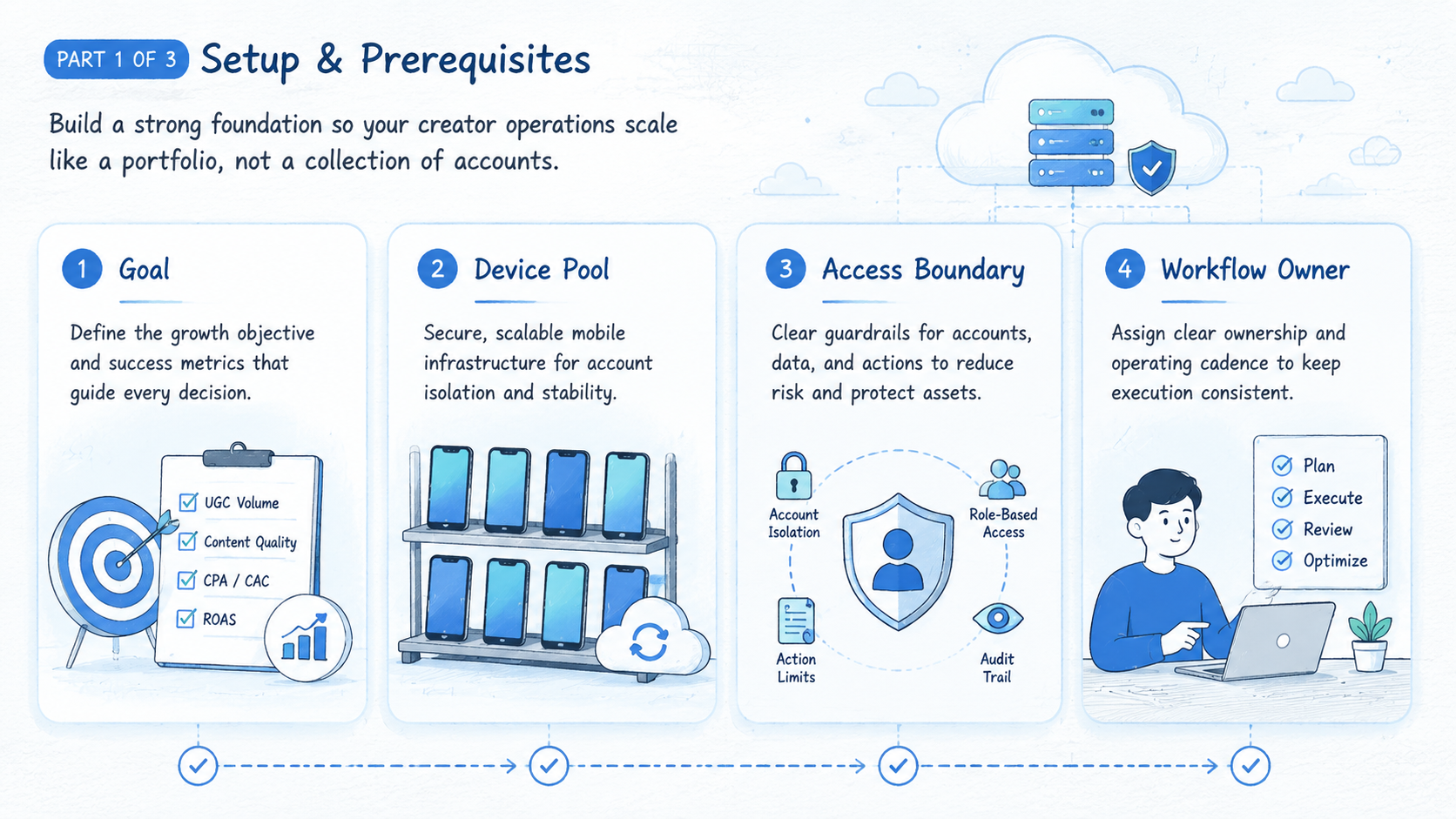
- TikTok creator operations should work like a managed growth portfolio.
- The best UGC system starts from real product moments, not polished ad scripts.
- Creator tiers, market fit, incentives, and payment paths decide whether viral reach becomes business value.
- Mobile teams need account infrastructure, device isolation, asset records, and a weekly review loop.
Why TikTok Creator Operations Should Work Like a Portfolio
A creator operations system recruits, briefs, manages, publishes, measures, and improves TikTok-led UGC. The work connects creative testing with account execution, market tracking, and business outcomes.
Budget.
That definition matters.
From the outside, a creator program can look simple.
During the first review, operators should compare creator notes, account state, target market, device setup, and product response before making the next decision.
A team finds creators, sends a brief, receives videos, and checks views. Serious growth requires more discipline.
Payment.
A creator program behaves more like a portfolio of uncertain assets than a list of one-off posts.
Each creator has a different language, audience, shooting style, country mix, posting rhythm, and breakout probability.
For a clean test, operators should compare creator notes, account state, target market, device setup, and product response before making the next decision.
Some will drive most of the results. Some will improve with coaching.
Timing.
Others will produce weak signals and should leave the active program.

The useful lesson from the source case is not the exact product, brand, revenue figure, or founder story.
At the account layer, operators should compare creator notes, account state, target market, device setup, and product response before making the next decision.
Those details should not be copied. The useful lesson is the operating model: let creators discover product-native moments while the team builds infrastructure, data, and incentive rules around them.
Context.
Mobile growth teams need more than ideas. They also need execution control.
During weekly review, operators should compare creator notes, account state, target market, device setup, and product response before making the next decision.
MoiMobi can support that layer with cloud phones, phone farms, mobile automation, device isolation, and proxy network.
Creators supply the content spark.
Signal.
Operators still need controlled accounts, clean environments, and visible records.
Product Moments Beat Scripted Ads in TikTok Creator Operations
Many teams treat UGC as a cheaper ad format.
Within the creator brief, operators should compare creator notes, account state, target market, device setup, and product response before making the next decision.
They ask creators to repeat features, praise the product, and follow a rigid script. That can explain a product.
Review.
It often fails to feel native.
Product-native UGC works differently.
After a weak post, operators should compare creator notes, account state, target market, device setup, and product response before making the next decision.
A creator uses the product in a real situation. Something funny, useful, awkward, or emotionally clear happens on screen.
Fit.
The audience understands the use case without a long pitch.
Short example: a language-learning app can show normal practice, pronunciation correction, and daily conversation.
When views spike, operators should compare creator notes, account state, target market, device setup, and product response before making the next decision.
That is useful, but predictable. A stronger scene appears when a creator turns the AI into a strict language coach.
Clarity.
One wrong pronunciation creates tension. The product remains central, but the video now has a story.
For payment checks, operators should compare creator notes, account state, target market, device setup, and product response before making the next decision.
This is why the program should not over-control every creative detail. Operators define safety rules, product boundaries, target markets, and review criteria.
Routing.
Creators need room to find moments that feel native to the platform.
Use a short brief:
- Target user: who should understand the video.
Across creator tiers, operators should compare creator notes, account state, target market, device setup, and product response before making the next decision.
- Product moment: the exact action shown on screen.
- Hook: the first three seconds.
Pacing.
- Market: the intended country and language.
- Risk boundary: claims, behaviors, or topics to avoid.
Before the next upload, operators should compare creator notes, account state, target market, device setup, and product response before making the next decision.
- Review metric: the result that matters after views.
Before designing any posting workflow, teams should review TikTok's official Community Guidelines.
Intent.
If a workflow touches API-based publishing, teams should also review TikTok for Developers' Content Posting API. Platform rules are part of the operating system.
After market data shifts, operators should compare creator notes, account state, target market, device setup, and product response before making the next decision.
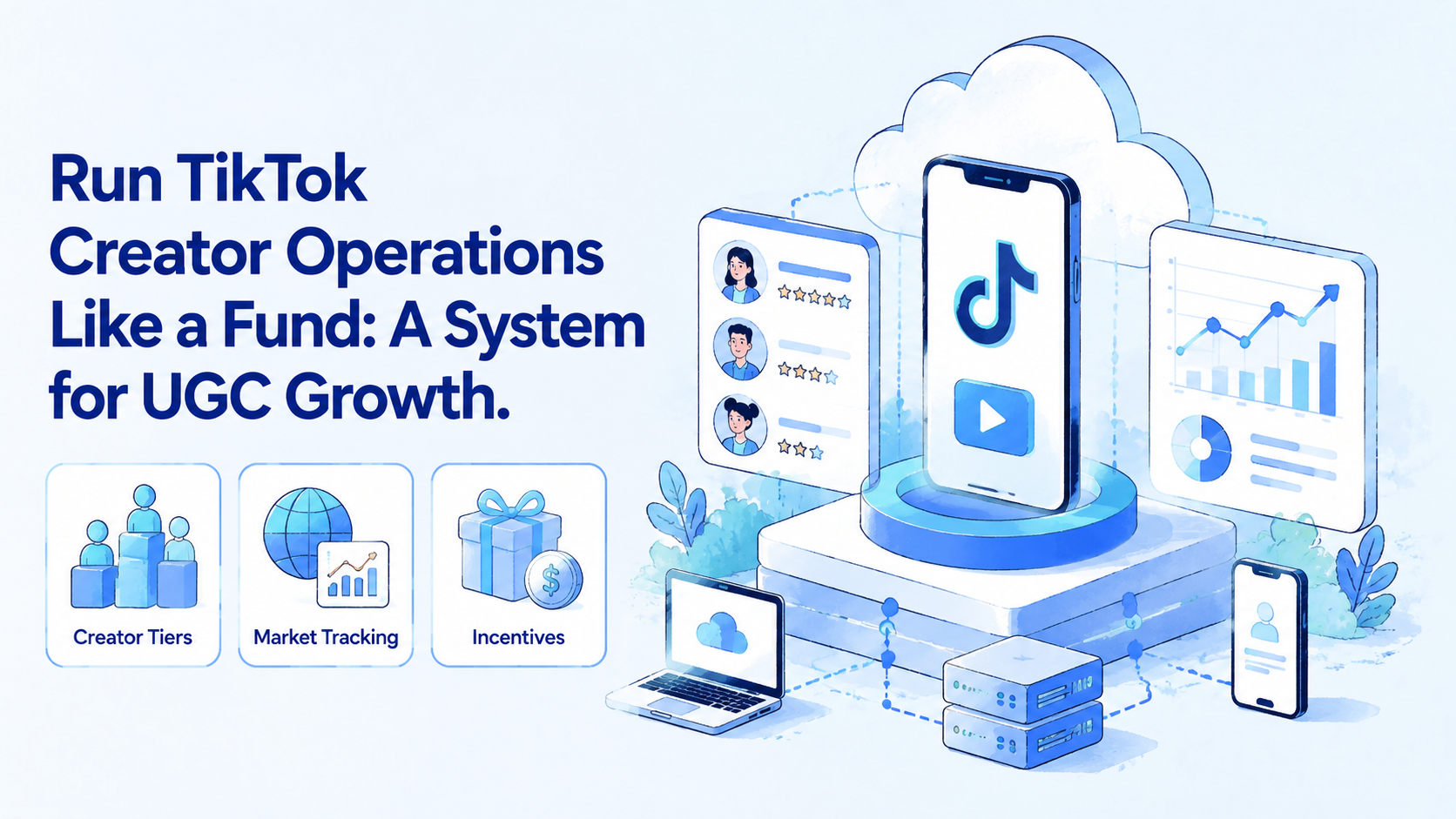
Build Creator Tiers for TikTok Creator Operations
Creator programs become messy when every creator is managed the same way. The portfolio needs tiers.
Focus.
Clear tiers help the team decide who gets budget, who gets coaching, who stays in testing, and who exits.
Core creators are the top layer.
For asset reuse, operators should compare creator notes, account state, target market, device setup, and product response before making the next decision.
They produce the strongest reach, conversion, or reusable creative patterns. These creators deserve better briefs, faster feedback, more product access, and higher upside.
Limits.
Potential creators form the second layer. They have signs of quality, such as past breakout videos or strong audience fit, but their output is not stable yet.
Across the phone group, operators should compare creator notes, account state, target market, device setup, and product response before making the next decision.
They need coaching around hooks, pacing, product scenes, and comment analysis.
Experimental creators test new countries, languages, use cases, and personas.
Source.
They should use smaller budgets and shorter review cycles.
Exit creators stop active work.
When coaching starts, operators should compare creator notes, account state, target market, device setup, and product response before making the next decision.
That is not a personal judgment. It is budget discipline.
Result.
Tier rules:
- Core: increase support and protect the relationship.
- Potential: coach the hook, scene, and posting plan.
For a safer workflow, operators should compare creator notes, account state, target market, device setup, and product response before making the next decision.
- Experimental: limit cost and shorten the learning cycle.
- Exit: stop spend and save the lesson.
Budget.
This tiering also helps the account layer. A team using multi-account management should know which accounts support core campaigns, experiments, review queues, and backup workflows.
After comments arrive, operators should compare creator notes, account state, target market, device setup, and product response before making the next decision.
Without that structure, a video failure is hard to diagnose. Was the creative weak?
Payment.
Was the audience wrong? Was the account unhealthy?
When installs rise, operators should compare creator notes, account state, target market, device setup, and product response before making the next decision.
The review needs the answer.
Recruiting Criteria Should Not Start With Follower Count
Follower count is easy to compare, but it is a weak first filter.
Timing.
A creator with a small audience can outperform a larger account if the creator understands the user problem, has short-form instincts, and is willing to iterate.
Use three filters first.
For the next creator, operators should compare creator notes, account state, target market, device setup, and product response before making the next decision.
First, the creator should be close to the target user. A language product benefits from real learners.
Context.
A shopping product benefits from real buyers or reviewers. A utility app benefits from people who can show an actual workflow.
Before scaling begins, operators should compare creator notes, account state, target market, device setup, and product response before making the next decision.
Second, the creator should have evidence of platform understanding. One past high-view video does not prove future results, but it shows that the creator has felt the rhythm of short-form content.
Signal.
Third, smaller creators should not be ignored. Micro creators often communicate faster and test stranger scenes.
Once the hook works, operators should compare creator notes, account state, target market, device setup, and product response before making the next decision.
That can be valuable when the team is still searching for a repeatable angle.
A recruiting sheet should include more than name, handle, and price.
Review.
Add creator language, country, audience country mix, best past video, content category, shootable scenes, forbidden claims, price model, turnaround time, and review owner.
Keep it current. Every completed collaboration should update the sheet.
For cleaner records, operators should compare creator notes, account state, target market, device setup, and product response before making the next decision.
Incentives Should Reward Useful Reach
Creator incentives shape behavior. If the team pays only per delivered video, creators may optimize for speed instead of quality.
Fit.
Paying only for final business results means creators may carry too much risk and leave the program.
A balanced model combines a base fee with performance tiers.
Once testing closes, operators should compare creator notes, account state, target market, device setup, and product response before making the next decision.
The base fee protects effort. The upside rewards useful reach.
Clarity.
Views are not enough. A viral video in the wrong country may create noise instead of growth. A post with many comments may still attract the wrong user.
During team disagreement, operators should compare creator notes, account state, target market, device setup, and product response before making the next decision.
Incentive rules should include market fit and business progress.
Use a simple scorecard:
- Distribution: views and completion signals.
Routing.
- Market fit: country, language, and audience match.
- Engagement: comments that mention the real problem.
For regional accounts, operators should compare creator notes, account state, target market, device setup, and product response before making the next decision.
- Product interest: clicks, installs, or first action.
- Revenue signal: trial starts, paid conversion, or payment quality.
Pacing.
- Asset value: whether the scene can be reused.
Teams can connect this data back into the execution system.
From the dashboard view, operators should compare creator notes, account state, target market, device setup, and product response before making the next decision.
A workflow using mobile automation can help standardize asset movement, account preparation, publishing queues, and reporting steps.
Automation should support review.
Intent.
It should not hide risky decisions from the operator.
Geography Can Turn a Viral Win Into a False Signal
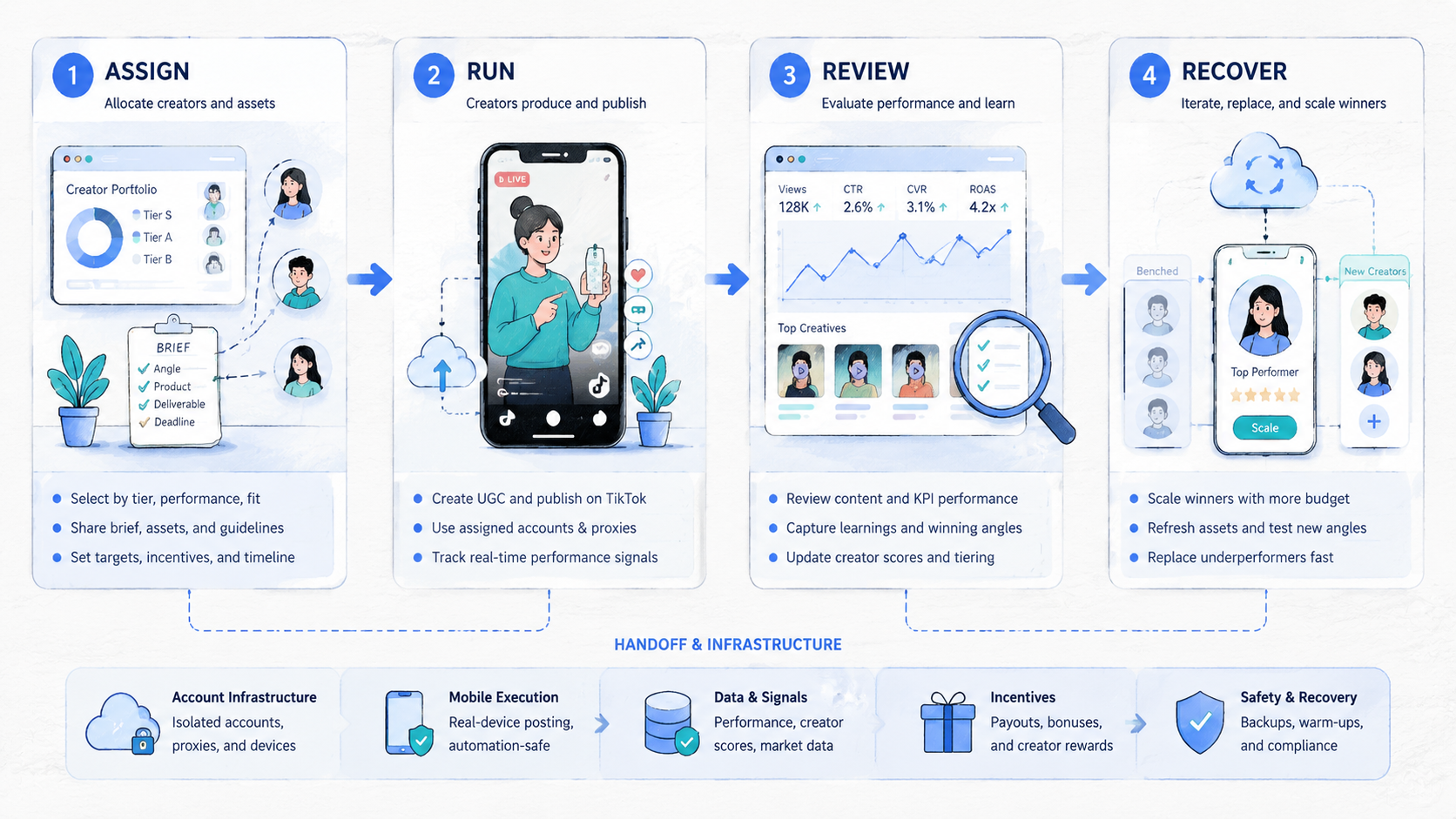
International UGC has a common trap: content can go viral in the wrong market.
Following a funnel leak, operators should compare creator notes, account state, target market, device setup, and product response before making the next decision.
The video may bring users, but the users may not match the business. Language intent may be wrong.
Focus.
Payment may be hard. The app store flow may not support the market well.
That changes the scaling decision.
Before retesting content, operators should compare creator notes, account state, target market, device setup, and product response before making the next decision.
Geographic tracking should start on day one. Every video should be reviewed against target country, audience language, install source, payment path, and downstream conversion.
Limits.
With the United States as the target, a viral response in another country may still be useful for learning. It should not automatically receive more budget.
For operator handoff, operators should compare creator notes, account state, target market, device setup, and product response before making the next decision.
The team needs to decide whether the mismatch is acceptable.

Ask four questions before scaling:
- Did the target country match?
Source.
- Could users pay smoothly?
- Did the language match product intent?
Once the campaign closes, operators should compare creator notes, account state, target market, device setup, and product response before making the next decision.
- Did the product moment match the core value?
This is where device planning and routing matter.
Result.
Teams need to understand which environment belongs to which account group, which market the account is meant to serve, and how the result maps back to that market.
Execution context matters.
Before budget moves, operators should compare creator notes, account state, target market, device setup, and product response before making the next decision.
Account Infrastructure Is Part of Creator Operations
Creator programs fail when content management and account execution are separated. The creative team may approve a video, but the operations team may not know which account should post it.
Budget.
The same asset may be reused too many times.
Sometimes the problem is even simpler.
During the first review, operators should compare creator notes, account state, target market, device setup, and product response before making the next decision.
A creator delivers content for one market, while the account setup points to another market.
A visible account system is required for TikTok creator operations.
Payment.
At minimum, each asset should have an asset ID, creator ID, target market, assigned account, device environment, posting window, review status, reuse status, and performance result.
Use a practical record:
- Asset ID:
ugc-us-032.
For a clean test, operators should compare creator notes, account state, target market, device setup, and product response before making the next decision.
- Creator ID:
cr-anna-07. - Target market: United States.
Timing.
- Account group:
us-test-03. - Device profile:
android-clean-12.
At the account layer, operators should compare creator notes, account state, target market, device setup, and product response before making the next decision.
- Proxy region: US East.
- Review result: approve with caption edit.
Context.
- Scale decision: repeat scene with a new hook.
MoiMobi's device isolation and cloud-phone infrastructure can help teams separate account environments.
During weekly review, operators should compare creator notes, account state, target market, device setup, and product response before making the next decision.
A creator program does not become safer just because it has more accounts. It becomes easier to review when every account has a known purpose, a controlled environment, and a clear audit trail.
Signal.
For larger teams, phone farm workflows can support account groups, regional execution, and repeatable routines. The goal is not blind mass posting.
Within the creator brief, operators should compare creator notes, account state, target market, device setup, and product response before making the next decision.
The goal is controlled distribution with reviewable data.
Paywall and Trial Flow Still Matter
UGC does not end at the video.
Review.
The landing flow, onboarding, trial message, payment screen, and cancellation explanation all affect the outcome.
Many teams try to improve paid conversion by adding more proof, more testimonials, and more feature claims.
After a weak post, operators should compare creator notes, account state, target market, device setup, and product response before making the next decision.
That can help, but clarity often matters more. Tell users when the trial starts, when payment happens, when reminders arrive, and how cancellation works.
Fit.
The point is not to copy a specific paywall. The point is to align the promise made in the creator video with the next screen users see.
When views spike, operators should compare creator notes, account state, target market, device setup, and product response before making the next decision.
A funny product moment should make the landing flow should make that moment easy to try. A low-risk video promise means the paywall should not feel hidden.
Clarity.
Content that reaches a country with payment friction means the team must know that before increasing spend.
Weekly Review System for TikTok Creator Operations
The creator portfolio should be reviewed weekly.
For payment checks, operators should compare creator notes, account state, target market, device setup, and product response before making the next decision.
A slow review cycle wastes budget. A chaotic review cycle creates false learning.
Routing.
Use this order:
- Market check: did reach land in the intended country?
- Content check: which scenes created retention or comments?
Across creator tiers, operators should compare creator notes, account state, target market, device setup, and product response before making the next decision.
- Account check: did account state affect distribution?
- Conversion check: did users move past the first product step?
Pacing.
- Creator check: who should get more support?
- Budget check: where should spend increase, decrease, or stop?
Before the next upload, operators should compare creator notes, account state, target market, device setup, and product response before making the next decision.
The review should create rules, not just comments. A winning hook becomes a reusable pattern.
Intent.
A failed country mismatch becomes a targeting warning.
A problematic account environment becomes an operations fix.
After market data shifts, operators should compare creator notes, account state, target market, device setup, and product response before making the next decision.
A creator who improves after coaching may move from the potential layer to the core layer.
Small rules compound.
Operating Example: From Creator Brief to Scale Decision
Consider a mobile app team testing English-speaking creators for the United States.
Focus.
The team wants videos that show one clear product moment. The brief asks creators to open the app, complete one visible action, and react naturally within the first five seconds.
For asset reuse, operators should compare creator notes, account state, target market, device setup, and product response before making the next decision.
The first creator delivers a funny scene that reaches the intended market. Comments mention the exact user problem.
Limits.
Trial starts increase, but paid conversion is flat. Managers keep the scene, change the paywall copy, and ask for two more hooks.
Across the phone group, operators should compare creator notes, account state, target market, device setup, and product response before making the next decision.
The second creator delivers a polished video that reaches the wrong country. Views are high, but payment completion is weak.
Source.
The hook becomes a creative reference. Scaling stops for that market.
When coaching starts, operators should compare creator notes, account state, target market, device setup, and product response before making the next decision.
The third creator reaches the right country but posts through an account group with weak distribution history. The creator is not rejected immediately.
Result.
The test repeats on a cleaner account group before the brief changes.
This example shows why account data, market data, and creator data should be reviewed together.
For a safer workflow, operators should compare creator notes, account state, target market, device setup, and product response before making the next decision.
Creative performance is only one part of the decision.
Frequently Asked Questions
What are TikTok creator operations?
Budget.
These operations recruit, brief, manage, pay, publish, and review creators for repeatable UGC growth. The work includes content direction, account execution, market tracking, and feedback.
After comments arrive, operators should compare creator notes, account state, target market, device setup, and product response before making the next decision.
How are creator operations different from influencer marketing?
Influencer marketing often focuses on individual campaigns.
Payment.
Creator operations focus on a repeatable system across many creators, accounts, assets, incentives, and learning loops.
Why should teams use creator tiers?
When installs rise, operators should compare creator notes, account state, target market, device setup, and product response before making the next decision.
Creator tiers prevent budget waste. Strong creators get more support.
Timing.
Potential creators get coaching. Experimental creators test new markets.
For the next creator, operators should compare creator notes, account state, target market, device setup, and product response before making the next decision.
Low-signal creators leave the active program.
Should TikTok creator operations be fully automated?
Context.
No. Automation can support asset organization, account preparation, reporting, and workflow checks. Final review should remain human-controlled when platform rules, account health, and brand risk matter.
Before scaling begins, operators should compare creator notes, account state, target market, device setup, and product response before making the next decision.
How does geography affect UGC performance?
Geography determines whether traffic can become revenue.
Signal.
A video may reach the wrong country, wrong language group, or wrong payment environment. Teams should review market fit before scaling.
Once the hook works, operators should compare creator notes, account state, target market, device setup, and product response before making the next decision.
Where does MoiMobi fit into this workflow?
MoiMobi supports the mobile execution layer.
Review.
Teams can use cloud phones, phone farms, proxy routing, device isolation, and multi-account management to operate accounts with clearer structure.
What should a weekly creator review include?
For cleaner records, operators should compare creator notes, account state, target market, device setup, and product response before making the next decision.
A weekly review should include market fit, content performance, account condition, conversion quality, creator tier movement, and budget allocation. The output should be new rules, not only observations.
Fit.
Conclusion
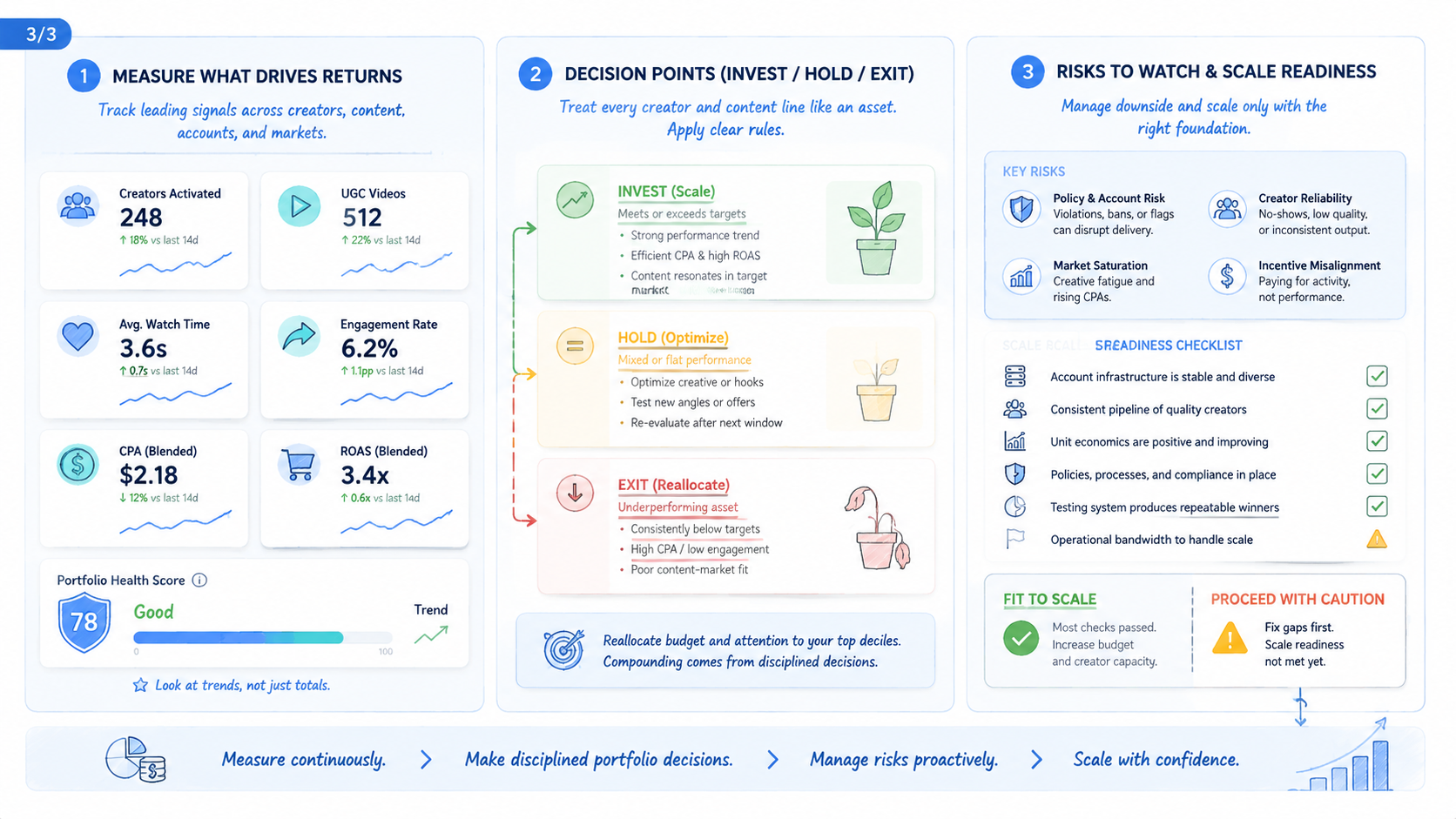
This work performs best when treated as a managed growth system. Creators explore real product moments.
When testing is complete, operators should compare creator notes, account state, target market, device setup, and product response before making the next decision.
Operators build account infrastructure.
Data teams connect views to geography, payment, and conversion.
Clarity.
Managers move budget toward the strongest combinations.
The result is not a magic viral formula.
During team disagreement, operators should compare creator notes, account state, target market, device setup, and product response before making the next decision.
It is a better way to create, test, scale, and retire content bets. For mobile teams, that discipline matters.
Routing.
UGC growth becomes more reliable when creator creativity is connected to controlled devices, organized accounts, clear incentives, and weekly learning.