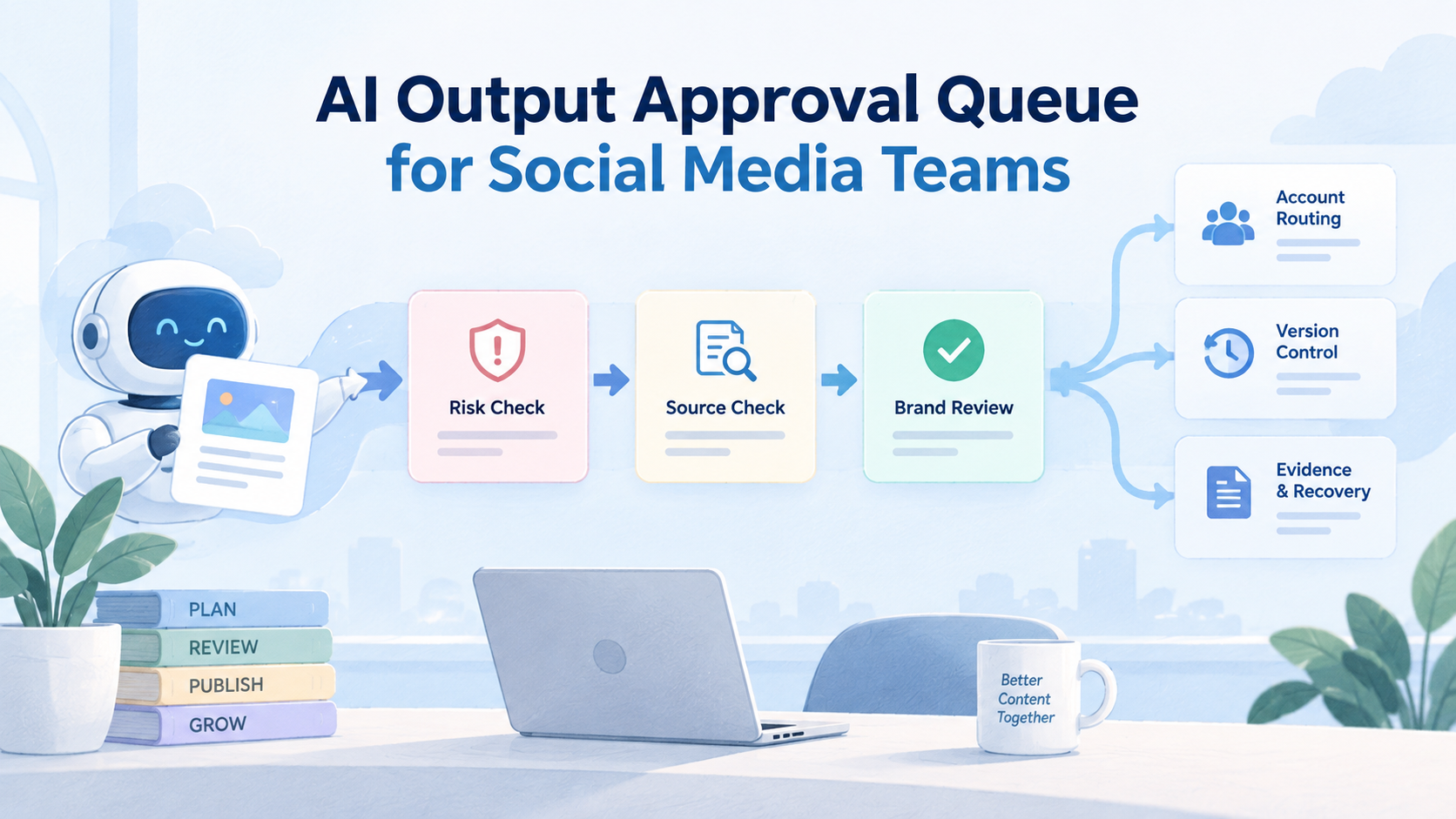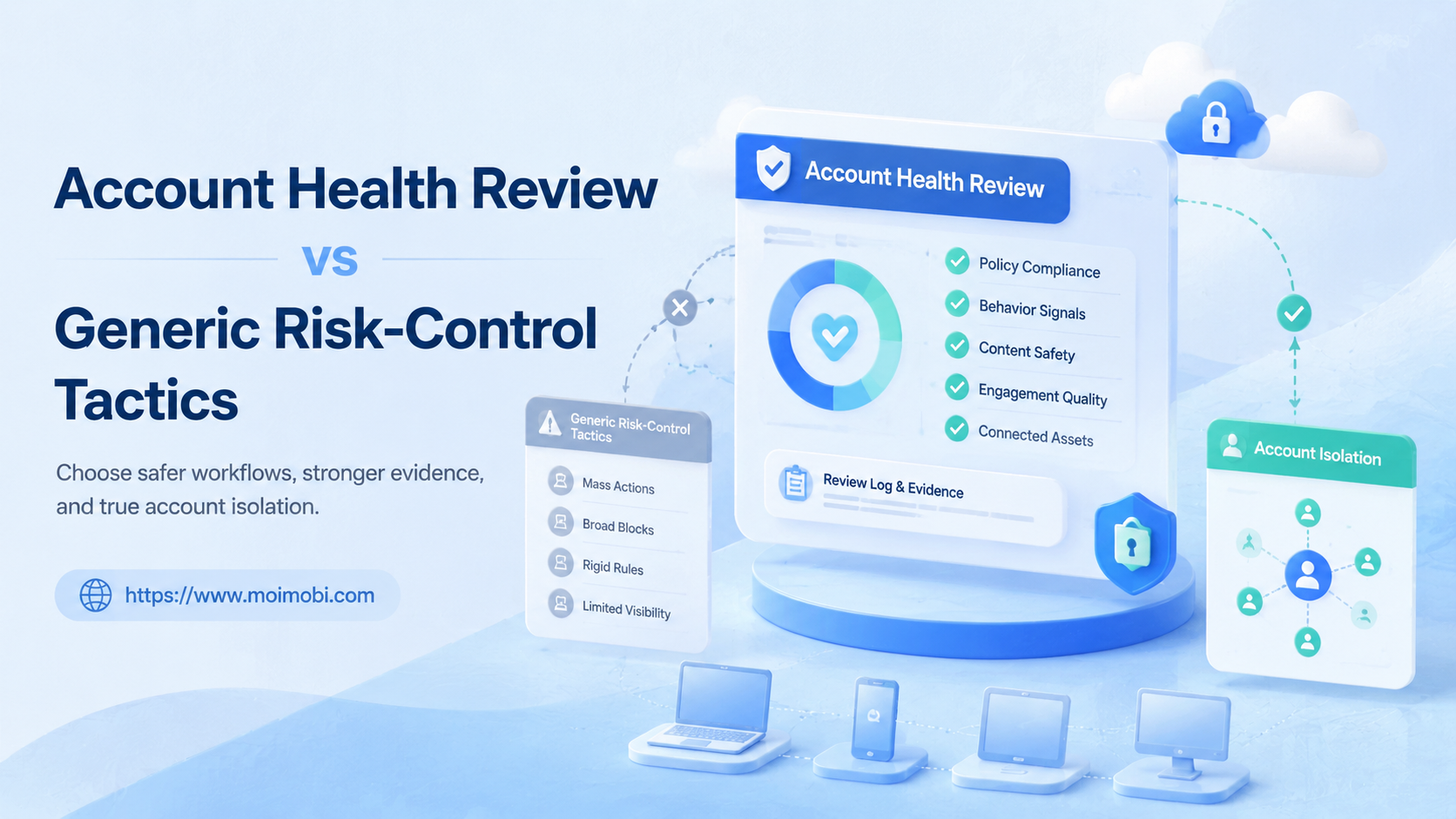
An account health review is a structured process for checking account status, policy signals, operational history, permissions, content issues, and workflow evidence before a team scales activity. Generic risk-control tactics are broader habits, rules, and safeguards that may reduce mistakes but do not always explain what happened to a specific account.
The better choice is usually a structured account review when a team manages multiple business or creator accounts and needs traceability. Generic tactics can still help as guardrails. They are weaker when the team needs diagnosis, ownership, recovery notes, or a clear decision about whether an account is ready for more work.
Use the comparison this way: choose structured review for account-level decisions, and use generic tactics as supporting controls. Do not treat either option as a promise that a platform will never limit, review, or remove content.
Key Takeaways
- A structured review is better for teams that need account-level evidence and recovery decisions.
- Generic risk-control tactics are useful as baseline guardrails, but they are too vague for diagnosis.
- Platform status pages, appeal paths, and policy centers should inform the review process.
- Multi-account teams need separated environments, task history, permissions, and stop rules.
- MoiMobi fits when teams need controlled browser and mobile execution environments for account-based work.
What to Compare Before Choosing Account Health Review
Start with the decision that matters. Are you trying to reduce random operator mistakes, or are you trying to understand the condition of specific accounts? Those are different jobs.
Generic tactics usually cover broad rules: do not publish too fast, do not reuse the same content everywhere, do not let everyone share credentials, and do not ignore platform notifications. These rules are useful, but they do not create a record of account status.
A structured account review adds an evidence layer. It asks what the platform already shows, what the account did recently, who touched the account, which environment was used, and whether any task should pause.
| Criteria | Account health review | Generic risk-control tactics |
|---|---|---|
| Decision level | Specific account, asset, task, and recovery state. | General team behavior and posting habits. |
| Evidence | Status screenshots, review notes, task logs, platform messages. | Rules of thumb, team reminders, informal checklists. |
| Best use | Scaling, audits, account readiness, post-issue recovery. | Training, onboarding, basic quality control. |
| Main weakness | Requires discipline and clean records. | Can hide account-specific problems. |
Official platform status tools are one reason this distinction matters. Instagram documents Account Status as a place to view removed content or issues tied to standards. Meta Business Support Home explains that teams can review business portfolios, ad accounts, commerce accounts, catalogs, and Pages. TikTok’s account safety help explains that accounts or posts may be banned or removed after consistent guideline violations, and it describes appeal paths.
Key Differences Between Account Health Review vs Generic Risk-Control Tactics
The main difference is traceability. Generic tactics tell people to “be careful.” A structured review tells the team what to inspect, what changed, who owns the next action, and whether the account should continue.
For example, a generic tactic may say “slow down posting.” That advice may be reasonable in a training document, but it does not answer whether a specific Instagram account has removed content, whether a TikTok post was appealed, or whether a business asset has a visible support issue.
Structured review works better when the team manages operations across browser profiles, mobile devices, and platform dashboards. Each account needs a small review file: status, last task, last exception, content issues, login environment, owner, and recovery decision.
Baseline tactics still have a place. They are helpful as a first layer for new operators. They can reduce careless behavior such as using one shared login, ignoring review notifications, or running tasks without approval. They should not replace account-level evidence.
Decision Framework: Which Option Should You Use First?
Use the following rule. If the team cannot name the account, owner, environment, latest status, and last exception, start with structured review. If those facts are already clear, baseline tactics can sit on top as SOP guidance.
Choose account health review when
- The team manages multiple social or commerce accounts.
- Operators work across browser and mobile environments.
- You need recovery decisions after removed content or account messages.
- Client or manager reporting requires evidence.
- Different accounts have different owners, regions, or workflows.
Use generic tactics when
- The team is still documenting basic operating rules.
- Only one or two accounts are active.
- The goal is training, not account diagnosis.
- No recent account issues need investigation.
- Work is mostly manual and low volume.
The choice can also be staged. Begin with generic rules for every operator, then add deeper review for accounts that matter most. This keeps the process light for simple accounts and strict for accounts that carry revenue, client work, or support traffic.
Features, Workflow, and Trade-Offs
The biggest myth is that risk control is one hidden trick. For real teams, the safer model is usually a visible operating system. It records the account, environment, task, review state, and next action.
A practical review workflow includes:
- Check platform status. Review visible account status, business support messages, content notices, or app policy messages.
- Review recent actions. Look at posts, replies, login events, device changes, and task failures.
- Confirm ownership. Make sure one person owns the account’s next action.
- Check execution environment. Verify the browser profile, mobile device, and routing assumptions used for the account.
- Classify the account. Mark it ready, watch, pause, needs review, or needs human action.
- Record evidence. Save notes, screenshots, URLs, timestamps, and recovery decisions.
This workflow takes more time than generic tips. The trade-off is better diagnosis. Teams can see whether a problem came from content, platform policy, permission gaps, operator behavior, or execution environment confusion.
MoiMobi can support this process when account work needs separated execution environments. A team can connect multi-account management with browser or mobile workspaces instead of handling every account from one shared machine.
Pricing and Operational Considerations
Cost is not only software price. The real cost is the time spent investigating failures after the fact. Generic tactics are cheap to write but expensive when they fail to explain what happened.
Structured review has a higher process cost. Someone must check status pages, collect evidence, and update account records. That work is worthwhile when account downtime, client reporting, or repeated mistakes cost more than the review itself.
Teams should also consider environment cost. If an account requires app-based tasks, a cloud phone may be part of the execution setup. If an account mainly uses web dashboards, a browser profile and device isolation may be enough.
The practical budget question is simple: which accounts deserve review discipline? Begin with revenue accounts, client accounts, support accounts, and accounts with recent exceptions. Lower-risk accounts can stay under lighter controls until they need deeper review.
Which Option Fits Different Teams
Agencies should lean toward structured review. Client work needs evidence, ownership, and reporting. A vague checklist rarely satisfies a client when an account has a status issue or a failed publishing task.
Creator teams can use a hybrid model. General rules help keep daily work simple, while deeper review should cover monetized accounts, brand accounts, and accounts used for campaign delivery.
E-commerce teams usually need stronger review controls. Product launches, customer replies, marketplace messages, and social accounts often connect to revenue. A small review process helps separate content problems from operator or environment problems.
Solo operators may not need a full review system. A simple checklist can be enough if the account count is low. Once the same person starts managing several accounts, regions, platforms, or outsourced tasks, the decision shifts toward structured review.
Review Cadence and Ownership
Cadence should match account value and activity level. A high-value client account may need a short review before a launch, while a low-volume account may only need a weekly check. Applying the same review load to every account usually wastes time.
Ownership should be visible in the task record. One person should know whether an account is ready, paused, under watch, or waiting for a platform response. Shared ownership creates delay when a platform message appears.
Rollout and Review Checklist
Do not turn the review process into a large audit on day one. Build a small weekly loop first.
- Pick 5-10 important accounts.
- Record current platform status and recent task history.
- Assign one owner per account.
- Add one environment field, such as browser profile or mobile device.
- Define five states: ready, watch, pause, needs review, needs human action.
- Review failed tasks once per week.
- Convert repeated failures into SOP changes.
The review should produce decisions, not just notes. If an account is marked “watch,” the team should know what triggers a pause. If an account is marked “needs human action,” the owner should know what evidence to collect before the next task.
For teams building a broader execution stack, mobile automation can connect review decisions with controlled execution. Social teams can also map review states into social media marketing workflows so publishing, replies, and monitoring stay aligned.
Common Mistakes to Avoid
Do not use review language to hide reckless behavior. A real review process should make account work more accountable, not more aggressive.
Avoid mixing every account into one environment. Shared sessions make investigation harder because the team cannot tell which account, device, or operator created a problem. Separated environments make the review record easier to trust.
Do not treat platform status tools as the only signal. A visible account status page is useful, but the team also needs task logs, content changes, permission history, and workflow notes.
Finally, avoid using risky vocabulary in SOPs. Terms that imply bypassing enforcement or ignoring platform rules are bad operating language. Use safer terms such as account isolation, status review, permission checks, recovery logs, and environment consistency.
Frequently Asked Questions
What is an account health review?
It is a structured check of account status, recent actions, ownership, environment, and recovery evidence before further work.
Are generic risk-control tactics useless?
No. They help with training and baseline behavior. They become weak when a team needs account-specific diagnosis.
Does account health review prevent every restriction?
No. The process improves visibility and decision quality, but platforms still apply their own policies and reviews.
Which accounts should be reviewed first?
Begin with revenue accounts, client accounts, support accounts, ad-linked accounts, and accounts with recent exceptions.
How often should teams run reviews?
Weekly works for active accounts. High-value accounts may need checks before major campaigns or after visible platform messages.
What evidence should be saved?
Save account status notes, task logs, screenshots, post URLs, owner names, timestamps, and recovery decisions.
Can MoiMobi replace platform account status tools?
No. Platform tools remain the source for platform-specific status messages. MoiMobi helps organize execution environments, account workflows, and review records.
When are generic tactics enough?
They may be enough for one account, low-volume work, or early SOP training. They become thin when multiple people manage many accounts.
Conclusion
The safer decision is not a binary choice between structured review and generic tactics. Use generic tactics as baseline rules, then use deeper account review where evidence, ownership, and recovery matter.
Begin with the accounts that create the most operational risk. Record their platform status, owner, environment, recent tasks, and next action. If the team can explain what happened and what to do next, the review process is working.