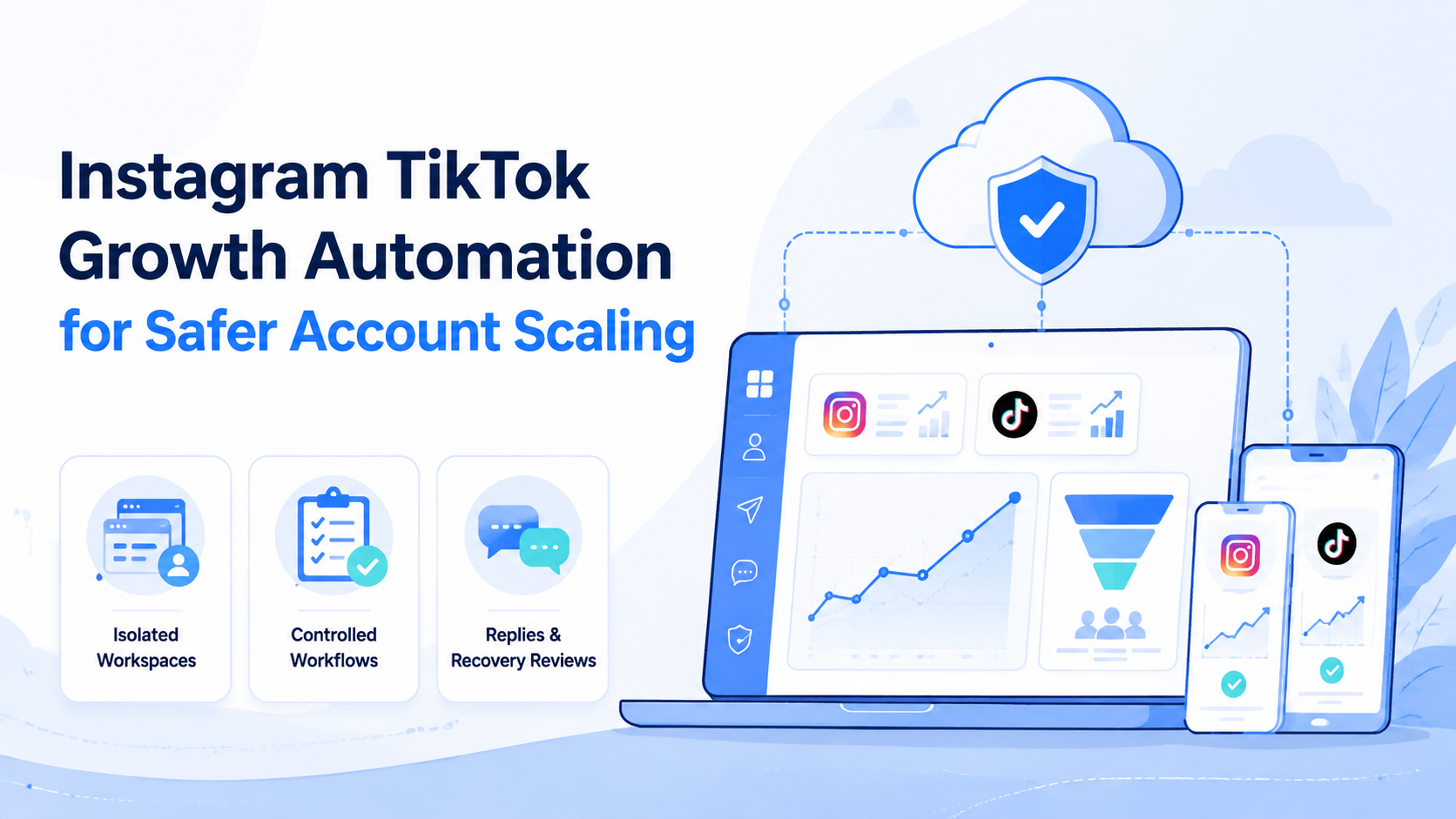
Instagram TikTok growth automation is a controlled way to scale content, account tasks, replies, and review workflows across multiple Instagram and TikTok accounts. It should improve operating discipline, not create fake engagement or uncontrolled activity.
For teams, “growth automation” is often misunderstood. The useful version is not a bot that pushes more actions. The useful version is a system that keeps accounts separated, assigns work, checks content readiness, records outcomes, and gives humans control over risky decisions.
TikTok’s official integrity rules warn against spam, fake engagement, deceptive account behavior, and automation designed to bypass systems. TikTok’s Content Posting API also shows that direct publishing depends on approved app access, authorized users, valid media, and compliance review. Instagram has its own community rules around authentic and safe interaction. Those sources define the boundary for any growth workflow.
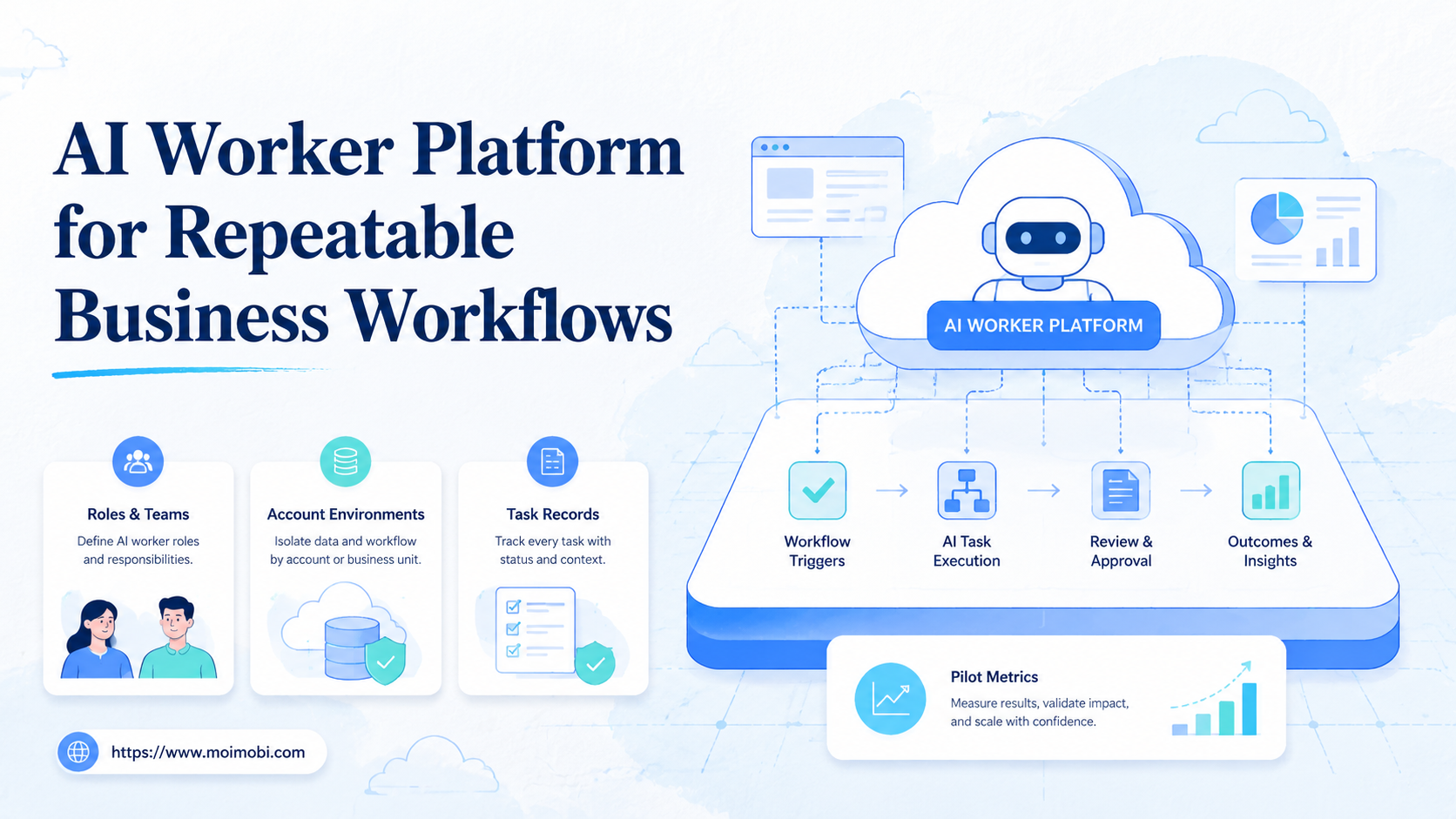
Moimobi helps teams operate inside that boundary by connecting AI browser and cloud phone infrastructure with multi-account workspaces, mobile execution, and task records.
Core Operating Takeaways
- Growth automation should scale approved workflows, not artificial engagement.
- Account scaling needs isolation, clear roles, and reviewable task history.
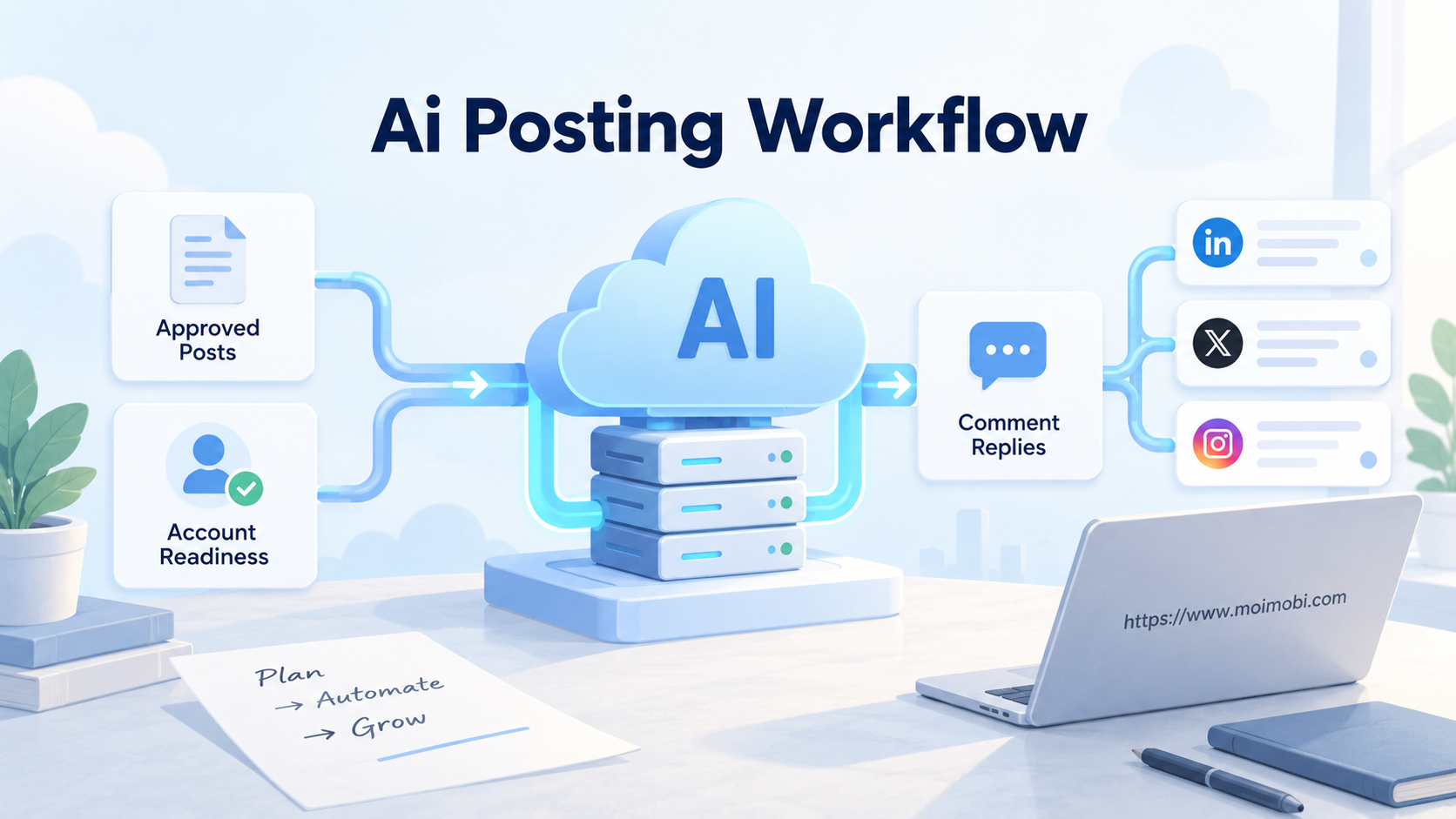
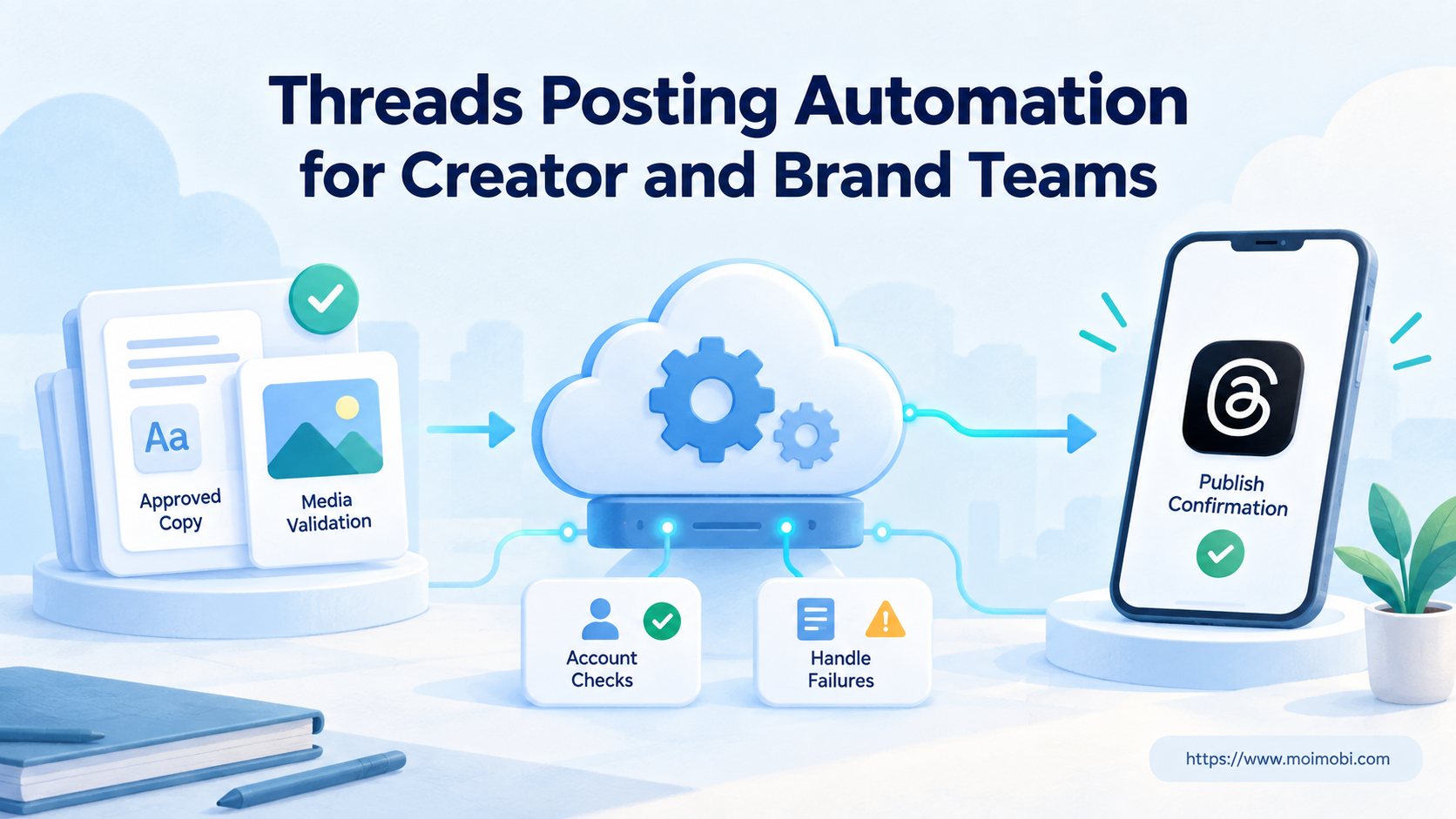
- TikTok and Instagram workflows should include content, publishing, replies, and recovery.
- Safer scaling means fewer session conflicts, cleaner handoffs, and clearer stop rules.
- Automation should make exceptions visible instead of hiding them.
The Core Idea Behind Instagram TikTok Growth Automation for Safer Account Scaling
The core idea is to scale account operations only after the workflow is clear. A team should know which account does what, which environment owns it, which content is approved, and who reviews results.
Growth becomes risky when the team expands before those basics are in place. More accounts create more login sessions, more content variants, more comments, more direct messages, and more chances for the wrong task to run in the wrong account.
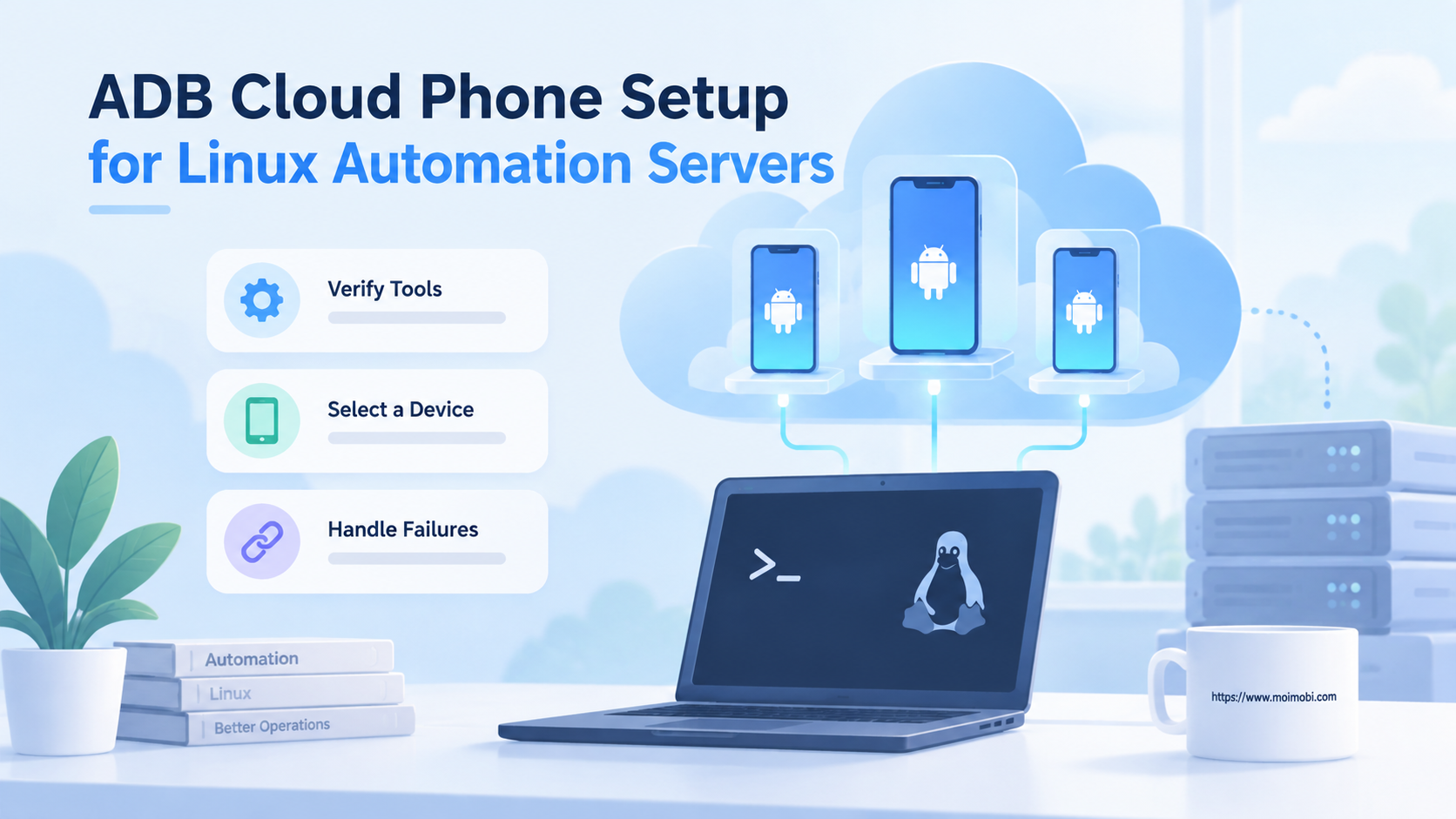
Moimobi’s cloud phone and browser execution layers give teams persistent environments for account work. That does not remove the need for judgment. It gives the team a cleaner place to run repeated workflows.
Use this simple model:
| Layer | Scaling question |
|---|---|
| Account role | Why does this account exist? |
| Environment | Where does this account execute? |
| Content | What can this account publish? |
| Engagement | Who handles replies and comments? |
| Review | What proves the workflow worked? |
If any layer is missing, scaling should pause.
Why Teams Search for This Topic
Teams search for Instagram TikTok growth automation when manual execution starts slowing growth. A creator team may need more posting capacity. An agency may need cleaner account separation. An e-commerce team may need to publish product videos and handle replies across several regions.
The search often includes “TikTok automation tool,” “TikTok posting automation,” or “TikTok browser automation.” Those terms point to tools, but the real need is usually operational control.
A tool can publish, click, or route a task. It cannot decide the account strategy by itself. The team still needs account roles, approved content, escalation rules, and response ownership.
This is why multi-account management matters. Growth does not scale cleanly when all account state lives in separate spreadsheets, personal devices, and private chat threads.
Who Benefits Most and In What Situations
The best fit is a team with repeated workflows and enough volume to justify structure. Agencies, cross-border sellers, creator operations teams, and customer engagement teams often fit.
Agencies benefit because clients need separation. Each client may require different accounts, reporting rules, approval paths, and recovery processes.
E-commerce teams benefit because product content needs accuracy. A wrong caption, wrong link, or wrong offer can create real business problems.
Creator teams benefit when they need repeatable publishing and engagement workflows without losing content quality.
The wrong fit is a team that has not proven its content model. If every post is improvised, automation will not fix the problem. Build the content process first.
Account routing and workspace design
Account routing is where many growth systems become hard to manage. A team may have the right content and the right accounts, but still run tasks from mixed devices, shared browsers, or unclear proxy routes.
A cleaner setup gives each account a known workspace. That workspace can be a cloud phone, a browser profile, or another controlled mobile environment. The key is that operators know where the account runs and what tasks belong there.
Use routing labels that operators can understand:
| Label | Meaning |
|---|---|
| Primary brand account | Publishes approved brand content |
| Product account | Handles product demos and product replies |
| Regional account | Targets a specific market or language |
| Test account | Tests formats before broader rollout |
| Support account | Handles comments, DMs, or customer questions |
These labels help teams avoid a common mistake: using every account for every task. Growth becomes easier to review when each account has a role.
Routing also supports recovery. If one account has a login issue or publishing error, the team can pause that workspace without stopping the entire operation.
How to Evaluate or Start Using Instagram TikTok Growth Automation for Safer Account Scaling
Start with a pilot, not a full rollout.
-
Pick one growth use case.
Choose publishing, comment replies, account warm-up, content testing, or lead follow-up. -
Select a small account group.
Use three to five accounts with clear roles and stable login environments. -
Assign isolated workspaces.
Use dedicated browser profiles, cloud phones, or mobile environments for each account. -
Build one approved task flow.
Define the content, action, review rule, and recovery owner. -
Run the workflow for a short window.
Track success, failures, account state, and human interventions. -
Review before adding more accounts.
Scale only after the workflow produces clear task records.
Moimobi’s mobile automation layer is useful when a workflow must run inside mobile apps. Its device isolation layer helps keep account workspaces separated.
Team permissions and handoff rules
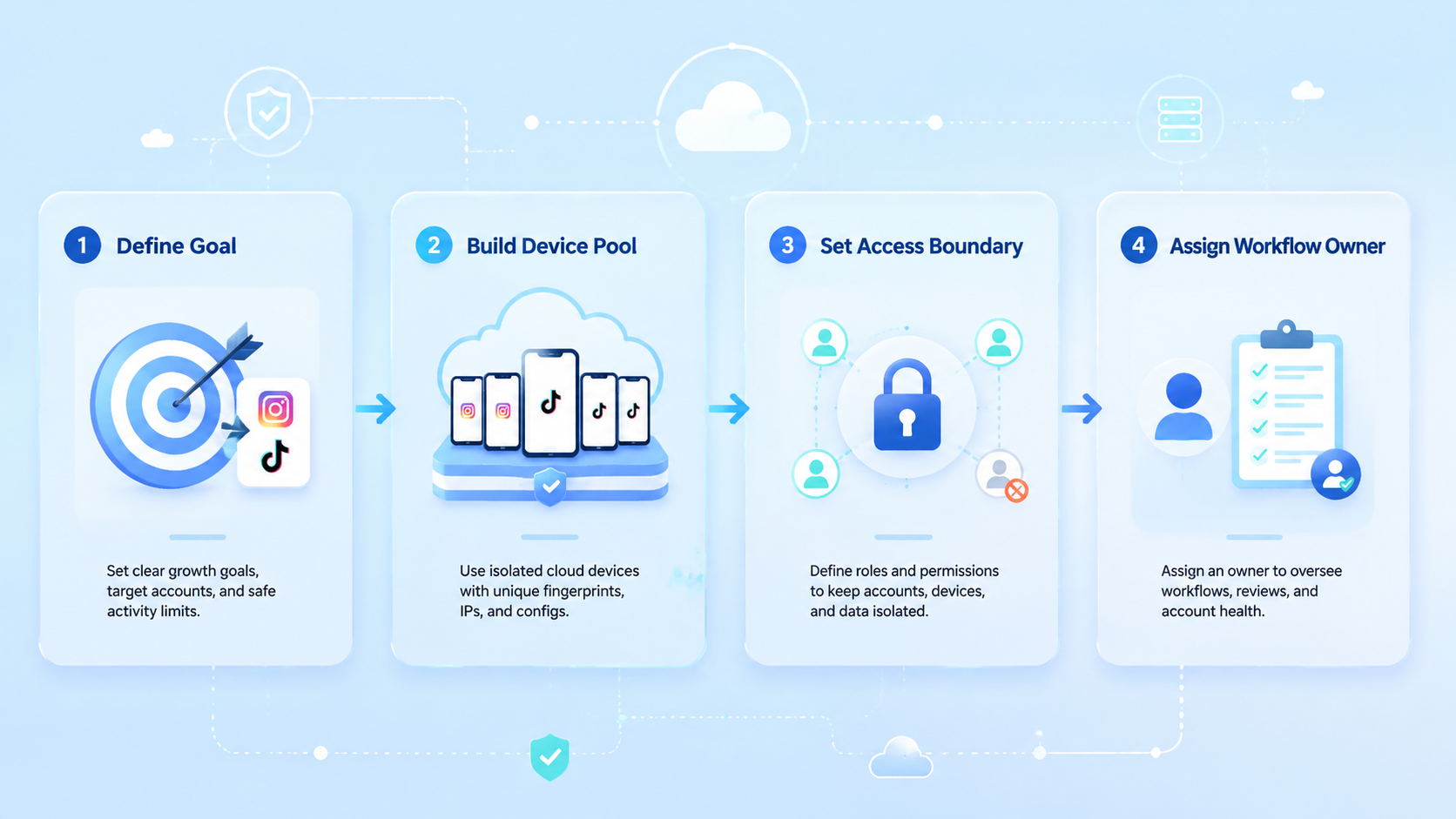
Growth automation needs role boundaries. The person who writes a caption should not always be the person who approves publishing. The person who runs a workflow should not always be the person who decides whether to scale an account.
A simple team model works well:
| Role | Responsibility |
|---|---|
| Content owner | Approves videos, captions, and campaign context |
| Account operator | Runs tasks in assigned workspaces |
| Reply owner | Handles comments, DMs, and customer questions |
| Workflow manager | Reviews failures and approves scaling |
| Analyst | Tracks account activity and campaign results |
This split prevents automation from becoming a black box. Everyone knows what they own, and every failed task has a next step.
For agencies, permissions also protect client boundaries. One client’s account queue should not mix with another client’s workspace or reporting view.
Mistakes That Reduce Results
The first mistake is treating growth automation as a way to inflate metrics. TikTok’s integrity rules specifically identify fake engagement and spam as prohibited behaviors. Growth workflows should support real content and real operations.
The second mistake is scaling all accounts at once. When many accounts change at the same time, the team cannot tell whether a problem came from content, environment, routing, timing, or operator behavior.
The third mistake is ignoring reply workflows. Growth is not just publishing. Instagram and TikTok posts can generate comments, direct messages, product questions, or support requests.
The fourth mistake is using one unmanaged environment for many accounts. Mixed sessions create confusion. Operators may not know which account is active or which route produced an issue.
The fifth mistake is missing stop rules. A good workflow pauses when login issues, publishing failures, repeated content, or reply quality problems appear.
Pilot Rollout, Measurement, and Recovery Checks
Measurement should focus on execution quality first. Track whether tasks ran in the right account, used the right content, finished in the expected state, and produced a usable log.
Use this pilot scorecard:
| Area | What to measure |
|---|---|
| Publishing | Posted, failed, pending, or manually recovered |
| Account state | Login stable, challenged, paused, or unclear |
| Content quality | Approved, duplicated, mismatched, or missing |
| Engagement | Comments handled, DMs routed, or unresolved |
| Recovery | Owner assigned, fixed, or still blocked |
The review should happen before the next scaling step. Do not add ten more accounts if the pilot cannot explain failures. Fix the workflow first.
Teams focused on TikTok can review Moimobi’s cloud phone for TikTok page. Teams comparing execution infrastructure can also use the cloud phone vs emulator guide.
Reporting that actually helps growth
Reports should not only show how many tasks ran. They should show what changed because the tasks ran.
Start with operating metrics. Track published posts, failed tasks, paused accounts, reply queues, and recovery time. These numbers tell the team whether the execution layer is working.
Then add growth metrics. Track useful comments, profile visits, direct messages, link clicks, saves, and qualified customer conversations when those metrics are available. Do not treat vanity metrics as the whole result.
Finally, connect results back to account roles. A test account should be judged by learning speed. A product account should be judged by product questions and customer intent. A support account should be judged by response quality and handoff speed.
This is the difference between automation and a growth operating system. Automation runs tasks. A system helps the team decide what to do next.
Frequently Asked Questions
What is Instagram TikTok growth automation?
It is a workflow for scaling content, account tasks, publishing, replies, and review across Instagram and TikTok accounts.
Is growth automation the same as fake engagement?
No. A proper workflow supports real content and operations. Fake engagement and spam are outside a responsible model.
What should teams automate first?
Start with content queues, publishing checks, account assignment, task logs, or reply routing. Avoid high-risk actions first.
Do cloud phones make account scaling safer?
Cloud phones can reduce session mixing and improve execution control. They do not remove the need for platform-compliant behavior.
How many accounts should a pilot use?
Three to five accounts is enough to test workflow quality before broader scaling.
What should stop the workflow?
Stop when login problems, content mismatches, repeated failures, unclear ownership, or poor reply quality appears.
How does Moimobi fit this workflow?
Moimobi gives teams execution environments, account separation, and task workflows for browser and mobile operations.
Conclusion
Instagram TikTok growth automation should start with control, not volume. The priority order is account roles, isolated workspaces, approved content, task execution, reply ownership, and recovery review.
Before scaling, run one pilot. If the team can show where each account runs, what task happened, what result appeared, and who owns exceptions, the growth workflow is ready for the next step.
Sources: TikTok Integrity and Authenticity Guidelines, TikTok Content Posting API, Instagram Community Guidelines