Key Takeaways
- Instagram and TikTok automation for agencies is mainly about lane control, approvals, and recovery, not only faster posting.
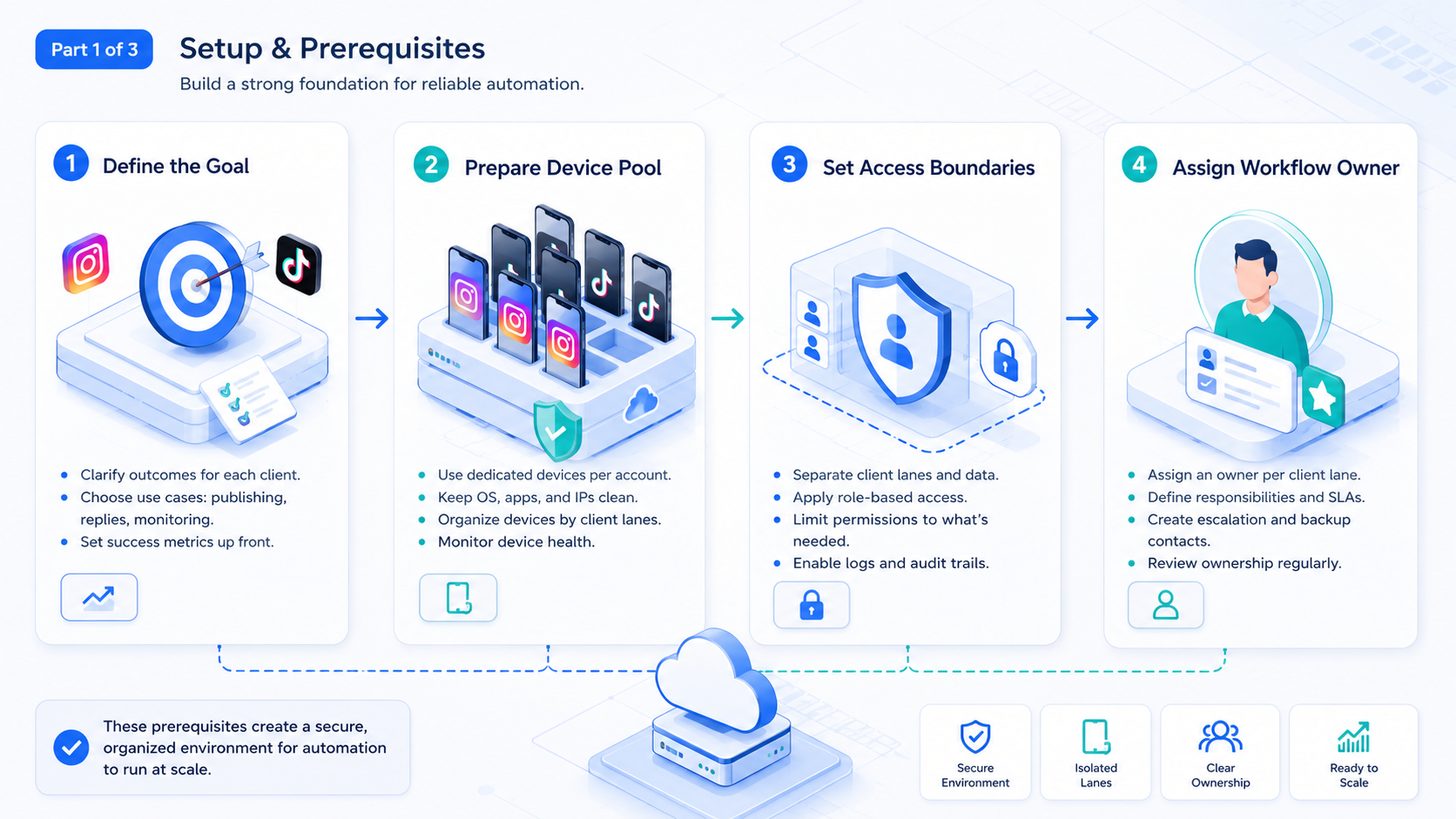
- Agencies need separate client environments, clear task scope, and handoff rules before they need more volume.
- Mixed client operations break down when publishing, reply work, and reporting share one undocumented lane.
- A pilot should measure review speed, exception handling, and client-delivery clarity before expansion.
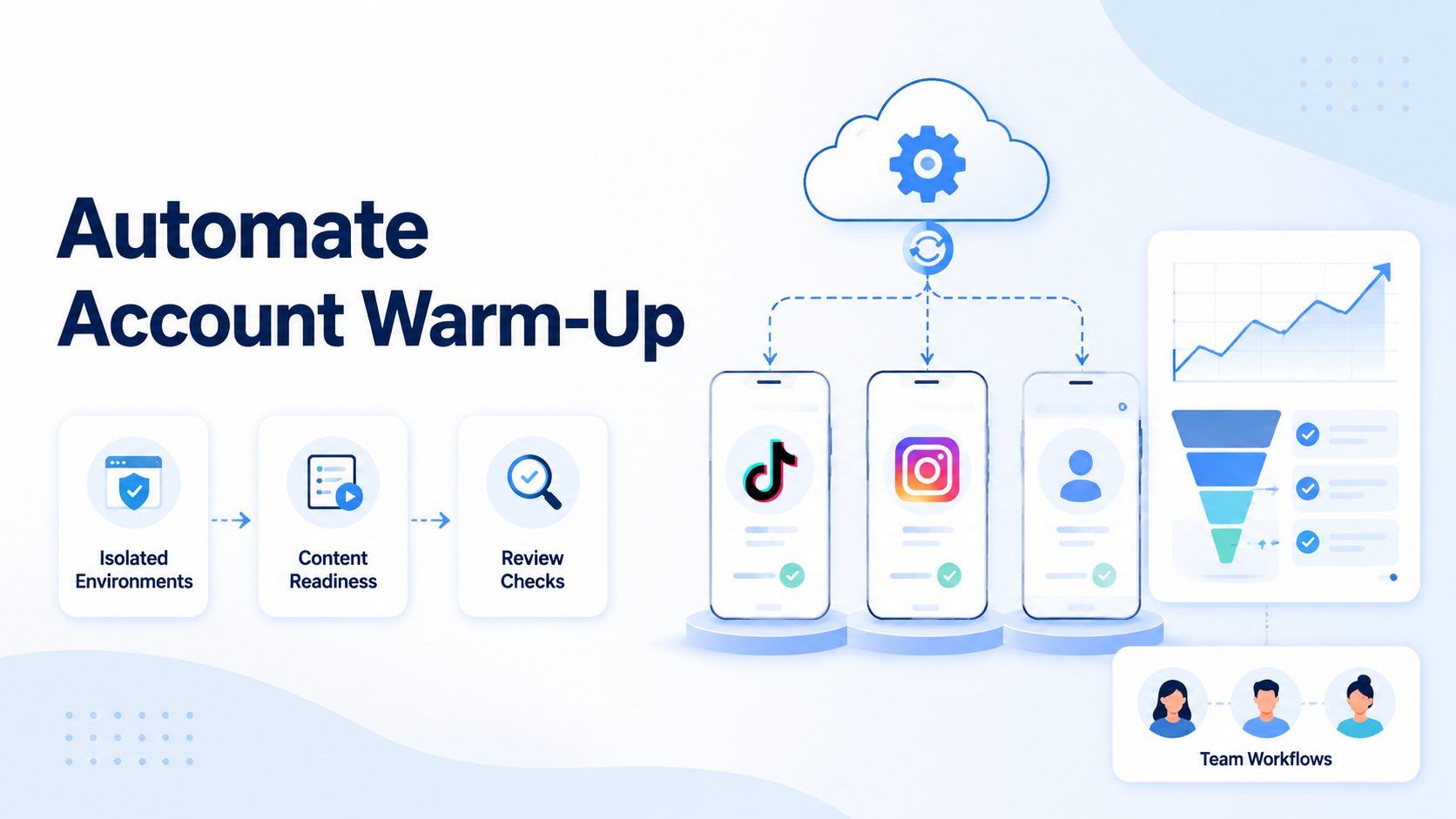
Instagram and TikTok automation for agencies is a way to run client account workflows through separated environments, defined approvals, and repeatable execution rules. The useful agency model is not one giant automation queue. It is a lane system that lets the team explain what happened for each client account and what should happen next.
That matters because agency work has more moving parts than an in-house single-brand setup. Different clients have different calendars, review cycles, escalation paths, and operator teams. When agencies run those programs inside one shared routine, small mistakes become expensive to trace.
Official documentation supports the operational logic behind this model. Platform business surfaces, browser automation standards, and managed device guidance all favor controlled sessions and explicit ownership over improvised shared state.1 2 3 4 5
The Core Idea Behind Instagram and TikTok Automation for Agencies
The common mistake is to think automation means scheduled posting only. Agencies need a broader system. Client work includes approvals, asset checks, queue review, publishing, replies, monitoring, and recovery.
That means automation has to answer more than one question:
| Question | What the agency must define |
|---|---|
| Which client lane owns this task? | Separate environment and account scope |
| Who can approve it? | Named owner and review checkpoint |
| Where does it run? | Browser lane, mobile lane, or both |
| What happens if it fails? | Visible retry and recovery rule |
| How is status reported? | One record the agency can review later |
Once those answers exist, Instagram and TikTok automation becomes a controllable delivery model instead of a loose set of tools.
Why Teams Search for This Topic
Agencies usually search for this topic after they outgrow ad hoc execution. A few operators may be able to juggle several clients manually. Later the workload expands across posting, comment replies, inbox follow-up, and weekly reporting. At that point the same shortcuts start creating risk.
Another reason is client separation. Agencies are expected to keep workspaces clean. If one team member uses the same informal routine for several client accounts, review becomes harder and trust drops.
A third reason is service expansion. Agencies often begin with content publishing and later add reply work, monitoring, or audience engagement support. Each added service creates more handoff points. Automation becomes attractive when it can keep those handoffs visible.
Who Benefits Most and In What Situations
The strongest fit is an agency with recurring client workflows, not only an agency with a large number of accounts.
This model usually works best for:
- Agencies with several active client calendars
- Teams that split approvals, publishing, and monitoring across roles
- Cross-border agencies managing market-specific account lanes
- Programs that need browser review plus mobile execution
- Very small teams with one account and no shared process
- Programs that avoid documenting approval or retry rules
- Agencies that want one mixed lane for every client
- Workflows measured only by post count
One useful boundary is client complexity. If each client has different creative review rules, reply rules, or campaign timing, lane separation becomes valuable early. That is where multi-account management and device isolation start to matter.
How to Evaluate or Start Using Instagram and TikTok Automation for Agencies
Start with checkpoints, not with a giant workflow map.
Use this pass/fail setup:
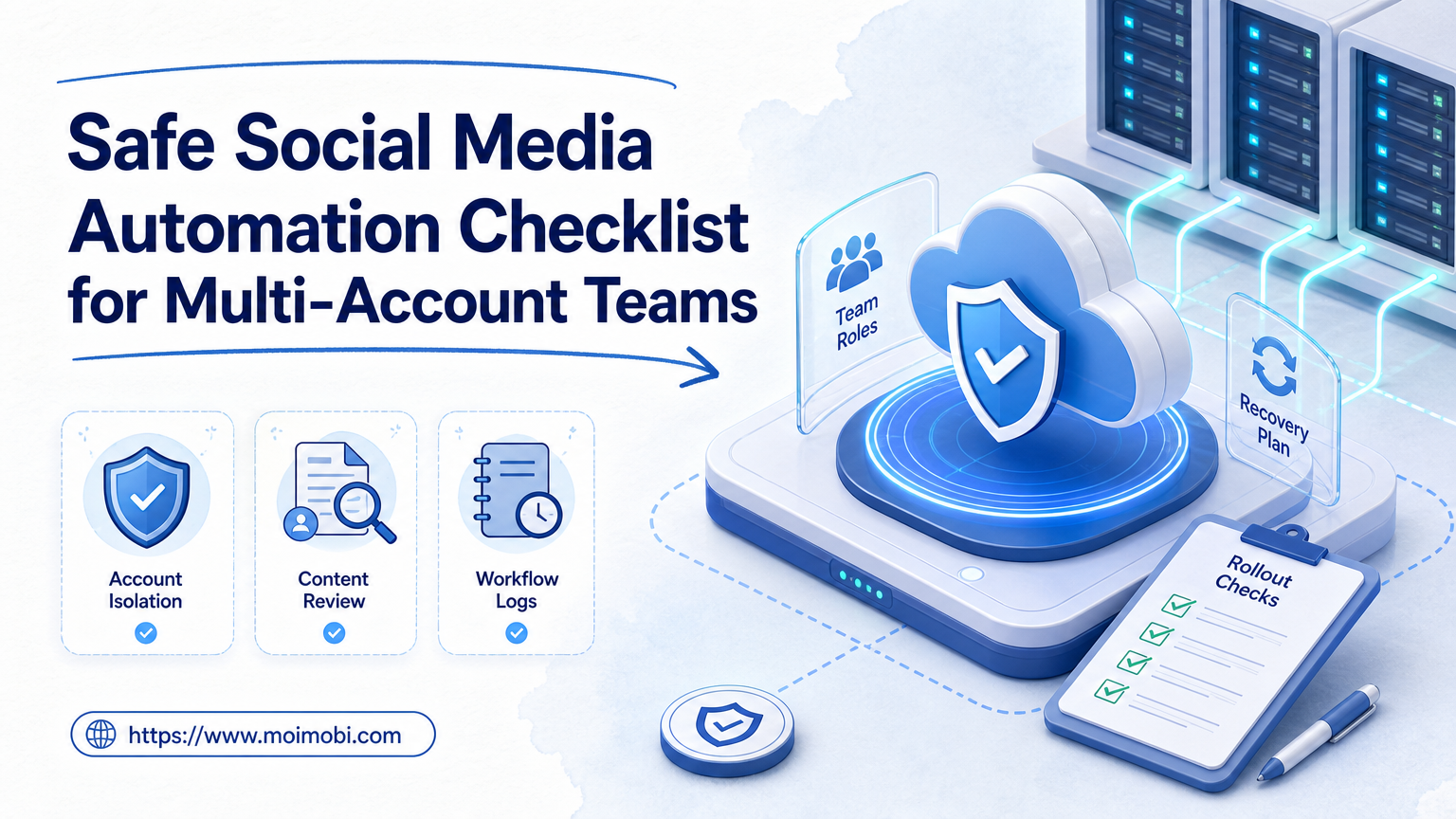
- Client lane defined: every client has a named account lane and owner.
- Approval checkpoint visible: the team knows who clears content or reply actions.
- Execution layer chosen: browser review and mobile execution are separated where needed.
- Retry owner assigned: failed work does not disappear into general chat.
- Status record usable: another operator can review the lane without oral history.
If one of those checks fails, adding more automation usually increases confusion instead of reducing it.
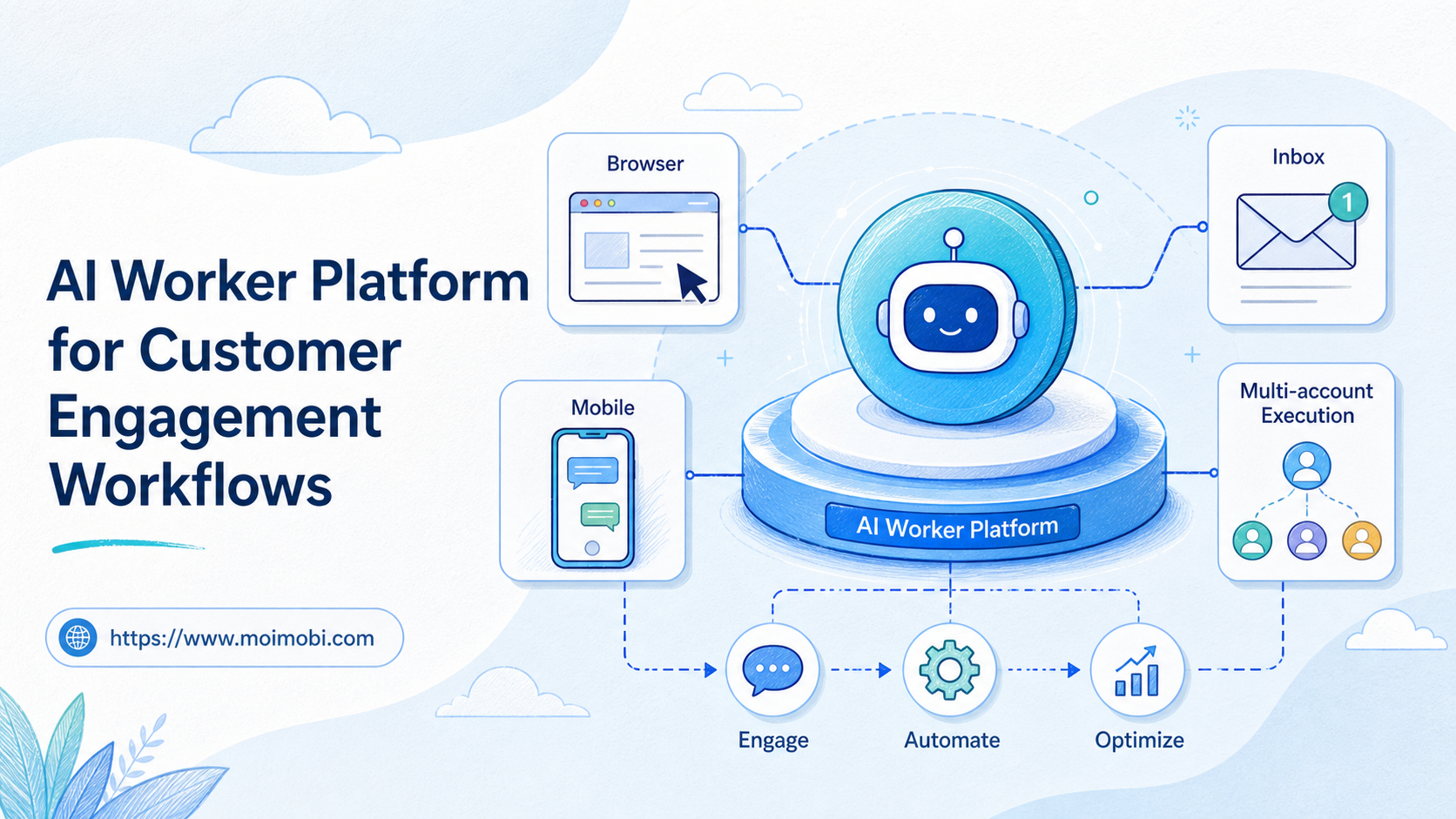
Agencies often end up with a layered setup. Browser surfaces fit queue review, approvals, or reporting checks. Mobile-facing tasks may fit cloud phone, phone farm, or mobile automation. The correct split depends on the client workflow, but the principle is consistent: the lane should stay explainable.
Agency leads can also score each client lane before expanding it. A lane with clear approvals, stable retries, and short review cycles is usually a better candidate for more automation than a lane that still changes owner every few days. This is a simple judgment step, but it prevents agencies from scaling the wrong client workflow.
| Checkpoint | What good looks like |
|---|---|
| Approval path | The team can name the reviewer and the release rule |
| Retry path | Failures go to one visible owner |
| Status history | The client lane can be reviewed without oral history |
| Execution split | Browser and mobile work are not mixed without reason |
Mistakes That Reduce Results
The first mistake is putting every client through the same lane template with no service distinction. Publishing, comment review, and escalation handling rarely need the same pace or owner.
The second mistake is treating automation as a substitute for approvals. Agencies still need visible checkpoints. Automation works better when it reduces handoff noise, not when it hides it.
The third mistake is optimizing for delivery speed without measuring recovery cost. An agency may ship more posts and still have a weaker operation if retries, pauses, and ownership changes become opaque.
What not to do
- Do not mix unrelated clients in one shared account lane.
- Do not allow publishing and recovery to share no common log.
- Do not move reply work into production before the review path is stable.
- Do not promise scale if the agency cannot inspect the lane after an exception.
Pilot Rollout, Measurement, and Recovery Checks
Pilot one client group first. Choose a service mix that reflects real agency work, such as publishing plus comment routing or publishing plus monitoring.
Track four items every week:
| Metric | Why it matters |
|---|---|
| Review time per lane | Shows whether the workflow stays readable |
| Exception count | Shows whether delivery is stable |
| Retry completion time | Shows whether recovery has a real owner |
| Client-status clarity | Shows whether the team can report progress cleanly |
One useful recovery check is to compare the lane log against the client delivery calendar at the end of the week. That reveals whether delays came from content approvals, execution-layer issues, or unclear ownership. Agencies that make this distinction early fix the right problem faster.
Another useful field is service type. A lane may look unstable until the team realizes it mixes publishing, replies, and monitoring in the same execution queue. Once the service types are separated, exception patterns are easier to compare across clients.
This is also where social media marketing becomes a better frame than "posting automation." Agencies are selling a delivery system, not only a schedule.
One more useful review is to compare client lanes by approval friction, not only by post volume. A lane may publish fewer assets yet still be healthier because it has shorter approval loops, clearer retry ownership, and fewer hidden exceptions. That comparison helps agency leads decide whether to add more automation, adjust service scope, or move a client into a different delivery lane.
Agencies can also separate client work into three operating bands: onboarding, steady delivery, and recovery. Onboarding lanes usually need more review and narrower task scope. Steady delivery lanes can carry more routine publishing and reply work. Recovery lanes should stay small and explicit so exceptions do not pollute the rest of the queue.
This three-band view is useful because it stops the agency from treating every client as if they are at the same stage. A newly onboarded client with weekly approvals should not share the same workflow expectations as a mature account set with proven routines. Once those bands are visible, automation decisions become less emotional and more operational.
Another practical review is client-lane profitability versus lane effort. Some lanes look productive because output is high, but the agency may still spend too much time on manual retries or approval chasing. When the team compares effort alongside output, it can see which automation patterns deserve wider rollout and which ones need redesign first.
That view also helps account directors explain tradeoffs to clients. Instead of describing every delay as a generic workflow issue, the agency can point to a specific lane problem: approval bottlenecks, execution-layer mismatch, or overloaded monitoring work. That makes service design more credible and easier to improve.
- Pass: each client lane has one visible owner for retries and one visible reviewer.
- Pass: delivery status can be explained from the lane record alone.
- Fail: client exceptions still live only in chat threads.
- Fail: the agency cannot separate onboarding lanes from steady-state lanes.
That scorecard is simple, but it gives agency leads one more way to compare client lanes before adding more automation volume.
Frequently Asked Questions
Is Instagram and TikTok automation for agencies only about content scheduling?
No. Agencies also need review, handoff, exception handling, and status reporting.
Should every client have a separate lane?
Usually yes, or at least a separate account group with its own owner and review path.
Can browser automation cover all agency tasks?
No. Browser lanes help with review and queue work, but some tasks fit mobile execution better.
What should an agency automate first?
Start with lane routing, approvals, and retry logging before scaling delivery volume.
What is the biggest warning sign?
The biggest warning sign is when client status depends on one operator remembering the workflow.
Do small agencies need this structure?
Small agencies may need less tooling, but they still need clear ownership and lane separation.
What should a pilot prove?
It should prove that the agency can review, recover, and report the lane cleanly.
Conclusion
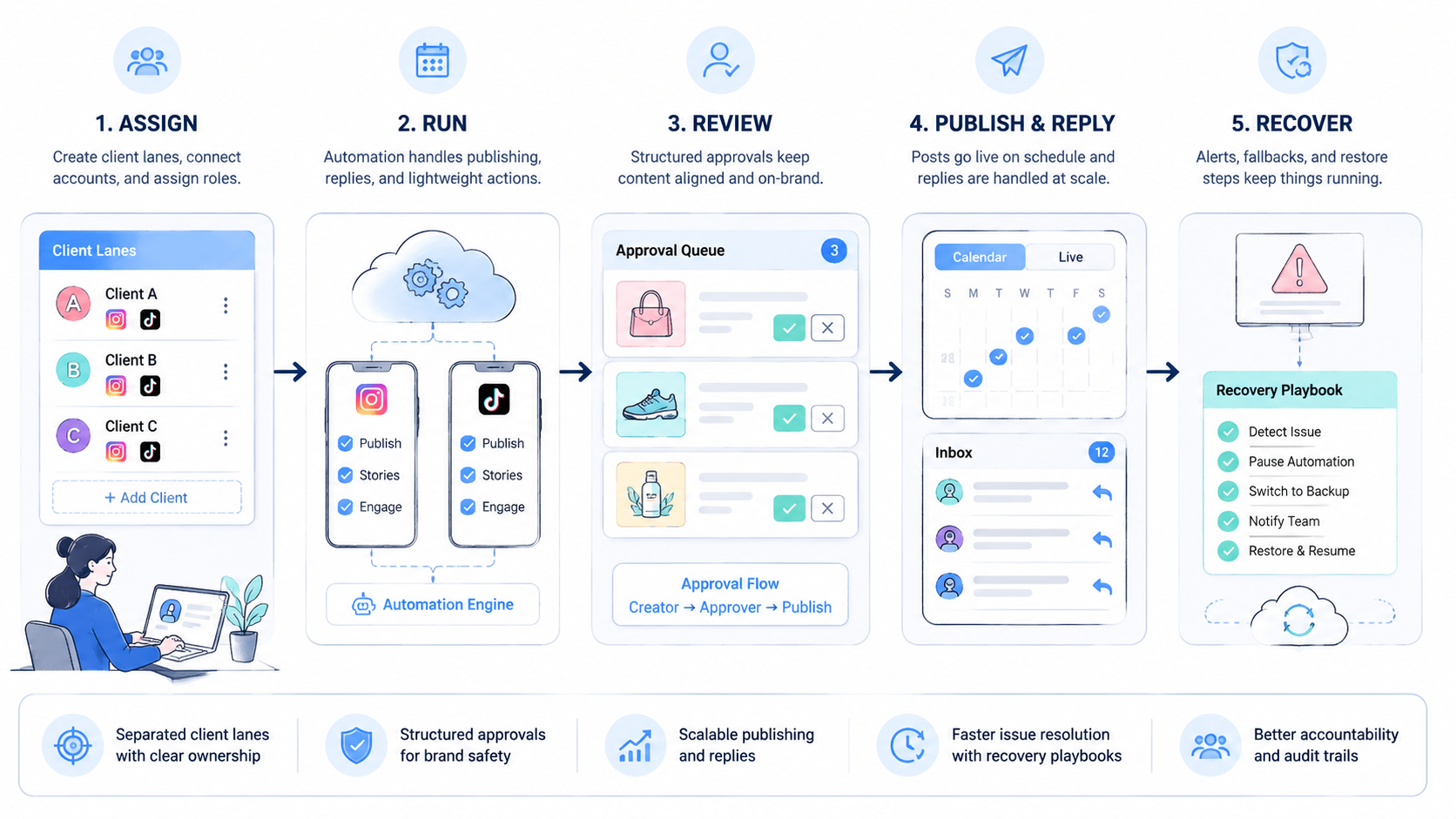
Instagram and TikTok automation for agencies works when client lanes stay separated, approvals stay visible, and recovery stays owned. The goal is not more moving parts. The goal is more explainable delivery.
Start with one service mix, one client cluster, and one weekly recovery review. If the lane stays readable, scale from there.