Key Takeaways
- An AI social media agent is an execution layer for repeated social tasks, not just a chat assistant.
- Multi-account teams need isolated lanes, clear ownership, and review rules before they need more prompts.
- Browser and mobile execution usually work together in the same operating model.
- A small pilot should prove control and recovery before it proves speed.
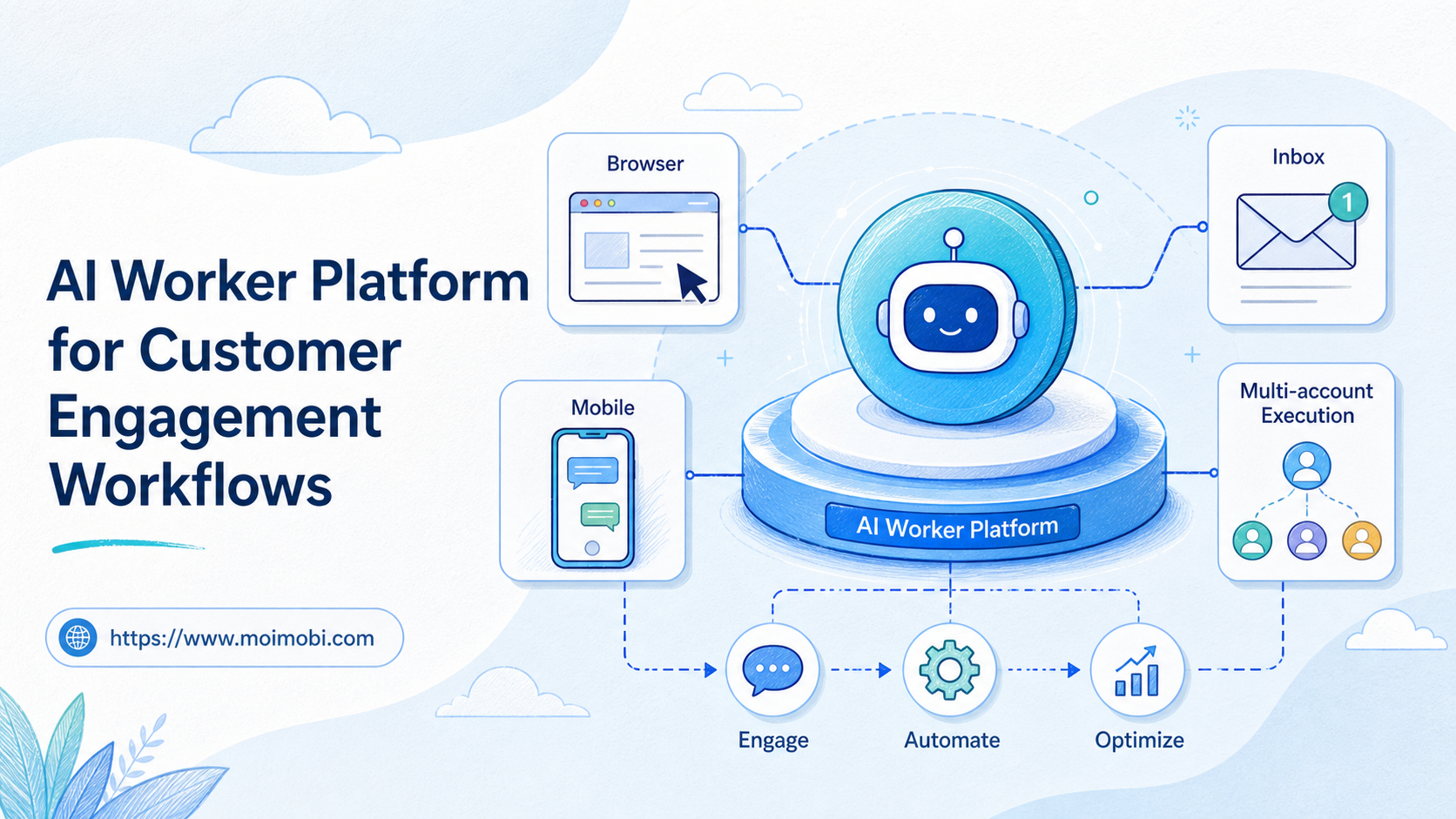
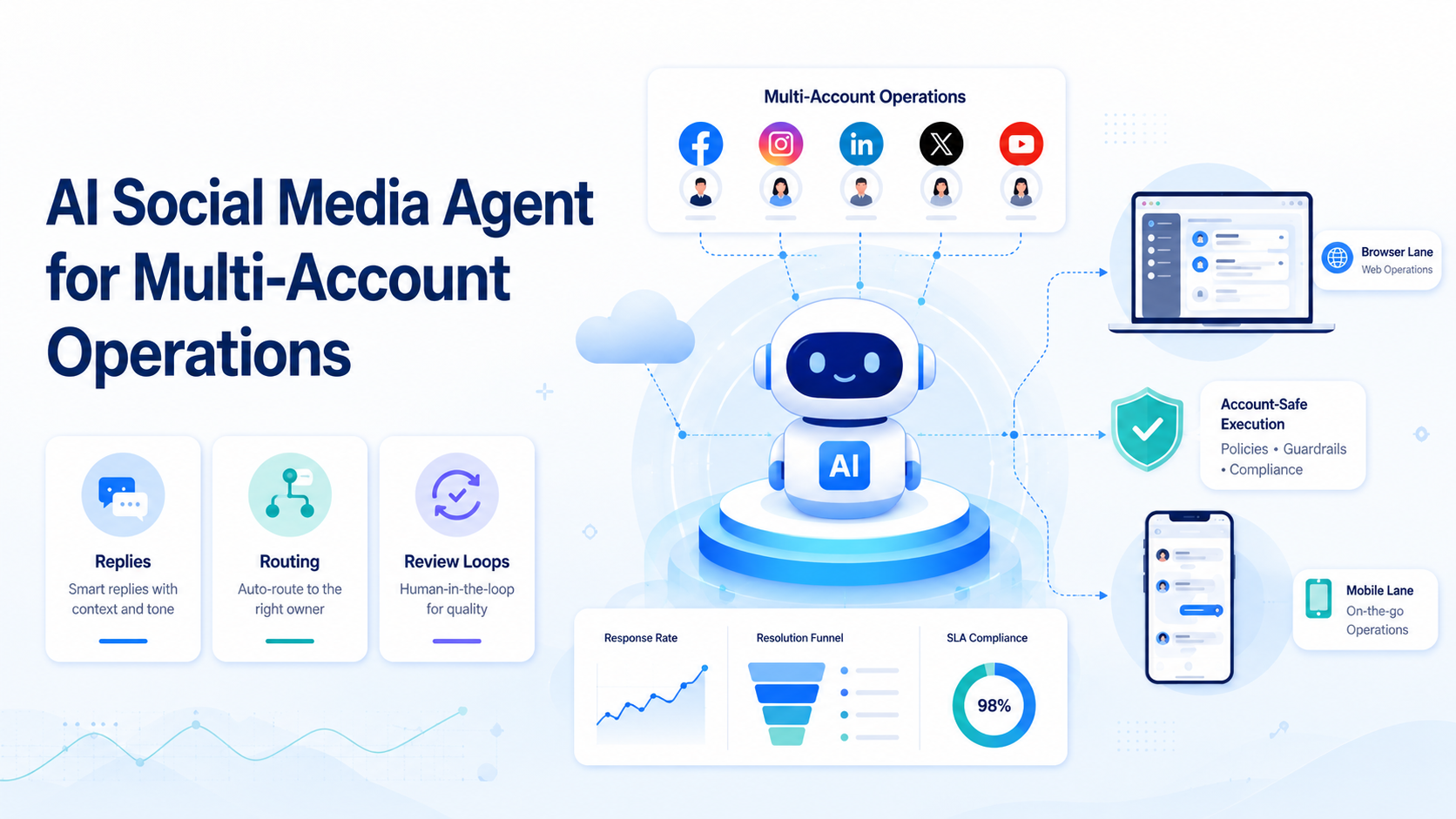
An AI social media agent is a workflow system that helps a team run repeated social tasks with rules, account separation, and visible handoff. It does not replace every operator decision. It reduces the manual load around queue review, reply routing, content prep, and account-by-account execution.
This matters most in multi-account work. Once a team handles several social accounts, the hard part is no longer only content generation. The hard part is keeping accounts separate, assigning work cleanly, and making sure the same task can run again tomorrow without confusion.
That is why many teams evaluate an AI browser and cloud phone platform instead of a single automation tool. The useful question is not "can AI write a reply?" The useful question is "can the team run replies, publishing, review, and recovery across many accounts without mixing state or ownership?"
Primary documentation supports that execution model. Playwright documents browser contexts as isolated sessions, while W3C WebDriver defines browser control as explicit commands inside a session.1 2 Android Enterprise also frames managed device work around controlled environments and policy separation.3
The Core Idea Behind AI Social Media Agent for Multi-Account Operations
The common misunderstanding is simple: people hear "AI social media agent" and picture a tool that posts, replies, and monitors everything on its own. The workable model is narrower and more useful.
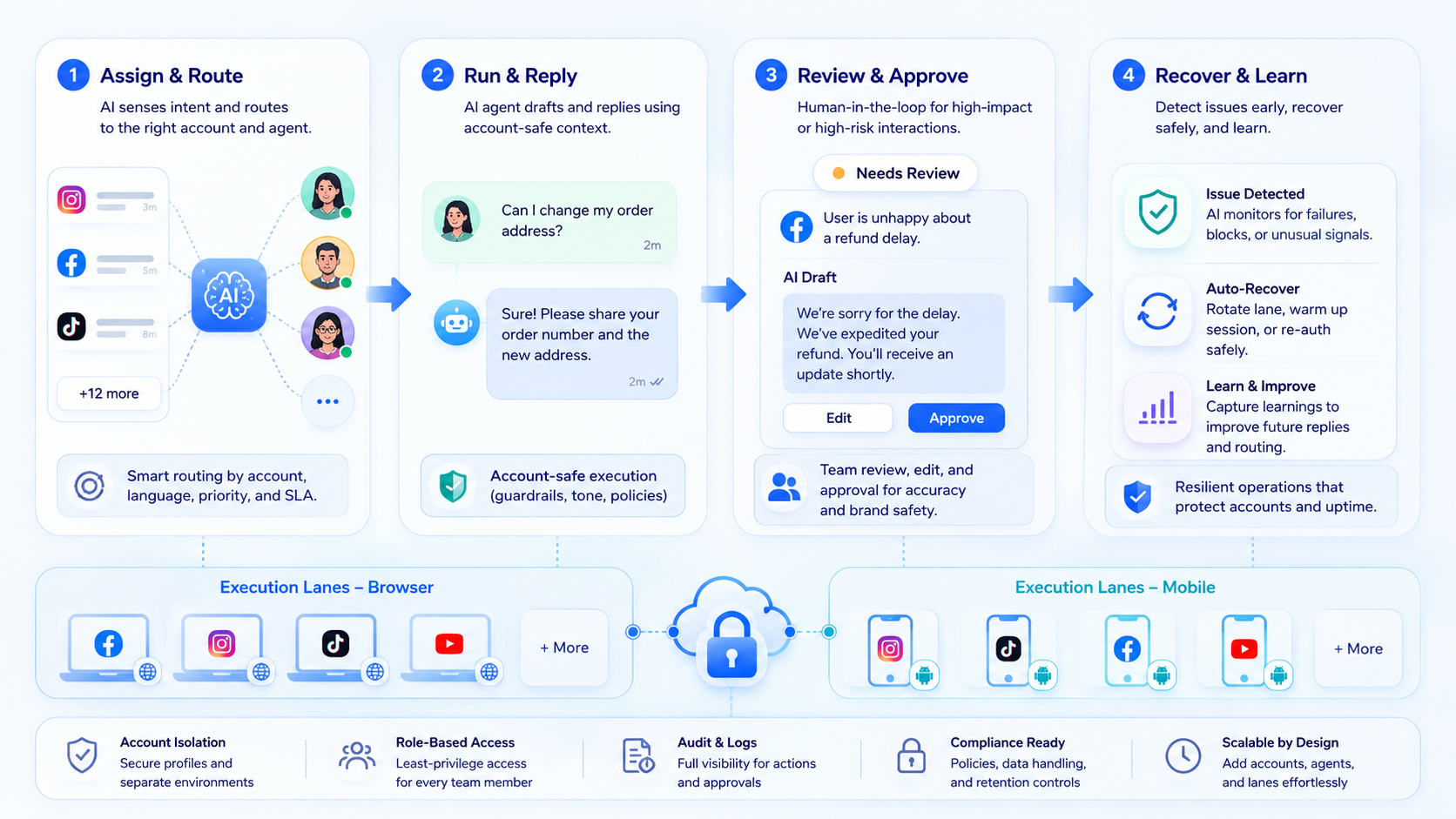
Most teams deploy this kind of agent inside an execution stack. One layer prepares copy, tags, or routing. Another layer opens the right browser or mobile lane. A review step checks whether the task is safe to continue. A recovery rule decides who handles pauses, blocked sessions, or unclear messages.
| Layer | Job | Why it matters |
|---|---|---|
| Planning | Draft replies, captions, or next actions | Keeps repetitive writing structured |
| Execution lane | Open the right browser or mobile environment | Prevents account state drift |
| Review gate | Pause sensitive actions for approval | Protects public account actions |
| Recovery path | Route failures to a named owner | Stops blocked tasks from disappearing |
This is why the topic belongs next to multi-account management, not only next to AI writing tools. The agent is valuable when it can keep work moving across separated account lanes.
A practical check helps here. Ask whether a new operator can look at the lane and understand the next action in under a minute. If not, the process is still too loose for dependable scale.
Why Teams Search for This Topic
Teams usually search for an AI social media agent after manual coordination starts breaking. A founder may still approve every reply. An agency may still use one shared spreadsheet to track account status. A support team may still move from browser tabs to mobile apps with no clear handoff.
The search intent looks like automation. The real pain is operations drift.
Three signals usually trigger the search:
- The same reply and triage work repeats every day.
- Several accounts need different owners, rules, or device lanes.
- Exceptions keep landing in chat instead of a tracked workflow.
Social platforms also keep real work inside managed surfaces. Meta Business Help documents inbox, page, and account management through business tools.4 TikTok Business Help and TikTok Support do the same for account and content operations.5 6 That is why teams care about execution quality, not only generated text.
Who Benefits Most and In What Situations
This topic is a strong match when the team already knows what work repeats. It is weaker when every task still depends on open-ended judgment.
Strong match
- Agencies managing several client accounts with repeatable routing rules.
- Brand teams handling comments, inboxes, and publishing queues every day.
- Cross-border teams moving between browser and mobile execution surfaces.
- Operators who need one account lane per workspace or device lane.
Weak match
- Solo workflows with no repeated queue or handoff problem.
- Teams that still change process every day.
- High-risk public actions with no review policy.
- Setups that rely on one shared session for all accounts.
One example makes the fit clearer. A multi-brand team may receive comments across Instagram, TikTok, and Facebook. The agent can classify intent, suggest a reply lane, and route the task into the right environment. It should not guess silently. It should surface the lane, owner, and next action.
For teams with heavier mobile execution, cloud phone and mobile automation are often the next pages to evaluate.
How to Evaluate or Start Using AI Social Media Agent for Multi-Account Operations
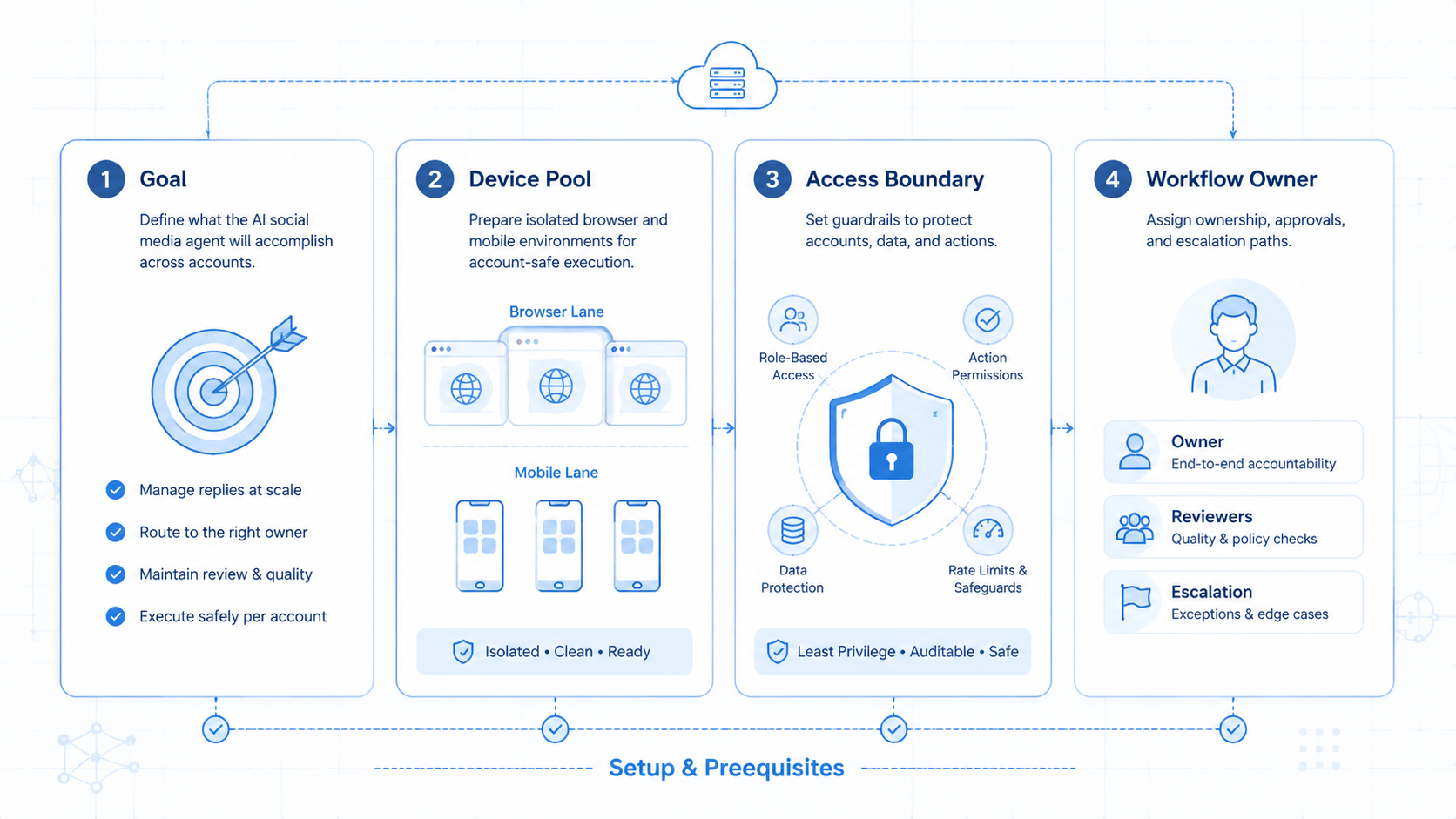
Start with one account group, one repeated task path, and one clear review owner.
- Choose a single workflow, such as comment triage, content staging, or inbox routing.
- Map one account group to one execution lane. Do not share that lane with unrelated accounts.
- Define what the agent may draft, what it may route, and what must pause for approval.
- Track the task state with a short field set: account lane, task type, reviewer, pause reason, and next action.
- Test blocked cases first, not only happy-path runs.
Use a checkpoint instead of a vague pilot goal:
- Pass: the same account opens in the expected lane every time.
- Pass: one reviewer can explain why a task paused.
- Fail: operators still ask in chat which account is active.
- Fail: the agent suggests replies, but the team cannot trace who approved them.
If a team also needs browser-side review and profile separation, the Hermes Agent skills guide is a useful adjacent page because it explains agent workflow structure more directly.
Mistakes That Reduce Results
The first mistake is treating the agent like a universal operator. Good runs stay narrow. They handle one queue, one rule set, and one account lane at a time.
The second mistake is mixing AI planning with execution history. A model can draft text, but the system still needs a reliable state log. Without that log, reply quality becomes less important than workflow ambiguity.
The third mistake is skipping account separation. Playwright contexts exist for a reason.1 Separated browser or device lanes keep session assumptions explicit. The same logic applies to device isolation and Android antidetect when teams need per-account workspaces.
What not to do
- Do not let one lane handle unrelated brands or regions.
- Do not treat every drafted reply as auto-approved.
- Do not measure only task count if blocked tasks keep piling up.
- Do not connect new accounts before the recovery owner is visible.
AI Social Media Agent Workflow Scorecard
This workflow is easier to judge when the team uses a short scorecard instead of broad claims.
| Check | Healthy signal | Failure sign |
|---|---|---|
| Lane mapping | One account group per lane | Operators guess which account is open |
| Reply ownership | Reviewer and approver are named | Tasks move through chat only |
| Recovery handling | Paused runs go to a queue owner | Blocked cases sit unresolved |
| Cross-surface handoff | Browser and mobile steps share the same task record | The team restarts work from memory |
| Scale readiness | The pattern works for the next account set | Manual rescue grows with each new lane |
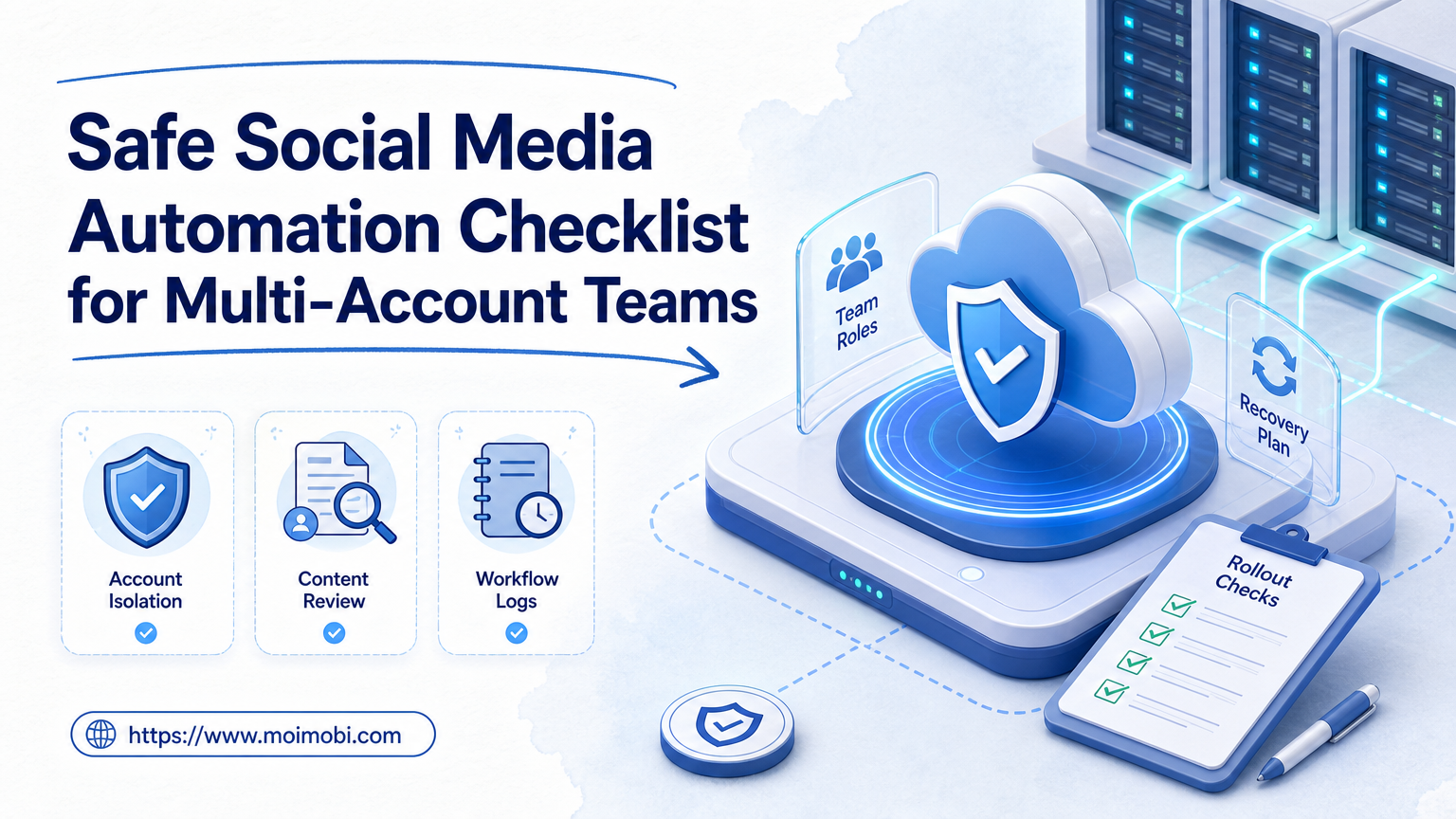
This scorecard is also a buying filter. If a tool cannot show isolated workspaces, visible state, and review points, it is not solving the real team problem.
Pilot Rollout, Measurement, and Recovery Checks
The pilot should test control before speed. That is the right order.
Run the pilot for one account group over one or two repeated workflows. Then review five fields after each cycle:
- Task completion: did the run finish the intended step?
- Approval visibility: could the reviewer inspect the reply or action?
- Lane integrity: did the same account stay in the same environment?
- Pause handling: did blocked work reach the right owner quickly?
- Expansion readiness: can the same model support the next account cluster?
If two checks fail, reduce scope. Remove one task type, shorten the handoff, or isolate the lane more tightly. AWS Device Farm and BrowserStack both frame device testing around repeatability and result inspection, which is the same discipline an operations team should apply to live execution workflows.7 8
The longer-term goal is not just faster replies. The goal is a reusable system for social execution across accounts, teams, and surfaces.
Add one final audit question before expansion. Can a second reviewer reopen the task and explain what already happened without asking the first reviewer? That test reveals whether the agent workflow is truly operational or still dependent on private memory.
Frequently Asked Questions
Is an AI social media agent the same as a chatbot?
No. A chatbot answers messages. An AI social media agent also routes work, opens the right lane, and supports review.
What should a team automate first?
Start with one repeated queue, such as comment triage or content staging.
Does it need separate account environments?
Yes, if several accounts or teams share the workflow.
Can it run browser and mobile steps together?
Yes, when both surfaces share the same task state and review logic.
What is the first warning sign?
Operators losing track of which account or lane handled the last action.
Is this only for agencies?
No. Brand, support, and cross-border teams also fit this model.
What should be measured in the pilot?
Lane integrity, approval visibility, recovery speed, and repeatability.
Does this fit region-based or language-based account teams?
Yes. That is often one of the cleanest use cases because each lane can map to one language rule set, one market, or one account owner.
Conclusion
The model works when it behaves like execution infrastructure, not like a generic assistant. The useful setup keeps account lanes separate, reply rules visible, and failures recoverable.
Before expanding, check three things:
- one account group maps to one lane
- one reviewer can explain every paused task
- one recovery owner handles blocked runs fast
If those checks hold, the workflow is ready for a wider rollout.
Sources