Key Takeaways
- AI browser automation for social media is an execution model for repeated web workflows.
- The browser layer matters when teams need isolated sessions, controlled routing, and visible handoff.
- Good setups separate routine work, review work, and exception handling.
- A small pilot proves whether the workflow is maintainable before it proves raw speed.
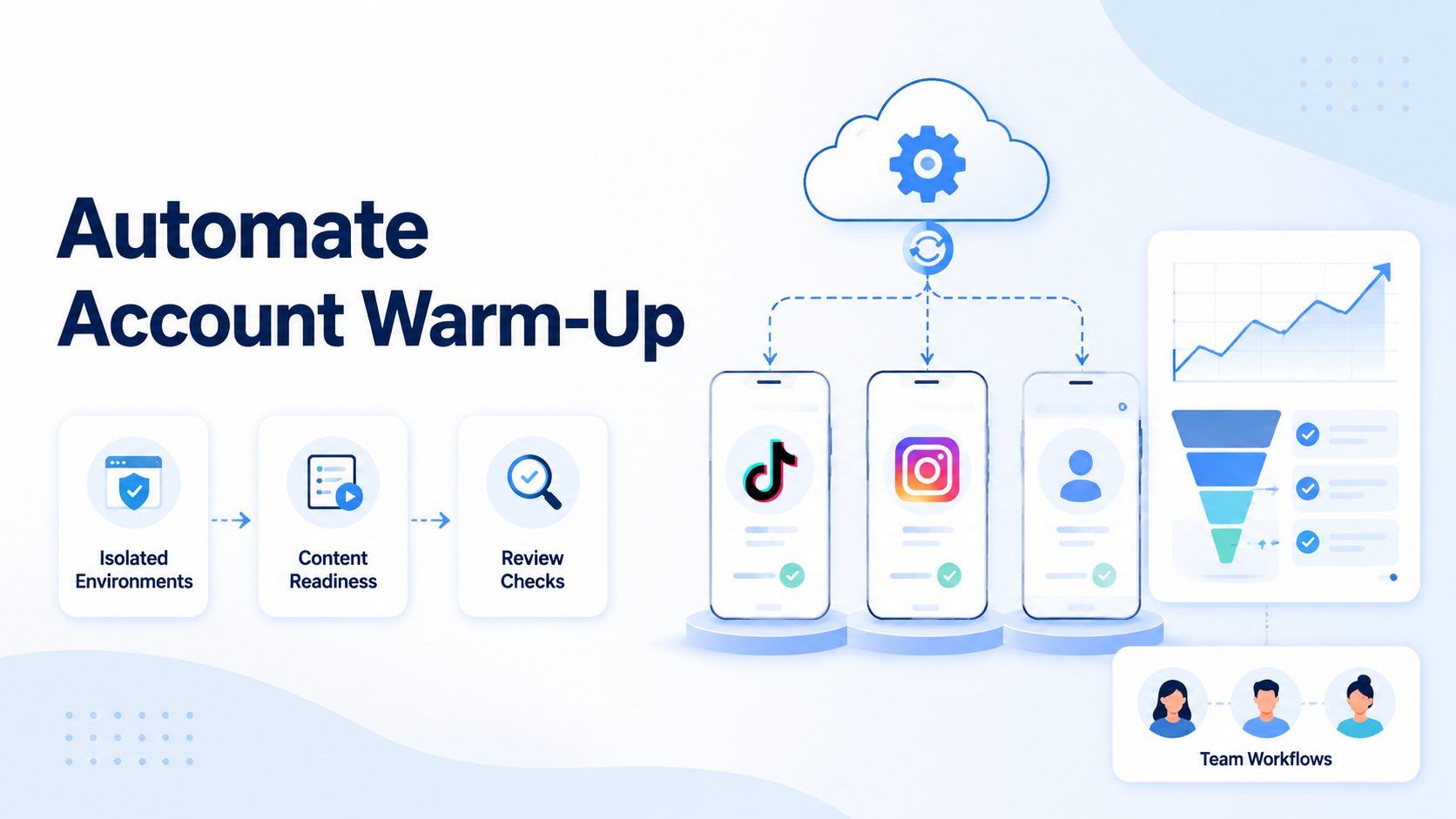
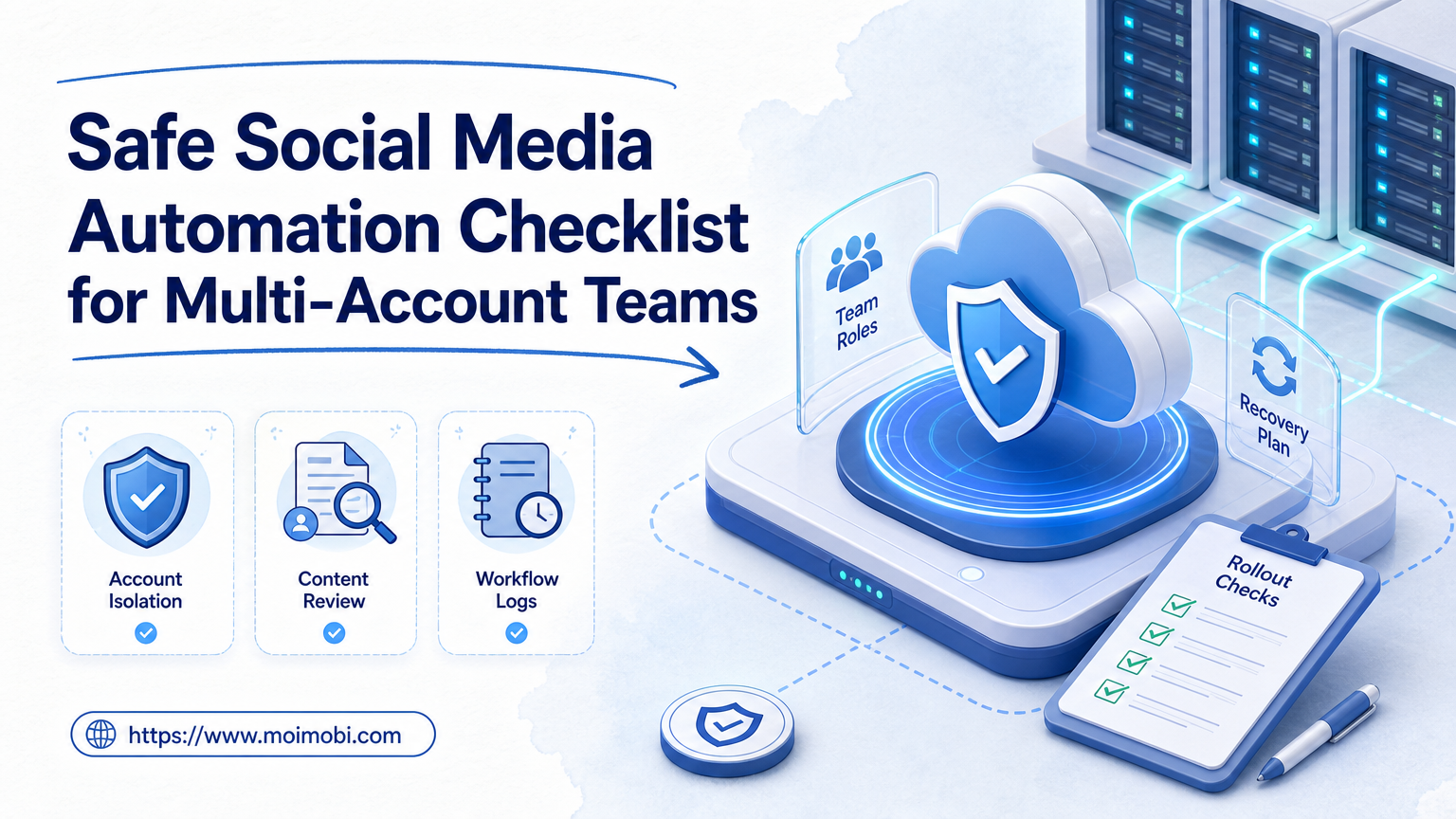
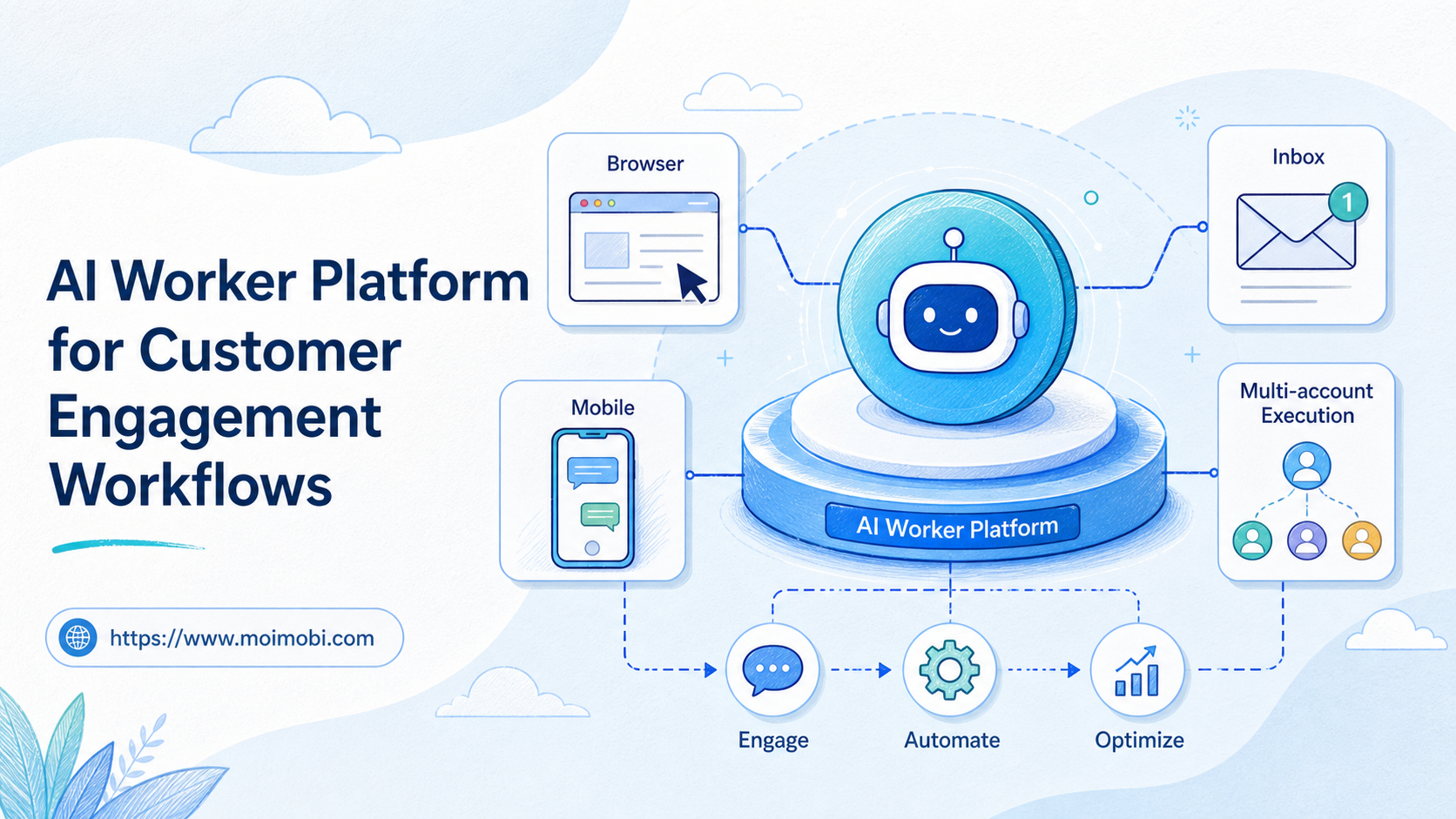
AI browser automation for social media is a system for running repeated browser-based tasks across social accounts with controlled sessions, workflow logic, and review loops. It is not just a browser macro with better prompts. A useful setup also needs account separation, task ownership, and a recovery path when a step pauses or fails.
That operating model matters because many social media tasks still happen in browser surfaces. Teams monitor dashboards, review queue items, inspect account settings, stage captions, check analytics, and sometimes handle account-specific admin work there. Once several people or several account groups share the same browser layer, workflow design starts to matter as much as automation itself.
The technical base is clear in primary documentation. Playwright browser contexts and W3C WebDriver both describe browser work in terms of separate sessions and explicit commands.1 2 That lines up with how operators think about social account work: one session, one lane, one visible next step.
The Core Idea Behind AI Browser Automation for Social Media Operations
The common myth is that AI browser automation means the browser will "just do the work." The workable version is more specific. The browser is one controlled execution layer inside a wider system.
That wider system usually includes:
| Layer | Role | Why it matters |
|---|---|---|
| Session lane | Separate browser state for each account group | Prevents mixed account context |
| Task path | Defines the repeated browser steps | Makes the run predictable |
| Review rule | Defines where human approval enters | Protects public or sensitive actions |
| Recovery path | Defines what happens after a pause or failure | Keeps the team from guessing |
This is why the first natural body mention of AI browser should point to the broader execution platform, not to one narrow browser script. Social media teams need the browser layer to stay connected to the rest of the workflow.
Why Teams Search for This Topic
Teams usually search for this topic after they hit a coordination problem. They may already have browser-side tasks that repeat daily, but the work lives in private tabs, ad hoc notes, or one operator's memory.
The surface-level question sounds like "can AI automate this browser task?" The deeper question is "can the browser workflow stay stable when more accounts and more operators join it?"
That is why multi-account management, device isolation, and social media marketing are relevant next pages. AI browser automation for social media only works when the workflow and the session model are both clear.
Who Benefits Most and In What Situations
AI browser automation for social media is strongest when the work is repeated, web-based, and tied to account context.
Strong match
- Teams that review dashboards, inboxes, or account settings in the browser.
- Operations groups that manage several social accounts with shared ownership.
- Agencies that need visible handoff between browser tasks and mobile tasks.
- Workflows that already have review and escalation steps.
Weak match
- One-off browser tasks with no repetition.
- Teams with no clear account boundaries.
- Workflows that require frequent human judgment at every step.
- Setups that still depend on one shared browser session for everything.
The fit question is simple: does the team have repeated browser work that needs clearer ownership and cleaner state? If the answer is yes, browser automation usually becomes much easier to justify.
How to Evaluate or Start Using AI Browser Automation for Social Media Operations
Start with one browser lane and one repeated task path.
- Choose one browser-based workflow, such as queue review, account checks, or caption staging.
- Create one isolated session lane for the account group involved.
- Define the steps that can run automatically and the step that must pause for review.
- Assign one owner for failures, retries, and blocked sessions.
- Log every paused or failed run before you expand to a second account group.
Playwright describes browser contexts as independent sessions, which is a useful operating model for this pilot.1 The same idea applies whether the team uses Playwright itself, a managed browser system, or a broader browser profile and cloud phone workflow.
Mistakes That Reduce Results
The first mistake is treating the browser lane as one pooled space for every account. That is how session drift starts.
The second mistake is confusing browser automation with decision automation. A browser run can repeat a sequence well, but the team still needs explicit approval rules for public or sensitive actions.
The third mistake is ignoring the handoff between browser work and mobile work. A browser queue may prepare the next action, while a mobile lane completes it. If that handoff is invisible, the workflow becomes harder to debug.
What not to do
- Do not let several operators use the same session lane with no state log.
- Do not expand the task path before the recovery rule is clear.
- Do not count clicks or completed steps if the team cannot explain blocked runs.
AI Browser Automation for Social Media Workflow Design
The browser workflow stays cleaner when the team divides it into short task types.
| Task type | Typical browser work | Why it fits the browser layer |
|---|---|---|
| Review | Check dashboards, comments, or queue status | Browser pages make status visible |
| Preparation | Stage captions, tags, or scheduling fields | Structured fields reduce manual copy errors |
| Verification | Confirm account settings or published state | Session-specific checks are easier to log |
| Escalation | Pause and hand off unclear cases | Protects account-sensitive workflows |
This design reduces one common failure. Operators stop treating the browser as a vague "do everything here" layer. Instead, each run has a known job and a known boundary.
AI Browser Automation for Social Media Session Scorecard
Session quality is often the first thing that breaks when the browser lane grows. Teams need a quick way to inspect whether the automation layer is still readable.
| Session check | What to inspect | Failure sign |
|---|---|---|
| Account mapping | One session lane maps to one account group | Operators guess which account is active |
| Task scope | The lane runs one known workflow | Unrelated tasks appear in the same run |
| Pause handling | Blocked runs move to a named owner | Exceptions sit in chat with no decision |
| Review visibility | A reviewer can inspect what changed | The lane only reports success or failure |
| Scale readiness | The same pattern works for the next account set | Manual rescue rises with each new lane |
This scorecard gives the team a practical stop rule. If two or more checks fail, the lane should be simplified before more automation is added.
- Strong signal: one session lane is tied to one account group.
- Weak signal: operators reuse a lane for unrelated accounts.
- Strong signal: a reviewer can inspect what changed before the next action.
- Weak signal: the run only reports that it succeeded or failed.
Pilot Rollout, Measurement, and Recovery Checks
The pilot should prove that the browser lane is easier to review, not just faster to execute.
Use this scorecard:
- Session stability: the lane reopens with the expected account state.
- Task clarity: each run follows one known browser path.
- Review quality: a human can inspect the run before public action.
- Recovery speed: blocked runs reach the right owner fast.
- Scale readiness: the same pattern works for the next account group.
If the pilot fails, reduce scope instead of adding more automation. Fix the session boundary, the handoff point, or the recovery rule first. The browser lane should become easier to explain with each cycle.
Browser-to-Mobile Handoff in Social Media Operations
Some social workflows start in the browser and finish on a mobile lane. A team may review queue items in the browser, prepare the next action, then use a mobile execution lane for the final step. The automation model works best when that handoff is explicit instead of informal.
Use a simple handoff checklist:
- The browser lane records the exact next action before handoff.
- The mobile lane reopens the same account group, not a shared fallback lane.
- The recovery owner stays visible across both execution layers.
- The reviewer can still inspect the run after the handoff completes.
That checklist is often what keeps AI browser automation for social media from becoming a pile of disconnected micro-steps.
AI Browser Automation for Social Media Pass or Fail Rules
| Decision point | Pass condition | Fail condition |
|---|---|---|
| Add another account lane | Current lane still has clean session history | Session mix-ups are already visible |
| Automate another browser task | The recovery owner can explain blocked runs | Blocked runs have no clear next step |
| Connect to mobile execution | Browser-to-mobile handoff is already visible | The mobile lane depends on memory or chat |
If the team fails one of these checks, it should simplify the workflow before it adds another automation path.
Session fields worth tracking
| Field | Why it matters |
|---|---|
| Session lane name | Shows which account group is active |
| Task path | Shows what the browser run is supposed to do |
| Review owner | Shows who inspects the result |
| Pause reason | Explains why the run stopped |
| Next action | Prevents handoff ambiguity |
For teams that also need mobile-backed execution, cloud phone and mobile automation are the most logical next product pages. For session-heavy account work, AdsPower alternative is also relevant because it connects browser profile structure with broader execution design.
Frequently Asked Questions
Is AI browser automation for social media the same as a browser bot?
No. A useful setup also includes session isolation, review rules, and recovery steps.
What should a team automate first?
Start with one repeated browser task path that already has a clear owner.
Does this replace mobile execution?
No. Browser lanes and mobile lanes often support different parts of the same workflow.
What is the first warning sign in a rollout?
Blocked runs that no one owns are a stronger warning sign than slow speed.
Is this a fit for agencies?
Yes, especially when several account groups share browser-side review work.
Why does session isolation matter so much?
It keeps account context from drifting across unrelated tasks.
What should a team do next?
Pilot one browser lane and inspect session stability, review quality, and recovery speed.
Conclusion
AI browser automation for social media operations works when the browser becomes a controlled execution lane instead of a shared manual workspace. The best systems keep session boundaries clear, task paths short, and human review visible.
Before you expand, confirm three things: one session lane maps to one account group, one task path is easy to repeat, and one recovery owner handles blocked runs. If those checks hold, the browser layer is ready to support a larger social workflow.