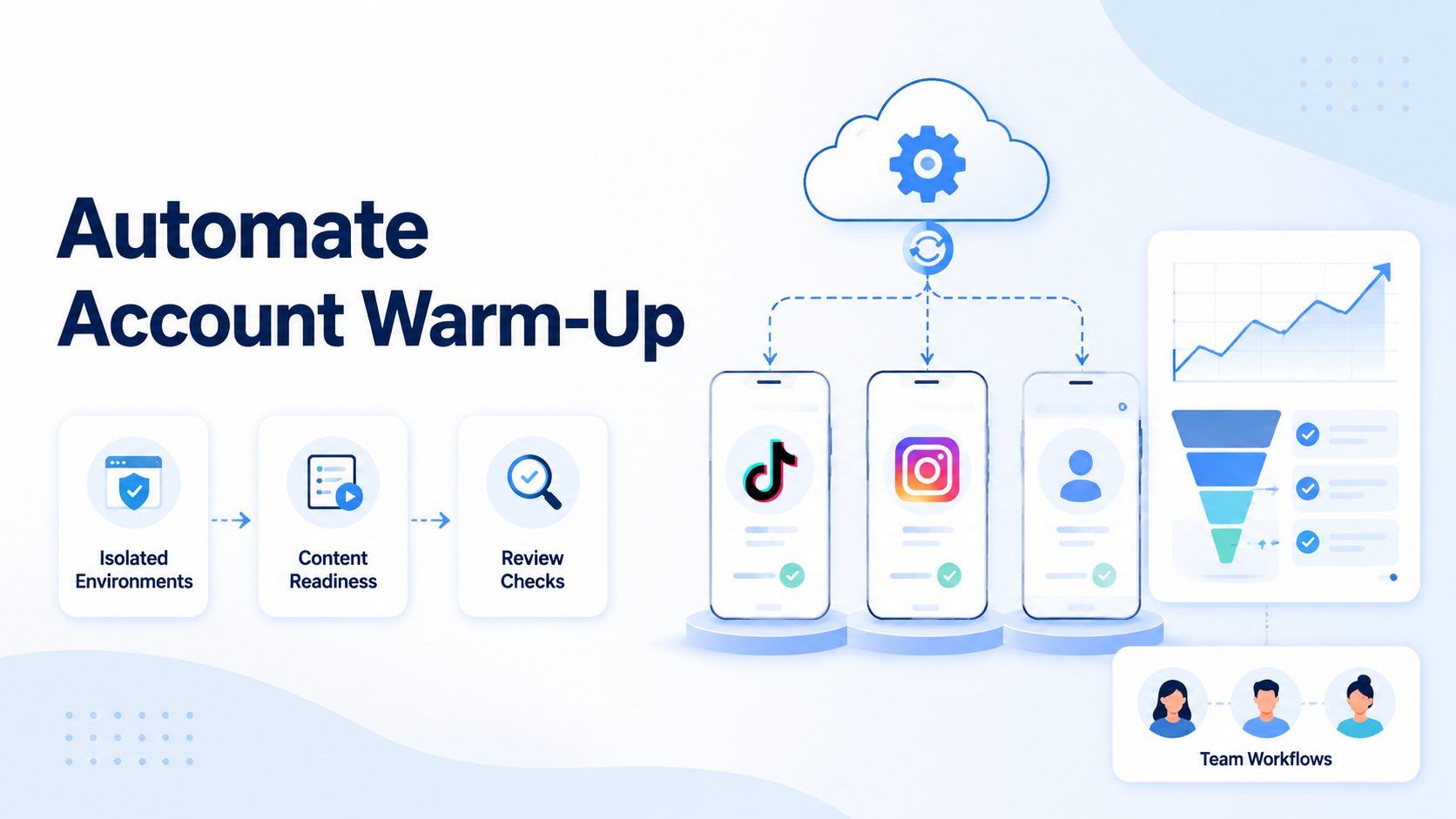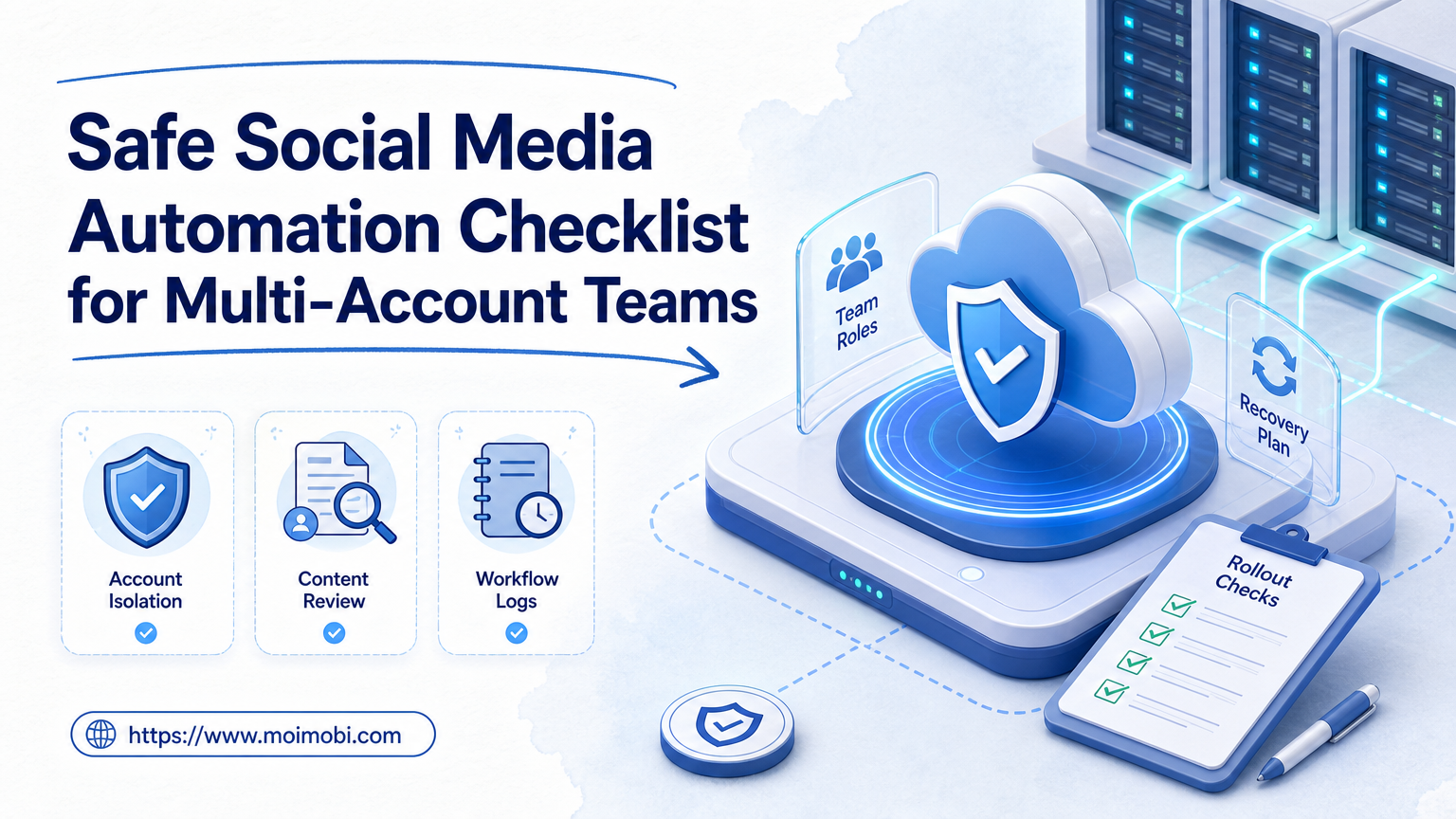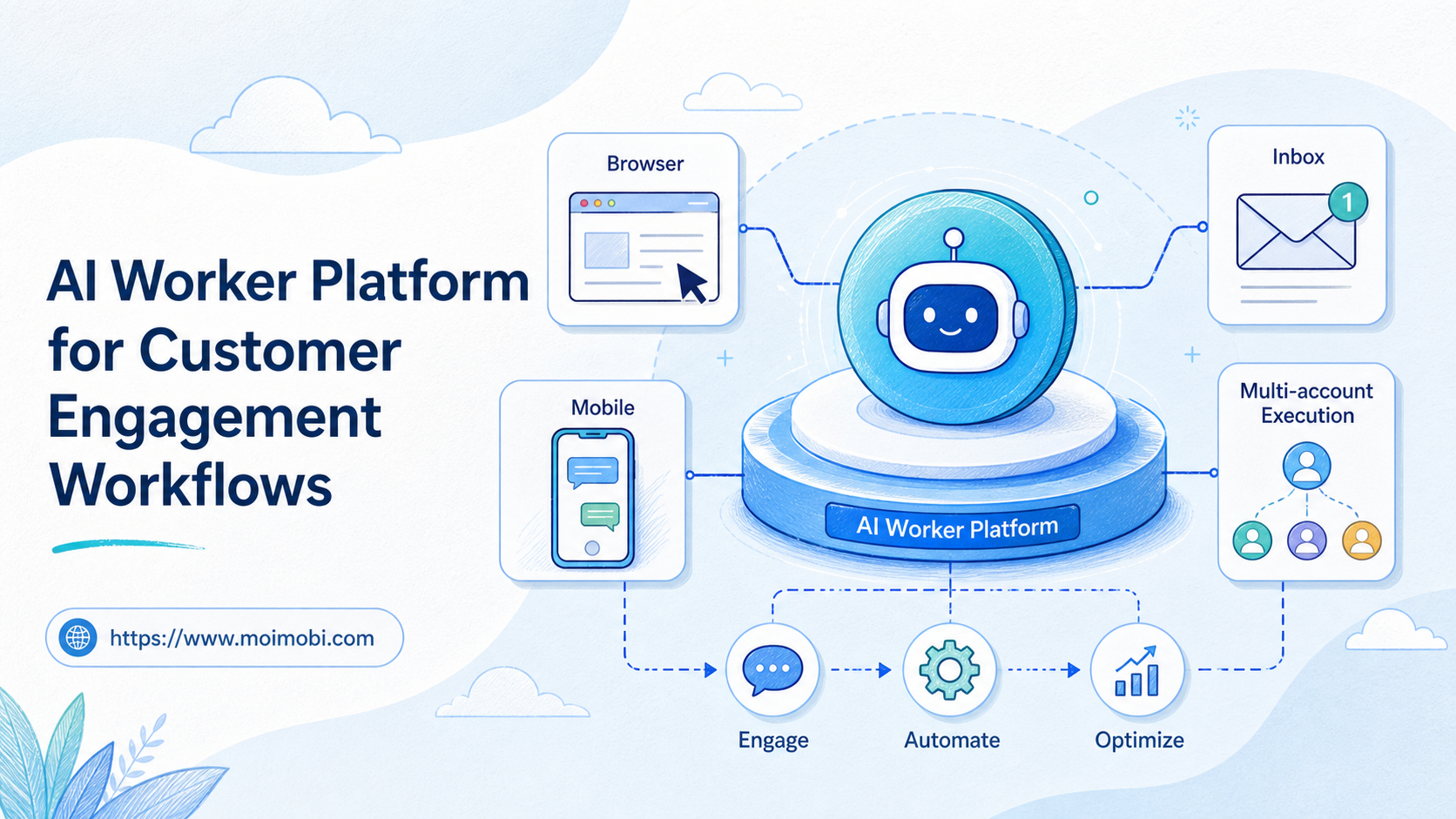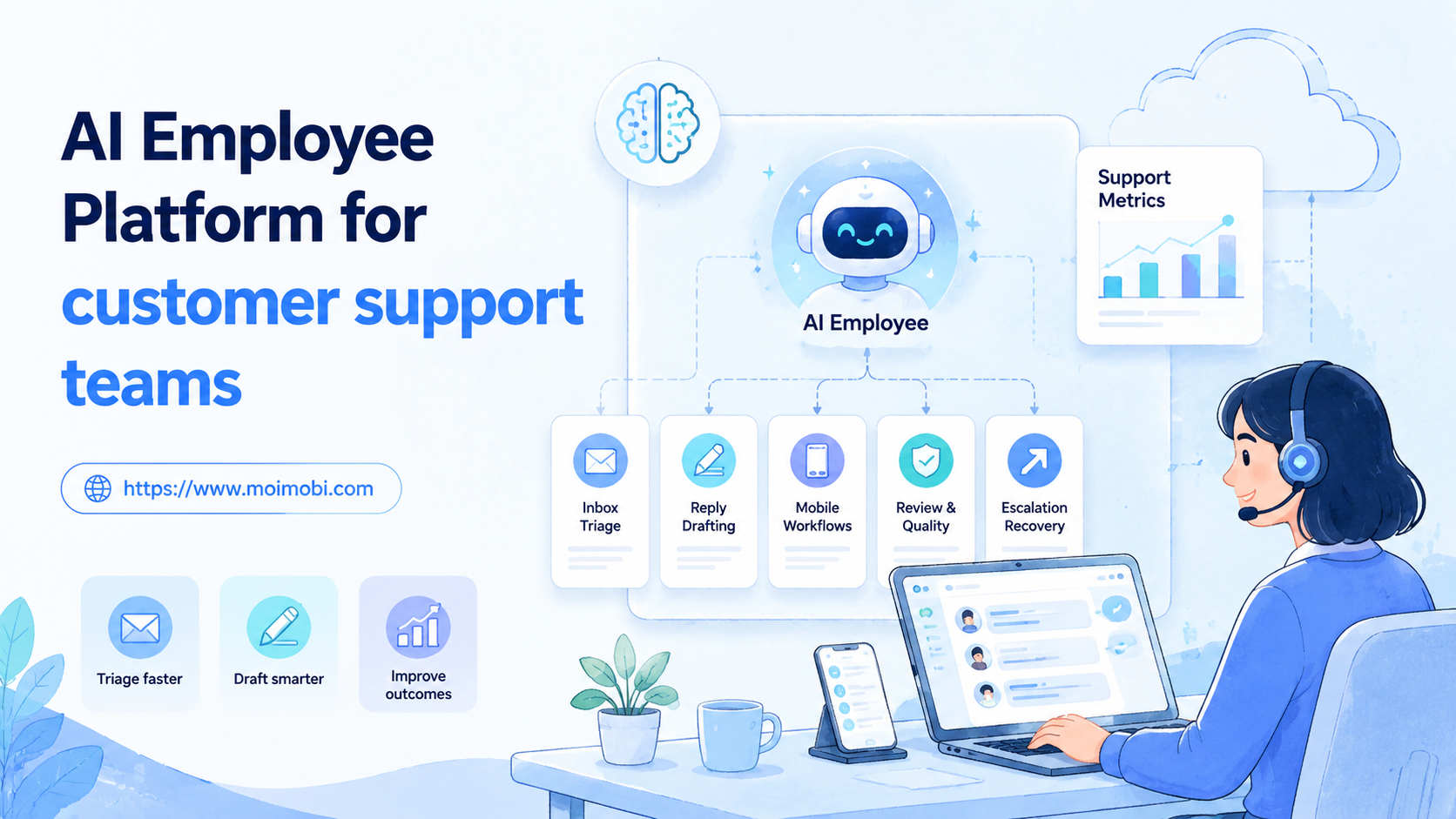
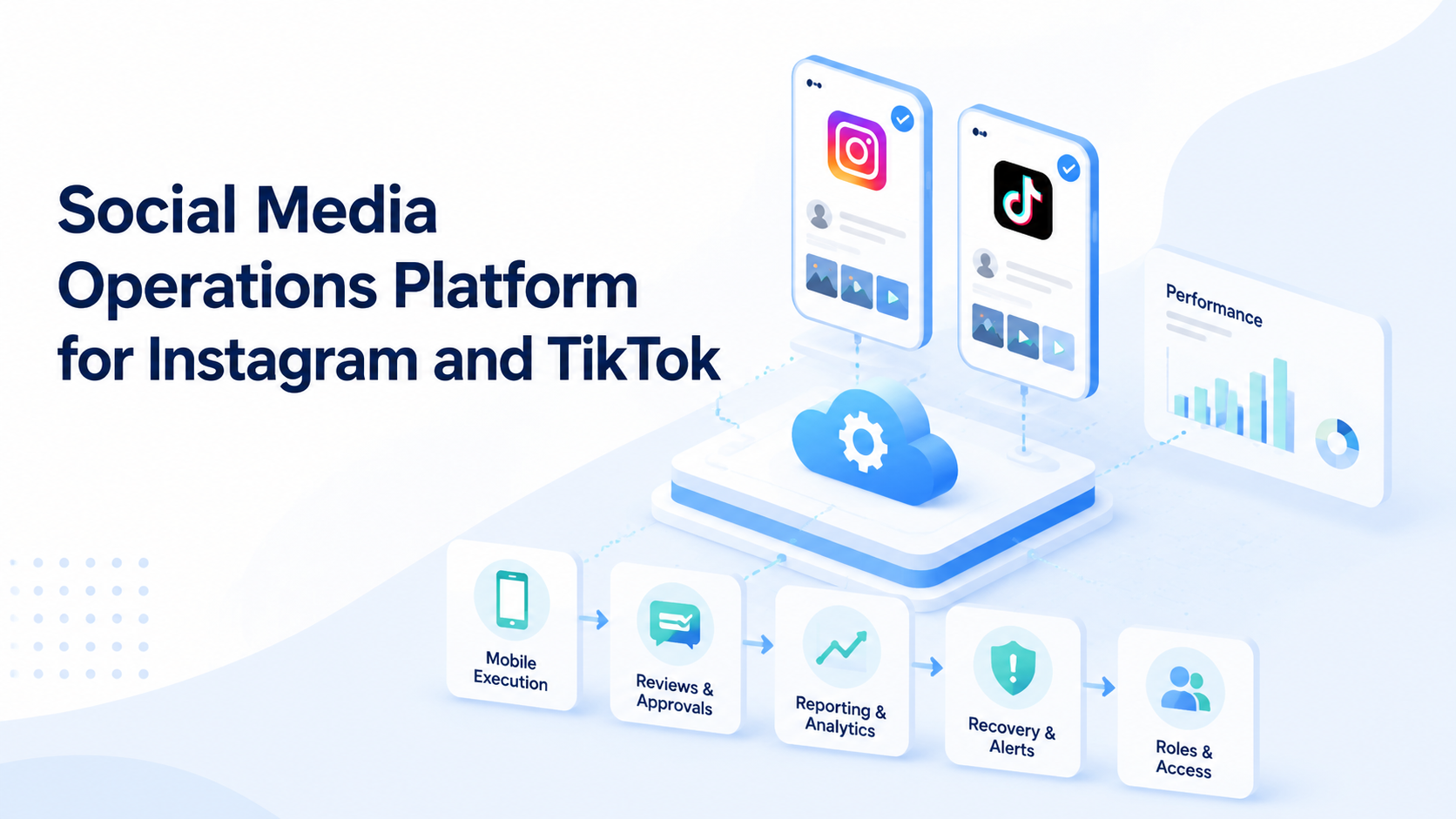
A social media operations platform is a system for managing repeated account work, content execution, review, monitoring, and reporting across social channels. For Instagram and TikTok teams, it should connect content plans with real account environments, not only schedule posts on a calendar.
Teams search for this category when social work becomes operational. A creator may post from one phone. A team managing several Instagram and TikTok accounts needs account ownership, mobile execution, browser checks, comments, DMs, reporting, and recovery.
Moimobi fits this category as execution infrastructure. It connects multi-account management, social media marketing, mobile automation, and cloud phone environments into one workflow model.
Key Takeaways
- A social media operations platform manages work, accounts, environments, and reporting.
- Instagram and TikTok teams need mobile execution plus browser workflow support.
- Account isolation makes task history easier to audit.
- Review gates are needed for captions, replies, and customer-facing actions.
- A pilot should measure completed workflows, failed reasons, and recovery time.
- Moimobi is strongest when teams need real execution environments across accounts.
The Core Idea Behind a Social Media Operations Platform
The core idea is simple: social media teams need an operating system for repeated work. Content planning is only one layer. Execution, account separation, review, and reporting are separate layers that need structure.
Instagram and TikTok workflows often move across devices. A team may draft captions in one tool, upload from a mobile app, check results in a dashboard, and review comments later. Without a platform model, those steps scatter across browsers, phones, spreadsheets, and chat.
Official platform support also has boundaries. TikTok documents a Content Posting API for approved integrations. Meta documents the Instagram Platform for business and creator workflows. Those official routes are useful, but teams still need process control around tasks that happen in apps, dashboards, and review queues.
Moimobi focuses on the execution side of the stack. It helps teams connect account work to browser and mobile environments, then track the result.
Why Teams Search for This Topic
Teams usually search for a social media operations platform when simple tools stop covering the work. The first sign is account switching. Operators spend too much time moving between logins, devices, content files, and reports.
The second sign is unclear ownership. A post may be approved, but nobody knows which operator should publish it. A comment may need a reply, but nobody knows whether it is a support issue or a marketing issue.
The third sign is weak reporting. Client or manager reports often show outputs, not the workflow behind them. A useful platform should show account, task, environment, reviewer, result, and follow-up owner.
Browser automation standards help explain one part of the need. The W3C WebDriver specification defines browser automation concepts, while Playwright documents browser contexts for isolated sessions. For social teams, the operational lesson is that logged-in work needs clean session boundaries.
Mobile work adds another layer. AWS Device Farm describes remote real-device app testing. The same managed-device logic matters when Instagram and TikTok workflows depend on app behavior.
What the Platform Should Manage
| Operations layer | What it controls | Why it matters |
|---|---|---|
| Account workspace | Account owner, platform, client, region | Prevents mixed responsibility |
| Execution environment | Browser profile or cloud phone | Keeps task state explainable |
| Content workflow | Asset, caption, campaign tag | Reduces handoff errors |
| Review queue | Approval, escalation, pause rules | Protects brand and support quality |
| Task history | Result, error reason, timestamp | Makes failures actionable |
| Reporting | Client-ready or manager-ready output | Turns work into evidence |
This table is more useful than a feature checklist. A platform may claim many automations, but the agency or team still needs these operating layers.
Moimobi can support the environment and workflow layers. Browser profiles help with web dashboards. Cloud phones help with mobile-first tasks. Account records connect the two.
Team roles inside a social media operations platform
A platform becomes more useful when roles are explicit. Social operations rarely belong to one person once account count grows. Strategy, content, execution, review, and reporting may sit with different teammates.
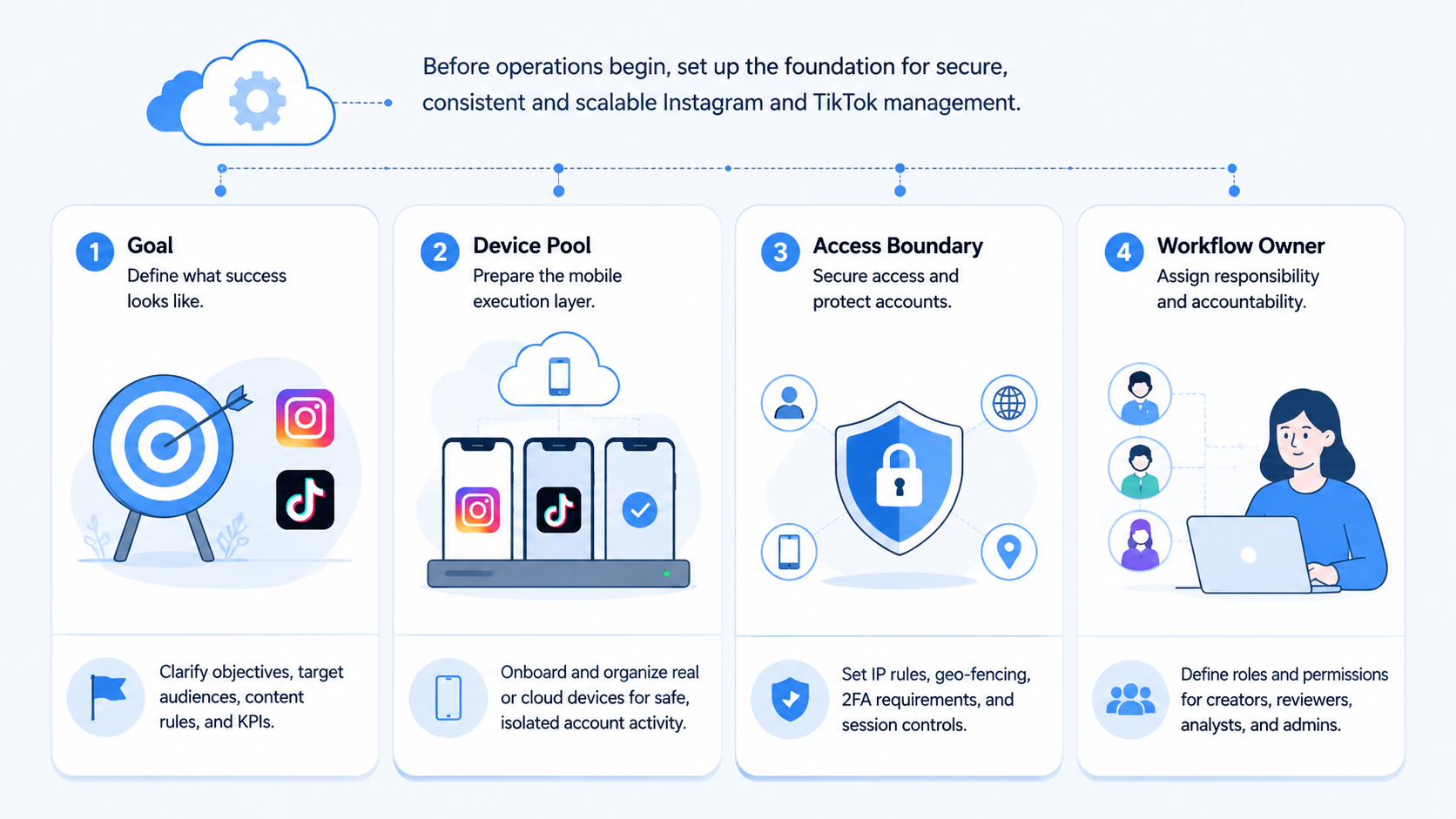
Define the basic roles first. A strategist owns campaign intent. A creator owns assets and captions. An operator owns task execution. A reviewer owns brand and customer-facing checks. An account owner handles access, environment health, and recovery.
These roles should appear in the workflow record. A task should not only say that a post was completed. It should show who approved it, which environment ran it, and who owns follow-up. That record reduces confusion when teams rotate shifts or manage client accounts.
Role design also protects focus. Operators should not decide brand claims while rushing through a queue. Reviewers should not hunt for device access. Account owners should not learn about a failure only after a client asks for an update.
Who Benefits Most and In What Situations
The strongest fit is a team with repeated work across multiple Instagram and TikTok accounts. This may include agencies, social commerce teams, creator operations teams, and cross-border sellers.
The platform is also useful when account work must be separated. A client account should not share the same workspace as a test account. A regional brand account may need a different review path from a creator partnership account.
It is a weaker fit for a solo creator with one account and no team handoff. In that case, a lighter scheduler or content tool may be enough.
The decision changes when mobile execution enters the service. If the team needs app checks, comment queues, account reviews, or mobile posting support, an operations platform becomes more relevant than a calendar-only tool.
How to Evaluate or Start Using a Social Media Operations Platform
Start with the operating model before choosing software.
-
Map account groups.
List Instagram and TikTok accounts by brand, client, region, and owner. -
Define task lanes.
Separate publishing, monitoring, replies, reporting, and recovery. -
Assign environments.
Use browser profiles for dashboards and cloud phones for app-first work. -
Add review gates.
Captions, product claims, DMs, and comments need different approval rules. -
Track run history.
Record account, environment, asset, reviewer, result, and error reason. -
Run a small pilot.
Use one account group and one workflow before expanding.
This sequence prevents a common mistake: buying a tool before the team knows what it needs to control.
Add a fit score before the pilot. Give one point for each condition that is true: more than three active accounts, more than one operator, mobile app checks, client reporting, comment review, and repeated recovery work. A score of four or higher usually means the team has moved beyond a simple scheduler.
That score is not a universal benchmark. It is a practical filter. It helps the team decide whether to evaluate a lightweight content tool or a broader execution platform.
Mistakes That Reduce Results
The first mistake is treating the platform as a scheduler. Scheduling is useful, but Instagram and TikTok operations include mobile checks, account state, comment review, and reporting.
The second mistake is using one shared device or browser for unrelated accounts. That creates confusion when something fails. It also makes it harder to know which operator handled which account.
Another mistake is automating replies before building an escalation model. Customer-facing messages may involve support, refunds, product claims, or sensitive complaints. Those workflows need human review and stop rules.
Teams should also avoid vague reporting. "Done" is not enough. A useful record should show what happened, where it happened, who approved it, and what needs follow-up.
Another failure mode is tool sprawl. One tool schedules posts, another stores assets, another runs mobile checks, and another holds reports. That setup can work for a small team, but it becomes hard to audit when work crosses clients and platforms.
The fix is not always replacing every tool. The fix is choosing a system of record. Decide where account status, execution history, and recovery notes live. Then make other tools feed into that record instead of creating competing versions of truth.
Pilot Rollout, Measurement, and Recovery Checks
A pilot should test the platform with one real workflow. Choose a narrow task, such as approved video publishing plus post-status checks. Use a small group of Instagram and TikTok accounts.
Measure the pilot with operational metrics:
- Setup time per account.
- Manual corrections per task.
- Completed workflows.
- Failed task reasons.
- Reviewer delay.
- Recovery time.
- Report completeness.
Recovery checks are the most revealing part. A failed asset should return to content operations. A login issue should go to the account owner. A sensitive reply should pause for review. A platform-specific issue should be logged with enough detail to decide the next action.
The pilot is ready to scale when every result is explainable. If the team still depends on chat messages or memory, fix the workflow before adding more accounts.
Use a recovery board during the pilot. Every failed task should land in one of four buckets: content issue, account issue, environment issue, or review issue. Each bucket should have an owner and a next action.
This simple board turns failure into product feedback for the workflow. If most failures are content issues, fix asset naming and approval. If most failures are account issues, review ownership and login state. If environment issues dominate, adjust the browser or mobile workspace model.
Moimobi is valuable when those recovery buckets connect to real execution environments. Teams can see whether a problem came from the account, the device workspace, the browser profile, or the review process.
Frequently Asked Questions
What is a social media operations platform?
It is a system for managing account workflows, execution environments, review, monitoring, and reporting.
How is it different from a scheduler?
A scheduler controls timing. An operations platform controls the work around accounts, environments, and results.
Why do Instagram and TikTok teams need mobile execution?
Many tasks depend on mobile app behavior, account checks, or app-first workflows.
Does every team need cloud phones?
No. Cloud phones matter when mobile execution and account separation are part of daily work.
Can AI be part of the platform?
Yes. AI can support captions, replies, task plans, and campaign ideas. Review rules still matter.
What should teams measure first?
Measure completed workflows, failure reasons, manual corrections, and recovery time.
How does Moimobi fit?
Moimobi provides browser and mobile execution environments for teams running multi-account social operations.
Conclusion
A social media operations platform becomes valuable when Instagram and TikTok work moves beyond posting. The key layers are account workspaces, execution environments, review queues, task history, and recovery.
Start with one account group and one workflow. Measure what happened, why it happened, and what broke. If the team needs mobile and browser execution together, Moimobi can provide the infrastructure layer for that operating model.