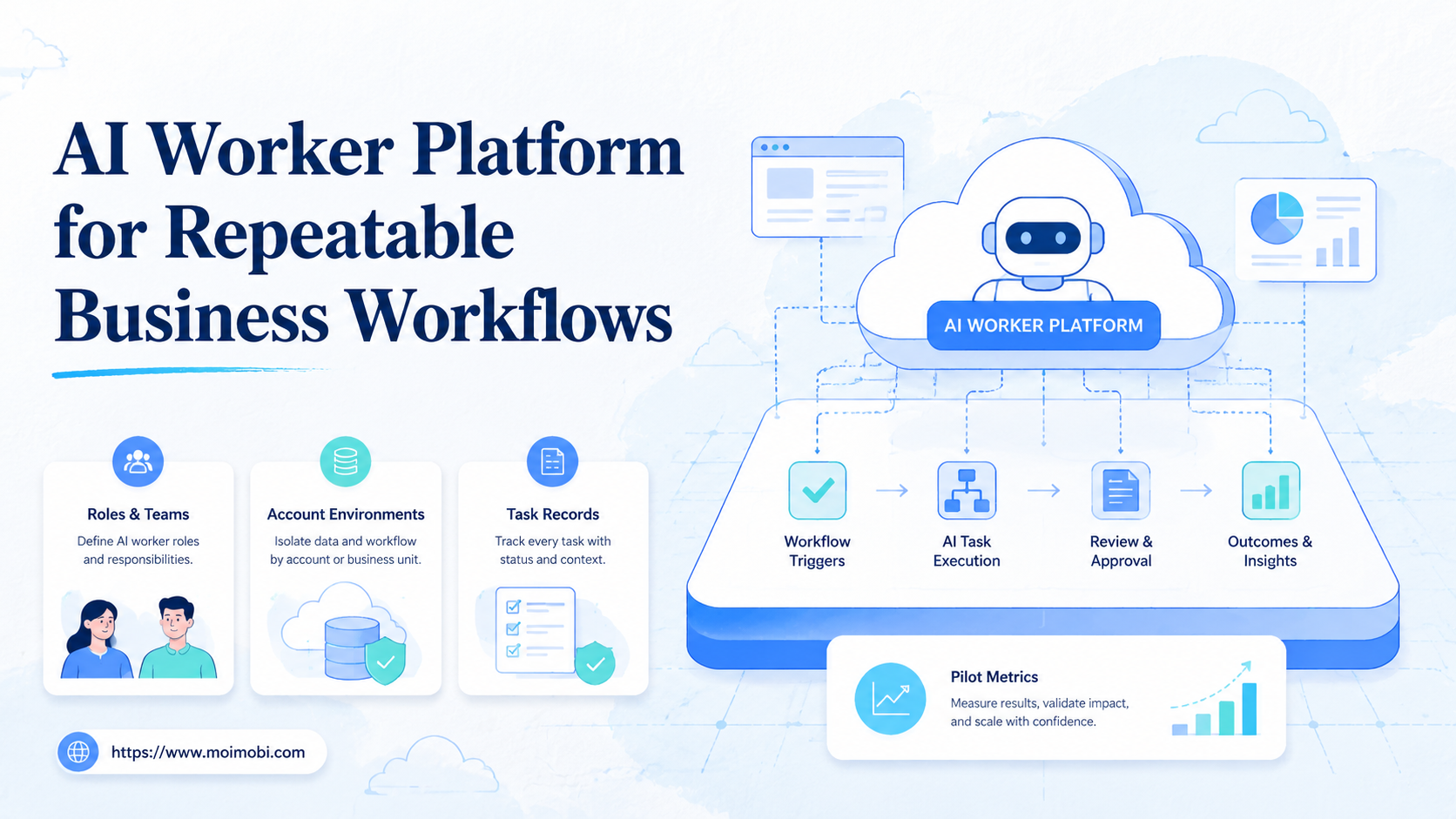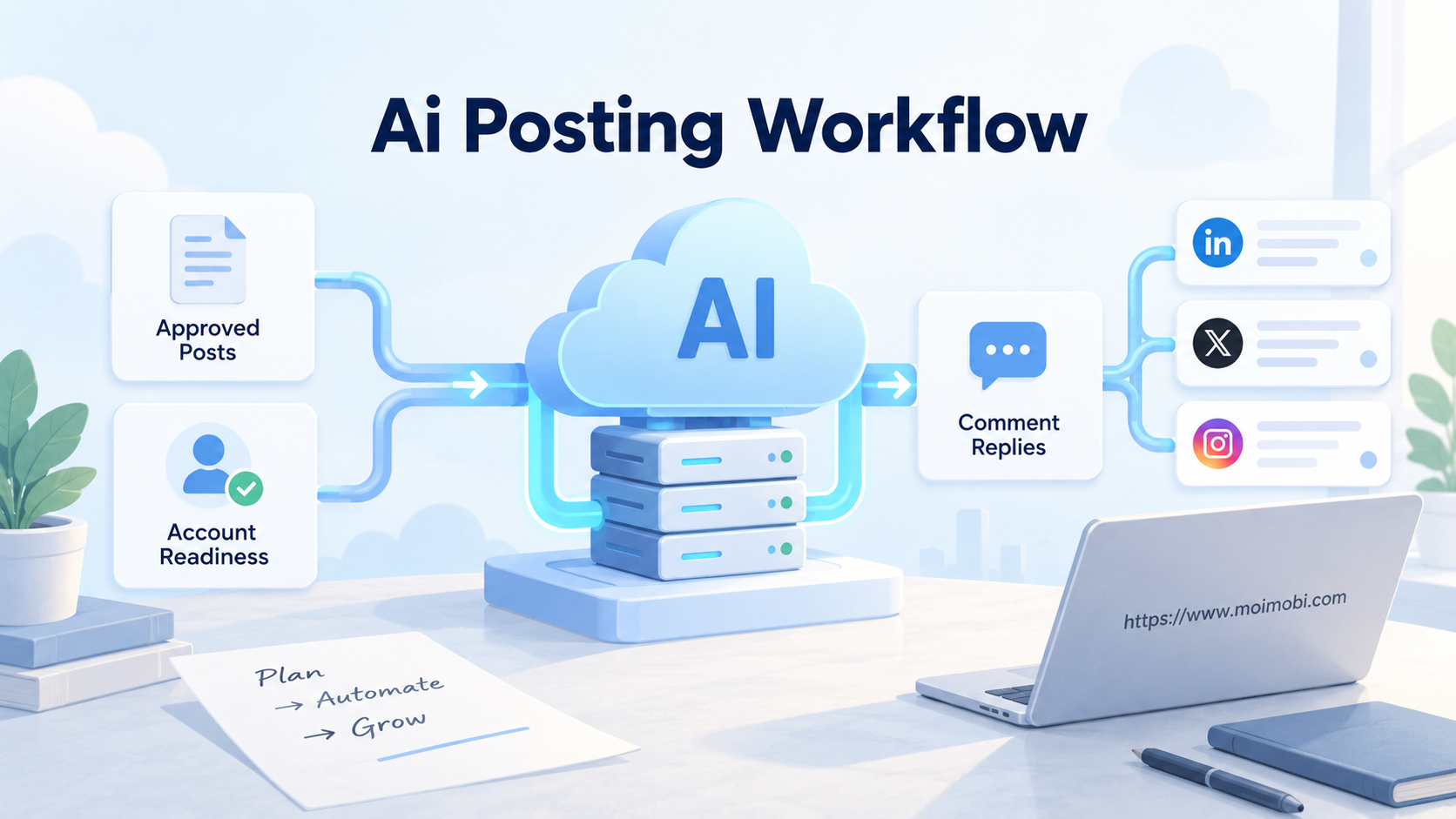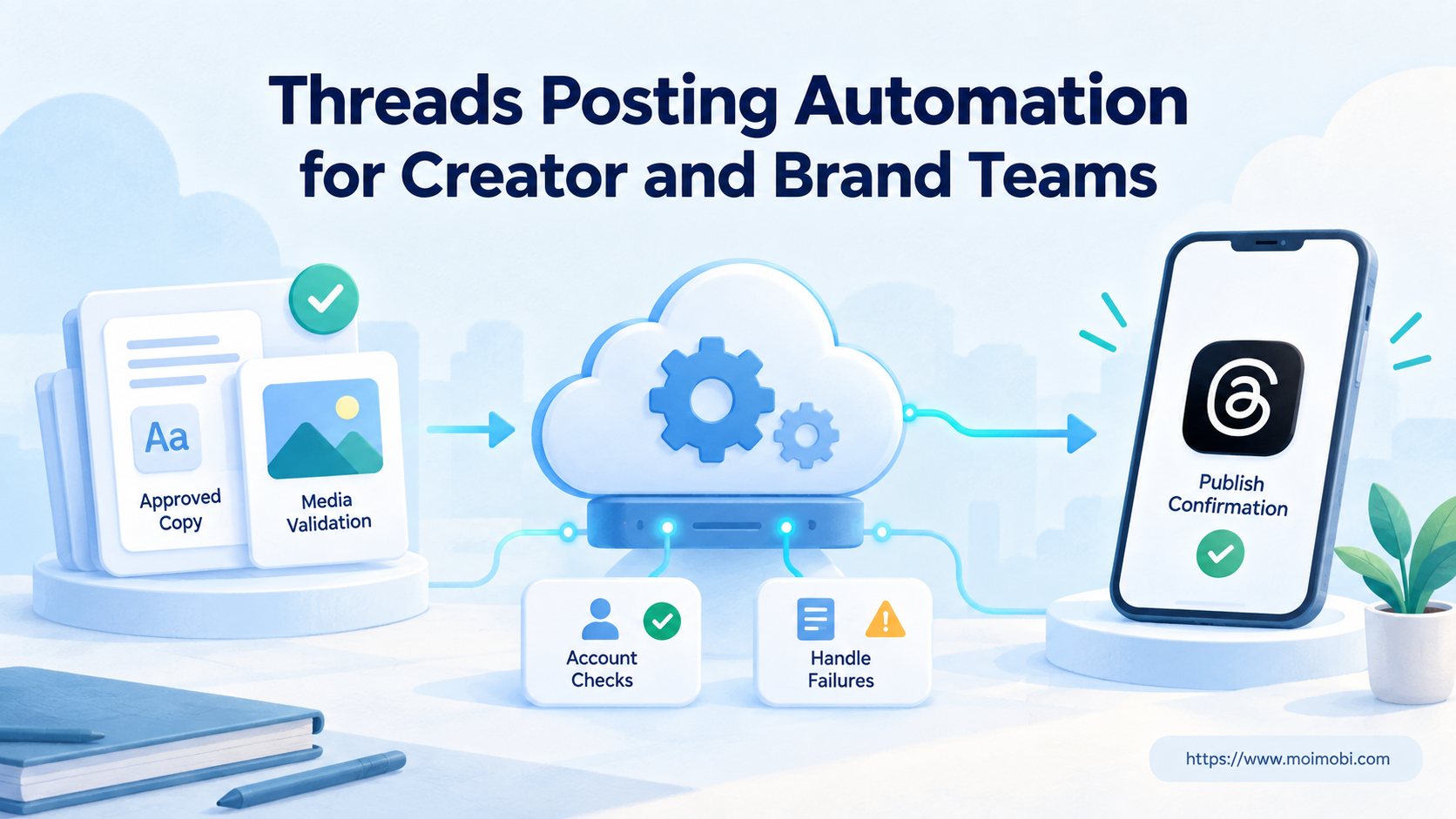
A social media automation stack is the tools, environments, workflows, and review rules that help an e-commerce team run repeatable social operations. It is not only a scheduler. It should cover accounts, publishing, comments, ownership, and reporting.
E-commerce growth teams work across several moving parts at once. A product drop may need video, comment triage, creator coordination, store links, customer follow-up, and review. Manual handling creates too much tool switching.
Moimobi fits this problem as execution infrastructure for teams that need social workflows across browser, mobile, and account environments. For broader execution planning, the Moimobi platform connects AI-assisted work with controlled environments rather than treating automation as a loose posting script.
Key Takeaways
- A social media automation stack should connect content, accounts, replies, review, and measurement.
- E-commerce teams need workflow ownership, not only scheduled posts.
- Mobile-first platforms often require mobile execution, account isolation, and clear handoff rules.
- The first stack should automate one product workflow before expanding to every channel.
- Good measurement covers completion, response quality, missed tasks, and recovery time.
Why E-Commerce Teams Need a Social Media Automation Stack
E-commerce social work has a different rhythm from general brand posting. The team needs to react to product availability, campaign windows, creator content, customer objections, and questions under posts. A calendar alone does not manage that whole operating loop.
A practical stack helps the team answer five questions every day:
- Which products or offers need content today?
- Which accounts should publish or engage?
- Which comments need a reply, escalation, or no action?
- Which workflow failed or paused?
- Which result should change tomorrow's plan?
Instagram’s business resources explain professional accounts through Instagram for Business. TikTok describes commerce workflows through TikTok for Business. These materials show why teams need structured work around platform-specific surfaces.
Core Layers of a Social Media Automation Stack
A useful social media automation stack has six layers. Each layer should have an owner and a review rule.
| Layer | What It Handles | Operational Check |
|---|---|---|
| Content planning | Topics, products, creators, campaign timing | Every post maps to a goal and product context |
| Asset preparation | Captions, videos, images, links, tags | Approved assets are separated from drafts |
| Account workspace | Profiles, sessions, mobile environments | Each account has a known execution place |
| Publishing | Scheduled or triggered posting tasks | Failures produce a visible task record |
| Engagement | Comments, DMs, replies, escalation | Unclear replies route to a reviewer |
| Reporting | Output, activity, missed tasks, review notes | The next cycle uses what the team learned |
Moimobi is most relevant where the work needs execution environments. The multi-account management layer helps teams separate account ownership, while the social workflow can keep content and replies tied to the correct account.
Where Automation Should Start
Start with the workflow that repeats most often and has the clearest output. For many e-commerce teams, that means post preparation, publishing checks, comment routing, or product question triage.
Avoid starting with “automate growth.” That is too vague. A better first workflow is: “When a new product post goes live, check comments every two hours, classify questions, draft approved reply types, and route uncertain cases to support.”
Use a simple first-pilot map:
- Campaign input: Product, offer, audience, approved assets.
- Account selection: Which social profiles publish or monitor.
- Execution window: When posting or checking should happen.
- Reply rules: Which comments can receive standard replies.
- Escalation rule: Which comments need a human.
- Result record: What changed, failed, or needs follow-up.
The first pilot should be small enough to review manually. That is the fastest way to see which parts of the stack need better instructions.
Account Workspaces for E-Commerce Teams
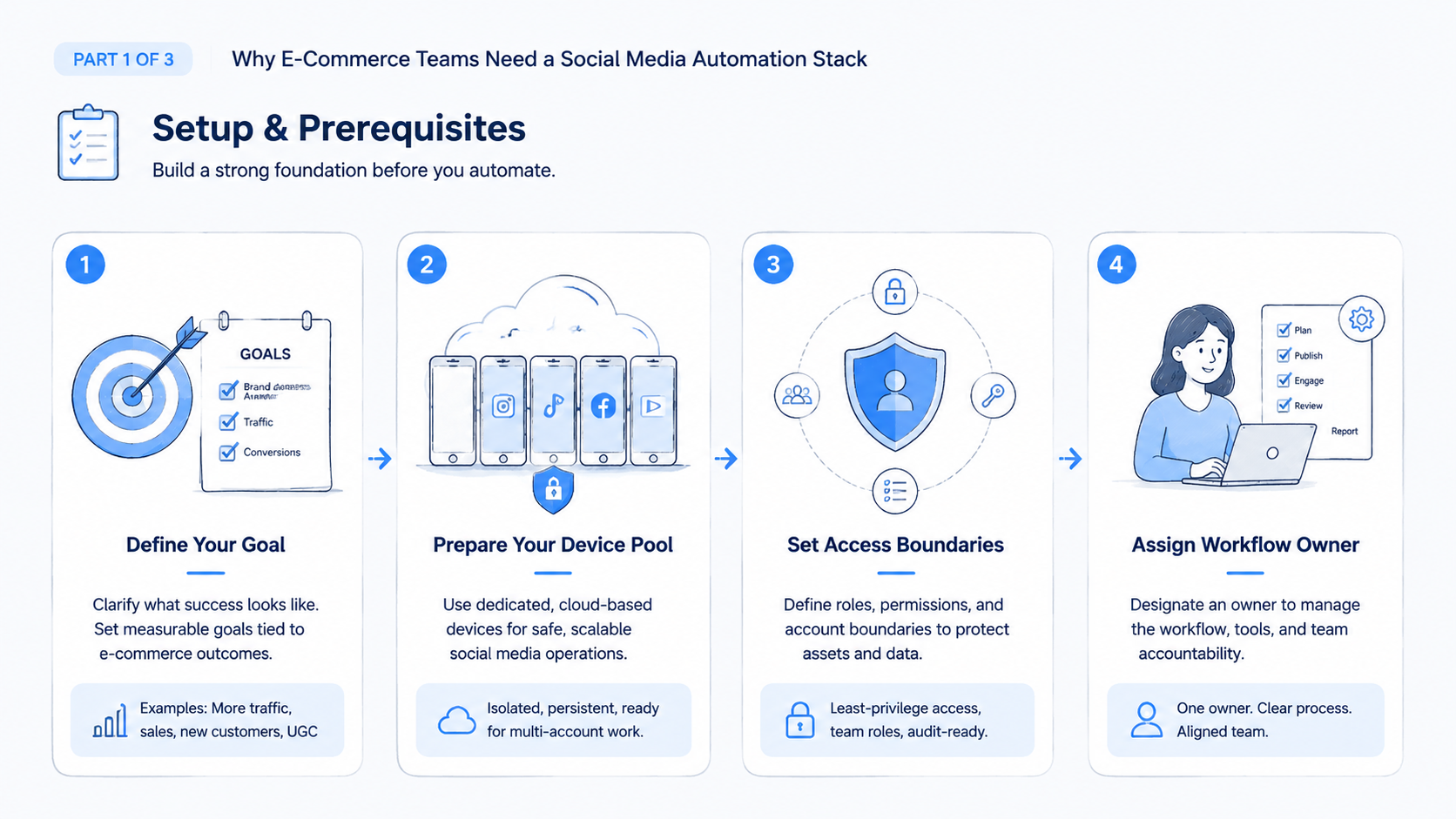
E-commerce teams often manage more than one social identity. They may separate brand accounts, store accounts, regional accounts, creator accounts, or campaign-specific profiles. Each account needs a defined workspace.
A workspace can be a browser profile, a remote mobile environment, or a phone-based session. The key requirement is not the device type. The requirement is that the account, task, owner, and result stay connected.
For mobile-first operations, Moimobi’s mobile automation page is a natural next step. It explains why mobile app workflows need a different execution layer from web-only dashboards. Teams running TikTok-heavy commerce should also review Moimobi’s TikTok operations page because platform-specific work often creates different publishing and monitoring needs.
The account workspace should store the fields reviewers need: account name, platform, environment, owner, workflow status, last action, next review, and recovery note. Without those fields, automation creates hidden work.
Publishing and Reply Workflow
Publishing is only one part of the social commerce loop. The real workload begins after the post is live. Product questions, delivery concerns, discount requests, and complaints can arrive under the same content.
The stack should separate reply types:
- Approved standard replies: Simple questions that match saved guidance.
- Needs context: Questions that require product, order, or campaign details.
- Needs support: Cases that belong to customer service.
- Needs no reply: Spam, duplicate comments, or irrelevant posts.
- Needs review: Anything unclear, sensitive, or high-value.
Meta’s business help center explains page and messaging tools through Facebook business help. TikTok also provides official guidance for business accounts through its business portal. These sources do not define your internal reply rules. They show why social work lives inside platform-specific systems.
For Moimobi, the practical layer is execution. Teams can connect comments and replies to account workspaces, then use review rules before publishing uncertain responses.
Pilot Metrics and Review Loop
Measure the stack by operational outcomes, not only post volume. A stronger signal is fewer missed tasks, clearer ownership, and faster review.
Track posts prepared, posts missed, comments classified, replies approved, reviewer edits, support escalations, stopped tasks, and recovery time.
The review meeting should be short. Look at the top failure category and fix one rule at a time. If failures come from missing assets, improve the content handoff. If they come from unclear comments, improve classification rules.
For teams using multiple tools, the resources hub can support comparison-style research after the team knows its operating requirements.
Frequently Asked Questions
What is a social media automation stack?
It is the connected system of tools, account environments, workflows, and review rules used to run social operations.
Why does e-commerce need a different stack?
It connects content, product timing, comments, support, and sales follow-up.
What should an e-commerce team automate first?
Start with publishing checks, comment classification, product question routing, or campaign reporting.
Should AI write every reply?
No. AI can draft and classify replies, but uncertain or sensitive cases should route to a reviewer.
How many tools should be in the stack?
Use only tools that support the workflow.
Do teams need mobile execution?
They need it when the workflow depends on mobile apps or app-specific notifications.
How should success be measured?
Measure completed tasks, missed tasks, review edits, escalations, and recovery time.
Can one stack support multiple brands?
Yes, if each brand has clear account ownership, environments, and review rules.
Conclusion
A social media automation stack for e-commerce growth teams should connect content, accounts, publishing, replies, and review. The value comes from a workflow that can be repeated, inspected, and improved.
Start with one product campaign and one account group. Define the handoff, environment, reply rules, escalation path, and report fields. Once that loop works, expand.