Key Takeaways
- Multi-account warm-up automation is a readiness workflow for account lanes, not a shortcut for aggressive growth.
- The real goal is consistent setup, separated environments, and observable early activity.
- Teams should automate checklists and routing before they automate more visible public actions.
- A good pilot measures lane integrity, review quality, and account-readiness signals together.
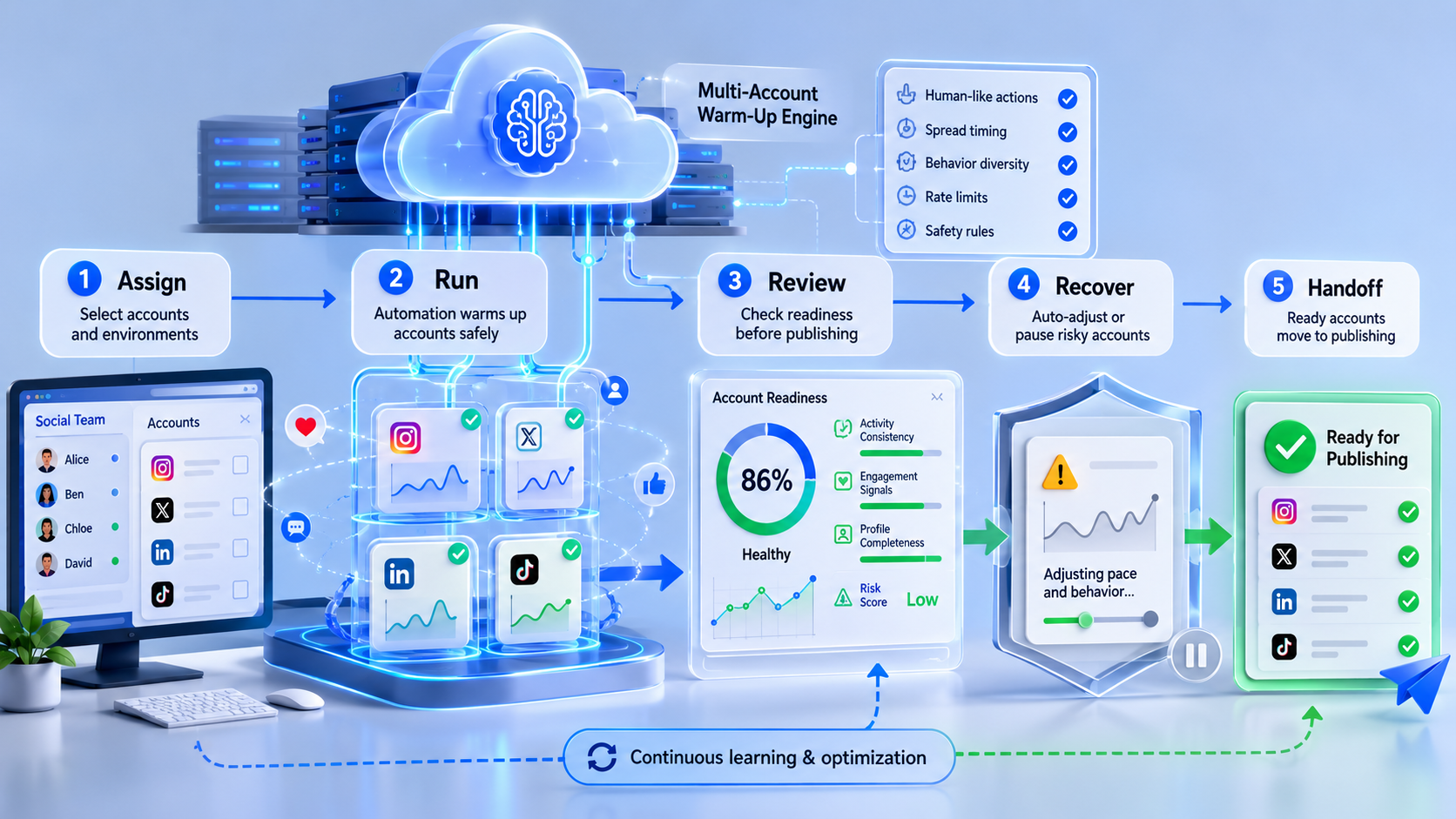
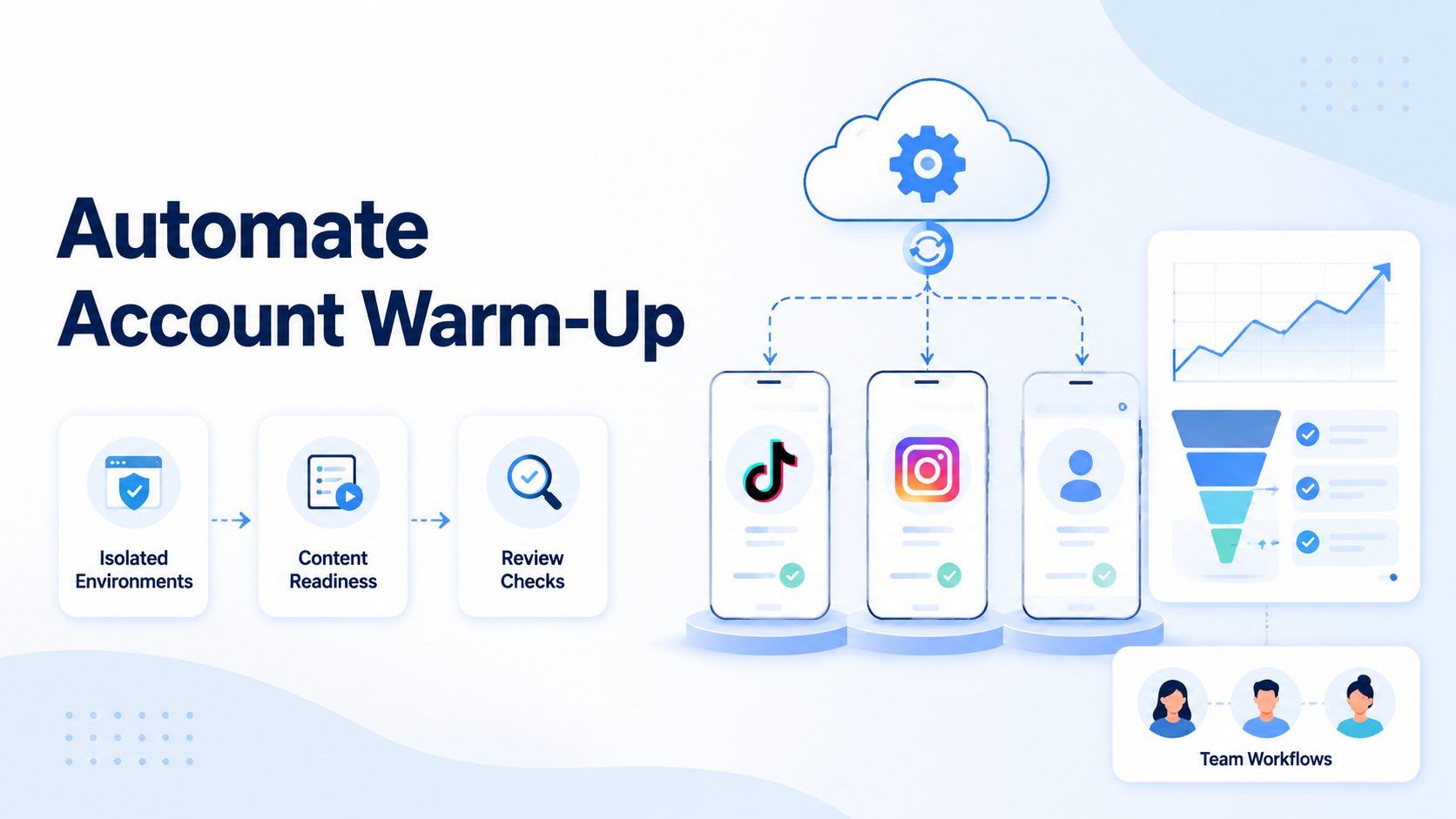
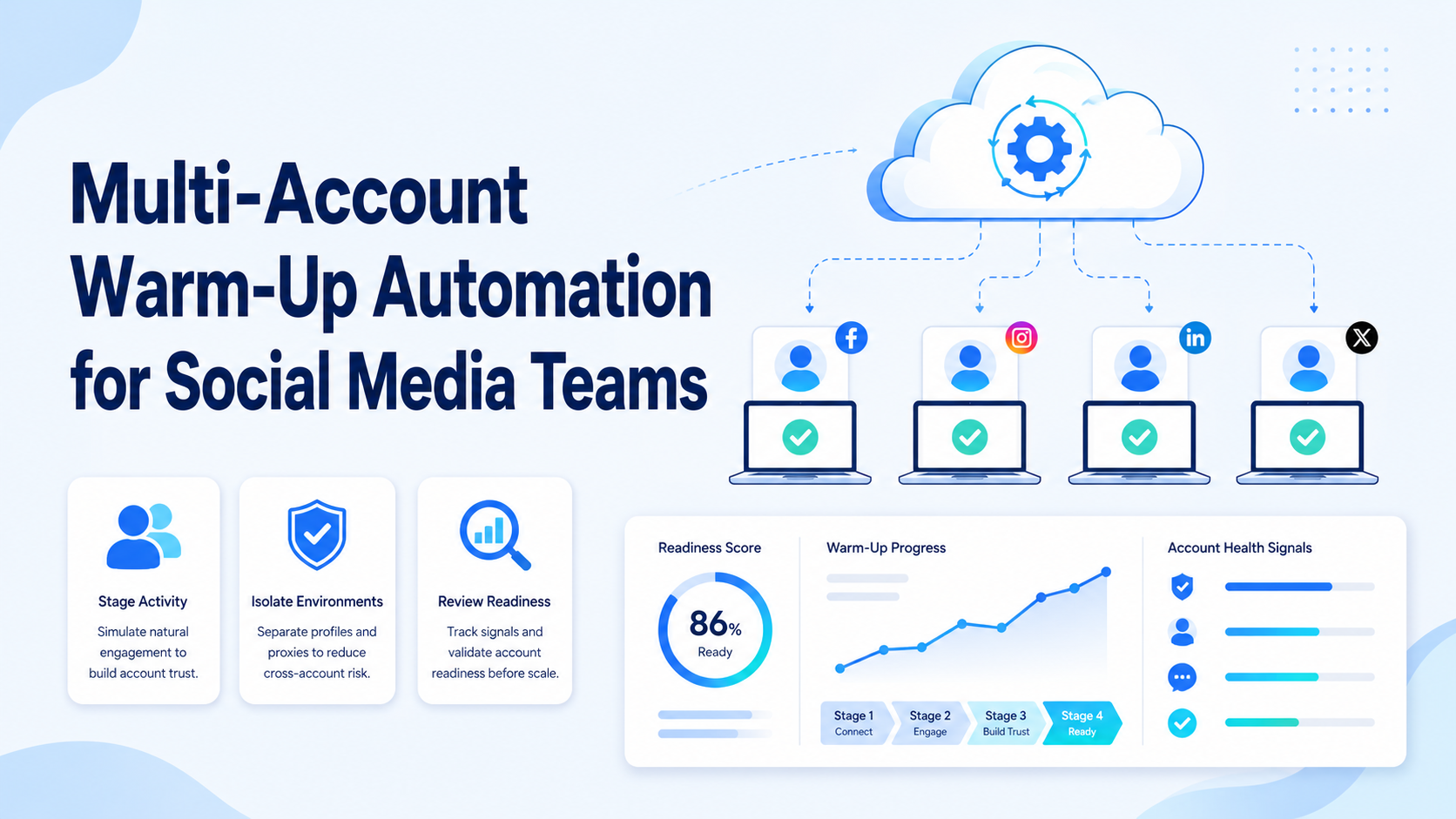
Multi-account warm-up automation is a controlled workflow that helps teams prepare new or newly assigned social accounts for regular operations. It is not a promise of instant performance. A workable model focuses on account readiness, separated environments, stable activity plans, and clear review steps before larger publishing or engagement workflows begin.
This topic becomes important when a team manages many accounts at once. New accounts, transferred accounts, or region-specific accounts all need a steady setup path. Without that path, operators usually improvise activity patterns, mix environments, or lose track of which account is ready for the next stage.
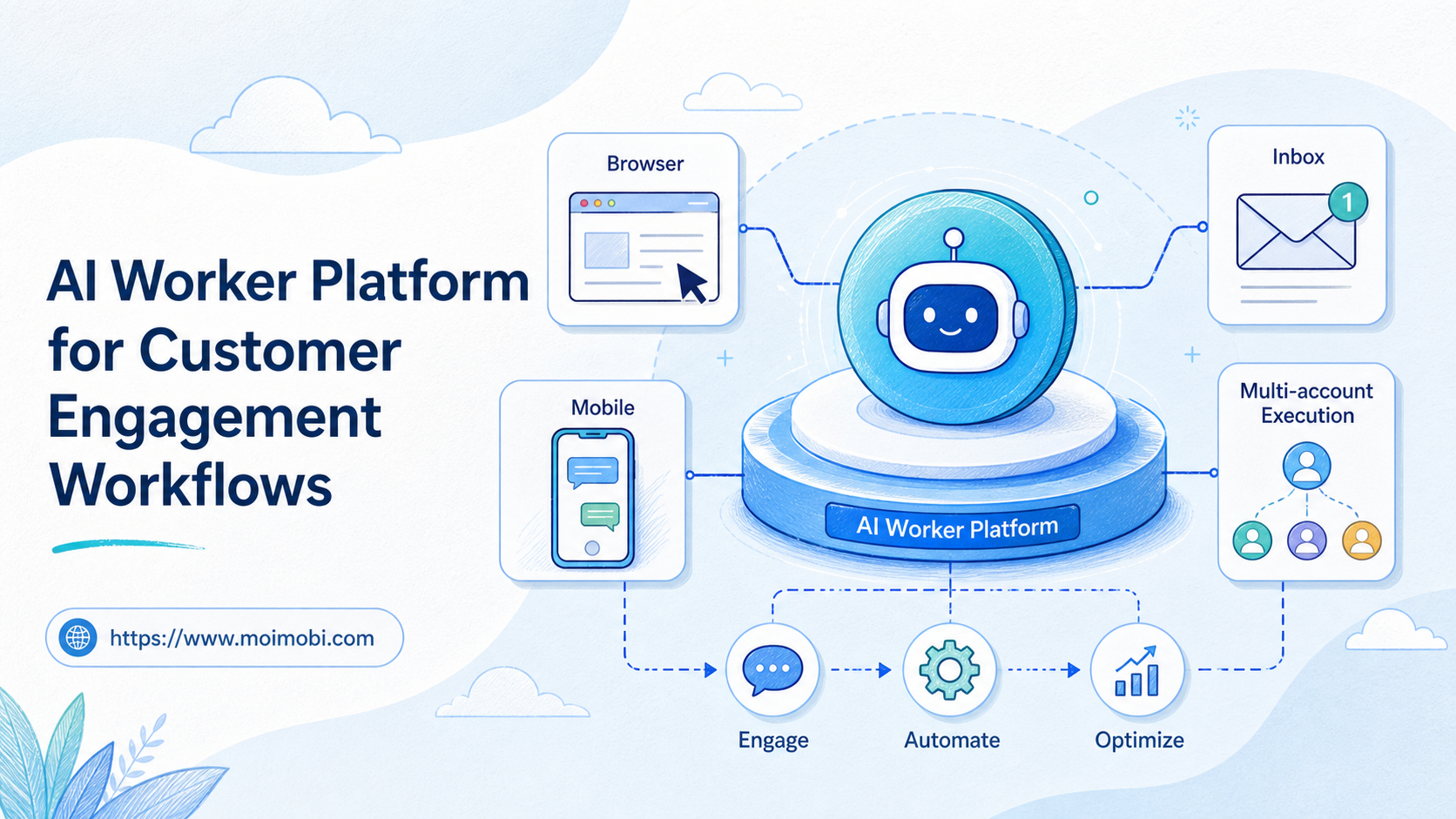
That is why many teams evaluate MoiMobi as an execution platform rather than only looking for a narrow warm-up script. The useful question is not "how do we automate everything fast?" The useful question is "how do we build repeatable readiness rules across many isolated account lanes?"
Platform and tooling documentation support that execution framing. Meta Business Help and TikTok Support both treat account and business operations as managed workflows with roles, account context, and platform-side controls.1 2 Playwright and W3C WebDriver also make session boundaries explicit, which matters when a team assigns one account lane to one environment.3 4
The Core Idea Behind Multi-Account Warm-Up Automation for Social Media Teams
The biggest misunderstanding is that warm-up automation is about forcing instant account growth. The more defensible model is about preparation and consistency.
In practice, the workflow usually covers three layers:
| Layer | What it covers | Why it matters |
|---|---|---|
| Environment setup | One lane, one account group, one routing path | Prevents mixed state and mixed ownership |
| Readiness checklist | Profile completeness, task plan, review owner | Keeps the first days structured |
| Observation loop | Track pauses, activity history, and next step | Shows whether the lane is ready to expand |
This is why device isolation, Android antidetect, and multi-account management are relevant next pages. Warm-up is useful when it protects operational clarity.
Why Teams Search for This Topic
Most teams search for this topic after they feel early-stage account operations becoming messy. The problem may start with a new market launch. It may start with a batch of newly assigned creator accounts. It may also start when a team takes over client accounts from another operator.
The surface question sounds tactical. The underlying problem is often lane control.
Three search triggers appear often:
- new accounts need the same startup path
- several operators touch the same account pool
- nobody can say which accounts are ready for normal publishing
That is why warm-up work should be treated as a workflow stage, not as vague early activity. Teams need one clear lane, one owner, and one readiness record per account cluster.
Who Benefits Most and In What Situations
This model fits teams that already run account pools and need cleaner early-stage operations. It is weaker for single-account creators with no handoff problem.
Strong match
- Agencies preparing several client or creator accounts at once.
- Cross-border teams launching new account groups in several regions.
- Operators managing browser and mobile execution across many lanes.
- Teams that already use account-level ownership and review rules.
Weak match
- One-off account setup with no repeated workflow.
- Teams that still share one pooled session for everything.
- Workflows with no readiness checklist or review owner.
- Buyers looking only for growth promises rather than operational control.
One common example is a social team preparing several new region accounts. A structured workflow can route each account into its own lane, apply the same setup checklist, and keep the team from guessing which account is ready for scheduled publishing next.
That fit becomes stronger when another team will inherit the account later. A clean readiness record saves time because the publishing or support team does not need to rediscover the account state from scratch.
How to Evaluate or Start Using Multi-Account Warm-Up Automation for Social Media Teams
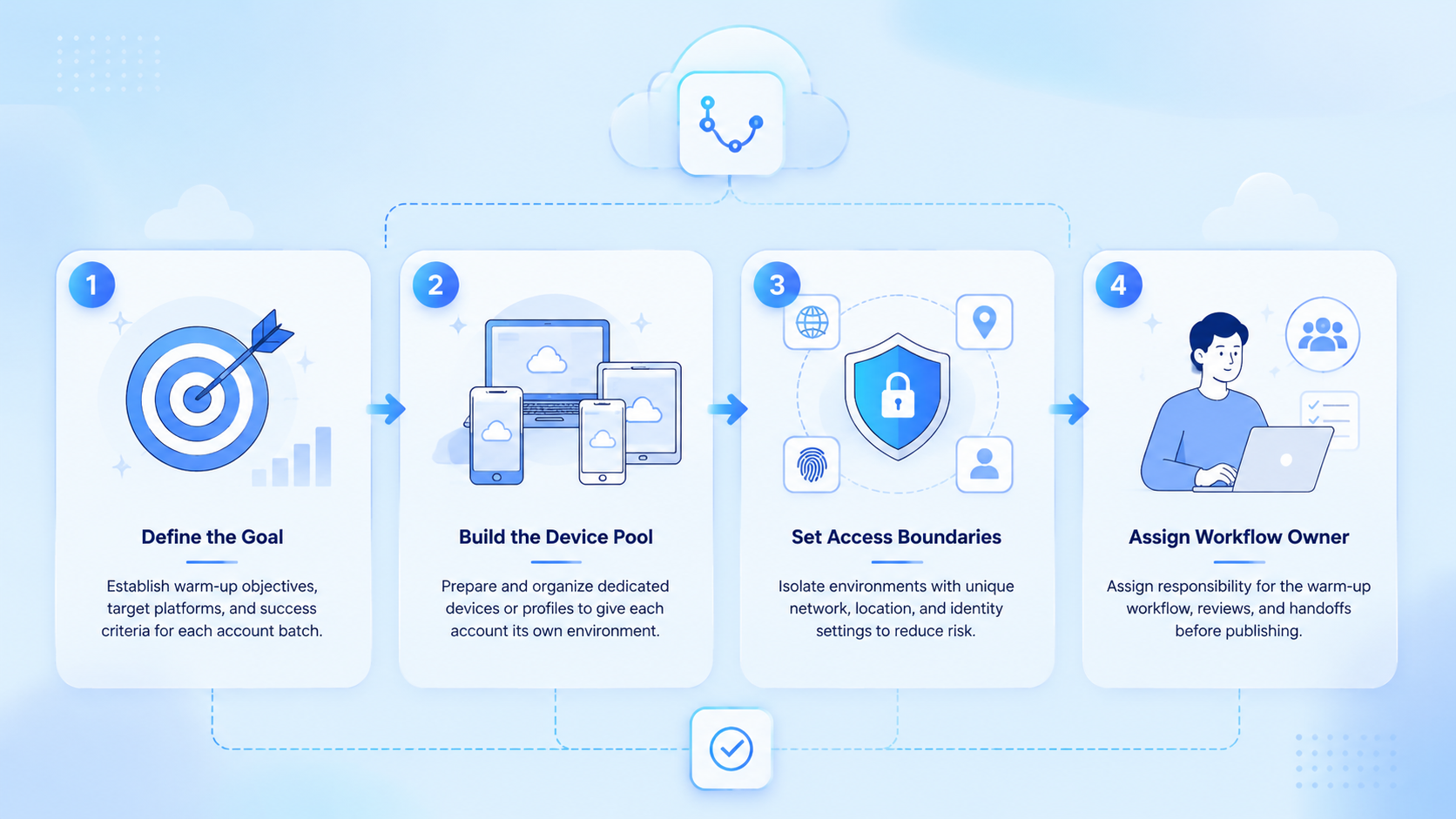
Start with one account cluster and one readiness path.
- Choose one account group, such as one region, one client batch, or one creator batch.
- Assign one isolated execution lane for that group. Do not reuse the lane across unrelated accounts.
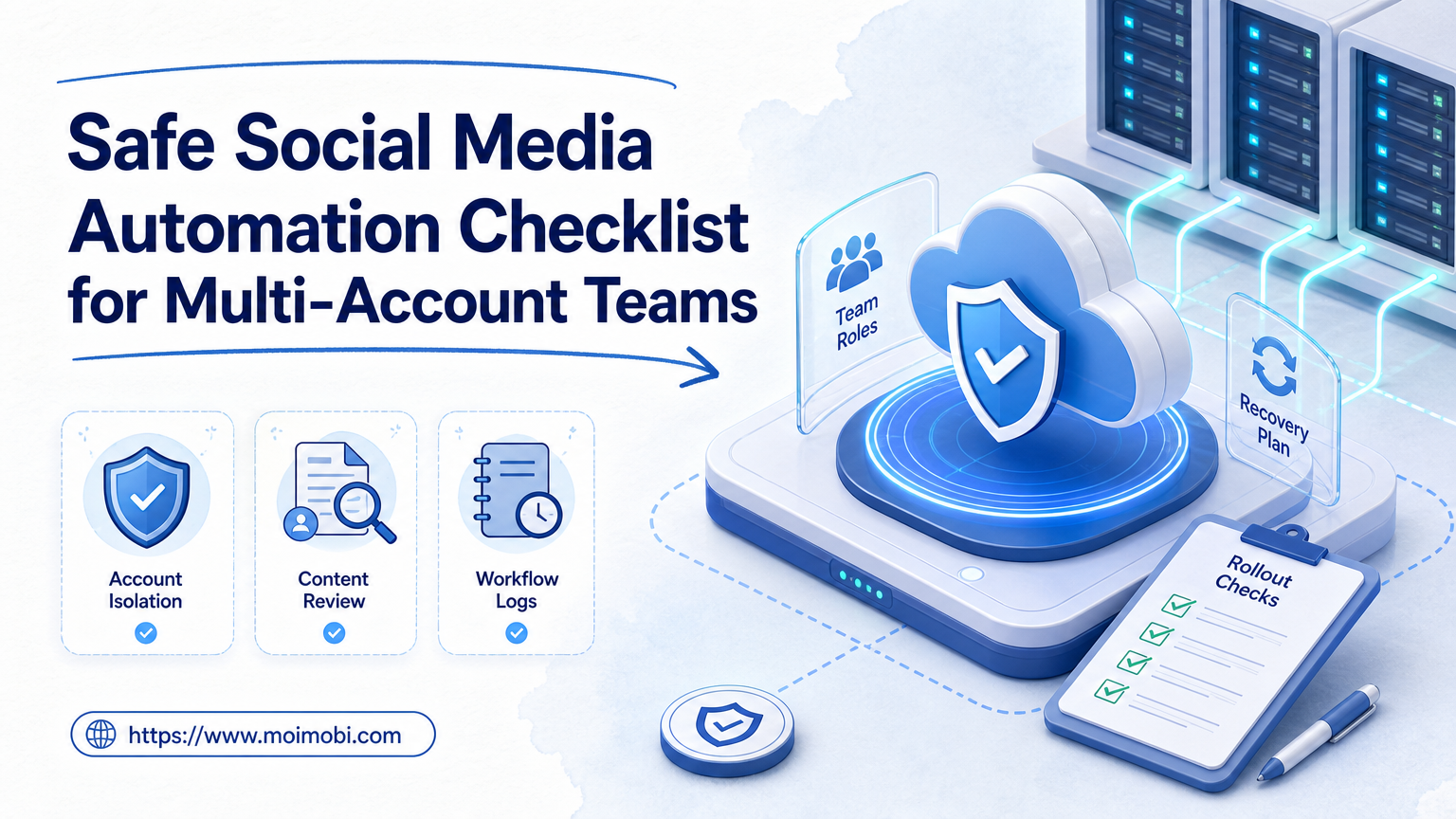
- Build a short readiness checklist: environment ready, owner assigned, profile review done, first activity plan defined.
- Log each step with a visible next action and pause reason.
- Expand only after the team can explain why every account is marked ready or not ready.
Use this short readiness rule:
- Ready: the lane is stable, ownership is clear, and the next publish step is documented.
- Not ready: the team still relies on chat or memory to explain account status.
- Ready: a second operator can review the account record and understand the next action.
- Not ready: the same account appears in more than one active lane.
For teams whose early-stage work depends on mobile execution, cloud phone and phone farm are often the most practical next evaluation pages.
It also helps to set a stop rule. If more than one account in the pilot batch reaches an unclear state, the team should pause and tighten the checklist before moving to the next batch.
Mistakes That Reduce Results
The first mistake is treating warm-up automation as a black-box growth tactic. That framing usually leads teams to ignore readiness checks, account ownership, and environment stability.
The second mistake is scaling the activity plan before the lane is stable. More tasks do not help if the team still cannot reopen a run and understand what already happened.
The third mistake is mixing account state. Playwright browser contexts and W3C WebDriver both center the idea of one explicit session per workflow.3 4 The same discipline protects multi-account readiness work.
What not to do
- Do not use one pooled lane for several unrelated account groups.
- Do not label an account "ready" without a visible checklist and owner.
- Do not expand task volume before blocked cases are easy to trace.
- Do not confuse repetitive activity with real operational readiness.
Teams also should not let several operators invent different meanings for ready, paused, and blocked. One shared definition is usually worth more than adding more early activity.
Pilot Rollout, Measurement, and Recovery Checks
The pilot should prove that account-readiness work becomes easier to inspect, not just easier to run.
A useful pilot log should also record what moved an account forward. For example, the record can note that profile review passed, the lane stayed stable for the planned activity window, and the next operating team accepted the handoff without reopening setup questions. Those details make later scaling decisions easier because the team is reviewing evidence rather than impressions.
Track the pilot with a short scorecard:
| Check | Healthy sign | Failure sign |
|---|---|---|
| Lane integrity | One account group stays in one environment | Accounts drift between lanes |
| Readiness visibility | Status is easy to review | Operators still ask who touched the account |
| Pause handling | Blocked steps have a named owner | Stalled accounts sit without action |
| Expansion readiness | The same pattern works for the next account batch | Manual rescue rises sharply |
| Audit clarity | A second operator can explain the record | The workflow depends on private memory |
AWS Device Farm, BrowserStack, and Android Enterprise all emphasize observable and repeatable device workflows.5 6 7 That same discipline is useful here because the first stage of account work should already be easy to review and repeat.
Reviewer transfer is another useful check. Ask whether a second operator can inherit the batch and still explain which accounts are ready, which are paused, and which need another environment review. If not, the workflow is still too informal.
A simple expansion test also helps. Take one account from the pilot, move it to the next planned workflow such as publishing or comment handling, and check whether the receiving operator can understand the record without asking for extra context. If that transfer fails, the warm-up system still lacks enough structure for wider rollout.
Frequently Asked Questions
Is multi-account warm-up automation the same as a growth bot?
No. A safer interpretation is account-readiness automation with separated lanes and documented next steps.
What should a team automate first?
Start with the checklist, routing, and status tracking before adding more visible activity steps.
Why does environment separation matter?
It keeps ownership and state clear for each account group.
Does this fit agencies?
Yes, especially when many client or creator accounts share the same onboarding workflow.
What is the first warning sign?
The team cannot explain which accounts are actually ready for normal publishing.
Can browser and mobile lanes both be used?
Yes, when the workflow records which surface owns the next step.
What should the pilot measure?
Lane integrity, readiness visibility, and blocked-case handling.
Can this feed a later publishing workflow?
Yes. That is one of the clearest benefits when the readiness record is structured enough to hand off to the next operating team.
What should teams document before scaling to the next batch?
They should document lane ownership, readiness criteria, pause reasons, and the exact signal that moves an account into the next workflow stage.
What proves the pilot is ready for another account batch?
The strongest proof is that another operator can review the record, explain why each account is ready or blocked, and move one approved account into the next workflow without rebuilding the setup history.
Conclusion
Multi-account warm-up automation for social media teams works when it behaves like a readiness workflow, not a vague activity script. The strongest setups keep account lanes separate, ownership visible, and readiness status easy to audit.
Before scaling, check four things:
- one account group maps to one lane
- the readiness checklist is visible
- blocked steps reach a named owner
- a second operator can review the record without guessing
If those checks hold, the team is ready to extend the workflow.
Sources