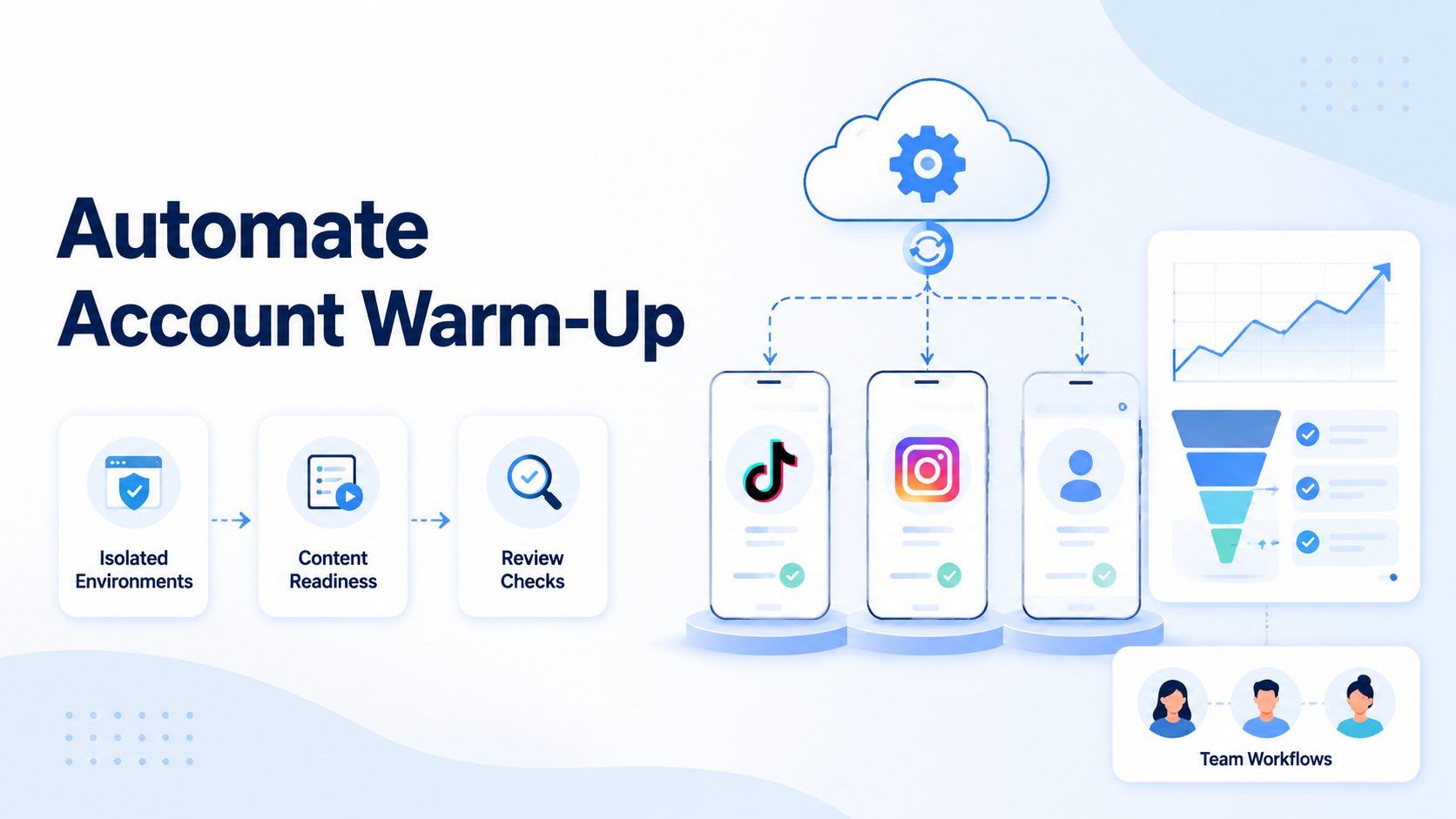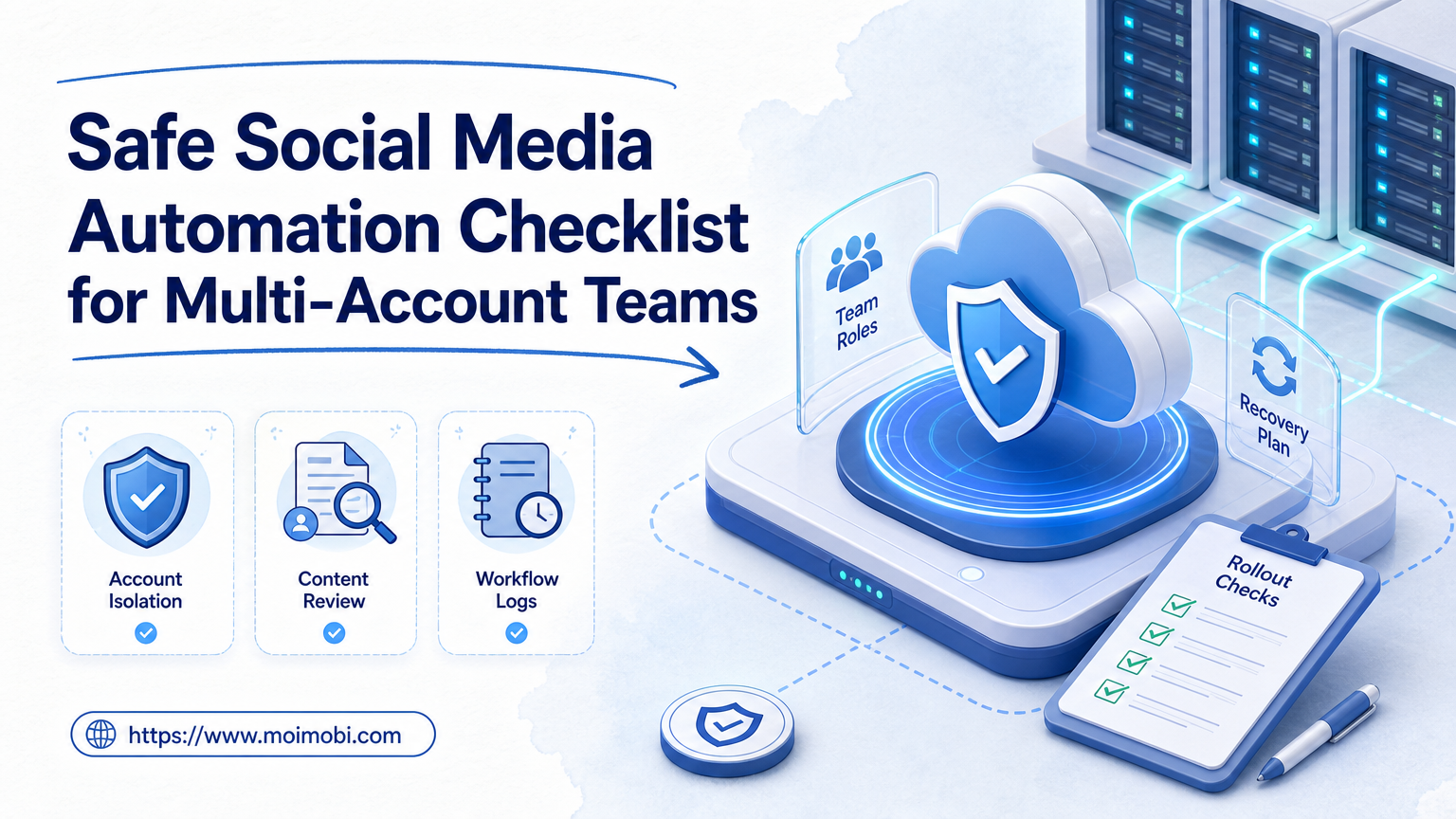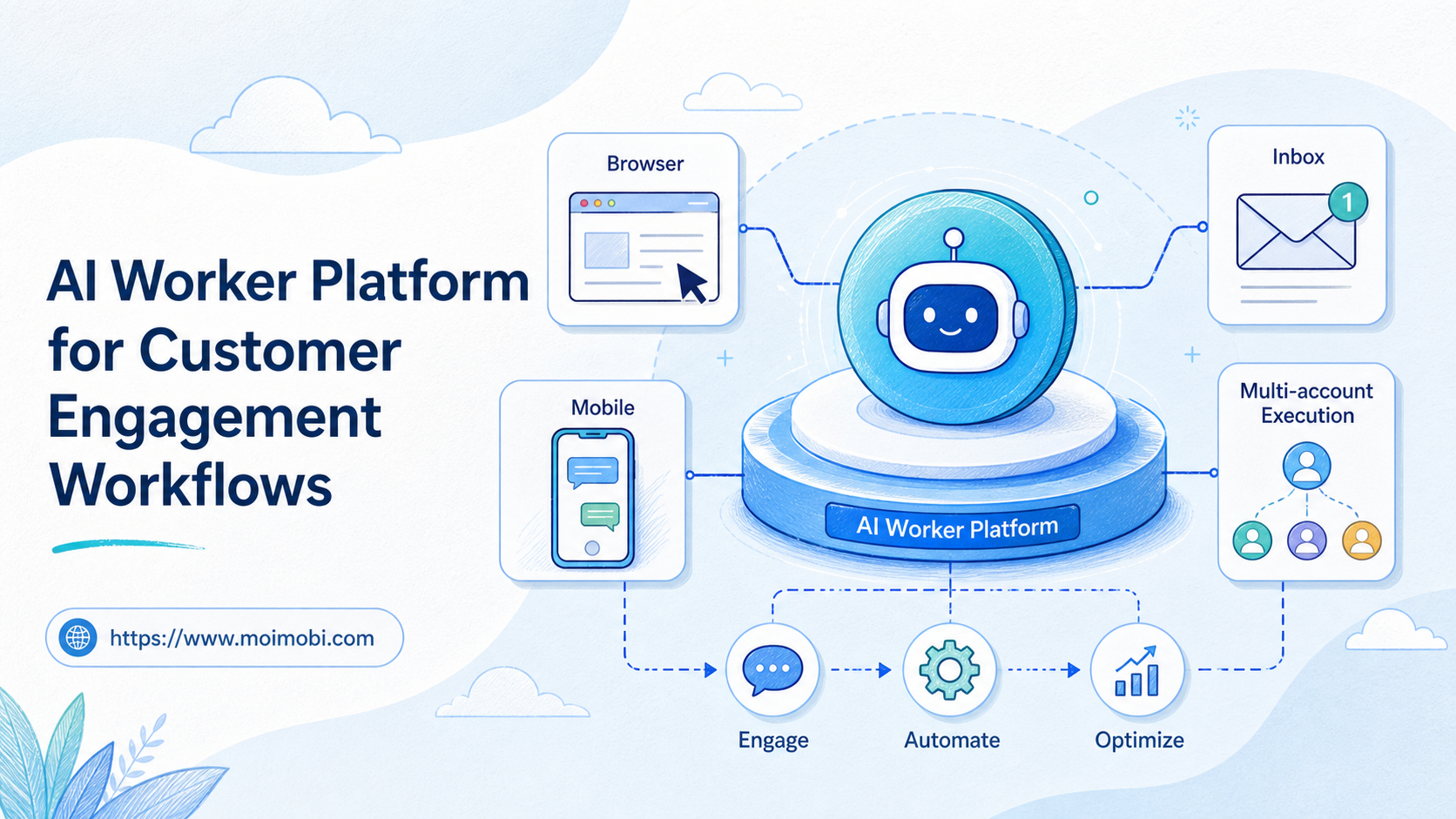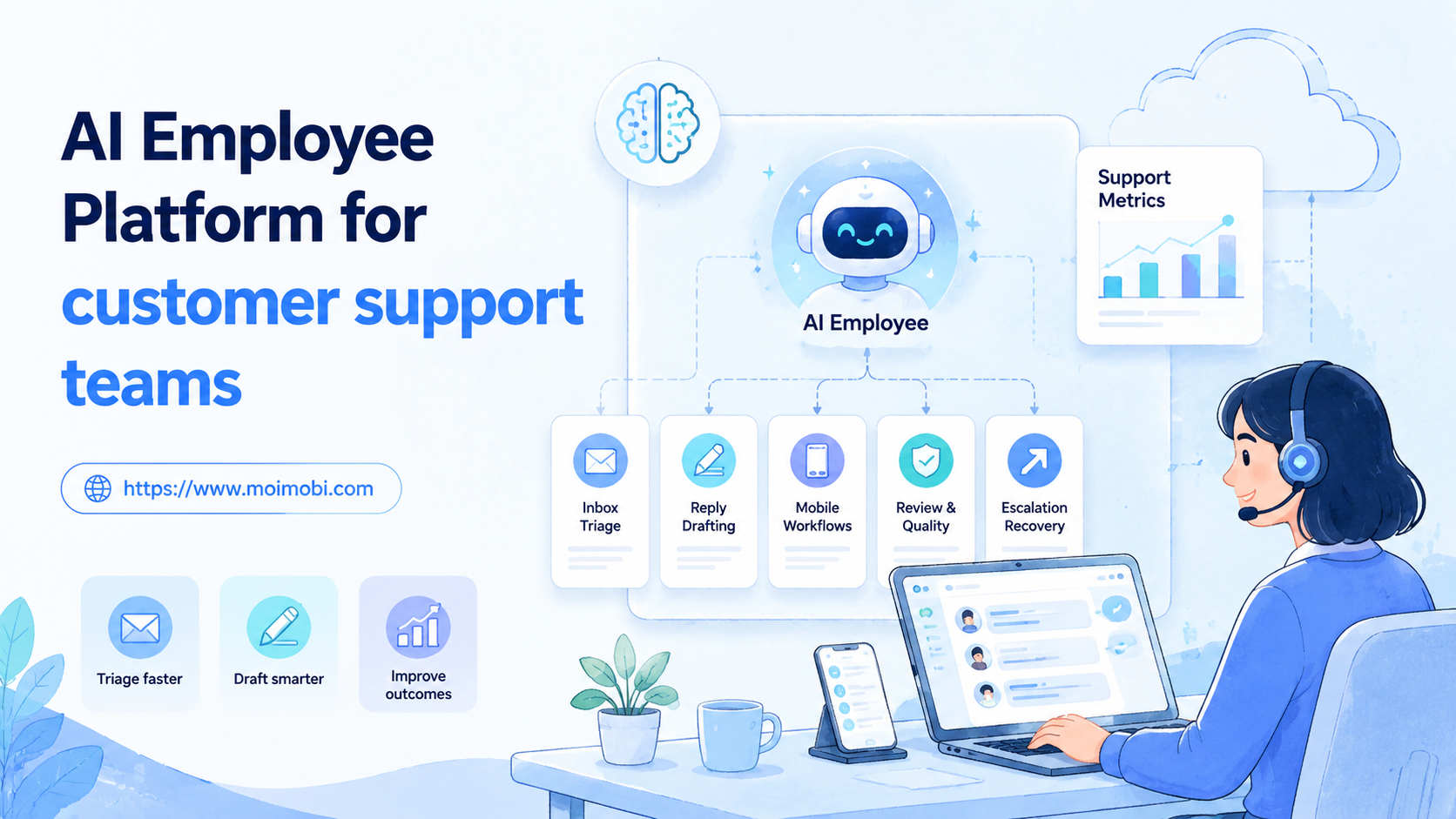
Cloud mobile infrastructure for global lead generation is the cloud phone, routing, access, and review system for mobile lead workflows across markets.
Global lead generation teams often start with a simple problem. They need mobile access in more places, across more accounts, and across more operators than a local phone setup can handle. Cloud phones can help, but only when they are managed as workflow infrastructure.
The direct answer is practical. Cloud phones give teams remote Android environments for lead research, outreach review, app-based workflows, and account handoff. This setup becomes valuable when each device lane has an owner, a route policy, a reset rule, and a review path.
For MoiMobi users, the topic connects to more than screen access. Lead generation teams may need cloud phone capacity and device isolation. They may also need proxy planning and multi-account management. Those layers work best when teams define how leads, accounts, devices, and operators move through the process.
Key Takeaways
- Global lead generation teams need controlled mobile lanes, not just more remote phones.
- Cloud phones help when device state, routing, access, and review are tied to workflow rules.
- The setup should separate markets, account groups, or operator teams when review quality matters.
- A pilot should measure handoff time, recovery time, and lead workflow clarity.
- Cloud phones do not replace policy responsibility, consent rules, or clean sales operations.
What cloud phones mean for global lead generation teams
Cloud phones are remote Android devices that teams can access through a browser, app, API, or control panel. For global lead generation teams, the useful model is not a pile of remote screens. A stronger model is a set of controlled mobile lanes.
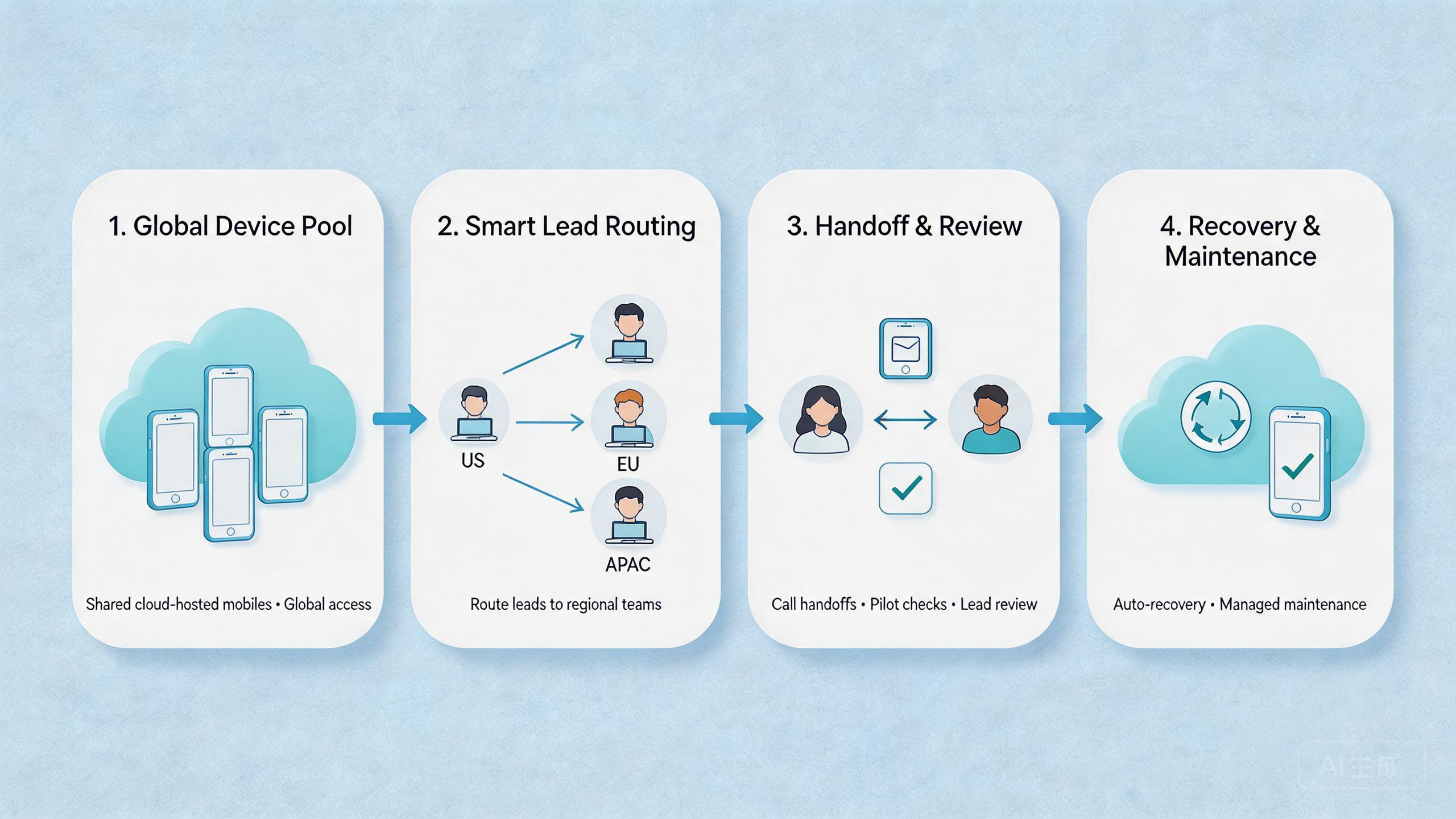
A mobile lane includes the device, account state, assigned operator, target market, route policy, app setup, and review status. This matters because lead generation work often crosses time zones and teams. One person may collect leads, another may qualify them, and a manager may review the result.
The myth is that global reach comes from simply adding more devices. Extra capacity can help, but it does not create a reliable workflow by itself. Without rules, more devices can multiply unclear ownership and messy handoff.
Cloud mobile infrastructure for global lead generation should answer four daily questions:
- Which device lane owns this market or account group?
- Who can operate, review, and reset the lane?
- Which route or region assumption applies to the lane?
- What happens when a lane has unclear state?
These answers help teams avoid hidden friction. They also make review easier. A lead manager should not need several private messages to understand which account ran which workflow.
Google Search Central emphasizes clear, useful information for people rather than thin claims (Google Search Central). The same standard works inside lead operations. A process is more useful when it is easy for a teammate to understand and repeat.
Why cloud mobile infrastructure for global lead generation matters
This infrastructure matters because the work is distributed by nature. Teams may cover different regions, languages, platforms, or account types. A local device shelf becomes hard to manage when the team grows.
Visibility comes first. Managers need to know which devices are active, which accounts are in progress, and which lanes are under review. Cloud phones can provide a clearer base when each lane has a written status.
Handoff comes next. Lead work often moves between operators, researchers, sales teams, and reviewers. A stable mobile lane keeps more context attached to the workflow. That context can include app state, account state, route assumptions, and reset history.
Recovery is the third issue. Problems are normal in any repeated workflow. The important question is whether the team can isolate the issue. A controlled cloud phone setup lets the team pause one lane, inspect it, and return it after review.
Consistency is the fourth issue. A team that changes device setup, routing, and account ownership at the same time will struggle to trace outcomes. A better model changes one major variable at a time when possible.
Google explains the value of clear structure and helpful organization for users and search engines (Google Search docs). Lead operations need similar clarity. Each lane should have a clear purpose and status.
Key benefits and use cases
The clearest benefit is controlled parallel work. Global lead generation often requires multiple operators and account groups to work at the same time. Cloud phones can support that pattern when the pool is organized by market, workflow, or team.
Common use cases include:
- Regional lead research. Teams can assign device lanes by market when app behavior, language, or workflow assumptions differ.
- Account-based outreach review. Operators can keep outreach accounts in separated Android environments for easier tracking.
- Social lead workflows. Teams can connect social media marketing tasks to specific account lanes.
- Mobile app validation. Sales or growth teams can test lead flows inside mobile apps without waiting for local hardware.
- Team handoff. Managers can inspect lane status before work passes to another operator.
The benefit depends on process quality. A cloud phone pool with weak rules becomes another place where information gets lost. A pool with owners, status labels, and reset rules becomes easier to trust.
Cloud phones also support partial automation. A team might use mobile automation for repeatable checks while keeping human review for judgment-heavy outreach decisions. The split is important. Automation should not hide responsibility.
For global teams, time zone coverage is another practical use case. A lane can continue across shifts when the next operator has enough context. Clear notes and review rules still matter.
Related MoiMobi layers:
How to get started with cloud phones for global lead generation teams
Begin with guardrails. Do not move every market, account, and operator into cloud phones at once. A narrow pilot gives the team room to learn without creating broad confusion.
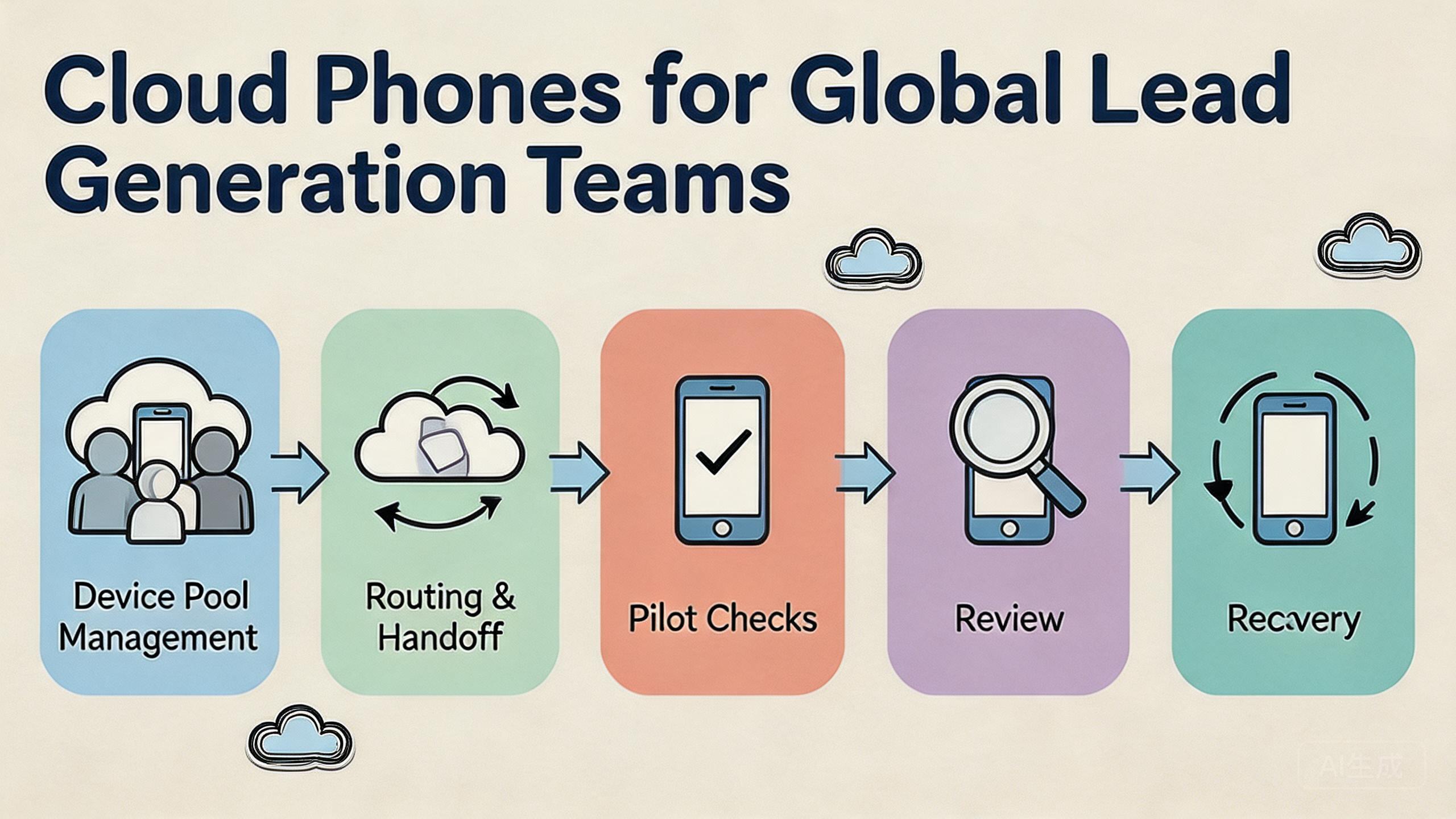
Use this setup path:
- Pick one lead workflow. Choose a real workflow that runs weekly.
- Choose one market or account group. Keep the scope narrow enough to inspect.
- Assign a small device pool. Do not start with more lanes than the team can review.
- Set access roles. Separate operators, reviewers, and admins when possible.
- Record routing assumptions. Write down the expected route or market context.
- Define reset states. Use simple labels such as active, reusable, under review, and reset required.
- Measure handoff. Track how long the next operator needs to continue work.
| Setup checkpoint | Pass signal | Warning signal |
|---|---|---|
| Workflow boundary | One clear lead workflow is selected. | Several unrelated tasks share the pool. |
| Device ownership | Each lane has a current owner. | Operators guess who last changed the lane. |
| Route policy | The team can explain the expected route. | Routes change without notes. |
| Review process | A lead can inspect status quickly. | Review depends on private messages. |
| Recovery rule | A failed lane has a pause and reset path. | Questionable lanes return to work by habit. |
The pilot should include one planned failure drill. Mark a lane under review, remove it from active use, inspect the cause, reset it, and return it only after the owner signs off. This drill shows whether the workflow can recover under pressure.
Keep the first pilot simple. The goal is not to prove every use case. The goal is to learn whether cloud phones make one lead workflow easier to assign, review, and restore.
Common mistakes to avoid
One common mistake is treating cloud phones as a shortcut around lead process design. A remote Android environment can support a workflow. It cannot define lead quality, compliance rules, messaging standards, or account ownership for the team.
Another mistake is mixing every market in one pool. A shared pool may look efficient at first. Later it becomes hard to know which operator, route, language, or app state affected a result.
Policy and consent can also be overlooked. Lead generation teams still need responsible data handling, platform rules, and appropriate outreach practices. Cloud phones do not remove those duties.
Skipping reviewer access creates another problem. A manager or reviewer should be able to inspect lane status without taking over the operator's work. Review that requires full admin access may create avoidable risk.
Weak documentation is a quieter failure. The notes do not need to be long. They need to say which account group, market, route policy, current owner, and status apply to the lane.
Premature expansion creates the final trap. Device count can rise quickly. Process clarity usually does not. Teams should expand only after they can show stable handoff, clear recovery, and fewer status questions.
Fit boundaries for global lead teams
Cloud phones are a strong fit when lead generation work is mobile-first, repeated, shared, and review-heavy. They are especially useful when several operators need controlled Android environments across markets.
The fit is moderate when only part of the process is mobile. A team may use cloud phones for account workflows while keeping CRM research, email review, or content planning in other systems. That mixed model can work if handoff is clear.
The fit is weaker when the team has no defined lead process. If target accounts, outreach rules, review steps, and owner roles are unclear, cloud phones may expose the problem but will not solve it alone.
Strong-fit signals:
- Multiple operators share mobile workflows.
- Account lanes need separation by market or task.
- Managers need review visibility.
- Recovery and reset rules matter.
- Remote access reduces local hardware limits.
Weak-fit signals:
- Work is one-off and rarely repeated.
- No one owns account status.
- Route assumptions change without notes.
- Lead quality rules are unclear.
- The team expects tooling to replace process.
This boundary check protects the rollout. It keeps the team from buying capacity before it has operating discipline.
Pilot metrics for cloud mobile infrastructure for global lead generation
Measurement should stay simple at the start. A pilot does not need a large dashboard. It needs enough evidence to decide whether the setup improves daily work.
Track five signals:
- Setup time. How long does it take to prepare a lane?
- Handoff time. How long does another operator need to continue?
- Recovery time. How long does a failed lane take to inspect and reset?
- Review clarity. Can a lead understand lane status quickly?
- Exception count. How often does the team bypass the normal process?
These metrics reveal different problems. Long setup time may mean the pool design is too complex. Long handoff time may mean notes are weak. High exception count may mean the workflow does not match reality.
Review the pilot weekly. Ask which lanes created confusion, which route assumptions changed, and which account groups needed extra cleanup. Then decide whether to expand, revise, or pause.
The review loop should also include a stop condition. Do not add more lanes when ownership is unclear or recovery keeps failing. Fix the operating model first.
Cloud mobile infrastructure for global lead generation governance
Governance keeps global lead work from turning into disconnected activity. The word may sound heavy, but the useful version is simple. A team needs to know who owns each lane, who can change settings, and who approves return to service after a problem.
Access governance comes first. Operators may need day-to-day access to assigned lanes. Reviewers may need visibility without changing setup. Admins should control higher-impact actions, such as reset, route changes, and pool creation. This separation reduces accidental changes.
Route governance comes next. Global work often depends on market context. A lane may be tied to a region, language, or workflow assumption. Reviewers need that assumption recorded so they can understand what changed after a failed run.
Account governance is the third layer. A lead workflow may use several account groups. Each group should have a clear owner and a current status. Without that status, managers cannot tell whether a problem is caused by account history, device state, route drift, or operator action.
The mobile workflow layer should make these checks easier to perform. It should not hide responsibility behind remote access. The system is useful when operators can work faster and managers can still review the work clearly.
Use a weekly governance review during the pilot:
- Which lanes had unclear ownership?
- Which routes changed without notes?
- Which account groups needed extra cleanup?
- Which operators needed more training?
- Which recovery steps took too long?
The answers should lead to action. Retire confusing lanes. Update the pool rule. Clarify access. Improve notes. Keep the process small enough that the team can actually follow it.
Reporting and handoff for global lead generation
Reporting should support decisions, not create paperwork. A useful report tells the team which lanes are active, which lanes are paused, which leads or accounts need review, and which issues repeat.
Handoff notes should stay short. A practical note can include the market, account group, device lane, current owner, route assumption, last important change, and next action. That is enough to help the next operator continue without guessing.
Managers should review patterns, not every minor detail. Repeated reset issues may show weak training. Repeated route changes may show unclear market rules. Repeated account cleanup may show that the workflow is not ready to scale.
This infrastructure becomes more valuable when reporting is tied to these decisions. A dashboard or export is only useful when it helps the team choose what to pause, fix, expand, or retire.
The handoff process also protects quality. Lead generation often suffers when speed becomes the only measure. Clear lane status makes it easier to balance volume with review. This balance matters for teams that work across markets, accounts, and operators.
For MoiMobi buyers, reporting expectations should be part of the pilot. Do not only ask whether operators can access phones. Ask whether managers can understand the state of work at the end of the day.
When cloud mobile infrastructure for global lead generation is ready to scale
The system is ready to scale only after the pilot becomes repeatable. Repeatable does not mean perfect. It means operators can run the same workflow, hand it off, review it, and recover from a problem without rebuilding the process each time.
Use three readiness checks. First, every active lane should have a clear owner and status. Second, reviewers should understand route and market assumptions without asking the operator to explain everything again. Third, failed lanes should move through a known pause, reset, and return path.
Expansion should follow those checks. Add one market, one account group, or one operator group at a time. This keeps the team from confusing a capacity problem with a process problem.
Frequently Asked Questions
What are cloud phones for global lead generation teams?
They are remote Android environments used as part of a mobile lead workflow. A useful setup includes device lanes, owners, routes, review, and recovery.
Why use cloud phones instead of local phones?
Cloud phones can make remote access, shared handoff, and parallel work easier. Local phones may still fit hardware-specific or small-team needs.
Does cloud mobile infrastructure for global lead generation replace CRM tools?
No. It supports mobile-side execution. CRM systems, data rules, messaging policy, and sales review still need separate management.
How many devices should a pilot use?
Use the smallest pool that can run one real workflow. A small pool is easier to inspect and improve.
Can cloud phones help with regional lead workflows?
Yes, when the team separates markets, records route assumptions, and reviews account lane state. The setup should match the actual market process.
What should teams measure first?
Measure setup time, handoff time, recovery time, review clarity, and exception count. These signals show whether the workflow is becoming clearer.
What is the biggest rollout risk?
The biggest risk is scaling unclear process. More device lanes will not fix weak ownership, unclear lead rules, or missing recovery paths.
Should automation be added immediately?
Usually not. Stabilize the account lane and review process first. Then add automation to repeatable steps that already have clear rules.
Conclusion
Cloud phones can help global lead generation teams when they are used as cloud mobile infrastructure, not just remote Android access. The priority order is clear. Define the lead workflow, assign device lanes, control access, record routing assumptions, and measure handoff plus recovery.
The next step is a narrow pilot. Choose one market or account group, create a small cloud phone pool, and run one repeated workflow through it. Review whether the setup reduces status questions, improves handoff, and gives managers a clearer view of account lanes.
If the pilot works, expand gradually. If the pilot creates confusion, fix ownership, notes, route rules, or recovery before adding more devices. Stable lead generation at global scale starts with clear mobile operations, not raw device count.
A useful final check is simple. Operators and managers should be able to explain who owns each lane, why it exists, which route applies, and what happens after a failed run. When those answers are clear, cloud phones can support broader lead operations with less daily confusion.
Keep that review habit active after expansion.
The same habit should continue during normal work. Review one sample lane each day, confirm its owner, and check whether the next action is clear. Small checks prevent hidden process drift.