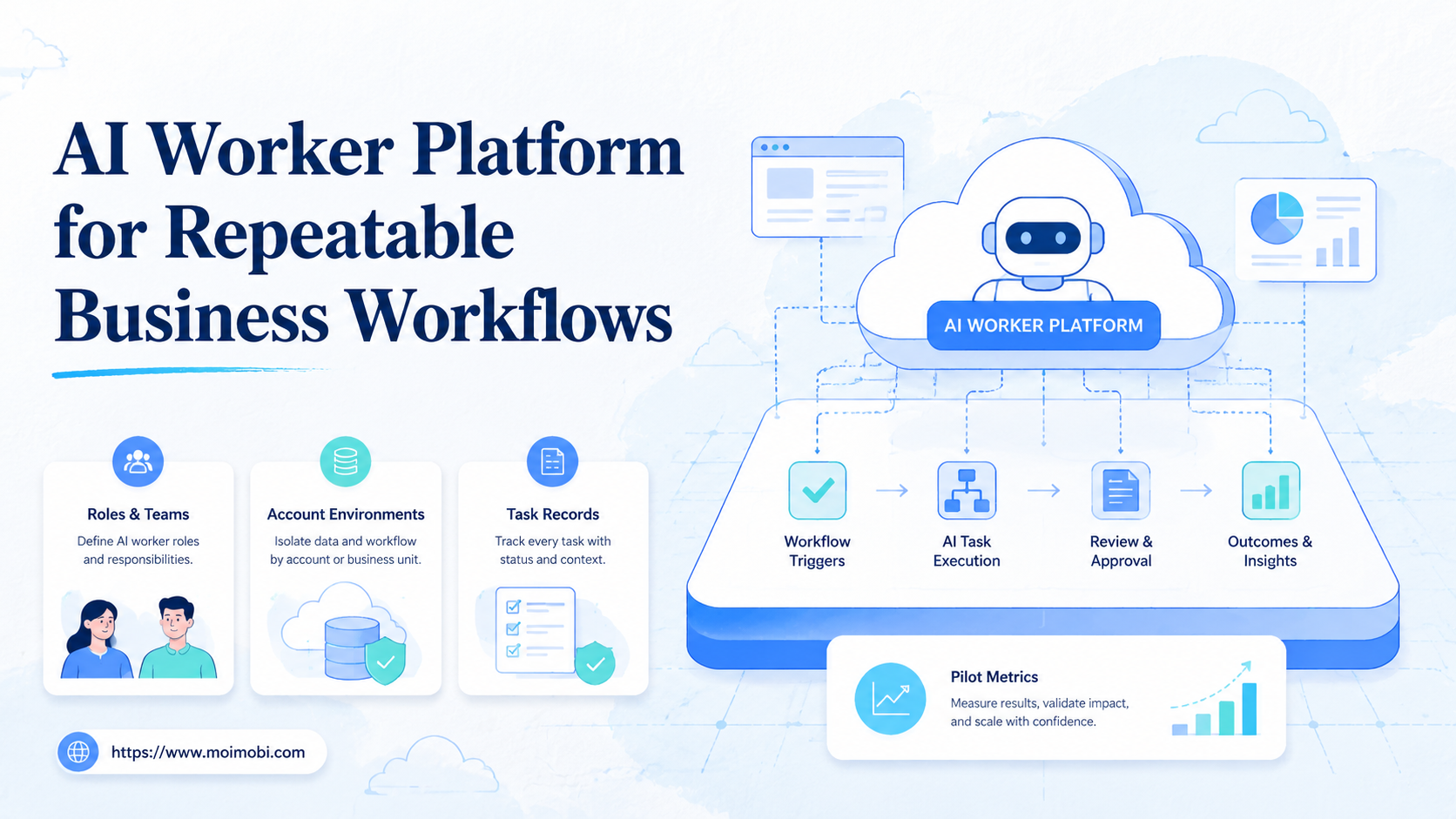
An AI employee platform is software that helps teams assign repeatable business tasks to AI agents or AI workers, then control how those workers use tools, data, browsers, mobile devices, and human review. The best choice depends less on model quality alone and more on the execution environment around the agent.
For business automation, teams usually need more than a chat interface. They need task queues, account workspaces, approval steps, monitoring, and recovery rules. OpenAI's Agents SDK documentation, for example, describes agents with tools, handoffs, guardrails, sessions, tracing, and human-in-the-loop controls. Microsoft Copilot Studio frames agents around instructions, context, knowledge, tools, triggers, and flows. Those details point to the real buying question: can the platform execute work in a controlled way?
Core Takeaways
- Choose an AI employee platform by workflow fit, not by the longest feature list.
- Agent runtimes are strong for tool calling, orchestration, memory, and developer control.
- Enterprise automation suites fit teams that already run structured workflows and approvals.
- Browser and mobile execution platforms matter when the task happens inside real websites or mobile apps.
- Human review, logs, retries, and account isolation matter more as workflows scale.
- A pilot should measure task completion, exception rate, review time, and recovery quality.
How to Evaluate an AI employee platform
Start with the work surface. Some tasks live inside APIs. Others live inside dashboards, logged-in web apps, social platforms, inboxes, mobile apps, or internal tools. A platform that is excellent for API orchestration may not fit mobile-first account operations.
Use these pass/fail checks before comparing vendors:
| Checkpoint | Pass condition | Failure signal |
|---|---|---|
| Work surface | The platform can access the browser, app, API, or data source where work happens | The demo only answers questions |
| Control model | Humans can approve, pause, retry, or take over sensitive steps | The agent runs without visible checkpoints |
| Context | Sessions, memory, or task records preserve useful state | Every run starts from scratch |
| Auditability | Logs show what happened, where it failed, and who approved it | Failures are hard to explain |
| Scale boundary | Multiple accounts or workflows can run without session mixing | Operators share one browser or device state |
OpenAI's Agents SDK lists guardrails, sessions, tracing, handoffs, and human-in-the-loop mechanisms as core workflow primitives. Microsoft Copilot Studio also describes flows that can be triggered manually, by events, by agents, or on a schedule. These are useful signals when judging whether a product is only conversational or actually operational.
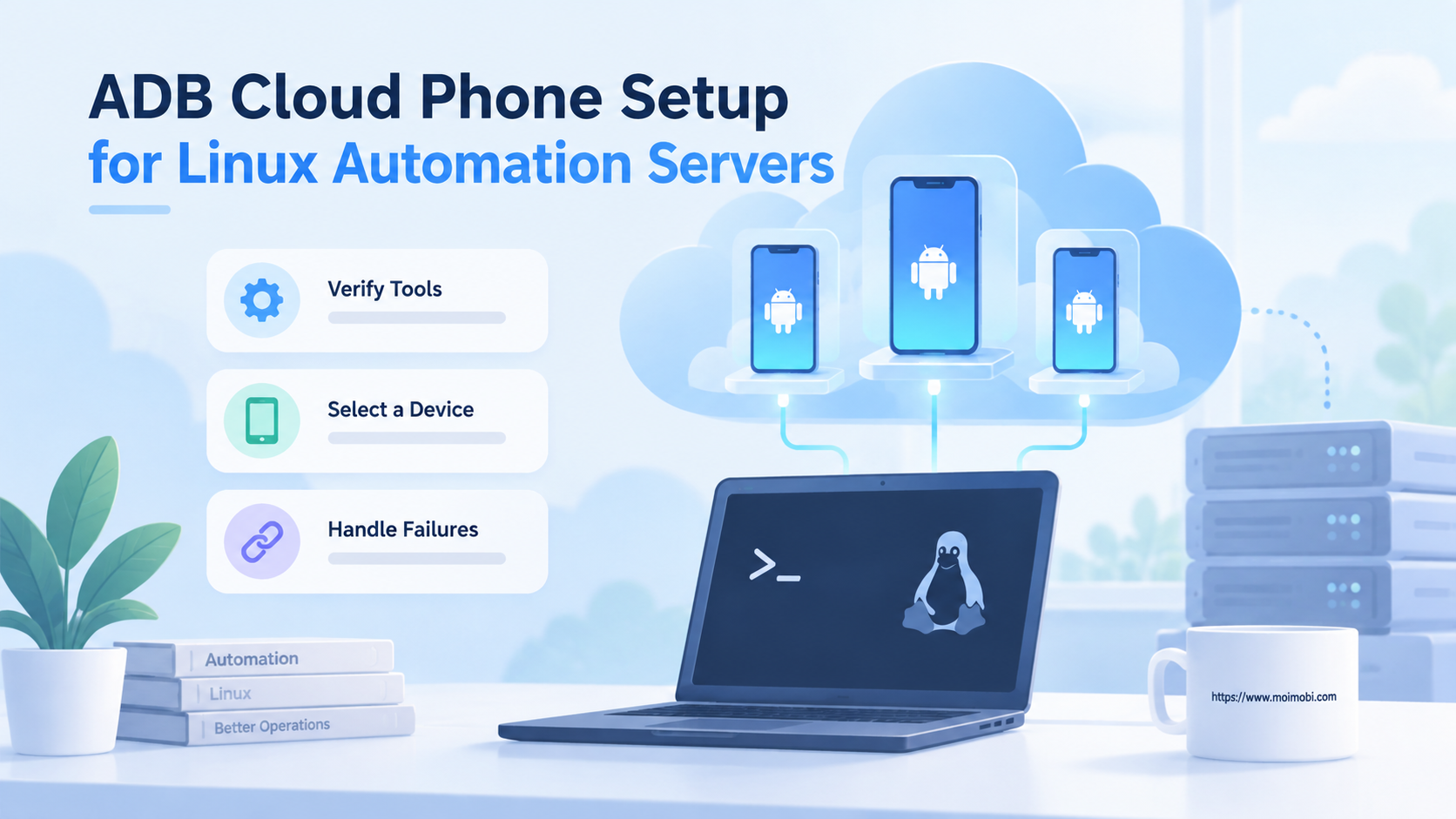
For teams that run account-based work, MoiMobi fits a different part of the stack. It focuses on AI browser, cloud phone, Android device, and multi-account execution environments. That matters when the job is publishing, replying, monitoring, checking dashboards, or operating mobile app workflows.
The Capabilities That Actually Change Outcomes in an AI employee platform
The useful capabilities are the ones that change daily operations. A polished agent demo is not enough if the team still needs to copy outputs into accounts manually.
Three capabilities usually decide the outcome.
Execution environment. The platform must run where the task happens. For some teams, that means API connectors. For others, it means a cloud phone, a browser profile, or an Android device session.
Workflow control. Business tasks need approval, exceptions, retries, and ownership. A customer reply workflow, for example, should separate drafted responses, approved replies, escalations, and failed sends.
Operational memory. The platform should remember useful task state. That can include account assignment, previous outcomes, task logs, workflow settings, and review notes.
UiPath's agentic automation materials position agents alongside robots, people, and process orchestration. That is a helpful distinction. AI workers rarely replace every part of a process. They work best when the platform defines which steps are automatic, which steps require review, and which steps need another system.
Platform Types to Compare
There is no single best AI employee platform for every business automation case. The right shortlist depends on where the work happens.
| Platform type | Best fit | Watch out for |
|---|---|---|
| Agent SDK or developer runtime | Custom tools, handoffs, memory, tracing, and product-specific agent workflows | Requires engineering ownership and production monitoring |
| Enterprise automation suite | Structured back-office processes, approvals, tickets, CRM, IT, HR, and finance workflows | May be heavy for lean growth teams or account operations |
| No-code workflow automation | Simple app-to-app triggers, data movement, and small team operations | May struggle when work depends on visual browser or mobile app state |
| Browser and mobile execution platform | Social media, e-commerce, customer engagement, and multi-account operations | Needs clear rules for account isolation, review, and task logging |
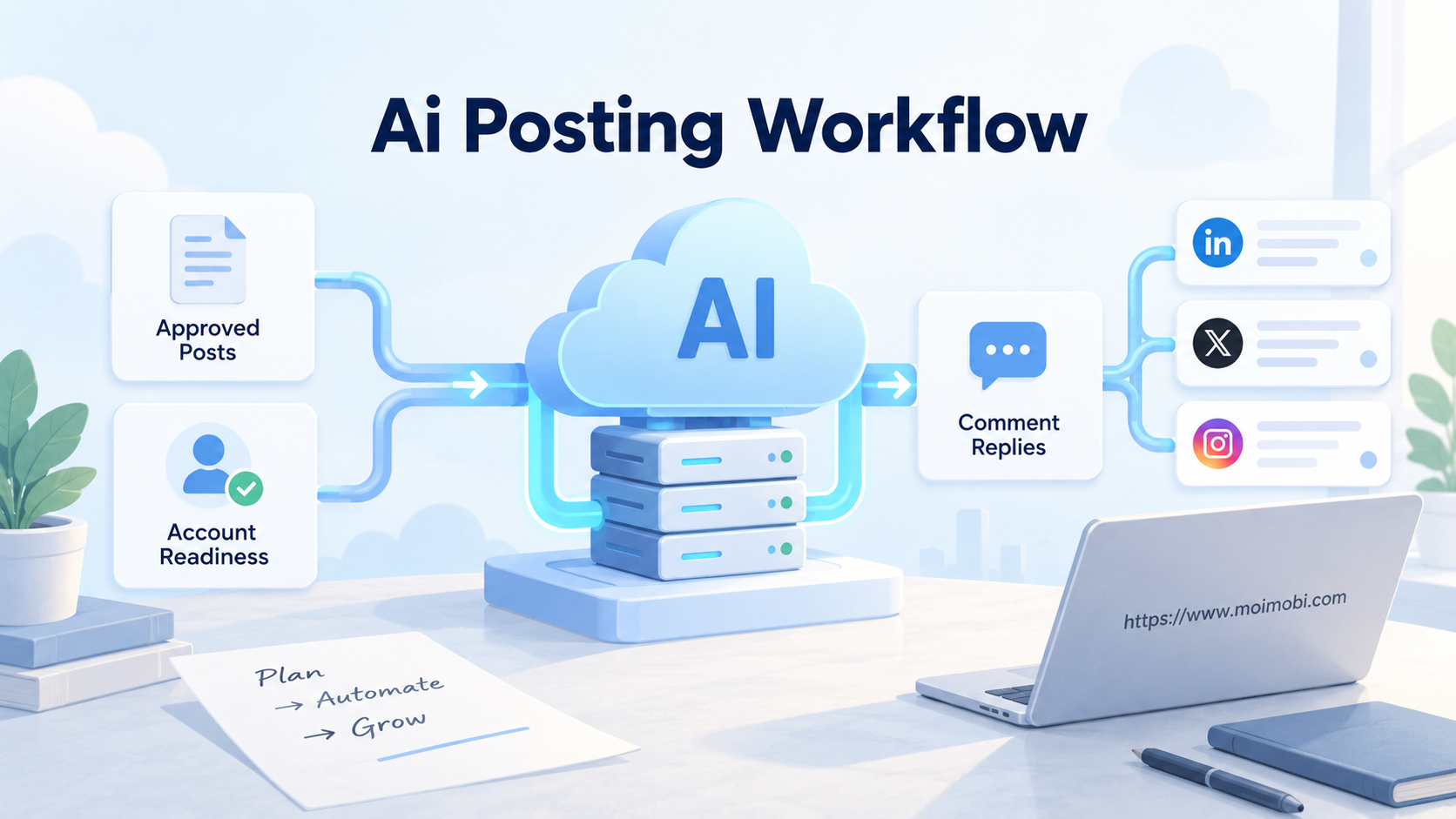
This is why mobile automation and browser execution should be evaluated separately from ordinary workflow builders. A social media team may need captions, replies, and task plans from AI. It also needs the ability to execute those tasks inside separated account environments.
Adoption Cost, Setup Friction, and Team Fit
Adoption cost is not only subscription pricing. It includes setup time, operator training, integration work, compliance review, and the cost of failed tasks.
A developer-led team may accept an SDK if it needs deep control. The same team can build custom tools, define guardrails, and own evaluation. A non-technical operations team usually needs a product layer with queues, account workspaces, permissions, and visible task status.
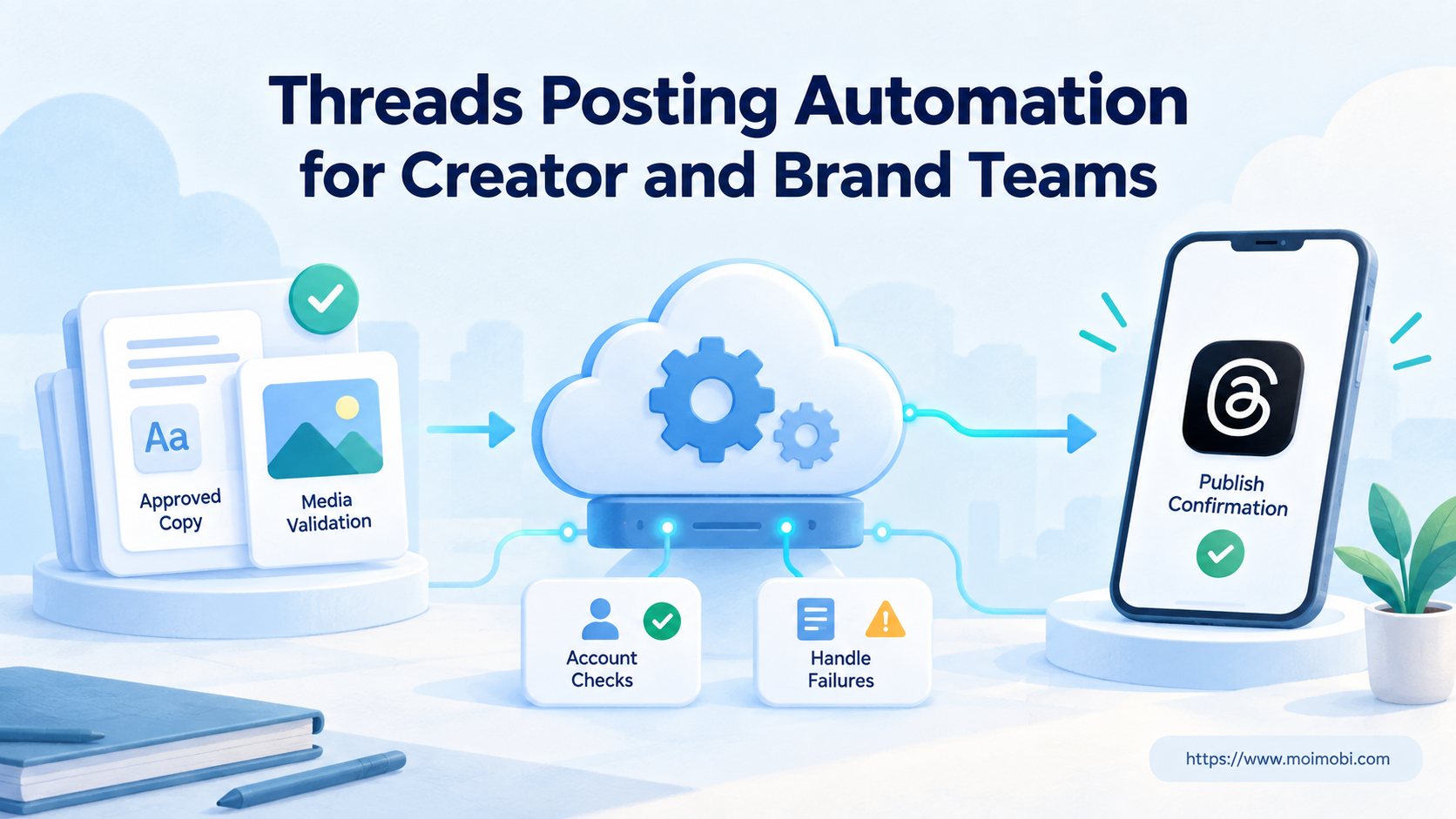
Setup friction also depends on task type. A CRM update may be easier to automate through an API. A TikTok, Instagram, WhatsApp, or Telegram workflow may require browser or mobile execution because the operator's real work happens inside the platform UI or app.
For account-based teams, device isolation is part of the cost calculation. Shared sessions can create confusion, wrong-account actions, and unclear ownership. Separate workspaces make the system easier to audit, even when they add operational structure.
Which Option Fits Different Operating Scenarios
The common mistake is choosing a platform because it can "use AI." The workable view is to match the platform to the workflow boundary.
Choose a developer agent runtime when your team is building a product feature or internal system with custom tools. OpenAI's documentation is a good example of the runtime pattern: agents, tools, handoffs, guardrails, sessions, and tracing.
Choose an enterprise automation suite when the process is already structured around tickets, approvals, business systems, and internal governance. Microsoft Copilot Studio and UiPath both emphasize orchestration, flows, tools, and broader business process automation.
Choose a browser and mobile execution platform when the work depends on real account sessions. Social teams, e-commerce operators, and customer engagement teams often need AI workers that can draft, publish, reply, monitor, and report across environments. In that scenario, multi-account management is not an add-on. It is the operating model.
Choose no-code workflow automation when the job is mainly moving data between apps. It can be enough for lead routing, notifications, table updates, and simple approvals.
Fit and Not-Fit Guide for MoiMobi
MoiMobi is a fit when business automation depends on browser and mobile execution. It is designed for teams that need separated browser profiles, cloud phones, Android devices, task automation, and account workspaces.
Good fit
- Social media teams managing multiple accounts.
- Agencies running publishing, replies, monitoring, or account checks.
- E-commerce teams operating web dashboards and mobile apps.
- Customer engagement teams that need controlled inbox workflows.
- Operators who need AI assistance plus real execution environments.
Not the first fit
- Teams that only need internal document search.
- Developers who want only a low-level agent SDK.
- Companies whose workflows are fully API-based and do not touch browsers or apps.
- Teams looking for unsupported platform behavior or spam automation.
The boundary matters. MoiMobi should be evaluated as an AI execution layer for operational teams, not as a generic chatbot. It connects AI planning, browser work, cloud phone work, and repeatable workflows.
Pilot Rollout, Measurement, and Recovery Checks
Run a pilot before choosing any AI employee platform. Pick one workflow with clear inputs, visible output, and a known human baseline.
For example, a social team could test comment triage across three accounts. The pilot should track how many comments were classified, how many replies were drafted, how many needed human edits, how many were escalated, and how many actions failed.
Measure these fields during the pilot:
- Task completion rate.
- Human review time.
- Exception rate.
- Wrong-account or wrong-workspace incidents.
- Average recovery time.
- Operator confidence after review.
- Content or reply quality after human edits.
Do not only measure speed. A workflow that is faster but harder to audit is not a good automation candidate. A slower pilot with cleaner logs may be a better foundation for scale.
Final Selection Checklist
Use this checklist after the pilot, not before it.
- Can the platform execute in the real work environment?
- Can the team see what the AI worker did?
- Can humans approve, pause, and recover tasks?
- Can accounts, sessions, and workspaces stay separated?
- Can the platform support the next five workflows, not only the first one?
- Can reporting show success, failure, and owner handoff?
- Does the vendor fit your team's technical level?
For teams running social media, e-commerce, or customer engagement operations, social media marketing automation should be tested as an execution workflow, not only as a content scheduling feature.
Frequently Asked Questions
What is the best AI employee platform for business automation?
The best AI employee platform is the one that matches your work surface, team skill level, control requirements, and execution environment. A developer SDK, enterprise automation suite, no-code workflow tool, and browser/mobile execution platform solve different problems.
Is an AI employee platform the same as AI employee software?
Not always. AI employee software may describe a narrow assistant. An AI employee platform usually includes orchestration, tools, task state, permissions, logs, and integration with real work systems.
When should a team choose browser or mobile execution?
Choose browser or mobile execution when the task happens inside logged-in websites, dashboards, social platforms, messaging apps, or Android apps. API-only automation may not cover those workflows.
Do AI employee platforms replace human operators?
They usually work best as controlled execution support. Humans still define workflows, approve sensitive actions, handle exceptions, and review performance.
What should a pilot measure?
Measure completion rate, review time, exception rate, failure reasons, recovery time, and operator confidence. Speed alone is not enough.
Is no-code automation enough for business teams?
It can be enough for simple app-to-app workflows. It may be insufficient when tasks depend on visual UI state, account sessions, or mobile app execution.
How does account isolation affect AI worker software?
Account isolation gives each workflow a clearer workspace. It helps teams reduce session confusion, improve handoff, and review actions by account.
What is the safest way to start?
Start with one bounded workflow, a small account set, human approval, and clear logs. Expand only after the team understands failure patterns.
Conclusion
The best AI employee platforms for business automation are not just the ones with the strongest model. They are the platforms that connect reasoning, tools, execution environments, review controls, and measurable workflows.
Shortlist platforms by where work actually happens. If your tasks live in APIs and internal systems, evaluate agent runtimes and enterprise automation suites. If your team operates accounts across browsers, cloud phones, and mobile apps, evaluate MoiMobi as an execution platform for controlled, multi-account work.