
Agency multi-client social media management is the practice of running each client’s accounts, tasks, approvals, and execution environments as separate operating lanes. It is not simply a shared publishing calendar. An execution lane defines who owns an account group, where work is performed, what can be approved, and how a failed task is recovered.
This model helps an agency avoid a common operational failure: client content, logins, and task history become mixed in the same queue. A clean lane gives the team a place to prepare content, assign work, collect evidence, and hand off exceptions without exposing unrelated client work.
Key takeaways
- A client lane should connect account ownership, an execution environment, task rules, and review history.
- Separate workflow lanes are more useful than one large queue with client labels.
- Publishing, replies, and account changes need different approval rules.
- A pilot should prove handoff and recovery before an agency adds more clients.
Agency Multi-Client Social Media Management: What Execution Lanes Mean
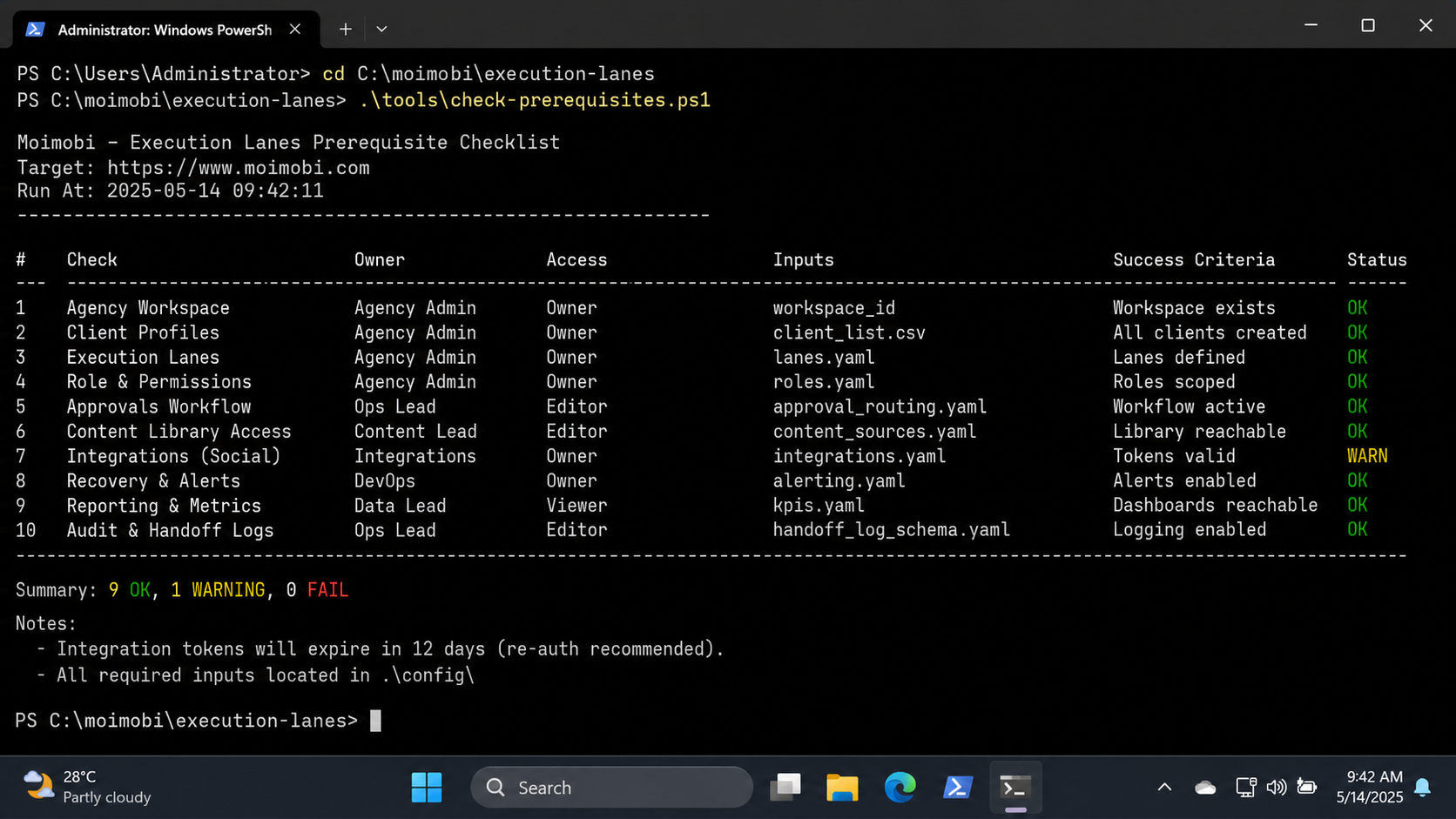
Agency multi-client social media management with execution lanes treats each client program as a bounded workspace. The lane contains the relevant account group, approved content inputs, task queue, assigned operators, and a record of outcomes. The goal is controlled execution, not more aggressive posting.
Client separation is especially important when several team members work across different roles. Meta's Page access documentation distinguishes full control from task access, including access to content, messages, and insights. That distinction is a practical reminder that account administration and daily operations should not automatically belong to the same person. Start with a client-account control workspace that makes ownership visible before expanding automation.
| Lane component | What it records | Why it matters |
|---|---|---|
| Client identity | Brand, market, owner, account group | Prevents cross-client task assignment |
| Execution environment | Browser or mobile device assignment | Supports repeatable work and recovery |
| Task rules | Inputs, approvals, stop conditions | Stops ambiguous work from reaching accounts |
| Evidence | Result, timestamp, operator, exception | Makes handoff and review possible |
Why Execution Lanes Matter for Agencies
The usual mistake is to centralize everything in one inbox, one browser session, or one spreadsheet. That may look efficient until an operator changes client context, a credential expires, or a task needs review. The problem is not the number of accounts. It is the lack of an operational boundary between them.
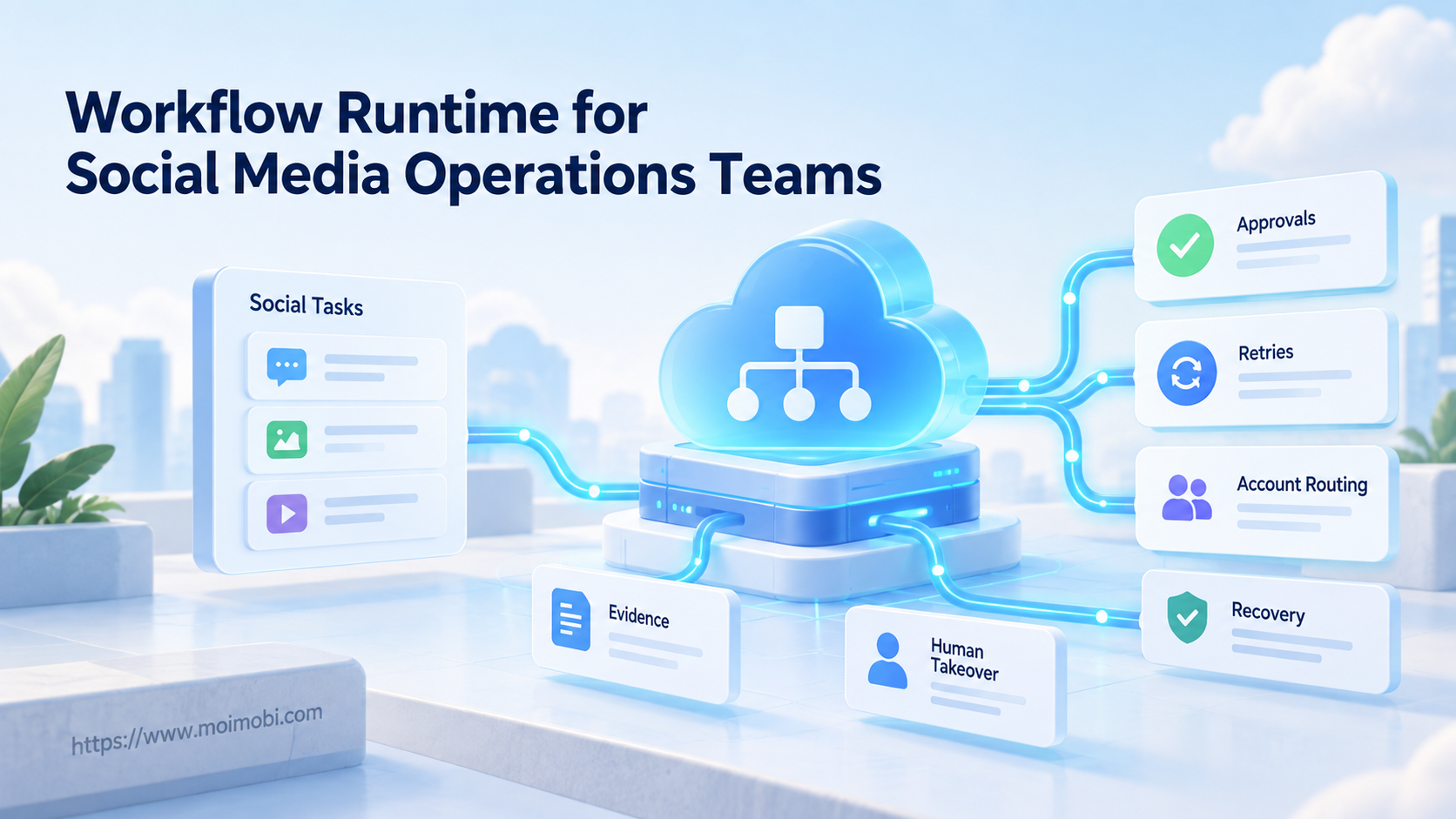
An execution lane gives each client a predictable path: content is prepared, an assigned operator completes an approved task, and the result is written back to the lane. For mobile-first work, the environment can include a cloud phone assigned to that client lane. A separate agency Android device capacity view is appropriate when an agency is evaluating capacity, device management, or operating requirements.
OWASP's authorization guidance recommends least privilege and default-deny access. In an agency workflow, that supports a simple rule: a person or automation should receive only the access required for the client task in front of them. It is easier to grant a needed exception than to untangle broad access after the team grows.
Agency Multi-Client Social Media Management Benefits and Use Cases
Execution lanes are useful when an agency manages recurring but distinct work. Common examples include:
- A content team prepares posts while a client lead approves final versions.
- A support operator handles inbound questions for one client without seeing another client’s history.
- A regional team uses a dedicated mobile environment for app-based tasks.
- An operations lead pauses a lane after an account, content, or routing issue.
The point is not to standardize every client into the same message. Standardize the controls instead: naming, ownership, approval state, result fields, and recovery steps. For social work that spans publishing and engagement, an approval-ready social operating flow can provide the next evaluation step.
The Operating Model Behind a Lane
An execution lane needs a small operating model, not only a list of accounts. The model should answer five questions before work starts: what outcome is expected, which accounts are in scope, who may approve an external action, which environment is assigned, and what proves completion. Put these answers in the lane record so a shift change does not depend on someone remembering the context.
Use three states for ordinary work. Ready means the input, owner, environment, and approval requirement are known. In review means a person needs to decide whether an external action should happen. Paused means the task cannot proceed safely or accurately. A paused task needs a reason code such as missing client asset, access change, content conflict, device unavailable, or policy question. Those reason codes become useful in weekly operations reviews because they show whether the bottleneck is content, access, or staffing.
Keep the lane deliberately small at first. An agency may define a lane by one client, one market, and one operational purpose, such as scheduled publication or message triage. That is easier to audit than a broad lane called "Client A social" that mixes launches, analytics, community work, and account maintenance. A clear boundary also makes it possible to pause one workflow without interrupting a client's unrelated work.
A Simple Lane Record
The following fields are enough for a first version:
- Client and account scope: client name, platform, market, account role, and environment identifier.
- People and permissions: client approver, agency owner, operator, backup operator, and the task permissions each role needs.
- Inputs and deadline: approved source material, intended action, due window, and any client-specific restrictions.
- Control point: whether an approval is required before execution and where that approval is recorded.
- Evidence and next state: result link or screenshot reference, timestamp, operator, and whether the task is complete, paused, or handed off.
This record does not need a complicated dashboard on day one. What matters is that the same details are visible to the person completing work and the person reviewing it later. The record also prevents a common agency failure: a task appears finished because content was drafted, while nobody can confirm whether it was actually completed in the correct account context.
How to Start Agency Multi-Client Social Media Management with Execution Lanes
Avoid starting with all clients. One small, recurring workflow gives much better evidence.
- Choose one client and one recurring task. Use a narrow example, such as approved content publication or inbound-message routing.
- Define the lane owner. Record who owns the client relationship, account group, approvals, and exception decisions.
- Bind tasks to an environment. Assign the browser or mobile environment that will handle the work. Use a [separated client device workspace](https://www.moimobi.com/en/products/device-isolation) where client separation matters.
- Add approval and stop rules. Require review for external publishing, sensitive replies, account changes, and tasks with missing inputs.
- Write back the result. Capture the operator, time, account, result evidence, and reason for any pause.
Set an Approval Matrix Before the First Run
Approval should follow the risk of the action, not the seniority of whoever happens to be online. A useful first matrix separates routine, material, and exceptional decisions. Routine work can include preparing an approved post or assigning an inbound message to the correct owner. Material work can include publishing a new campaign asset, changing an account setting, or replying to a commercial complaint. Exceptional work includes access changes, client-provided credentials, account warnings, or a request that conflicts with the documented plan.
For each category, name one approver and one backup. Record a time limit for the decision. If no approval arrives, pause rather than allowing the operator to infer intent. This approach is slower than a blanket "go ahead" rule for a single task, but it is faster over a month because it reduces rework, disputed changes, and unclear handoffs.
An approval matrix should not become an excuse to hold every minor action. Make it narrow enough that ordinary queued work can proceed, and explicit enough that unusual work reaches the right decision-maker. Review the matrix after the pilot and remove controls that never protect a meaningful decision.
Measurement That Shows Whether the Lane Works
An agency does not need to measure every social metric to evaluate an execution lane. Start with operational measures that reveal whether the workflow is dependable:
| Measure | What to calculate | What a weak result can indicate |
|---|---|---|
| Ready-to-complete rate | Tasks completed without missing input or access issue | Briefs, permissions, or environment assignment are incomplete |
| Approval turnaround | Time from review request to decision | Approver ownership or escalation path is unclear |
| Pause reason mix | Count of pauses by reason code | A recurring process issue needs correction before scale |
| Handoff reconstruction rate | Tasks a backup can continue using lane evidence | Records are too vague or kept in private messages |
| Rework rate | Completed tasks reopened for correction | Approval criteria or task definitions are ambiguous |
Look at these measures by client lane, not only as an agency average. A strong average can hide one client workflow that consumes a disproportionate amount of review time. During the first month, a weekly fifteen-minute review is usually enough: inspect the three most common pause reasons, one rework example, and one task that another operator had to pick up. Turn the result into one small change to the lane template.
Avoid treating speed as the only success signal. A faster turnaround is useful only if the right account, approval, and output record remain connected. A lane that is slightly slower but produces clean evidence is easier to scale than one that creates a large amount of untraceable activity.
Recovery Playbook for Exceptions
Every lane needs a recovery path because exceptions are part of account operations. When a task fails, the operator should stop the current action, save the available evidence, select a reason code, and notify the named owner. Do not create a second task that repeats the action until the original task has a recorded disposition. Otherwise, duplicate execution becomes likely during a shift change.
Use a short triage order. First, confirm whether the issue is an input problem, an access problem, an environment problem, or an approval problem. Second, identify whether any external change occurred before the interruption. Third, decide whether the task can resume, needs a new approval, or should be closed as not completed. Finally, add a preventive note to the lane only when the same exception is likely to recur.
For example, an incomplete asset pack is an input problem and should return to content preparation. An unavailable browser or mobile environment is an execution problem and should be reassigned only after the operator confirms that no duplicate external action was made. A changed account permission is an access problem and should go to the account owner rather than the person who originally scheduled the work. These distinctions make recovery predictable without forcing every exception through the same queue.
Common Mistakes to Avoid
Treating a lane as a label. A client tag on a shared queue does not create separation. The environment, access, and evidence must also follow the client boundary.
Giving every operator broad access. The agency may move faster at first, but handoff becomes harder to audit. OWASP also advises logging authorization events. Keep account changes, approvals, and exception actions visible.
Retrying without a recovery rule. A task that fails because of missing access, an unavailable device, or incomplete content should pause. It should not silently re-enter the queue.
When Agency Multi-Client Social Media Management Is a Strong Match
This model fits agencies with repeatable client tasks, multiple account owners, or work that crosses browser and mobile environments. Agency multi-client social media management is especially useful when client teams need clear evidence before approving work.
Agencies that have not defined services, account ownership, or basic content review should not start here. Document the human SOP first. Automation should reinforce a clear process, not become a substitute for one.
Pilot Rollout, Measurement, and Recovery Checks
Run one lane for one week before adding another client. Track whether every task has an owner, whether approvals happen before external actions, whether results are recorded, and whether a paused task reaches the right person.
NIST SP 800-171 Rev. 3 describes logging and audit records as a way to support analysis and accountability. Agencies can apply the same practical idea without building a compliance program: retain enough task evidence to answer what happened, where it happened, who handled it, and what changed next.
Frequently Asked Questions
Is an execution lane the same as a client folder?
No. A lane also includes environment assignment, task controls, approvals, and outcome records.
Do all clients need separate devices?
The right setup depends on the workflow. Separate mobile environments are most relevant when app-based work or account separation requires them.
Can one operator work across lanes?
Yes, if each task opens in the correct client context and permissions remain scoped.
What should trigger a lane pause?
Missing inputs, unavailable environments, account changes, unclear approvals, or an exception that needs a client decision.
How many lanes should an agency start with?
Start with one client and one recurring workflow. Expand after handoff and recovery are reliable.
Is this only for publishing?
No. It also applies to customer engagement, account maintenance, research, and reporting tasks.
What is the first success metric?
The first test is whether another team member can reconstruct a task and handle an exception without relying on private messages.
Conclusion
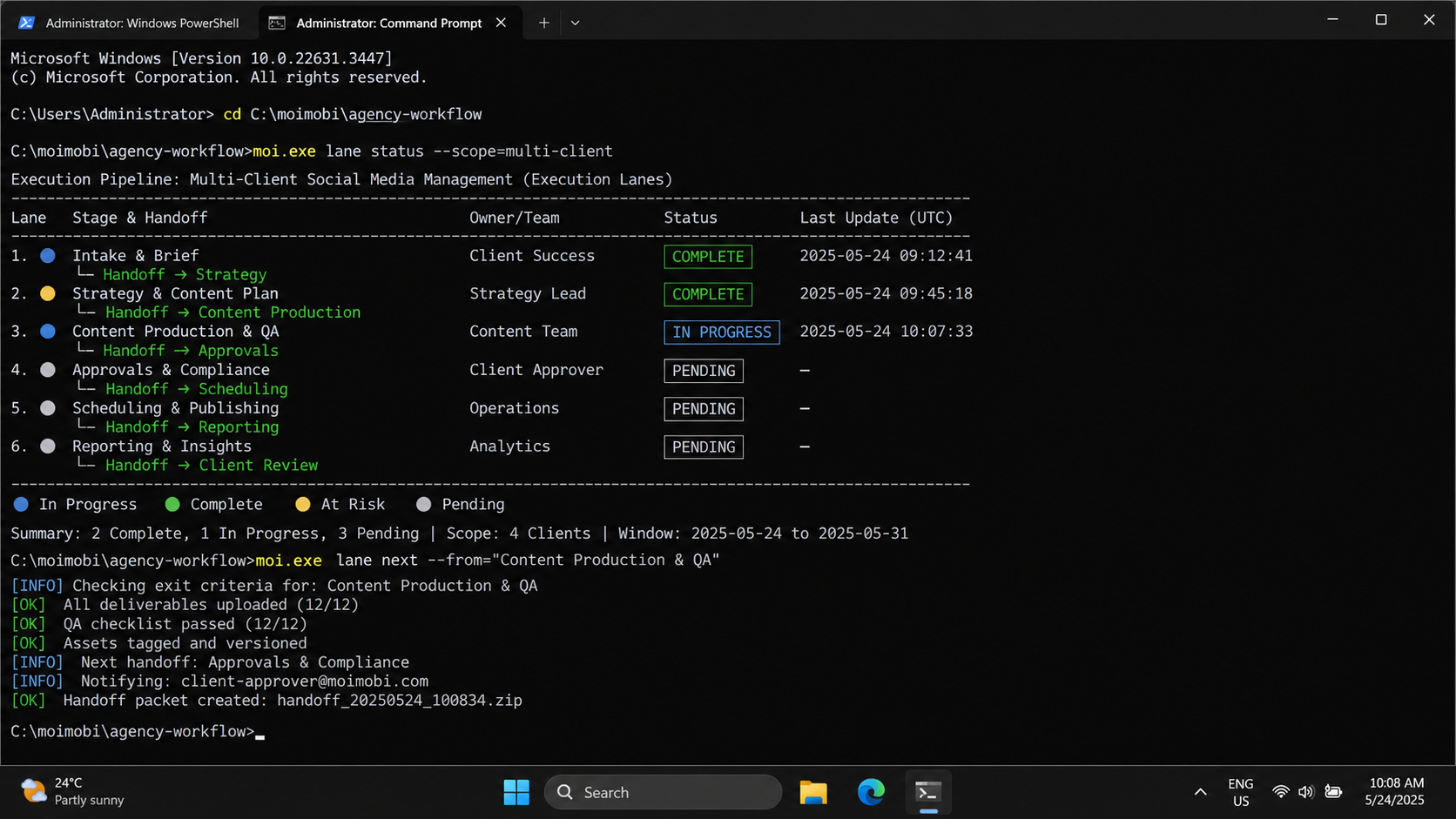
This operating model becomes more durable when client work runs in explicit execution lanes. First establish ownership. Then bind tasks to the right environment. Finally, test approvals and recovery on one small workflow before adding scale.