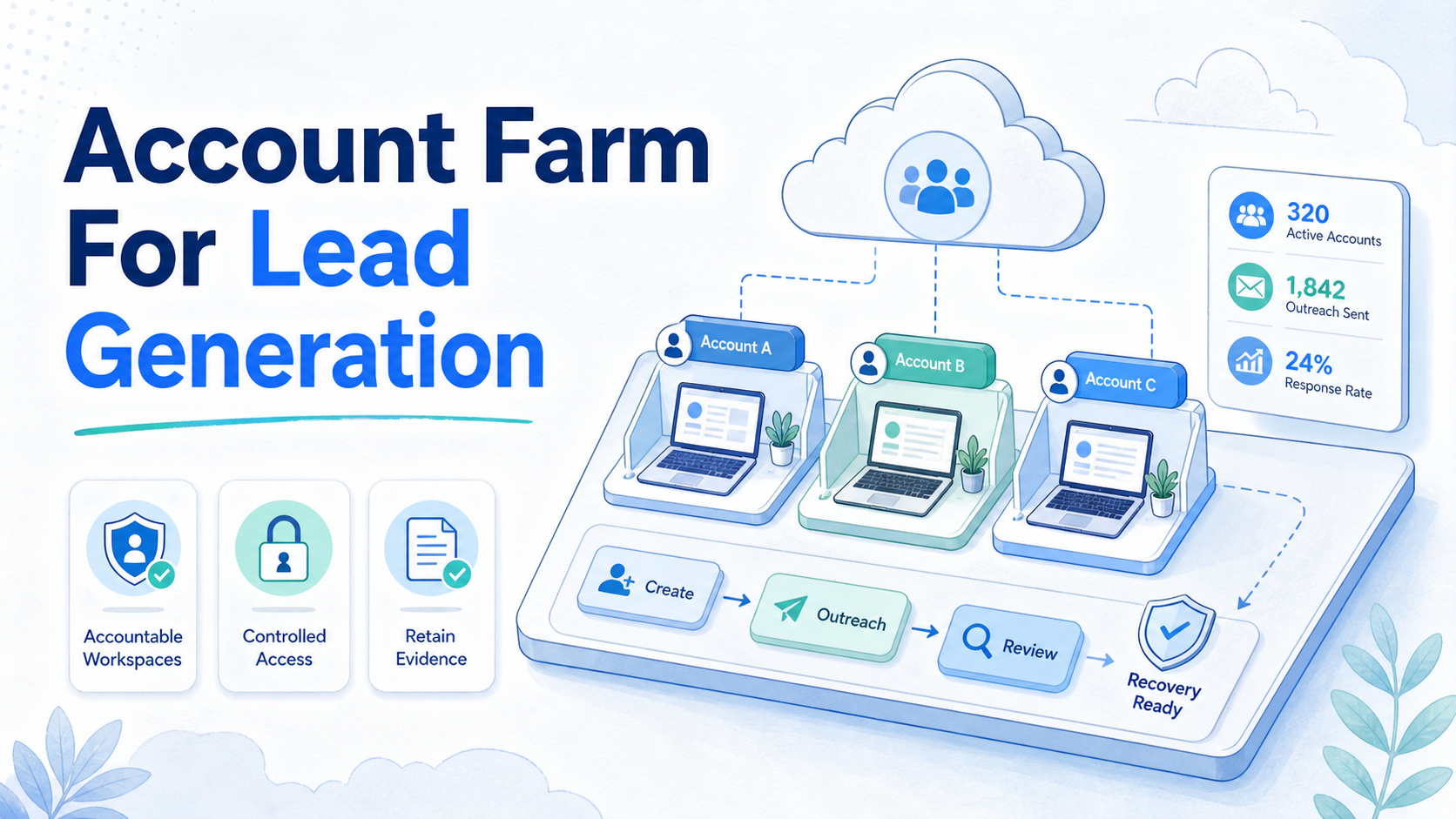
Title: Account Farm for Lead Generation: Safer Session Design for Outreach Scale
An account farm for lead generation is a controlled set of account workspaces used by a team to run approved, traceable outreach tasks. It should not mean creating false identities, evading platform controls, or sending unsolicited bulk messages. The useful operating model is simpler: assign each legitimate business account an environment, an owner, a permitted workflow, and a clear stop rule.
Lead generation becomes fragile when several operators work from shared devices and informal instructions. People lose track of account ownership, repeat the same contact, or continue a task after an approval has changed. A session design fixes those failure points by making the account, task, evidence, and recovery path visible before work starts.
This guide focuses on operational controls. It assumes the team will follow the rules of each platform, use truthful business identities, respect consent and opt-out requirements, and retain only the data needed for the stated work.
Key Takeaways
- Use legitimate, assigned business accounts rather than anonymous or deceptive identities.
- Give each account a dedicated environment, owner, and approved outreach scope.
- Separate lead research, message drafting, review, and sending into visible task states.
- Stop a workflow when consent, account ownership, or input quality is unclear.
What is an account farm for lead generation?
In a compliant operations context, an account farm is an account workspace model. It groups the approved business accounts a team needs for different regions, brands, sales roles, or customer channels. Each workspace should state which organization owns it, who operates it, what audience it may contact, and what tasks it may perform.
The phrase can imply risky practices when it is used to describe fake accounts or attempts to bypass platform enforcement. That is not a sustainable business workflow. A legitimate setup uses transparent account ownership, normal user-facing identities, platform-approved features, and human review for actions that affect prospects or customers.
The design goal is accountability. An operator should be able to answer: which account is this, what campaign is active, why is this contact eligible, what message was approved, and who can pause the task? If those answers live only in private chats, scale will increase operational risk rather than capacity.
| Workspace field | Why it matters | Example state |
|---|---|---|
| Business owner | Establishes responsibility for the account | Regional marketing team |
| Approved purpose | Prevents scope drift | Respond to opted-in product requests |
| Environment | Keeps operational sessions identifiable | Assigned mobile workspace |
| Operator role | Controls who can draft, send, or approve | Researcher, reviewer, operator |
| Stop rule | Defines when human review takes over | Missing consent or unclear account status |
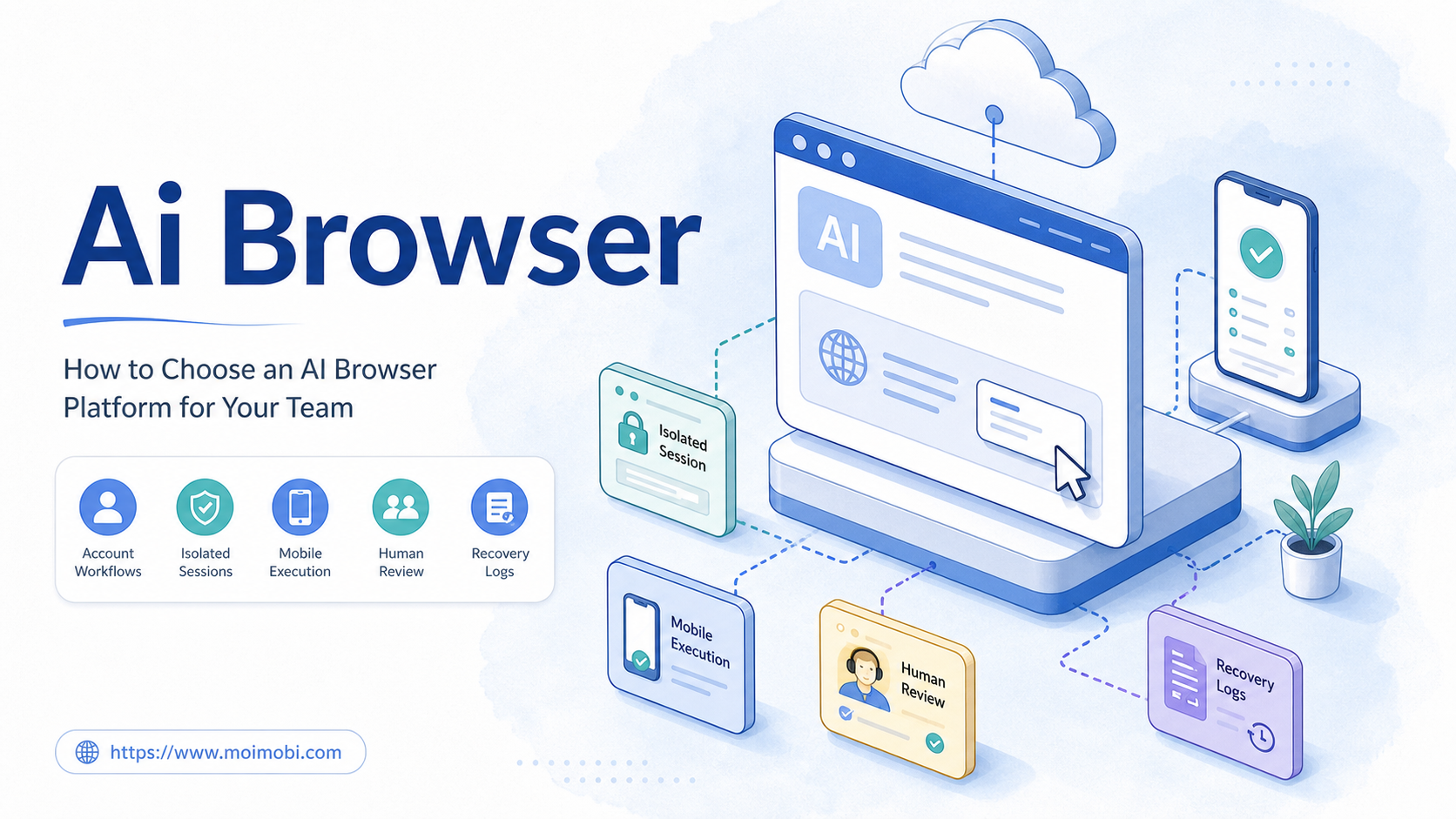
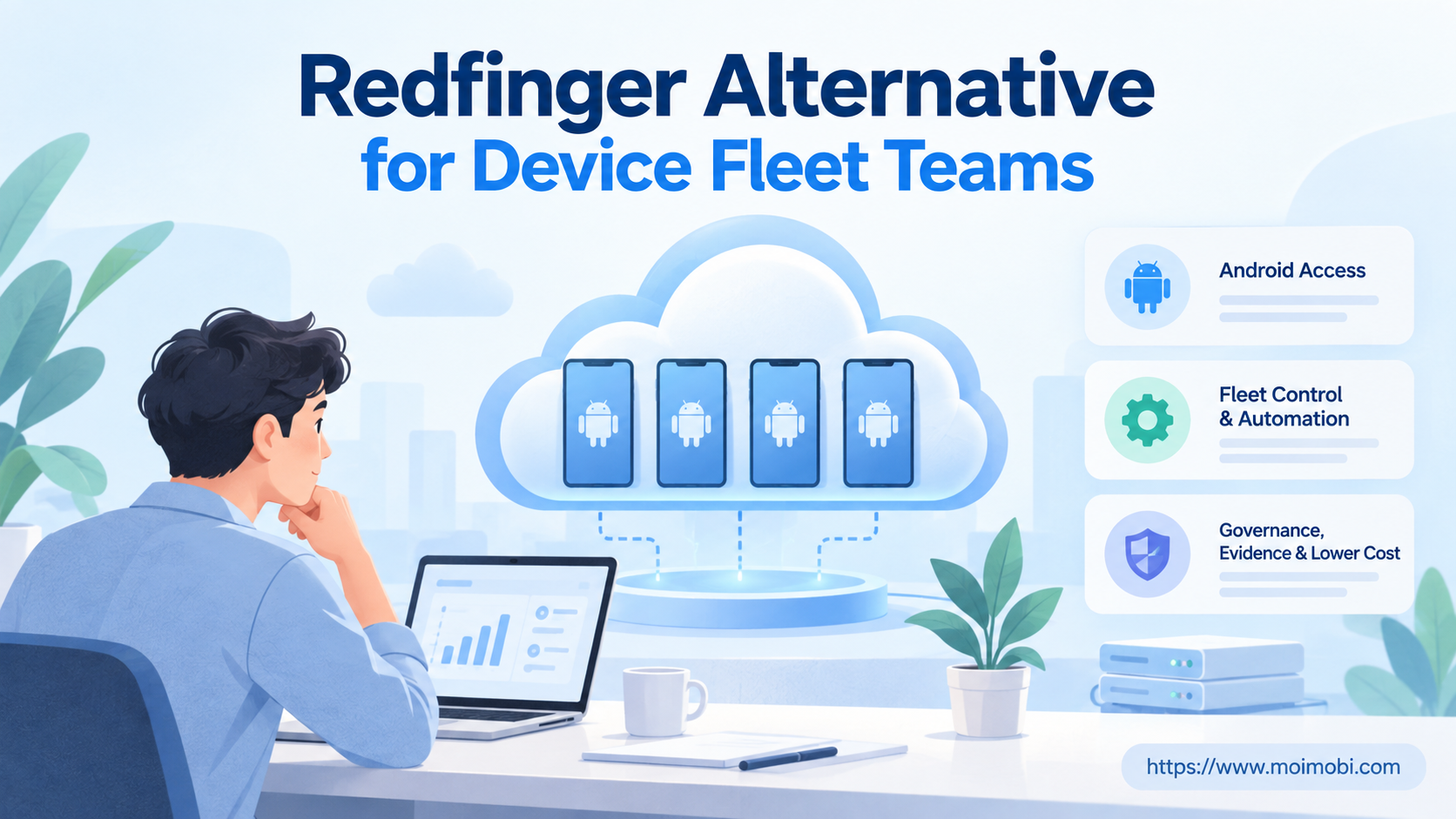
For mobile-first work, a cloud phone provides a persistent execution environment. It should be paired with an account register and a task record, not treated as an anonymous sending device.
Why session design matters for outreach scale
The most common scale problem is not a lack of accounts. It is a lack of context. A prospect may be researched by one person, contacted by another, and followed up by a third. Without a shared record, duplicate messages and incomplete handoffs become likely.
Session design gives each operator a predictable starting point. The workspace opens with the account role, campaign scope, approved resources, and pending tasks. It also makes clear what is not allowed, such as using an unreviewed message, collecting unneeded personal data, or continuing after a prospect opts out.
Permissions need the same discipline. NIST defines least privilege as restricting access to the minimum needed for an assigned task. See the NIST least-privilege definition. In outreach operations, that can mean a researcher sees a lead list, a reviewer approves copy, and an operator only performs the assigned, approved action.
This structure benefits managers as well. Instead of asking whether a device is online, they can review whether a campaign is in review, paused, complete, or waiting for a specific decision. That makes recovery and audit much more practical.
Fit and limits for an account farm for lead generation
This model fits teams that use several legitimate business accounts across markets or product lines, have recurring outreach workflows, and need clear delegation. It is especially useful when work moves between research, content, customer engagement, and sales teams.
It is not a fit for anonymous bulk outreach, automated attempts to defeat rate limits, impersonation, or contact lists without a lawful and documented basis. Those practices create legal, platform, and brand risks that a session tool cannot solve. The U.S. FTC’s CAN-SPAM compliance guide is a useful reference for commercial email requirements, including truthful header information and opt-out handling.
Teams should also separate platform-specific rules from their internal workflow. A task may be operationally possible but still require consent, an approved audience definition, or a platform-approved API path. Treat these as acceptance gates, not details to fill in later.
Named business accounts, documented campaigns, approved contact sources, human review, and clear follow-up ownership.
False identities, repetitive unsolicited messaging, hidden account sharing, or workflows designed to evade platform controls.
Set up the first account workspace
Start with one small pilot. Choose one team, one legitimate account group, and one limited outreach objective. A pilot might handle follow-up on inbound product inquiries, rather than broad cold outreach. The task is easier to review because the trigger, owner, and next action are explicit.
Before enabling work, build a short preflight checklist:
- Confirm the business account owner and backup owner.
- Record the market, platform, campaign, and permitted audience.
- Define the source of contact data and any consent or opt-out status.
- Assign the mobile or browser environment to that account.
- Identify who can approve content, pause a task, and resolve exceptions.
- Set retention rules for task notes and campaign data.
Then create an operating sequence. Keep the sequence short enough for a new operator to follow without improvising.
- Receive a qualified task. The queue should contain the account, contact source, approved purpose, and required review state.
- Check the workspace. Confirm that the assigned environment and account match the task before doing anything else.
- Prepare the action. Draft a response or follow-up from approved material. Do not add unsupported claims or sensitive data.
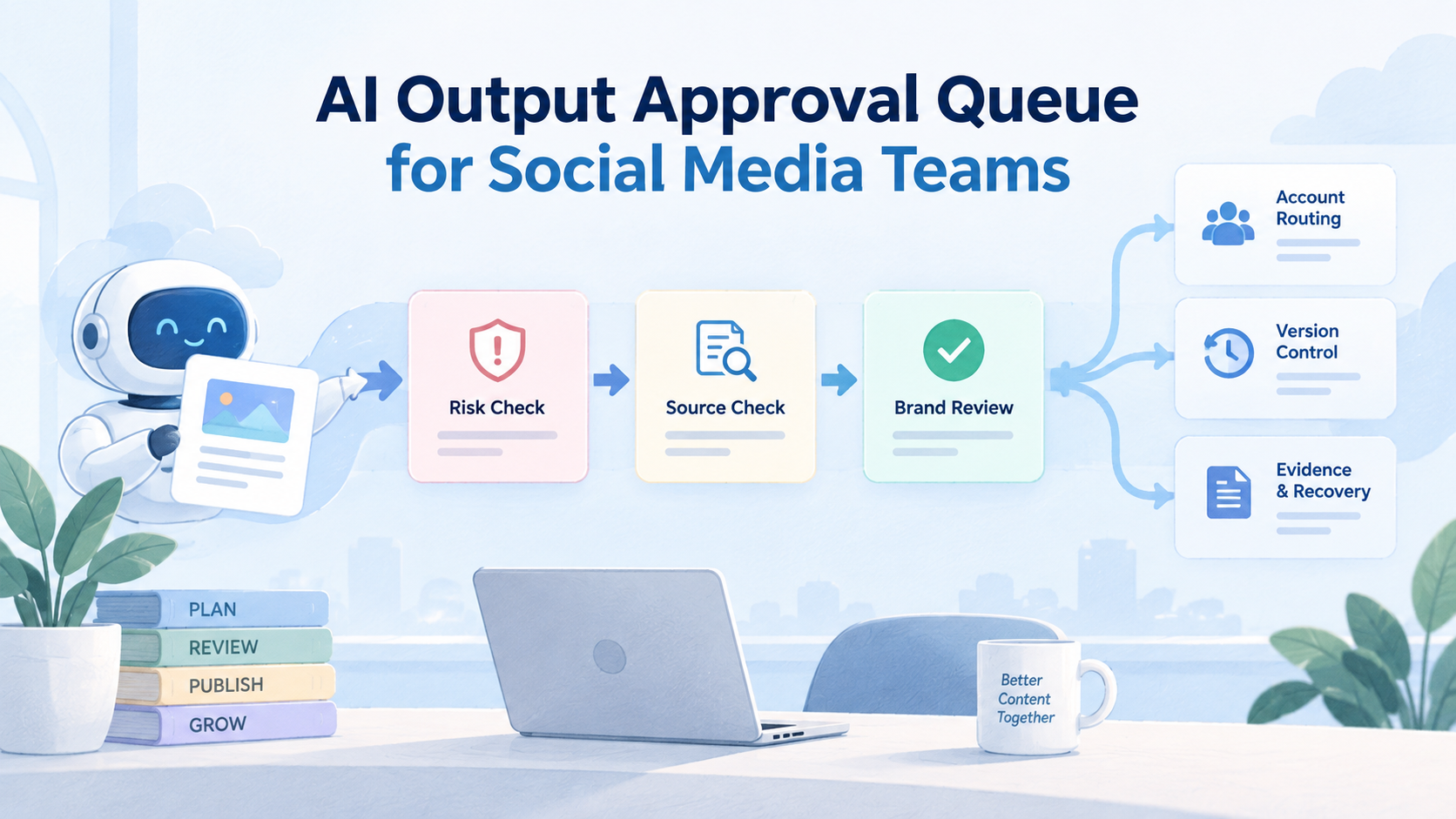
- Apply the review gate. Route new copy, high-impact changes, or unclear cases to the designated reviewer.
- Execute and record. Complete only the approved action, then save the result, timestamp, owner, and next step.
- Pause on exceptions. Stop when account status, consent, task input, or requested action is uncertain.
Teams that need mobile execution can evaluate a cloud phone platform for the device layer. For account roles and assignment rules, multi-account management is the more relevant operating layer.
Design a safe recovery and review loop
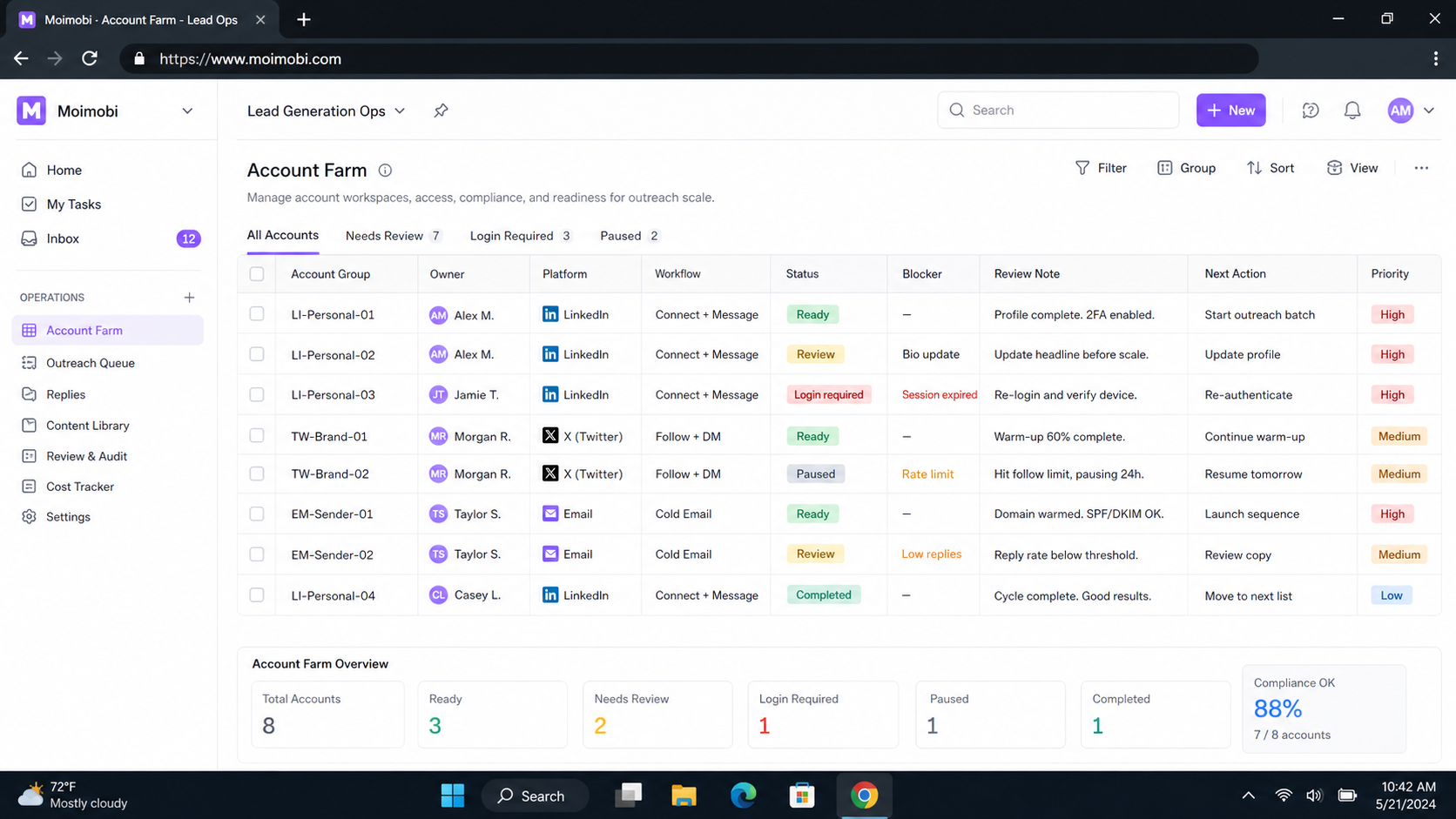
Every account workspace needs a recovery path. A session may expire, an operator may discover incomplete input, or a reviewer may reject a draft. These are normal workflow states, not reasons to bypass checks.
Use a small state model: Ready, In Review, Approved, Running, Paused, Completed, and Closed. Each transition should name the actor and reason. A paused task should retain enough context for another authorized person to continue or close it responsibly.
Review the pilot weekly. Sample completed tasks and look for missing ownership, repeated contacts, unclear approvals, and unresolved pauses. Track handoff time, review time, opt-out handling, and the proportion of tasks that needed recovery. These measures reveal whether the workflow is more controlled than the manual version.
For mobile workflows that must repeat inside an app, mobile automation can support structured task execution. The automation should operate within the approved scope and preserve the same review and stop rules as human work.
The UK Information Commissioner’s Office explains that organizations need a lawful basis to process personal data and should be able to demonstrate it. Its lawful basis guidance is useful when teams define lead data intake and retention policies. Requirements vary by jurisdiction, so use qualified legal guidance for the markets you serve.
Common mistakes to avoid
- Using the word “scale” as permission to loosen review. More accounts require stronger ownership and clearer approval, not less.
- Combining contact research and sending rights. Separate those roles when the campaign has meaningful volume or sensitivity.
- Ignoring opt-outs and contact-source fields. A missing status should trigger a pause, not a best guess.
- Reusing a workspace across unrelated brands or markets. Keep account purpose and campaign context clear.
- Retaining full conversations in every task note. Save the outcome and necessary evidence, not more personal data than the workflow needs.
- Treating an active session as proof of a valid task. A running environment does not prove that the action was approved.
Verify the pilot before adding account groups
Run a verification review before expansion. Pick several tasks at random and ask a separate team member to reconstruct the workflow. They should be able to identify the account, environment, owner, campaign purpose, approval state, result, and next action without opening a private chat.
Use these pass/fail checks:
- Every active workspace has a business owner and an assigned operator.
- Every task has a visible source, purpose, and status.
- Every exception has a pause reason and a next owner.
- Reviewers can see what they are approving without gaining unrestricted account access.
- Opt-outs, objections, and data-quality concerns have a defined route.
- A manager can stop a campaign group without deleting its history.
If the pilot fails one of these checks, improve the template before adding more accounts. A controlled pilot is the right place to remove ambiguity. It is not a reason to increase message volume until the workflow is reliable.
FAQ
Is an account farm for lead generation the same as a phone farm?
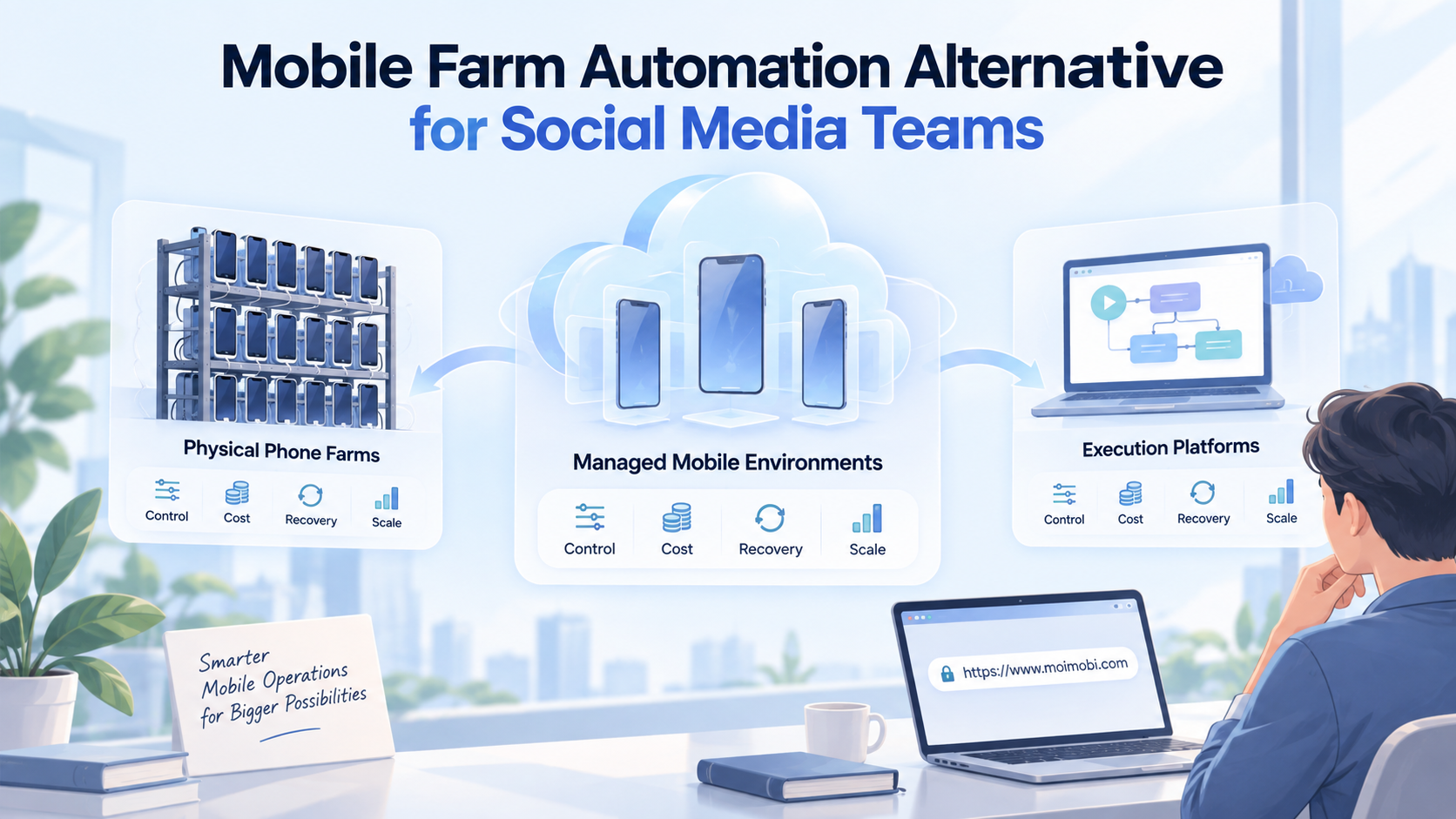
No. An account workspace model manages ownership and outreach tasks. A phone farm describes device capacity. A team may use both, but they solve different problems.
Can a team use this model for inbound leads?
Yes. Inbound follow-up is often a good pilot because the request source and next action are easier to document.
What should cause an immediate task pause?
Pause when consent status is unknown, the account environment does not match the task, the message needs approval, or a contact objects.
Who should approve messages?
Assign an accountable reviewer for new campaigns, sensitive categories, high-impact replies, or material changes to approved copy.
How many accounts should a pilot include?
Use the smallest group that includes real ownership, review, handoff, and recovery conditions. The goal is to test controls, not capacity.
Can automation send messages without review?
Only use automation within a documented, lawful, platform-compliant workflow. Keep approval and stop conditions for cases outside the template.
What data belongs in the task record?
Keep the account reference, task purpose, source, state, owner, result, and required next action. Minimize unnecessary personal data.
What is the next step after a successful pilot?
Standardize the task template, train the next account group, and expand one variable at a time: a new market, a new role, or a new task type.
Conclusion
An account farm for lead generation should be a controlled account-workspace system, not a shortcut around platform or privacy obligations. The priority order is clear: establish legitimate ownership, define the campaign purpose, control access, document review, and prove recovery before expanding.
When each task has an accountable owner and an evidence trail, a team can scale approved outreach with less confusion. When those controls are missing, adding accounts or devices only increases the cost of mistakes.
Review first.