Content Type: guide
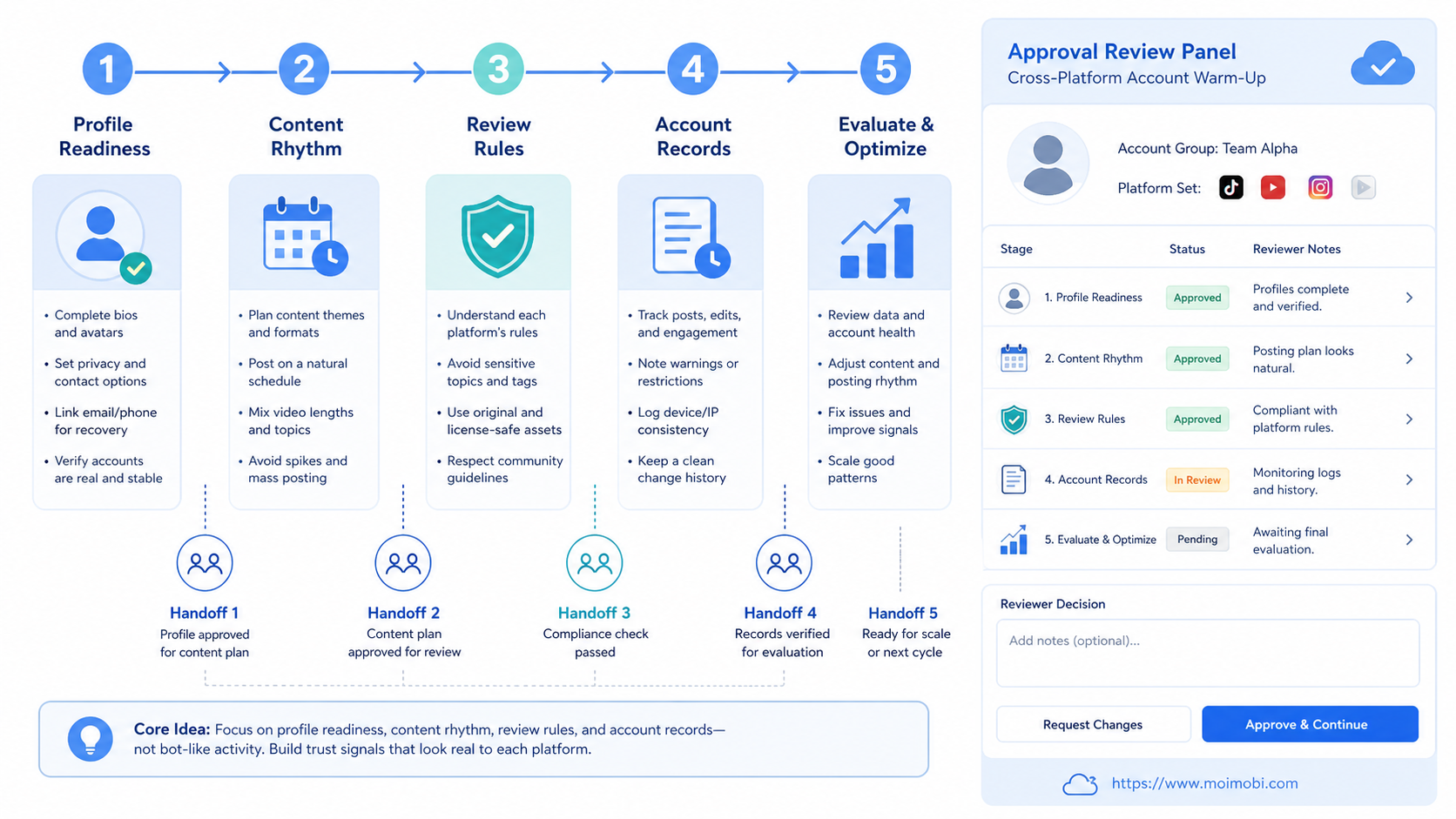
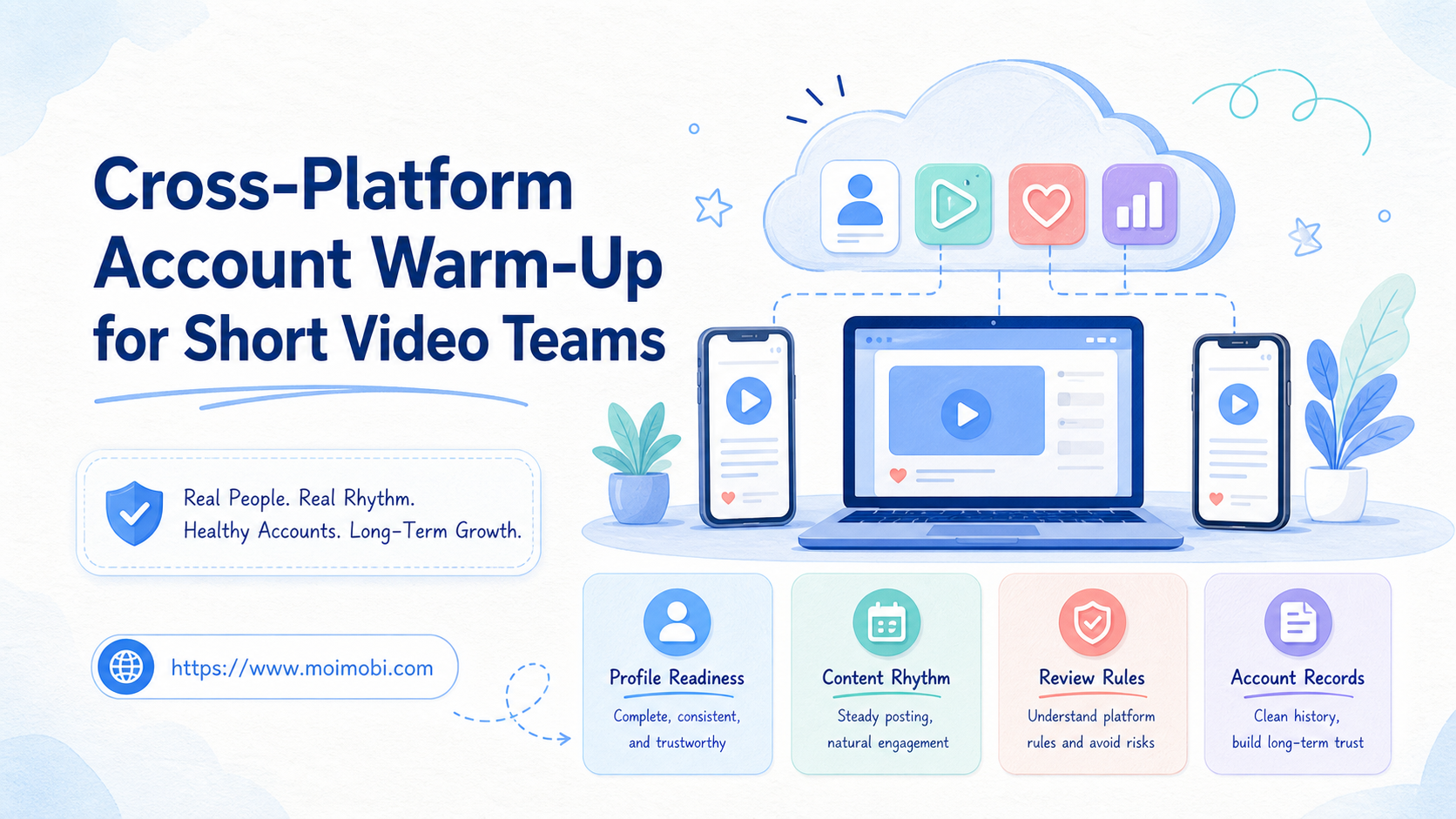
Cross-platform account warm-up is the process of preparing social accounts for normal team operations before scaling publishing, replies, monitoring, or campaign tasks. For short video teams, it should mean gradual setup, profile completion, content cadence, account ownership, and review records. It should not mean using bots to create artificial behavior.
Short video teams search for this topic because TikTok, Instagram Reels, Facebook Reels, and YouTube Shorts often sit in one content operation. A team may create one video idea, adapt it into several formats, publish through different accounts, and then reply to comments across platforms. Without a warm-up process, the team may start with too many actions before the account profile, content plan, and owner model are clear.
The safer decision is operational. Treat each account as a workspace with a role, history, content scope, and recovery path. Automation can help prepare tasks, collect status, and remind owners. Public actions still need limits and platform awareness.
Key Takeaways
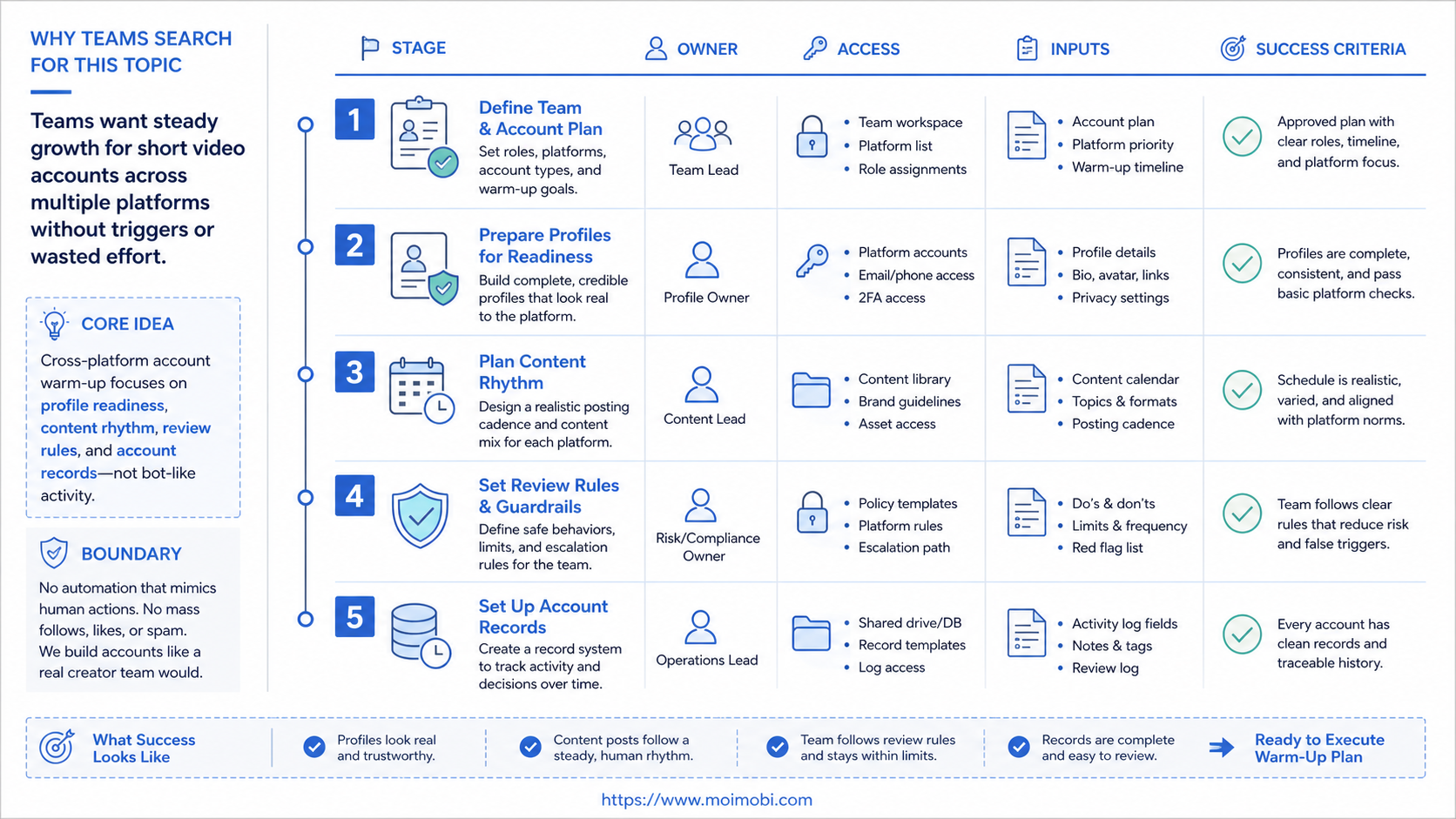
- Cross-platform account warm-up is an operating readiness process, not a bot tactic.
- Teams should prepare profile fields, owners, content rhythm, review rules, and activity logs first.
- TikTok and Instagram rules both discourage spam-like or misleading behavior, so volume should not be the goal.
- Short video teams need platform-specific publishing checks before using one workflow everywhere.
- A small pilot should prove account ownership and recovery before more accounts are added.
The Core Idea Behind Cross-Platform Account Warm-Up
Start with readiness before workload. A short video account needs a clear profile, a content direction, a normal publishing rhythm, and a person responsible for the next action.
Weak playbooks start with search terms such as “tiktok warm up bot” or “tiktok multiple account warm up bot.” That path creates the wrong incentive. It encourages activity for the sake of activity. A team should instead ask whether the account is ready for a real audience and a real workflow.
Review these readiness fields before any scaled campaign:
| Warm-Up Area | What to Prepare | What to Avoid |
|---|---|---|
| Profile | Avatar, bio, brand link, language, region, and owner notes. | Empty profiles pushed into publishing queues. |
| Content rhythm | Drafts, captions, posting windows, and approval status. | Sudden bursts across many new accounts. |
| Engagement | Human review, reply rules, and escalation paths. | Repeated generic comments or scripted replies. |
| Records | Account owner, task type, result, issue, and next action. | No history after a failed task. |
This is where a controlled short video account workflow helps. The workflow should connect content, account environment, approval, and recovery instead of treating every platform as the same upload box.
Why Teams Search for This Topic
Teams usually search for warm-up guidance after they see one of three problems. The first is account inconsistency. Some accounts have complete profiles and steady content, while others are empty, unused, or handled by multiple operators.
The second problem is workflow pressure. A campaign may need dozens of posts, but the account system is not ready. Operators then rush profile setup, posting, replies, and reporting in the same week.
The third problem is platform confusion. A video that works on one platform may need a different caption, cover, language, or reply policy on another platform. TikTok's Community Guidelines describe platform expectations around spam, misleading behavior, and platform integrity. Instagram's Community Guidelines also set expectations around authentic and respectful interactions.
Those sources do not provide a universal warm-up formula. They do make one point clear for operations teams: behavior quality matters. A warm-up process should lower operational confusion, not create repetitive activity that looks disconnected from real content.
Who Benefits Most and In What Situations
This operating model is useful for teams that manage several short video accounts across brands, regions, creators, or client projects. It is less useful for a solo creator with one established account and a stable posting routine.
A strong fit is a team with repeatable work. For example, a cross-border seller may run TikTok, Instagram, and Facebook accounts for different product lines. Each account needs content mapping, owner assignment, reply handling, and a record of what was posted.
Agencies also benefit because client accounts should not be mixed together. Account notes, content approval, and publishing responsibility should stay visible. A structured multi-account operations model can reduce handoff confusion when several people touch the same campaign.
A poor fit is a team that only wants a quick activity script. If there is no content plan, no owner, and no review rule, warm-up becomes noise. More actions will not fix an unclear account strategy.
How to Evaluate or Start Using Cross-Platform Account Warm-Up
Begin with guardrails. Do not automate follows, comments, views, or repeated actions just to make an account look active. Build a workflow that supports normal account preparation.
Follow this step sequence:
- Create the account map. Record platform, handle, brand, market, owner, backup owner, and allowed task types.
- Complete profile setup. Check avatar, bio, link, display name, business category, and recovery access.
- Prepare content batches. Build three to five platform-ready posts before the account enters an operating queue.
- Set activity limits. Define what can happen during the pilot, including publishing, replies, monitoring, and profile edits.
- Add human review. Require approval for first posts, sensitive replies, brand claims, and campaign changes.
- Track each task. Keep account, platform, operator, time, action type, result, and next action.
- Review after one cycle. Decide whether the account is ready for more work, needs fixes, or should pause.
For teams that run publishing, replies, and monitoring across many accounts, a short-video operating queue can keep the preparation work connected to daily operations.
Platform-Specific Checks Before Scaling
Do not treat TikTok, Instagram, Facebook Reels, and Shorts as identical channels. They may share the same vertical video format, but the operating details are different. Teams should write a short checklist for each platform before any account enters a campaign.
TikTok checks should cover profile language, region plan, first content theme, comment handling, and whether the account is meant for creator content, brand content, or support content. A product account and a creator account should not use the same voice by default.
Instagram checks should include profile category, bio link, content grid fit, Reels caption style, DM handling, and comment escalation. Instagram accounts often connect to broader customer interaction workflows, so reply ownership matters early.
Facebook Reels checks should include page ownership, page role permissions, brand alignment, post visibility, and comment review. A team that ignores page roles may discover too late that the wrong person controls publishing or moderation.
Shorts checks should include channel positioning, video metadata, thumbnail workflow, comment review, and handoff from long-form content if the team also runs a YouTube channel. If the organization avoids Google-owned sources for planning, it can still build an internal checklist from its own channel rules and editor workflow.
Use one shared warm-up policy, but keep platform fields separate. The shared policy defines ownership, approval, logs, and pause rules. The platform fields define what needs to be checked before publishing.
Account Environment and Team Ownership Rules
Warm-up fails when account environments are unclear. The account may have a content owner, but no one owns recovery access, device context, proxy notes, or task history. That gap becomes painful when the team rotates operators.
Assign each account a simple ownership record:
- Account owner: responsible for profile quality and campaign readiness.
- Backup owner: can continue work when the owner is unavailable.
- Content reviewer: approves captions, claims, and visual fit.
- Reply owner: handles comments, DMs, and escalation.
- Environment owner: checks login workspace, device notes, and access changes.
This structure does not need to be heavy. A simple table is enough for a pilot. The point is to prevent shared responsibility from becoming no responsibility.
Account environments also need boundaries. A browser profile may handle web dashboards and account settings. A mobile environment may handle app-first workflows. A shared team dashboard may handle task records and review. Mixing all three into one personal device makes the process harder to audit.
A Safe Pilot Plan for the First Two Weeks
During the first two weeks, prove that the team can run a clean process. Avoid campaign pressure during the pilot. Use a small number of accounts and a small content batch.
Week one should focus on setup. Complete profiles, assign owners, prepare drafts, define reply rules, and test task records. Publish only when review is complete.
Week two should focus on repeatability. Run the same workflow again. Check whether the team can move from draft to approval, then to publishing, then to comment review without private messages or memory-based coordination.
Score the pilot with these checks:
| Check | Pass Signal | Pause Signal |
|---|---|---|
| Ownership | Every account has an owner and backup. | Operators ask who controls the next step. |
| Content readiness | Drafts are approved before publishing. | Captions or claims are edited after posting. |
| Reply process | Comment rules are written before replies start. | Different operators answer with different promises. |
| Recovery | Failures show account, task, owner, and next action. | The team only sees that something failed. |
If two or more pause signals appear, do not add more accounts. Fix the operating model first. Scaling a weak pilot usually creates more hidden work for the same team.
What Automation Should and Should Not Do
Automation should support warm-up by reducing manual coordination. It can create tasks, route drafts, remind reviewers, collect status, and record results. It can also help operators avoid losing track of accounts across platforms.
Automation should not become the reason public behavior becomes repetitive. A team should be careful with any workflow that repeatedly follows, comments, likes, or messages without a clear human purpose. That kind of workflow may create operational and platform risk.
Use automation for preparation first:
- Build content checklists from campaign briefs.
- Assign tasks to account owners.
- Remind reviewers before publishing windows.
- Collect post URLs and status.
- Flag missing profile fields.
- Record failed actions and recovery notes.
Hold back on public actions until the process is stable. The warm-up period is a chance to prove visibility and control. It is not a reason to maximize activity.
Cross-Platform Account Warm-Up Verification Checklist
Verification should happen before the team increases activity. The goal is to confirm that the account is ready for normal work.
Run this checklist:
- The account has one owner and one backup owner.
- Profile details match the brand and platform.
- Recovery access is recorded and current.
- Content drafts have been reviewed for platform fit.
- First posts have a publishing owner and approval record.
- Reply rules are written before comments arrive.
- The team can explain why each task happened.
- A paused account has a recovery note and next action.
This is also where a safer Facebook account infrastructure guide workflow can be useful as a planning reference. Use it for account environment discipline, not for risky growth tactics.
Mistakes That Reduce Results
The most common mistake is confusing warm-up with fake engagement. A team may think more actions create trust. In practice, low-quality actions can create more review work and weaker account signals.
Another mistake is using one playbook for every platform. TikTok, Instagram, Facebook, and YouTube have different interfaces, formats, discovery systems, and rules. A shared workflow is useful, but each platform still needs its own checklist.
Ownership gaps also waste time. If two operators use the same account without records, nobody knows which action caused a problem. Ownership records make recovery possible.
Finally, do not scale before the pilot is measurable. If the team cannot show which accounts posted, which replies were reviewed, and which tasks failed, more accounts will make the system harder to control.
Frequently Asked Questions
Is cross-platform account warm-up the same as bot activity?
No. A good warm-up process prepares accounts for real work. It should not create fake activity or repeated automated behavior.
How do you warm up Instagram accounts safely?
Start with complete profiles, real content, clear ownership, limited tasks, and human review. Avoid scripted engagement patterns.
Should short video teams use a TikTok warm up bot?
Be careful with any tool that creates repeated public actions. Use automation for planning, records, reminders, and review workflows first.
How many accounts should be included in a pilot?
Start with a small group that represents normal work. Include different platforms, owners, and content types.
What should be tracked during warm-up?
Track account owner, profile status, content readiness, task type, approval, result, issue, and next action.
When is an account ready for more activity?
It is ready when profile setup, content quality, ownership, recovery access, and task records are clear.
Does warm-up remove platform risk?
No. It only improves operational control. Platform rules, user feedback, content quality, and account history still matter.
Can one workflow cover TikTok, Reels, and Shorts?
One operating model can cover all three, but each platform needs its own content and review checks.
Conclusion
A healthy warm-up process starts with readiness, not volume. First confirm account ownership. Then complete the profile. Next prepare real content, add review rules, and record each task.
Scale only after the team can explain what happened on each account. That is the practical test. If account history, ownership, and recovery are unclear, pause the rollout and fix the workflow before adding more accounts.
References